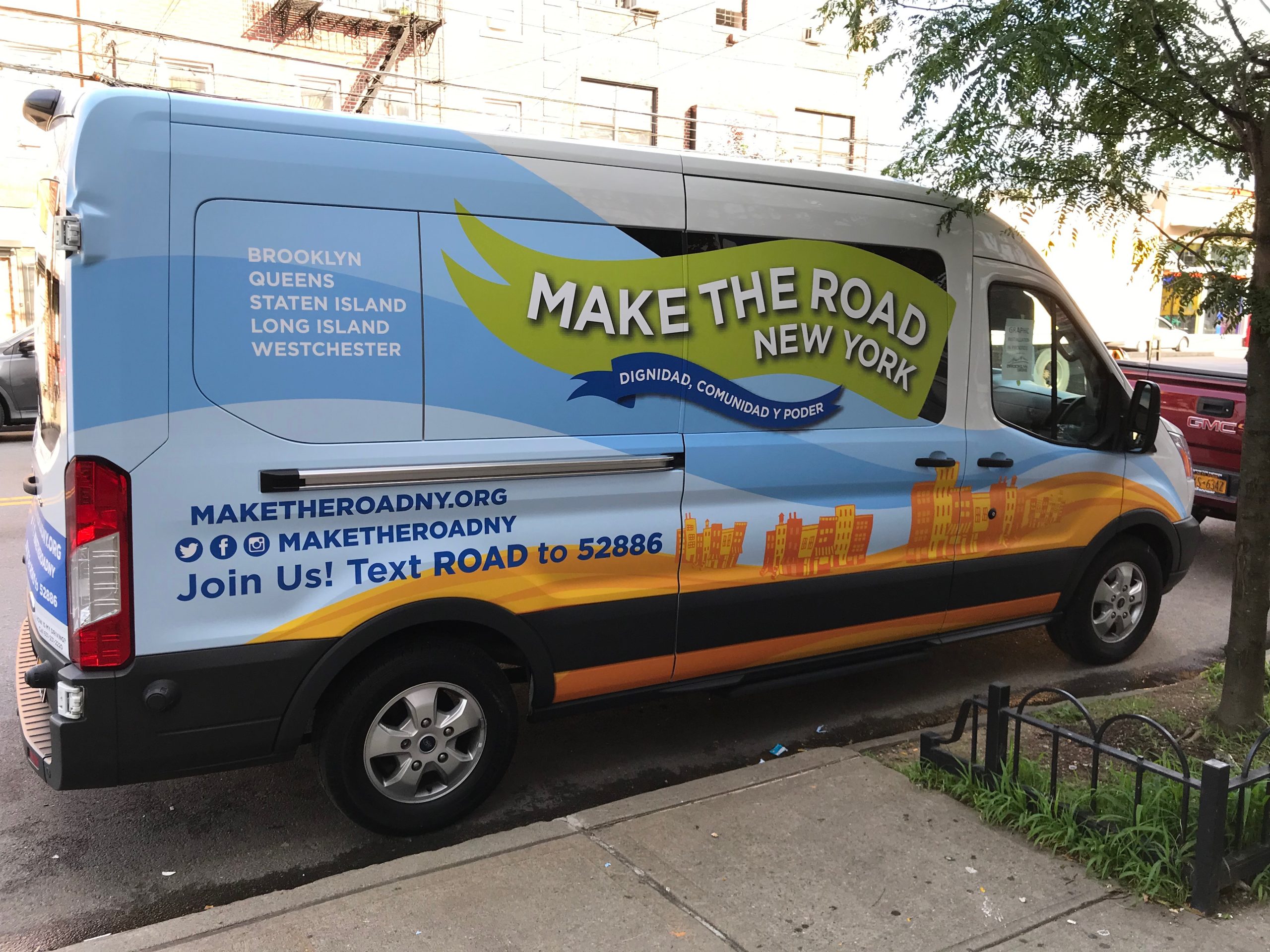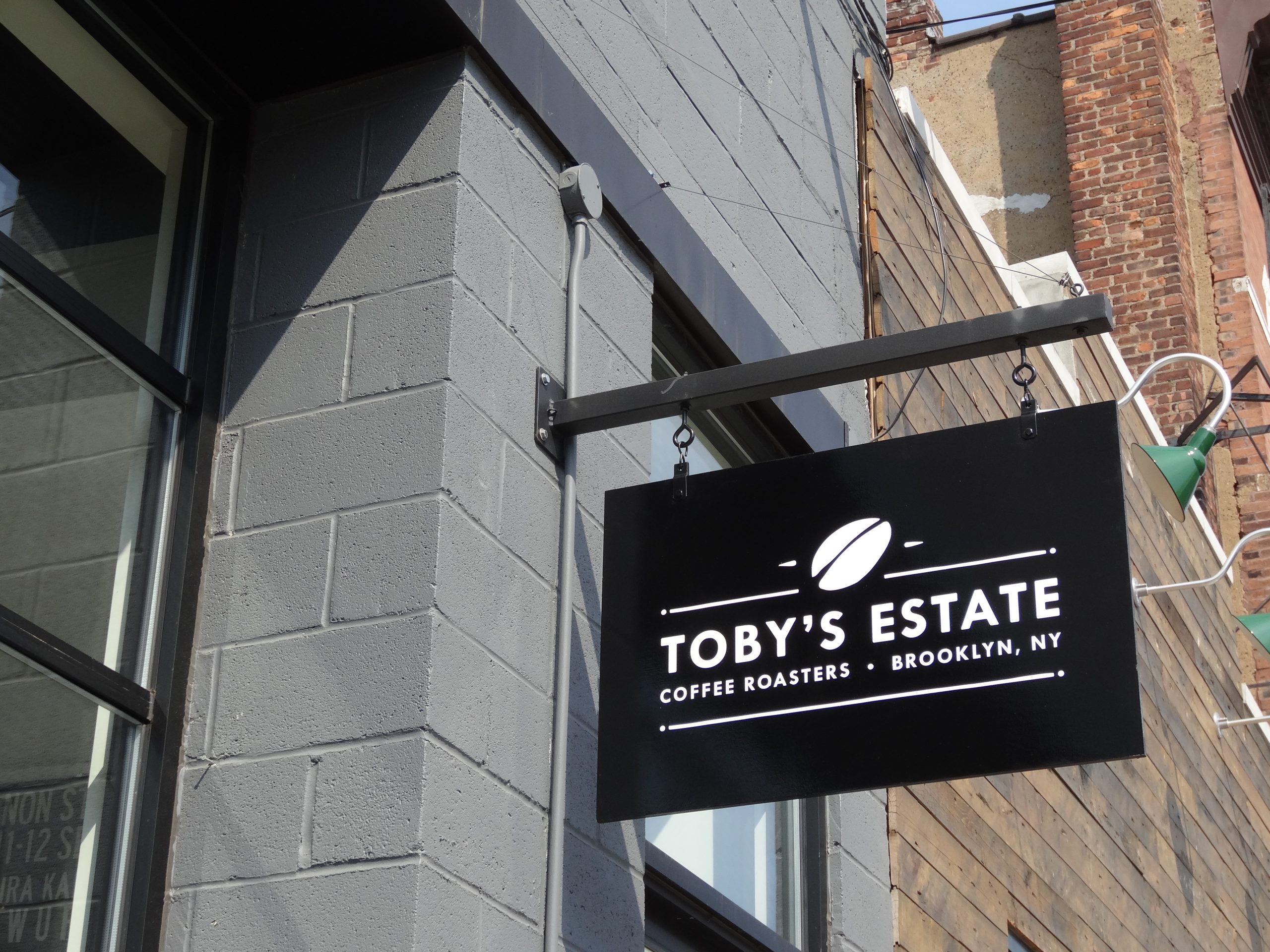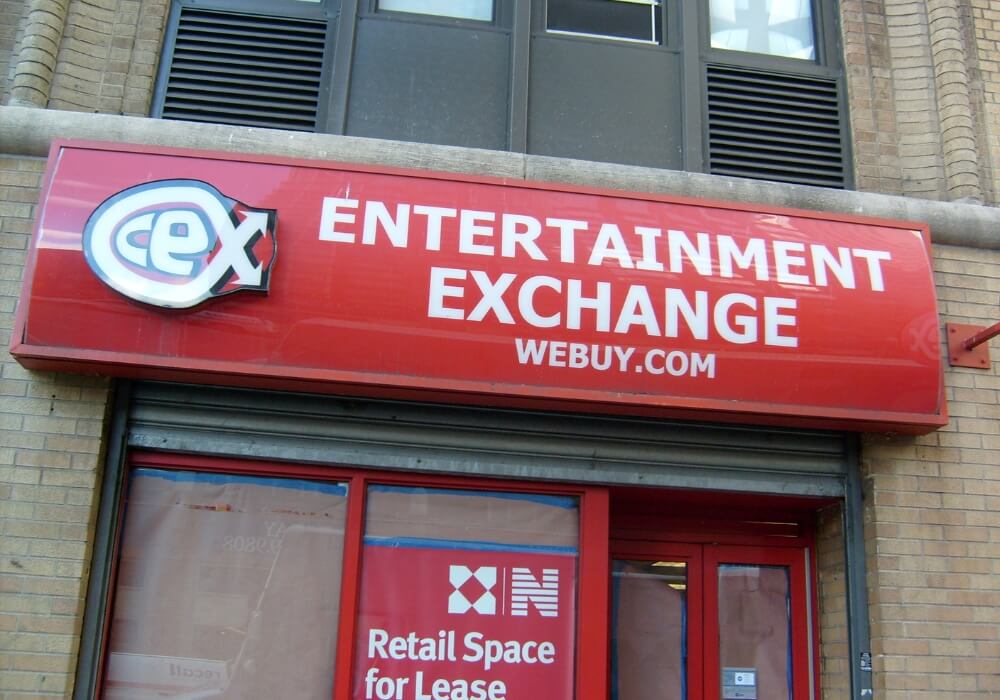
A storefront sign is built for one building and one brand. A no smoking notice is not, and it does not need to be.
The choice between custom signs vs ready made signs is rarely all or nothing. Most businesses need both: a custom sign that identifies the building and carries the brand, and a handful of standard signs that say the same thing in every building in the country, such as exit, restroom or no smoking.
The mistake is using the wrong one in the wrong place. A stock sign on the storefront makes a business look temporary, while a fully custom sign for a standard safety message can cost more and still miss the format inspectors expect.
This guide explains what each option actually is, compares them on cost, lead time, compliance and lifespan, and shows how to decide sign by sign.
What Counts as a Ready Made Sign
A ready made sign, often called a stock sign, is produced in volume before anyone orders it. The message, size, material and colors are fixed, and it ships from a catalog or a shelf. Typical examples are open and closed signs, parking notices, restroom pictograms, safety warnings and standard real estate panels.
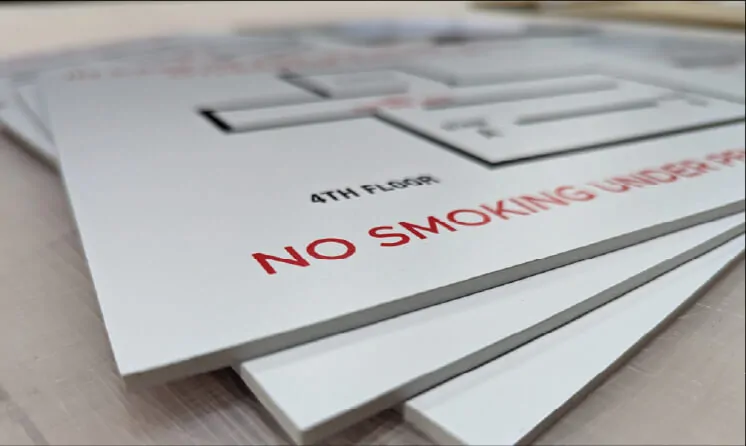
Between the two sits a large middle ground. A stock format printed with your own text, such as an aluminium panel in a standard size or a room sign template with your room names, is technically custom but behaves like a stock sign on price and speed.
What Makes a Sign Custom
A custom sign is designed for a specific building, brand and set of rules. It is sized to the sign band or the wall, built in the materials the location needs, colored to the brand standard and, if it is lit, wired and listed as a complete electrical sign. Channel letters, light boxes, blade signs, carved signs and lobby logos are custom by nature.
The design work is what you pay for. It includes measuring the site, checking the town’s size limits and drawing the sign so it can be permitted and installed. See our Custom Signs page for the range we build, and our Sign Design page for how the design stage works.
Custom vs Ready Made at a Glance
| Factor | Ready made sign | Custom sign |
|---|---|---|
| Message | Fixed, standard wording or pictogram | Anything the brand and the code allow |
| Size | Catalog sizes only | Sized to the sign band, wall or ordinance limit |
| Lead time | Usually ships within days | Several weeks, longer with permits and lighting |
| Unit cost | Low, because it is made in volume | Higher, because design and setup are per project |
| Materials | Chosen for price and shipping | Chosen for the location and expected lifespan |
| Code fit | Good for standard notices, poor for building identification | Drawn to the town’s limits and electrical code |
| Brand fit | Generic | Matches logo, colors and typeface |
Where Ready Made Signs Make Sense
Stock signs are the right answer when the message is standard, the meaning must be instantly familiar and the brand adds nothing.
Safety and Regulatory Notices
Workplace safety signs follow a recognised format for a reason. OSHA’s standard on accident prevention signs and tags sets out how danger, caution and safety instruction signs are classified, and a familiar layout is read faster than a creative one. Our guide to choosing custom safety signs covers when a site specific version is worth it.
Short Term and Low Stakes Uses
A temporary notice, a parking reminder or a sign for a one week event rarely justifies design time. A stock sign, or a printed panel on a standard blank, does the job and can be thrown away without regret.
Very Small Budgets on Interior Notices
Inside a building, a back of house sign such as staff only or storage is read from a few feet away by people who already know the space. A standard sign is perfectly adequate there.
Where Custom Signs Are the Better Choice
Building and Storefront Identification
The main exterior sign has to fit a specific facade, meet a specific town’s limits and be read from a specific street. A stock sign cannot be sized to a sign band or drawn for a permit, and it tells every customer the business did not invest in its own front door. Our Channel Letters and Light Box Signs pages show the usual options.
Accessible Room Signs
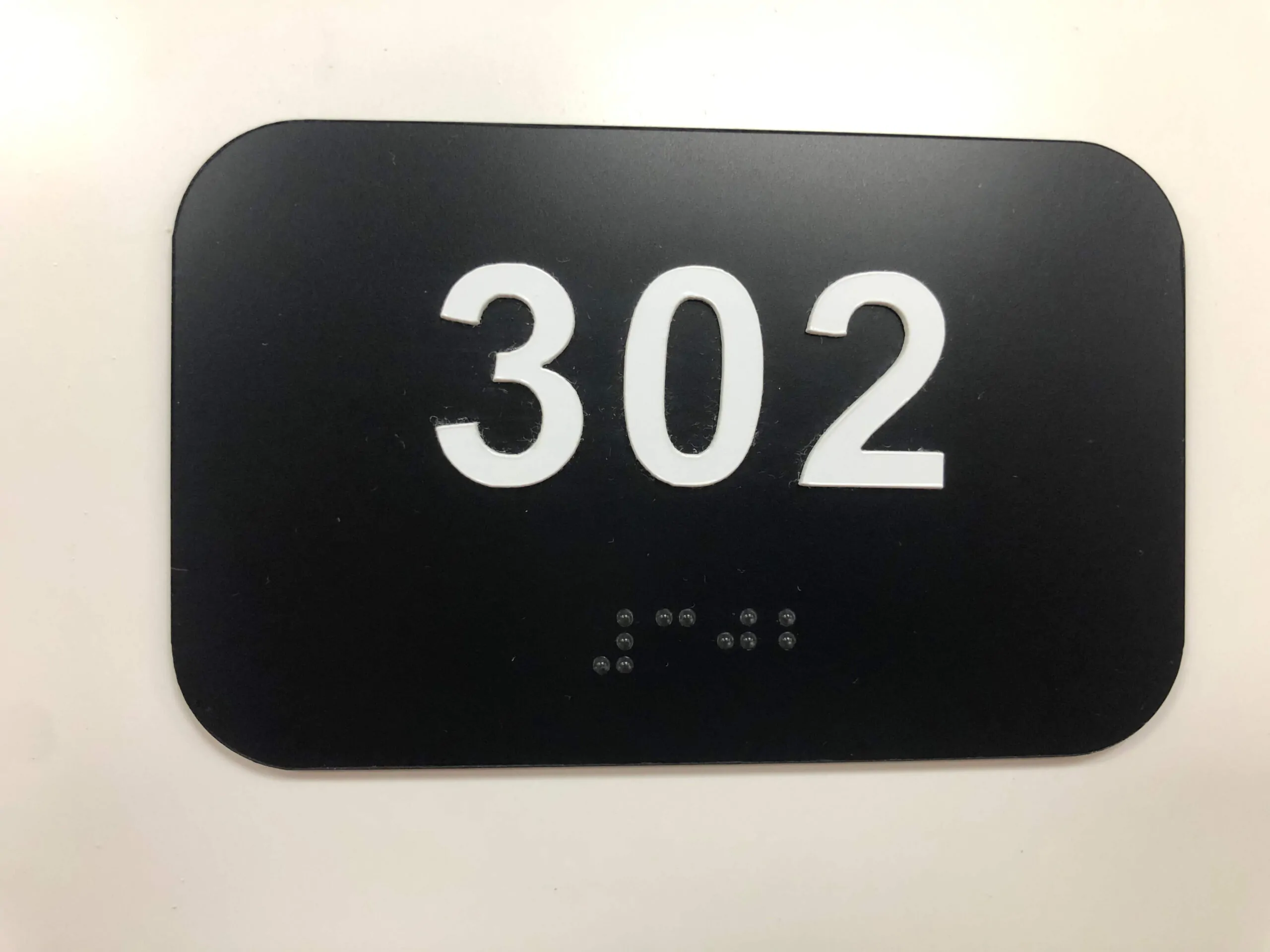
Room identification signs at restrooms, exits, stairs and numbered rooms must meet the 2010 ADA Standards, including raised characters, braille and mounting height. Many stock ADA signs are compliant as products, but they still have to match the room names, numbering and finish of the building. Ordering them as a custom set from a door schedule avoids gaps and duplicates. See our ADA Signs page for formats.
Anything Lit or Structural
Illuminated signs must be listed for electrical safety and installed to that listing, which is a whole sign question rather than a parts question. Pole, monument and projecting signs also carry structural loads. These are custom by necessity.
Brand Environments
Lobbies, reception walls and interior feature signs exist to express the brand. Custom dimensional letters, finishes and lighting are the whole point, which is why we build them to the brand standard rather than from a catalog. See our Lobby Signs page for examples.
What the Choice Really Costs
Price per sign favours stock every time. Total cost is less clear, because a cheap sign that fails early, looks wrong on the building or has to be replaced to pass inspection costs more in the end.
- Lifespan: stock exterior signs are often printed on light substrates meant for short use. A custom exterior sign is specified for years of weather. Our guide on how long commercial signs last breaks this down by material.
- Replacement risk: a sign that does not meet the town’s rules may have to come down. Designing to the ordinance first avoids paying twice.
- Brand value: the main sign is seen by every visitor every day, which makes it one of the cheapest marketing tools per view a business owns.
How to Decide Sign by Sign
- List every sign the location needs: exterior identification, entrances, parking, interior wayfinding, room signs, safety notices and temporary signs.
- Mark the standard messages: exit, restroom pictograms, no smoking, hazard warnings and similar notices can usually be stock or semi custom.
- Mark anything that identifies the business: storefront, pylon panel, lobby and vehicle graphics should be custom.
- Check the rules: anything outdoors, lit or accessible needs to meet the town’s ordinance, the electrical code or the ADA Standards, which pushes it toward custom.
- Group the order: ordering the custom and semi custom pieces together keeps finishes consistent and usually reduces installation visits.
Our guide to planning a complete business sign package shows how this list becomes a single coordinated order.
Common Questions About Custom vs Ready Made Signs
Are ready made signs cheaper than custom signs?
Per sign, almost always. Over the life of the sign the gap narrows, because stock exterior signs tend to use lighter materials and are replaced sooner, and a sign that does not fit the town’s limits may have to be replaced before it has paid for itself.
Can a stock sign be used as my main storefront sign?
It can, but it rarely works well. A stock sign cannot be sized to your sign band or drawn for a permit, and most towns review the main wall sign against size and placement rules that a catalog sign was never designed for.
Are stock ADA signs compliant?
Many are, as products. Compliance also depends on the right sign being at the right door at the right height, so room signs are best ordered as a set from the building’s door schedule.
How long does a custom sign take compared with a stock sign?
A stock sign usually ships within days. A custom sign typically takes several weeks for design, approval and fabrication, and longer when a permit or illumination is involved.
What is a semi custom sign?
It is a standard format with your own content, such as a standard size aluminium panel printed with your text or a room sign template with your room names. It costs closer to stock but reads like it was made for the building.
Should safety signs be custom?
The message and format should stay standard so people recognise them instantly. Custom sizing, materials or site specific wording can be worth it when a standard sign does not fit the hazard or the location.
Plan the Right Mix of Signs
Gogi Signs designs and builds custom signs in our Linden, New Jersey shop and supplies the standard and semi custom signs that go with them, so a location gets one consistent order instead of three suppliers.
Send us a list of what you need or request a free quote, and we will tell you which signs are worth customising and which are fine from stock.