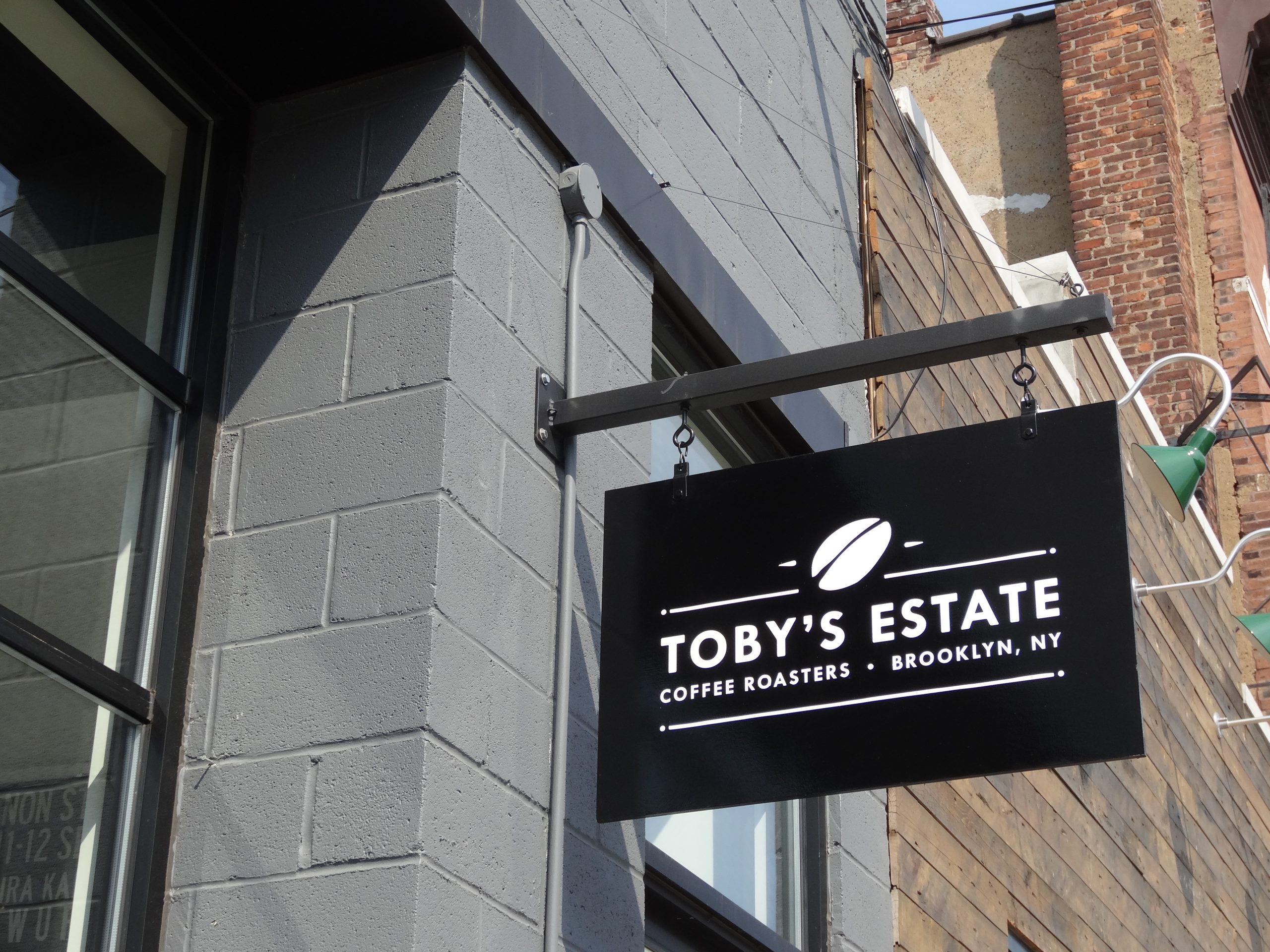
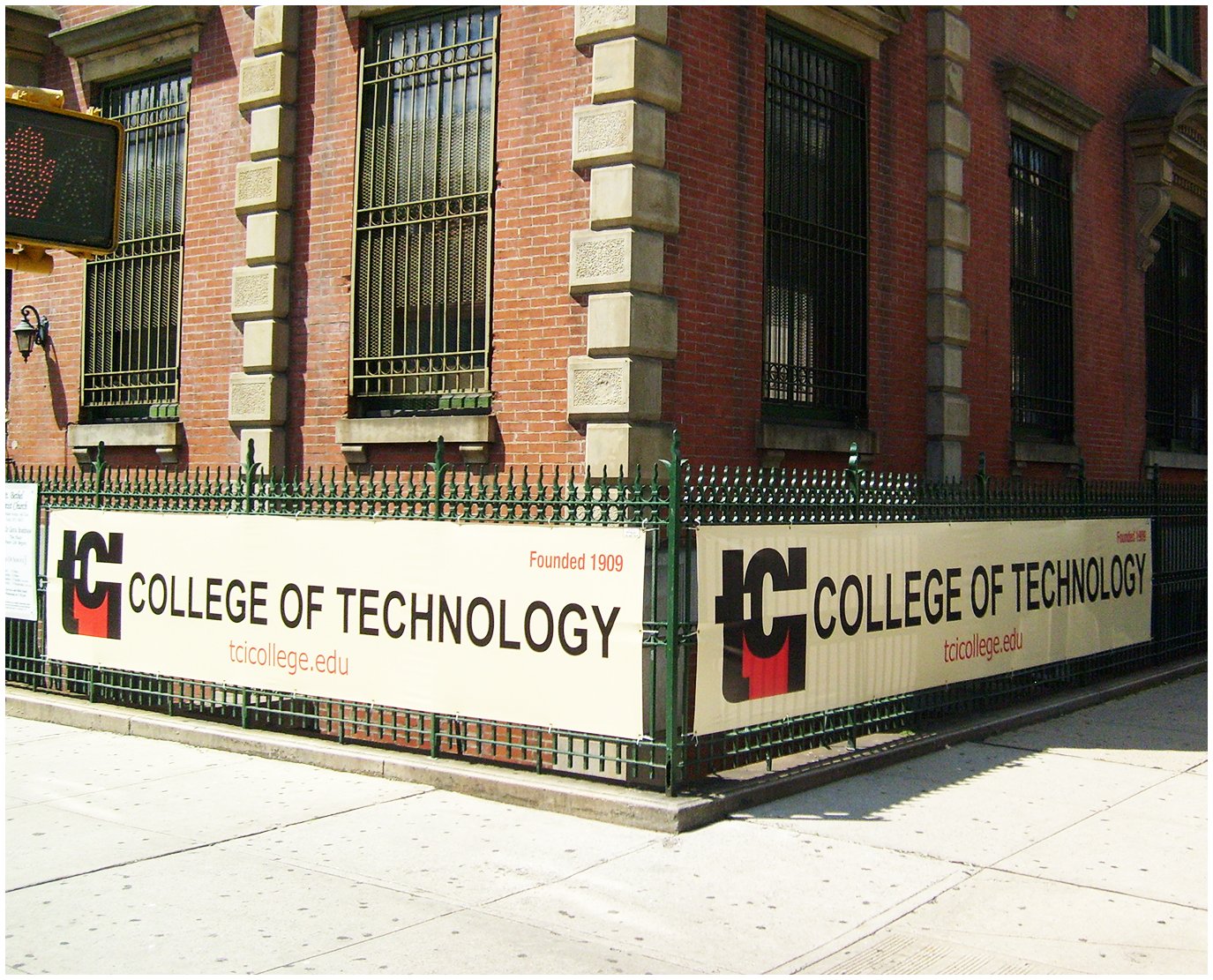
A single block can carry several storefront sign types side by side, each solving a different problem.
A retail storefront usually has more sign options available than the owner realizes. Channel letters, a light box, a blade sign, an awning, a carved panel, hand painted lettering, metal signage, a sidewalk sign, and a vestibule can all serve the same storefront, and each one solves a different problem. Picking the wrong type, or picking by price alone, is one of the more expensive mistakes a new or growing retail business can make, because a poorly matched sign still has to come down and be replaced once the mismatch becomes obvious.
Gogi Signs designs, fabricates, and installs retail storefront signs for businesses across New Jersey, and for storefronts in New York City where landmark review and Department of Buildings rules add another layer of planning. See our service areas for the approval process specific to your location.
This guide walks through each outdoor sign type available for a retail storefront, what it is best suited for, how to choose between them, what New Jersey and New York City require for permits, and the questions retail owners ask most often before committing to a sign.
Why the Right Storefront Sign Matters
A storefront sign is one of the only marketing tools that works every hour the business is open, and in many cases every hour of the day whether the business is open or not. It does not get skipped, closed out of, or scrolled past.
The sign is also often the first real impression a new customer has of the business, before they see the inside, the staff, or the product. A sign that looks cheap, outdated, or mismatched with the brand undercuts everything else the business has invested in.
Visibility conditions are different for every storefront. A tenant on a wide suburban road with drive by traffic has different needs from a tenant on a dense New York City sidewalk with foot traffic passing within a few feet. The lease and the local sign code also limit what is actually allowed on a given building, sometimes before style preference even enters the decision.
The sections below cover each outdoor sign type on its own, then a comparison table for a quick side by side view, then how to narrow the choice for a specific storefront.
Retail Storefront Signs at a Glance
The table below compares the nine most common outdoor sign types for a retail storefront. Each one is covered in more detail further down the page.
| Sign Type | Best For | Key Benefit | Illuminated |
|---|---|---|---|
| Channel Letters | Storefronts wanting a strong, dimensional brand identity | Individually lit letters that read as premium day and night | Yes |
| Light Box Signs | Retailers wanting one evenly lit, easy to update panel | Even illumination with a swappable face for rebrands or promotions | Yes |
| Blade Signs | Storefronts on a sidewalk or in a walkable retail district | Reads perpendicular to the building, catching pedestrians early | Often, unlit options exist |
| Awnings | Businesses wanting shade and branding in one structure | Protects the entry and displays while branding the door | Optional backlit option |
| Carved Signs | Upscale, traditional brands such as law offices or spas | Dimensional carving that signals craftsmanship | Rarely, accent lighting possible |
| Hand Painted Signs | Brands wanting a custom, artisanal, one of a kind look | A finish no printed material can fully match | No |
| Metal Signs and Plaques | Professional offices and building or address identification | Durable and low maintenance with a permanent look | Rarely |
| Sidewalk Signs | Daily specials and short term promotions | Portable and changeable, placed each business day | No |
| Vestibules | Storefronts needing an enclosed, climate controlled entry | Combines code compliant function with a branding surface | Optional |
Channel Letters
Channel letters are individual, dimensional letters, each one wired and mounted separately or on a raceway, usually lit from within so the brand reads clearly after dark. They are the sign type most associated with a true storefront identity, the kind of sign that makes a business look established rather than temporary.
Channel letters work well on a sign band, above an entrance, or on a parapet, and they scale from a small single tenant storefront to a large anchor box. See our Channel Letters page for finish and lighting options.
Light Box Signs
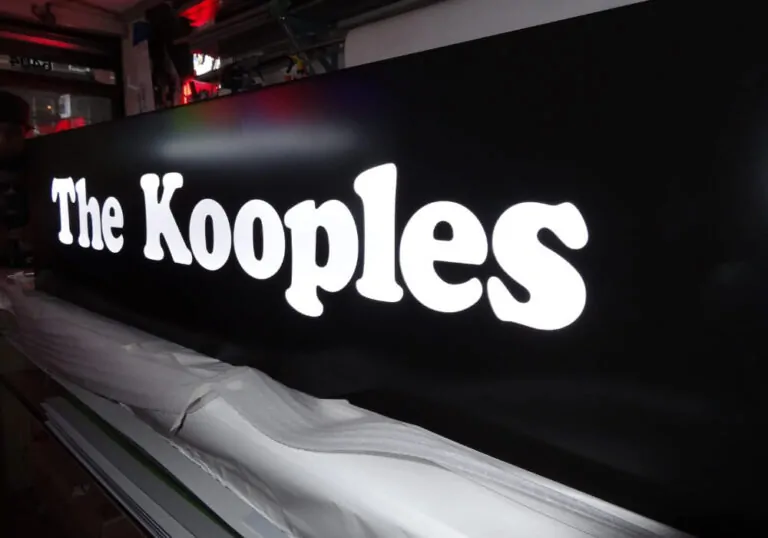
A light box sign is a single illuminated panel with the design printed or applied to its face, lit evenly from behind or within. It is a straightforward, reliable option for a storefront that wants consistent illumination without the individual wiring that channel letters require.
Light boxes are also useful for businesses that expect to update their message, a new logo, a seasonal promotion, or a rebrand, since the face can often be swapped without replacing the entire structure. See our Light Box Signs page for sizing and mounting options.
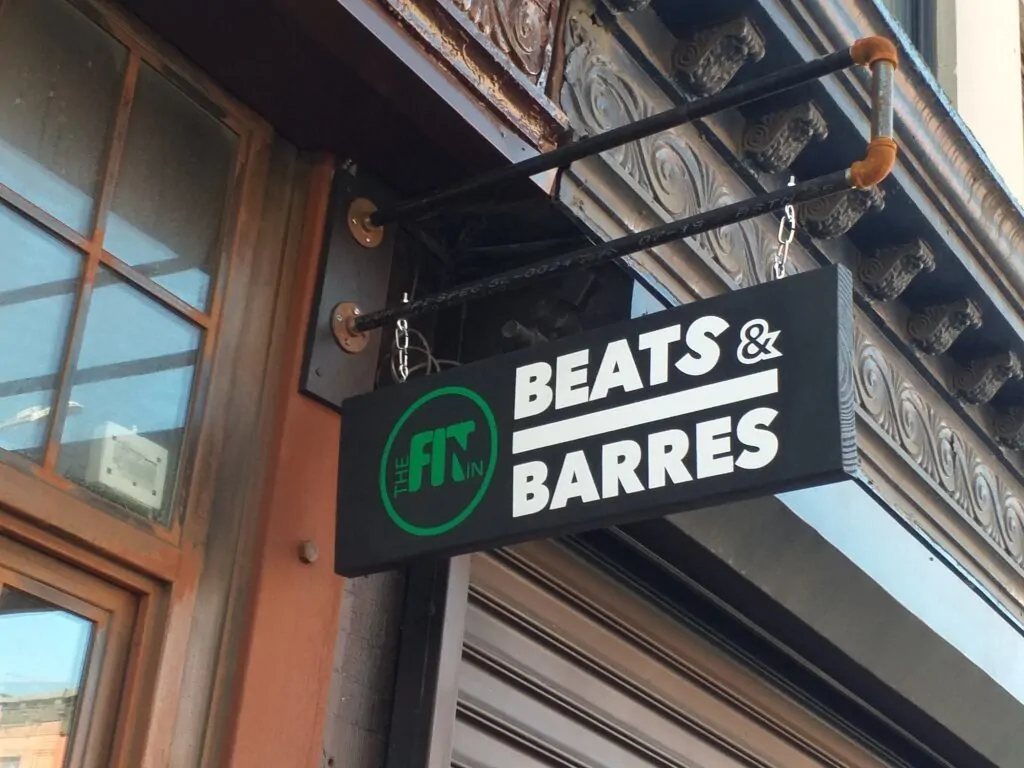
Blade Signs
A blade sign projects out from the building perpendicular to the storefront, rather than sitting flat against it. That makes it the sign a pedestrian sees first while walking down the block, well before they are standing in front of the door.
Blade signs are especially effective in dense, walkable retail corridors, shopping districts, and multi tenant buildings where several storefronts compete for attention along the same sidewalk. See our Blade Signs page for bracket and illumination choices.
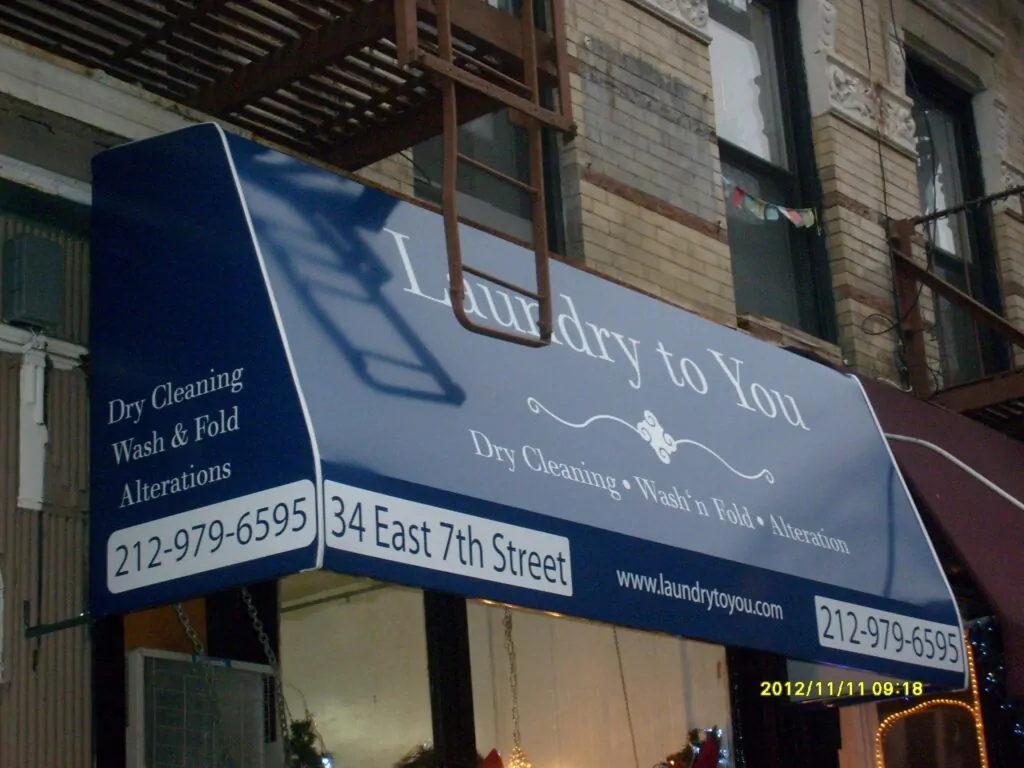
Awnings
An awning combines branding with a practical function, shade for window displays and entering customers, and some weather cover at the door. A well designed awning carries the business name and logo while also protecting the storefront itself.
Awnings can be backlit for nighttime visibility or left unlit for a quieter daytime only presence, depending on the look the business wants. See our Awnings page for frame and fabric options.
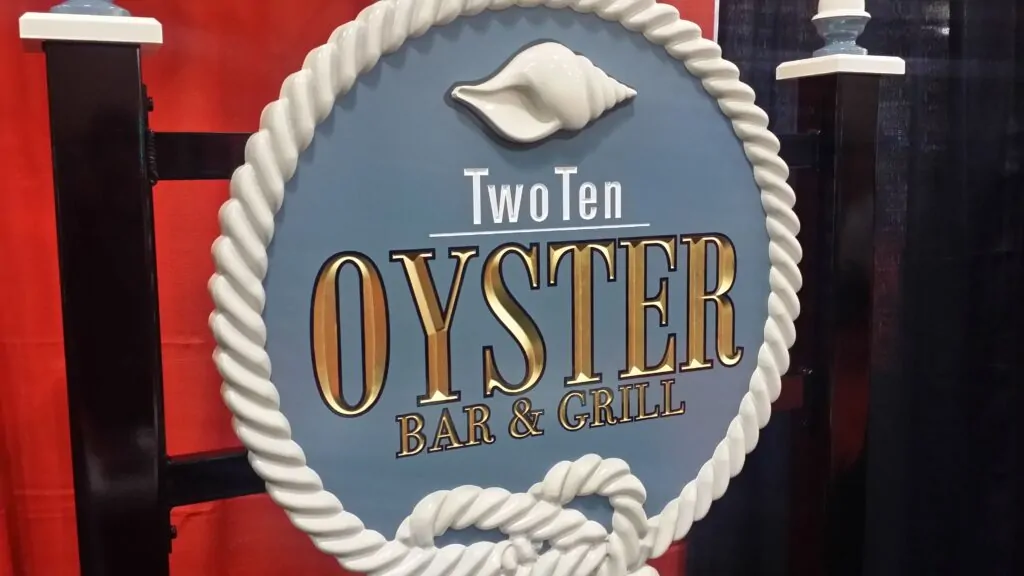
Carved Signs
A carved sign, sandblasted or router carved into wood, HDU, or a similar substrate, gives a storefront dimensional depth and a traditional, upscale look. It tends to suit businesses like law offices, spas, boutiques, and restaurants that want to signal craftsmanship rather than speed.
Carved signs read well in both modern and historic storefront settings, which makes them a common choice in districts with landmark or historic design review. See our Carved Signs page for substrate and finish options.
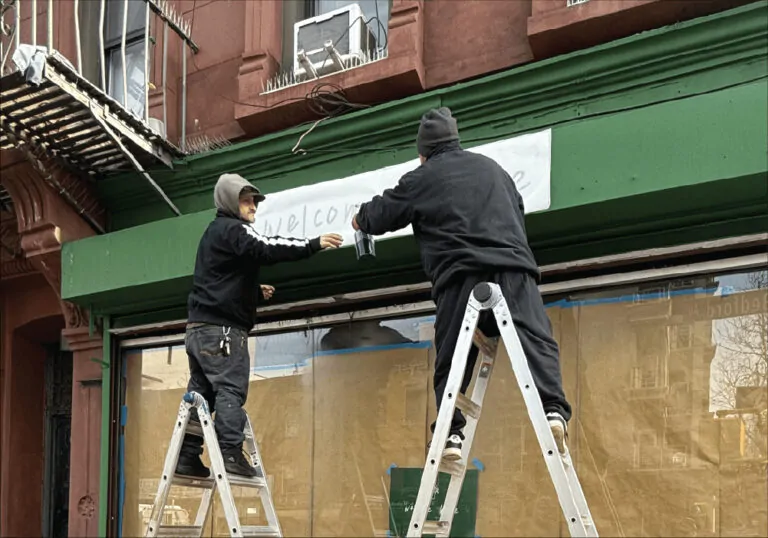
Hand Painted Signs
Hand painted signage is created directly by an artist rather than printed or fabricated from a template, which gives it a genuinely one of a kind character. Murals, custom window lettering, and heritage style storefront branding all fall into this category.
Businesses choose hand painted work specifically because it cannot be duplicated down the block, a point of difference a printed sign does not offer. See our Hand Painted Signs page for examples of past work.
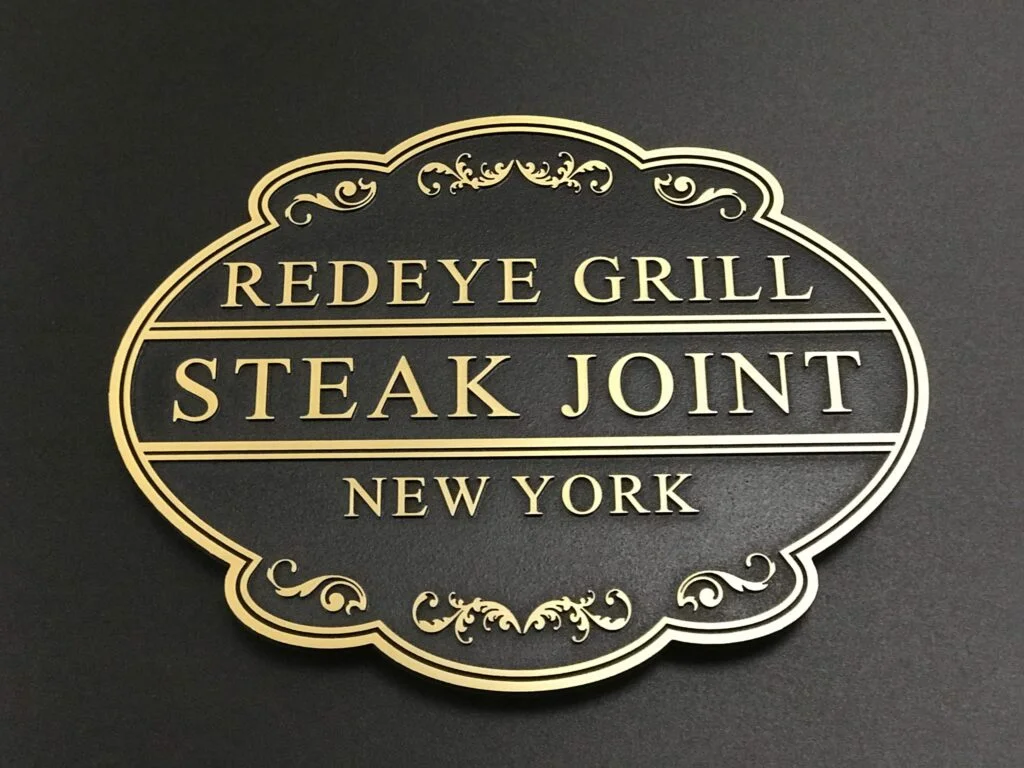
Metal Signs and Plaques
Metal signage and plaques are durable, low maintenance options most often used for professional office identification, building addresses, and directory or nameplate signage at an entrance. They hold up well outdoors with minimal upkeep.
For a retail storefront, metal signs often pair with a primary illuminated sign rather than replacing it, used for address numbers, hours plaques, or a secondary identity element. See our Metal Signs page for retail applications, and our Plaques page, part of our indoor signage line, for nameplate and directory options.
Sidewalk Signs
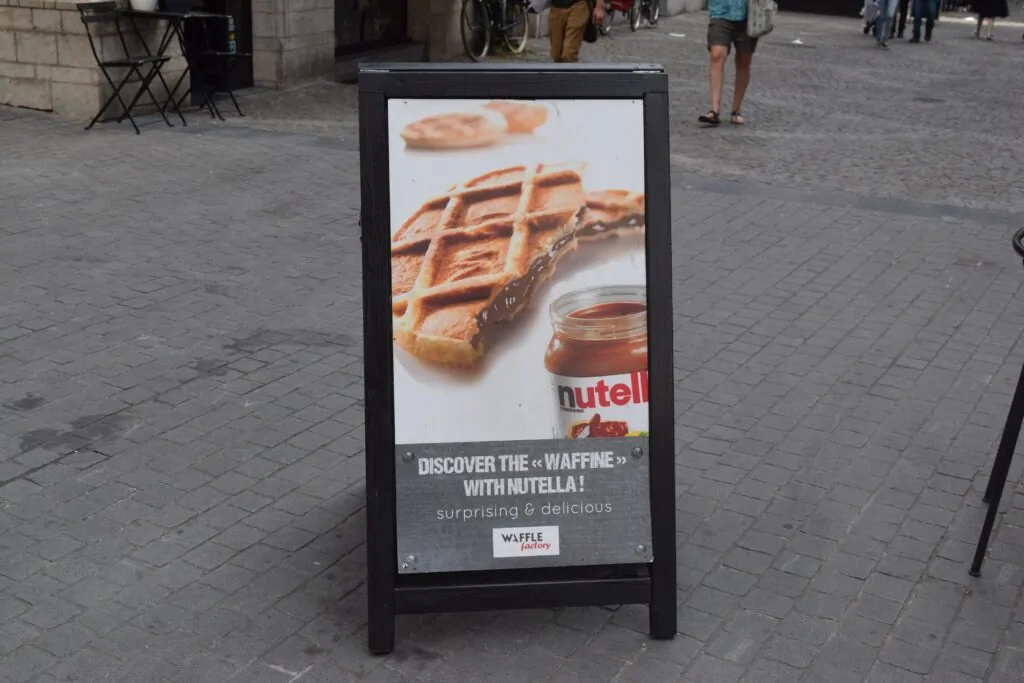
A sidewalk sign, sometimes called an A frame or sandwich board, sits outside the storefront during business hours and comes in at closing. It is the most flexible and least permanent sign on this list, which makes it well suited to daily specials, limited time promotions, or simply catching the attention of passersby who already walked past the main sign.
Sidewalk signs are a useful addition alongside a permanent sign, not usually a replacement for one. See our Sidewalk Signs page for frame and insert options.
Vestibules
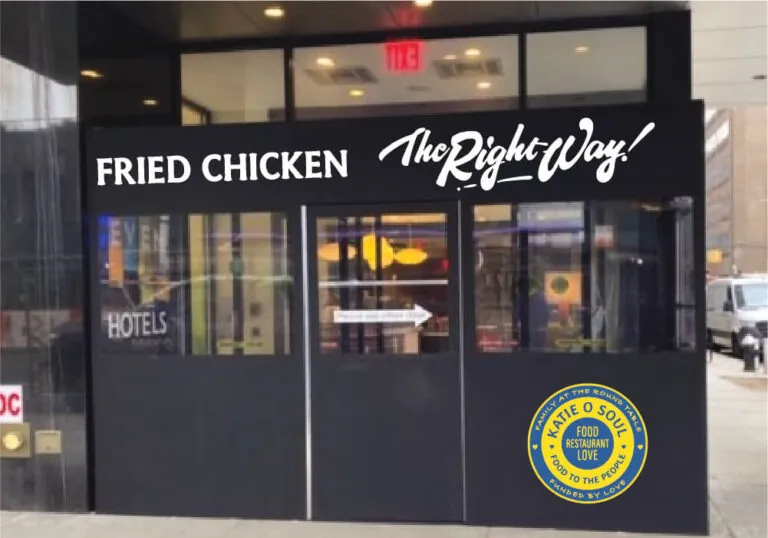
A vestibule is an enclosed entry space between the storefront door and the sales floor, used for climate control, security, or to meet a building or energy code requirement in certain locations. It also doubles as another branding surface, since the vestibule’s glass and panels can carry graphics, hours, or logo treatment.
Vestibules come up most often in colder climates and in buildings where code requires an air lock entry. See our Vestibules page for layout and graphic options.
How to Choose the Right Sign for Your Storefront
With nine sign types to choose from, narrowing the list usually comes down to six practical questions.
- Check the lease and the local code first: Before anything else, confirm what the landlord and the municipality actually allow on the building. Sign rights, size limits, and illumination rules vary by lease and by town, and in parts of New York City by landmark or historic district review.
- Think about how customers approach the storefront: A sign built for a driver glancing from a moving car is not the same sign that works for a pedestrian walking a sidewalk at close range. Match the sign type, and its height and letter size, to how people actually arrive.
- Match the sign to the brand position: A carved sign or hand painted mural signals something different than a bright light box, and a bright light box signals something different than a minimal blade sign. Choose the type that matches how the business wants to be perceived, not just what is cheapest to produce.
- Decide whether illumination matters for your hours: A business that closes before dark has different lighting needs than one that relies on evening traffic. Illuminated channel letters or a light box earn their cost differently depending on operating hours.
- Build a budget that includes more than the sign itself: Permits, electrical work, installation access, and any required engineering review all add to the project cost beyond the price of the sign structure itself. Planning for these up front avoids a surprise later.
- Get a site survey before finalizing artwork: A site survey confirms real dimensions, mounting conditions, and electrical access before final production, so the sign that gets built is the sign that actually fits the building.
See our Site Survey page for what that process includes.
Permits: What New Jersey and New York City Require
Almost every outdoor retail sign needs some form of permit or approval before installation. The process and the timeline differ by location.
In New Jersey, sign approval runs through the local municipality, not the state, so requirements vary by town. Most municipalities regulate sign size, placement, and illumination through local zoning ordinance, and some require a separate construction permit for the electrical and structural work involved in mounting a sign. Gogi Signs handles permit filing for New Jersey projects as part of the installation process, so the business owner is not navigating a separate municipal application alone.
In New York City, signage falls under the Department of Buildings, and storefronts in a historic district or in a building with landmark status face an additional design review before a sign permit is issued. Illuminated signs, projecting signs like blade signs, and signs above a certain size typically require a permit regardless of the neighborhood. Because review timelines in New York City tend to run longer than in most New Jersey municipalities, starting the permit conversation early is worth the extra lead time it buys.
- Reviewed by local municipality
- Zoning ordinance sets size and placement
- Separate construction permit for electrical work
- Gogi Signs files on your behalf
- Reviewed by Dept. of Buildings
- Landmark and historic districts add review
- Illuminated and projecting signs need permits
- Typically longer review timelines
Common Questions About Retail Storefront Signs
What is the most common sign for a retail storefront?
Channel letters and light box signs are the two most common primary signs for retail storefronts, since both offer strong visibility and illumination. Which one fits better usually comes down to budget, the look of the brand, and the sign band available on the building.
Do I need a permit for a storefront sign in New Jersey or New York City?
In almost every case, yes. New Jersey permit requirements are set by the local municipality, while New York City signage falls under the Department of Buildings, with added review in landmark or historic districts. See the permits section above for more detail.
Channel letters or light box, which is better for my storefront?
Neither is better in every situation. Channel letters give a more dimensional, premium look and read well even unlit during the day. A light box gives even illumination across the whole face and is often simpler to update later. The right choice depends on the brand, the sign band dimensions, and how important nighttime visibility is to the business.
How much does a retail storefront sign cost?
Cost depends on sign type, size, materials, illumination, mounting conditions, and permit complexity, so it varies significantly from one storefront to the next. A site survey and quote give an accurate number for a specific building rather than a general estimate that may not apply to the actual conditions involved.
Can a storefront have more than one sign?
Often yes, within the limits the lease and local code allow. Many retail storefronts combine a primary illuminated sign with a secondary element, a blade sign, a sidewalk sign, or window graphics, to cover both distance visibility and close up pedestrian attention.
How long does it take to design, permit, and install a storefront sign?
Timelines vary by location and sign type, but design, permit review, fabrication, and installation together typically take several weeks at minimum, longer in New York City or in any municipality with a slower review process. Starting the process well before an opening date or lease deadline avoids a last minute scramble.
Plan Your Storefront Signage Project
Every retail storefront is different, the building, the lease, the local code, and the brand all shape which sign type actually makes sense. The breakdown above is a starting point, not a substitute for seeing the specific building in person.
Browse our gallery to see these sign types installed on real storefronts across New Jersey and New York City, then request a free quote and we will help match the right sign, or combination of signs, to your storefront.