A sign in New Jersey or New York City has a hard life. It bakes in summer sun, freezes and thaws all winter, takes nor’easter winds and, near the coast or a salted road, gets coated in salt. The right material handles all of that for years. The wrong one warps, fades or corrodes in a season or two.
Gogi Signs builds outdoor signs for businesses across New Jersey and New York City from our Linden shop. This guide shows what our weather actually does, how long each common material is rated to last according to its maker, and which material fits which job.
In this guide
What Our Weather Does to a Sign
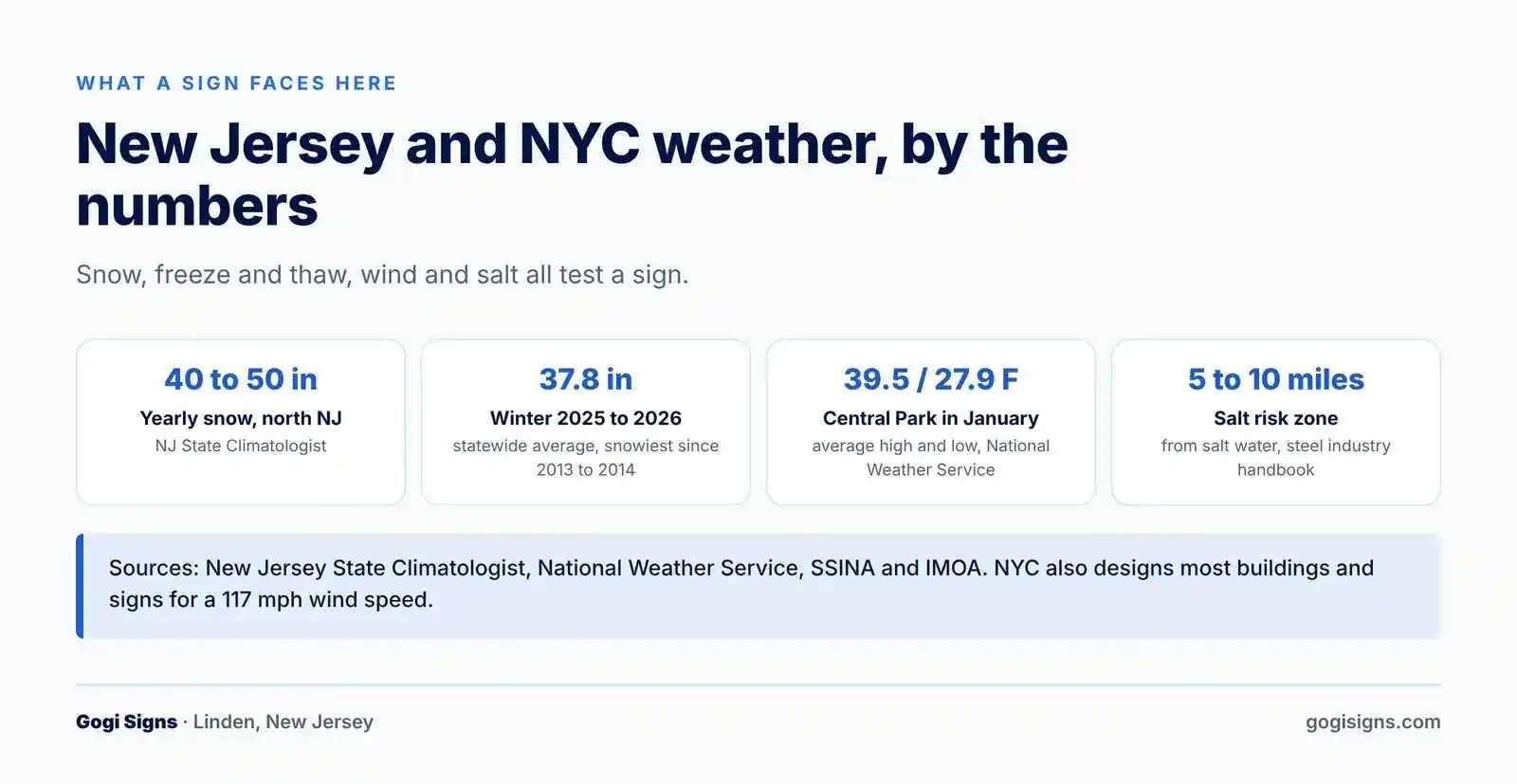
- Snow and ice. Annual snowfall averages 40 to 50 inches in northern New Jersey and 10 to 15 inches in the far south, according to the New Jersey State Climatologist. Winter 2025 to 2026 averaged 37.8 inches statewide, the snowiest since 2013 to 2014, and every station dropped below freezing on 16 days that February, according to the state climatologist’s recap.
- Freeze and thaw. In Central Park, the average January high is 39.5 degrees and the average low is 27.9, according to the National Weather Service. Days that cross freezing like that let water get into joints, freeze and expand.
- Wind. New York City’s building code sets a basic design wind speed of 117 miles per hour for most buildings, in chapter 16, and the city requires signs to be designed for that wind pressure under appendix H.
- Salt. Sites within five to ten miles of salt water are at risk of corrosion from sea salt, and de icing salt attacks metal too, according to a stainless steel handbook from the steel industry.
Outdoor Sign Materials at a Glance
| Material | Best for | What to know |
|---|---|---|
| Aluminum sheet | Panels, cabinets, letters | Does not rust, light, paints well |
| Aluminum composite | Wall panels and printed signs | Flat and stiff, two aluminum skins on a core |
| Acrylic | Lit faces, letters, plaques | Sign grades resist yellowing, needs room to expand |
| Polycarbonate | Faces where impact is a risk | Very tough, but can yellow over time |
| Cast vinyl | Graphics and lettering | Rated for many more years than calendered vinyl |
| Carved HDU | Carved and dimensional signs | Does not rot, absorbs almost no water |
| Stainless steel | Plaques, letters, hardware | Use the right grade near salt |
Aluminum Sheet
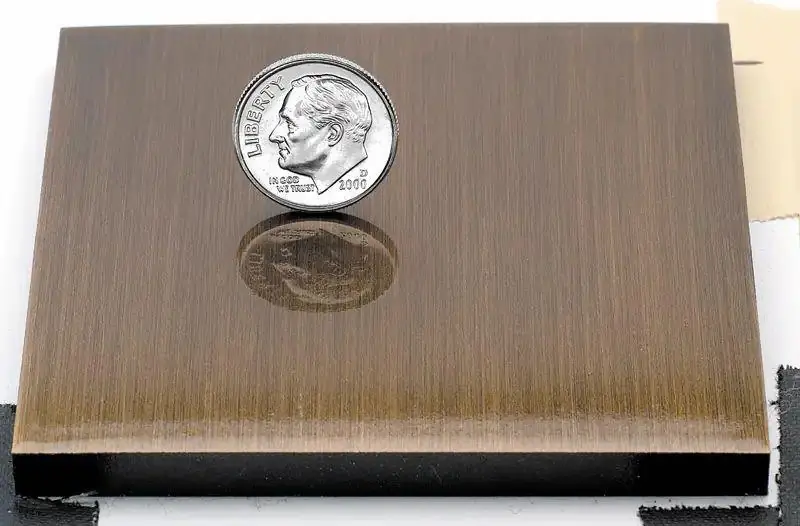
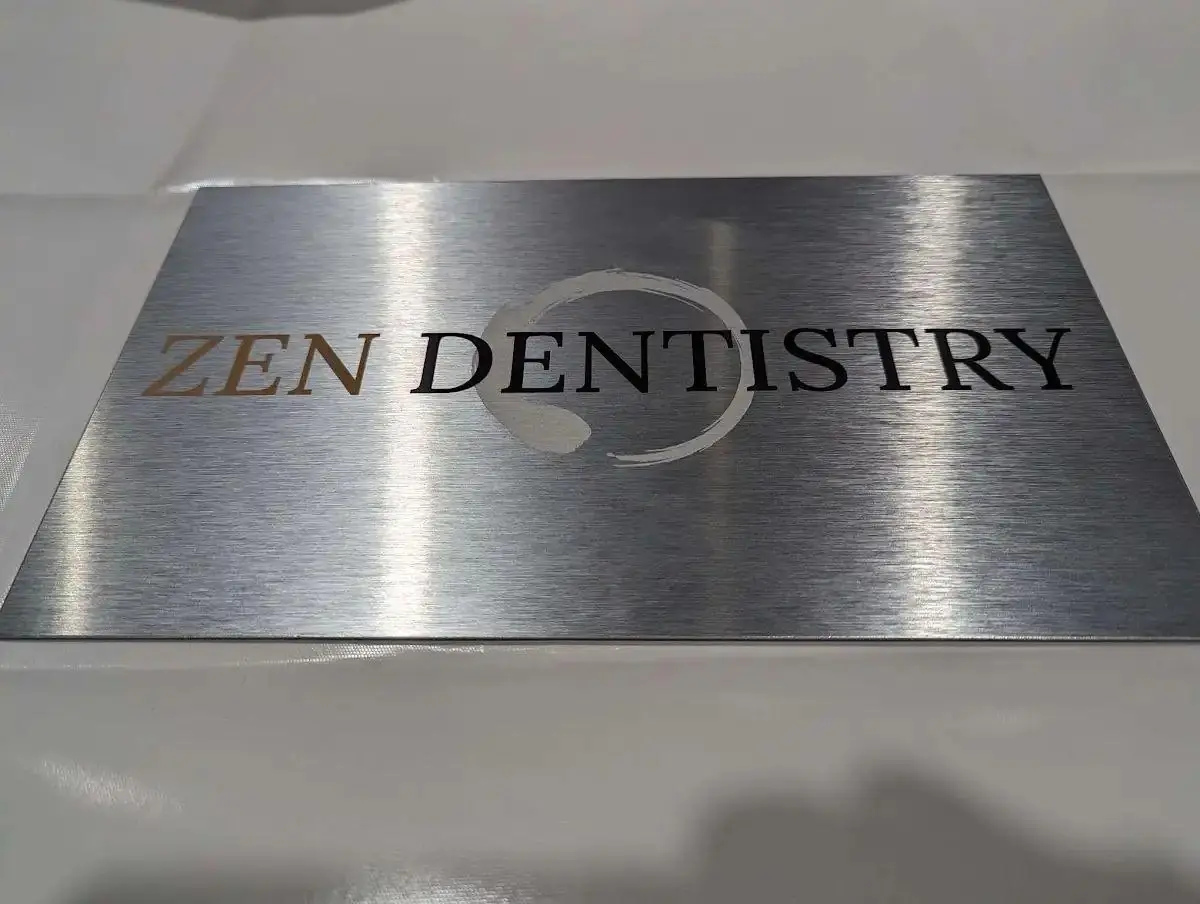
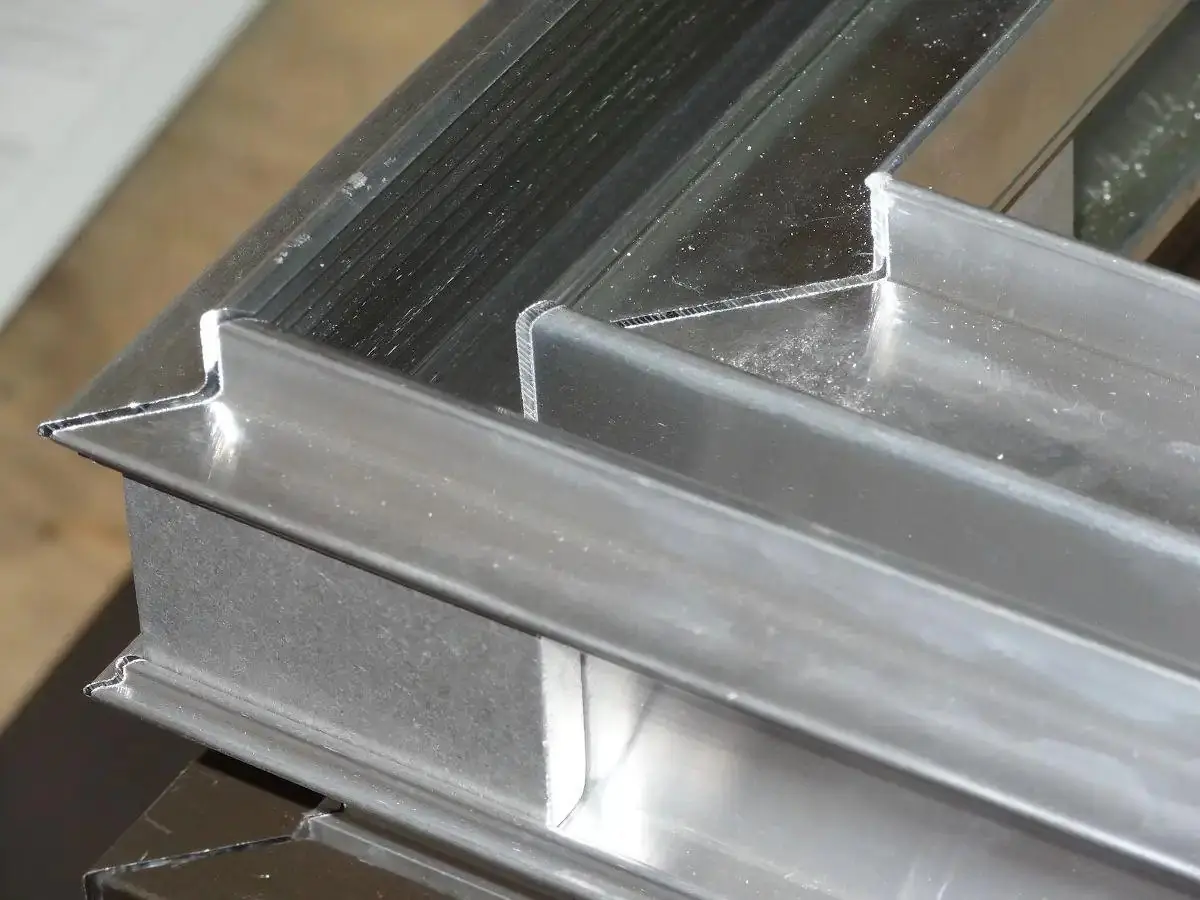
Aluminum is the backbone of most outdoor signs. It does not rust, it is light enough to mount safely, and it takes paint and vinyl well. Alloy 3003 is a popular general purpose alloy because it has moderate strength and good workability, and the 5000 series alloys add higher strength and resistance to corrosion in marine settings, according to The Aluminum Association. We use aluminum for metal signs, cabinets, returns and backer panels.
Aluminum Composite Panels
Aluminum composite, often sold as DIBOND, is two thin painted aluminum sheets bonded to a solid core. The maker describes it as the flattest panel on the market that will not bow, and lists exterior signs as a long term use, on its product page. It is our usual choice for printed wall signs and tenant panels. See our Dibond signs page.
Acrylic
Acrylic is the classic face for lit signs and the base for many letters and plaques. Some sign grades come with a 30 year warranty against yellowing, according to ACRYLITE. Acrylic also moves with temperature. A 48 inch panel expands and contracts about a quarter inch over a 100 degree swing from summer to winter, according to ACRYLITE’s technical data. That is why good fabricators leave room for movement in the frame. A face clamped too tight is the usual cause of a cracked or bowed sign.
Polycarbonate
Polycarbonate is much tougher than acrylic. Its maker lists outstanding impact strength and protection against windload and hail, on Plaskolite’s page. The trade off is color: polycarbonate faces are the most impact resistant but can yellow over time, as a Federal Heath writer notes in Retail and Restaurant Facility Business. Use it where impact is a real risk, such as low signs near a parking lot. 3M also notes that polycarbonate must be oven dried before vinyl goes on, in its 3630 film bulletin.
Vinyl Graphics and Lettering
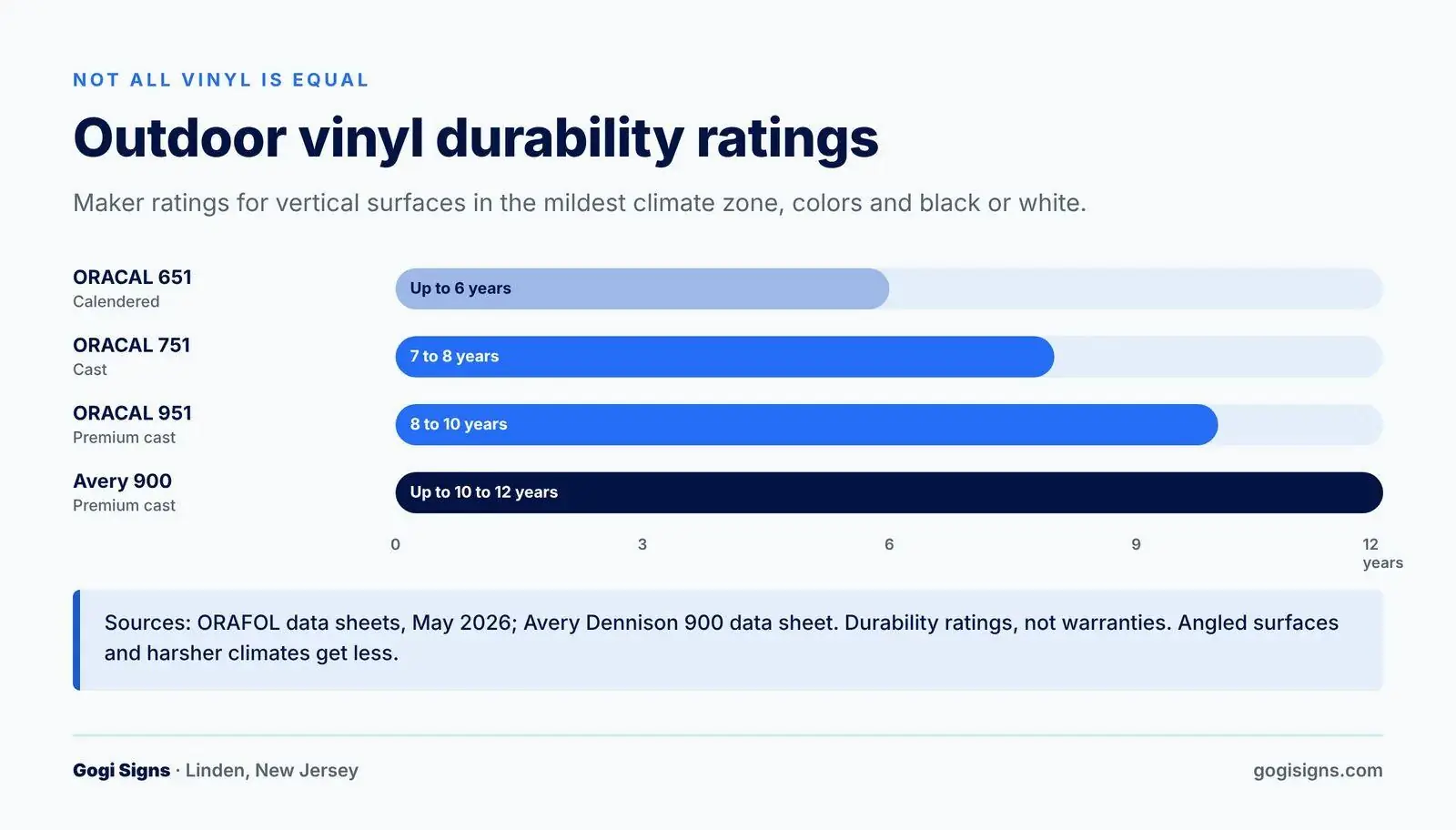
Not all vinyl is equal. ORAFOL rates its calendered ORACAL 651 for up to 6 years, its cast ORACAL 751 for 7 to 8 years and its premium cast ORACAL 951 for 8 to 10 years, all on vertical surfaces in its mildest climate zone. Avery Dennison rates its 900 Supercast for up to 10 to 12 years, and states plainly that the durability figure is not a warranty.
Lit faces need translucent film, and the ratings drop in harsher climates. ORAFOL’s 8800 translucent film is rated 8 years for colors in its mildest zone and less in harsher ones. Horizontal or angled surfaces get less life than vertical ones. For a permanent sign, we use cast vinyl. Pixel Wraps, our sister graphics shop, explains the same cast vs calendered choice in how to choose vehicle wrap vinyl.
Carved HDU and Hand Painted Signs
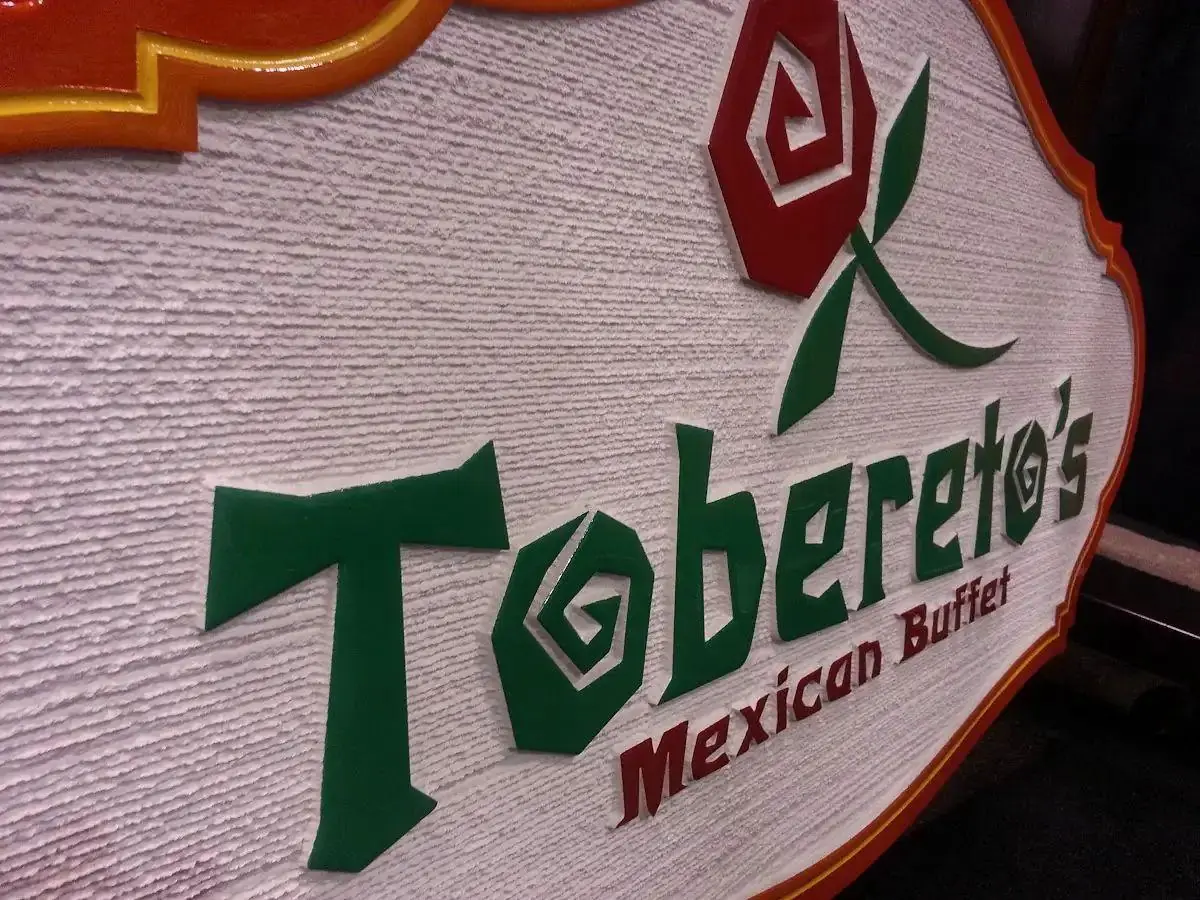
High density urethane, or HDU, is the modern material for carved signs. It carves like wood but does not rot. One maker’s data sheet lists water absorption of just 0.02 percent by volume and says it does not support mold growth, in the Precision Board data sheet. With a good primer and exterior paint, it lasts outdoors far longer than wood. Hand painted signs on masonry work too. Our sister shop in New York shows a large New Jersey example in painting 600 square feet of brick by hand.
Stainless Steel and Hardware Near Salt
Fasteners and brackets fail before the sign does if the metal is wrong. Type 316 stainless is preferred for most coastal uses because it contains molybdenum, and type 304 will corrode if exposed to de icing salt, according to the SSINA and IMOA handbook. On the Shore, along the Hudson and near salted roads, we specify 316 hardware and stainless plaques, and plan a wash after salt season.
What Does Not Belong Outdoors
Foam board, paper and indoor PVC grades warp, swell or fade quickly outside. Corrugated plastic is fine for short term signs but often lasts only 6 to 12 months. If a sign needs to last more than a season, build it from aluminum, acrylic, HDU or composite. Our guide on temporary vs permanent business signage explains where short term materials fit.
Weight and Wind in New York City
In New York City, signs over 75 square feet or 25 pounds must be hung by or under a licensed sign hanger, according to the Department of Buildings, and every sign must be designed for wind pressure. Lighter materials, such as aluminum and composite, can keep a sign under those limits or make the mounting simpler.
How to Choose the Right Material
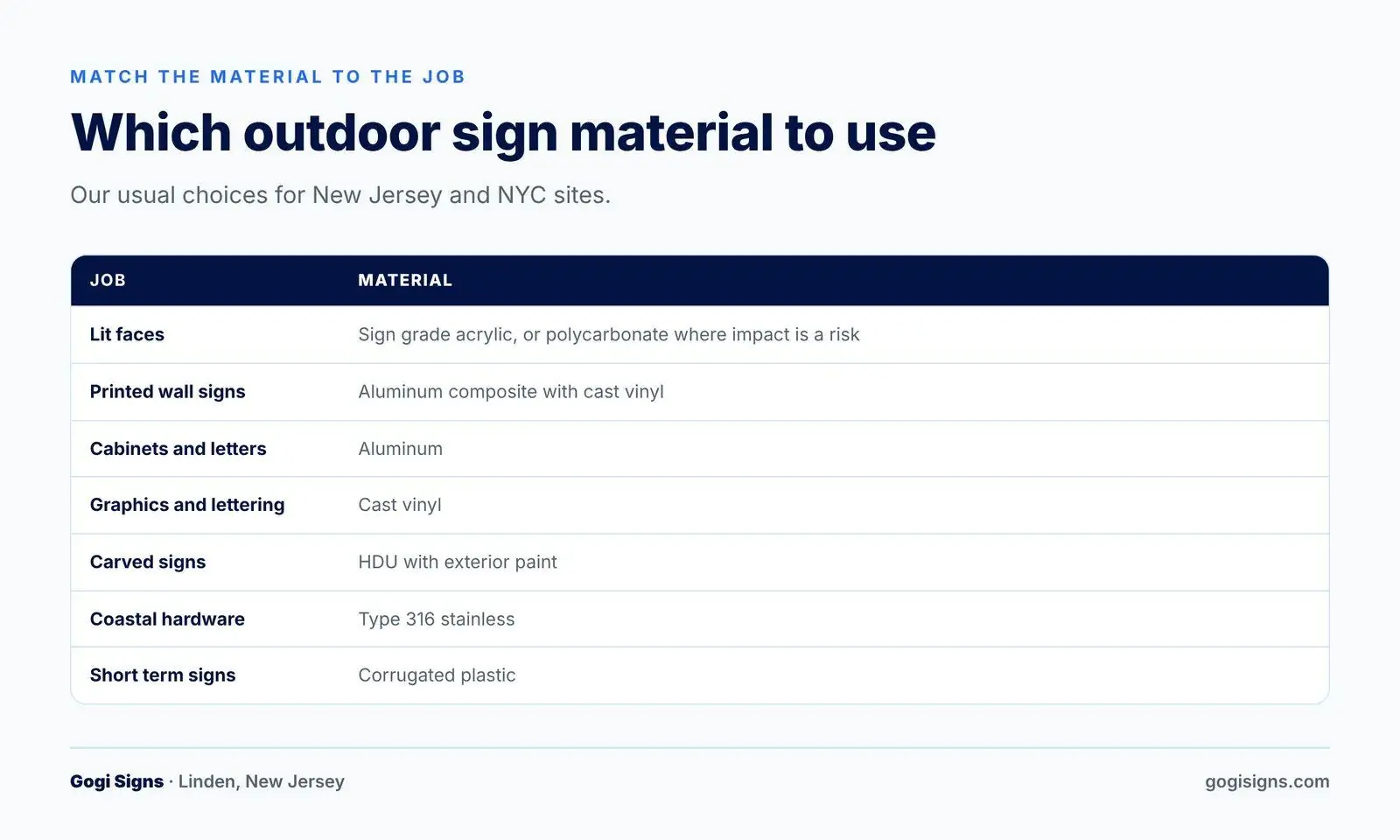
- How long must it last? Months or years decides short term vs permanent materials.
- Is it lit? Lit faces need sign grade acrylic or polycarbonate and translucent film.
- How close is salt? Near the coast or a salted road, use 316 stainless and plan washing.
- What is the look? Carved, painted, brushed metal or printed.
- Does weight matter? In NYC, staying under 75 square feet and 25 pounds avoids a licensed sign hanger.
Our guides on how long commercial signs last and how to maintain outdoor business signs cover what happens after installation.
Common Questions About Outdoor Sign Materials
What is the most durable outdoor sign material?
For most signs, aluminum or aluminum composite with cast vinyl or paint. Sign grade acrylic faces with a yellowing warranty, carved HDU and 316 stainless steel also last many years outdoors.
How long does sign vinyl last outside?
It depends on the grade. Calendered ORACAL 651 is rated up to 6 years, while cast films such as ORACAL 951 and Avery 900 are rated 8 to 12 years on vertical surfaces in mild climates. These are ratings, not warranties.
Is acrylic or polycarbonate better for a sign face?
Acrylic stays clearer and some grades carry a 30 year yellowing warranty. Polycarbonate is far tougher but can yellow over time, so use it where impact is a real risk.
Why did my outdoor sign warp?
Usually the wrong material, such as indoor PVC or foam board, or an acrylic face clamped too tight. Acrylic moves about a quarter inch on a 48 inch panel between summer and winter.
What stainless steel should I use near the ocean?
Type 316, which contains molybdenum. Type 304 can corrode near salt water and from de icing salt.
Can PVC signs be used outside in New Jersey?
Exterior grade PVC can work for small signs out of direct sun, but it softens in heat and is not our first choice for permanent outdoor signs. Aluminum composite is usually better.
Outdoor Signs Built for This Climate
We choose every material for the site, from the alloy to the screws. See our outdoor signs, then request a free quote.
Sources and further reading