Vehicle & Truck Lettering
Truck Lettering in New Jersey
Custom cut vinyl lettering, logos, USDOT numbers and commercial vehicle identification: professionally produced and installed by Gogi Signs.
Professional installation
Aligned and applied by our team
Often same day
Once artwork is settled
DOT & MC numbers
Sized and placed correctly
Linden, NJ
Or on site at your yard
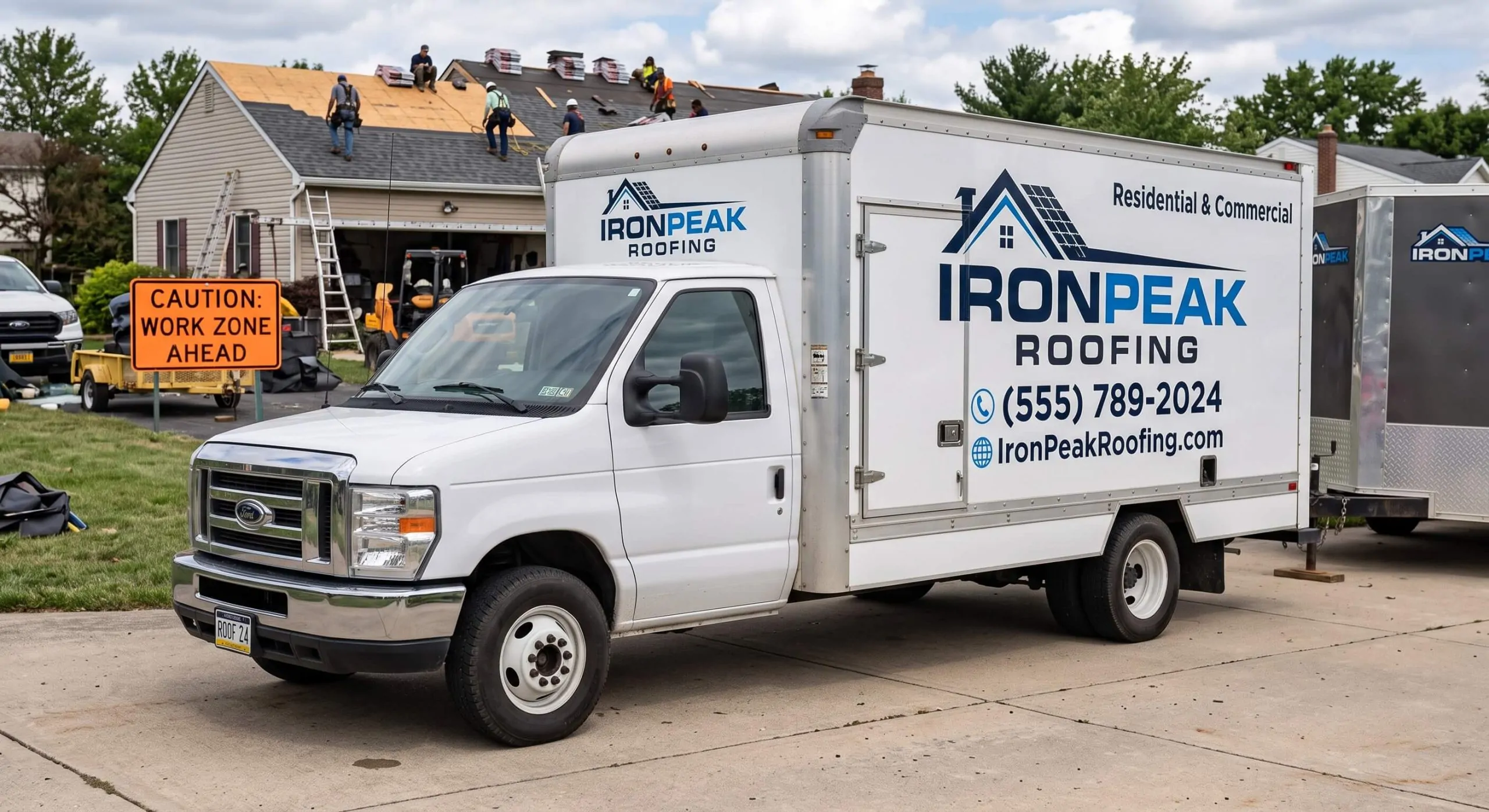
What it is
Professional Cut Vinyl Lettering for Commercial Vehicles
Vehicle lettering is individual letters and shapes cut from a single sheet of colored vinyl, weeded by hand, carried on transfer tape and laid onto your paint. There is no background and no printed panel: the body color of the vehicle shows through between the letters, so a lettered van still looks like a van rather than a billboard.
Lettering uses the same professional vinyl material family as vehicle wraps but requires less coverage. It is an efficient way to add business identification, services, contact details and required numbers while keeping the factory paint visible. Many approved lettering jobs can be installed within one working day.
Trucks, vans, trailers, pickups, box bodies and tractor cabs all take lettering the same way. What varies is how much goes on, where it sits, and which of it you are legally required to carry.
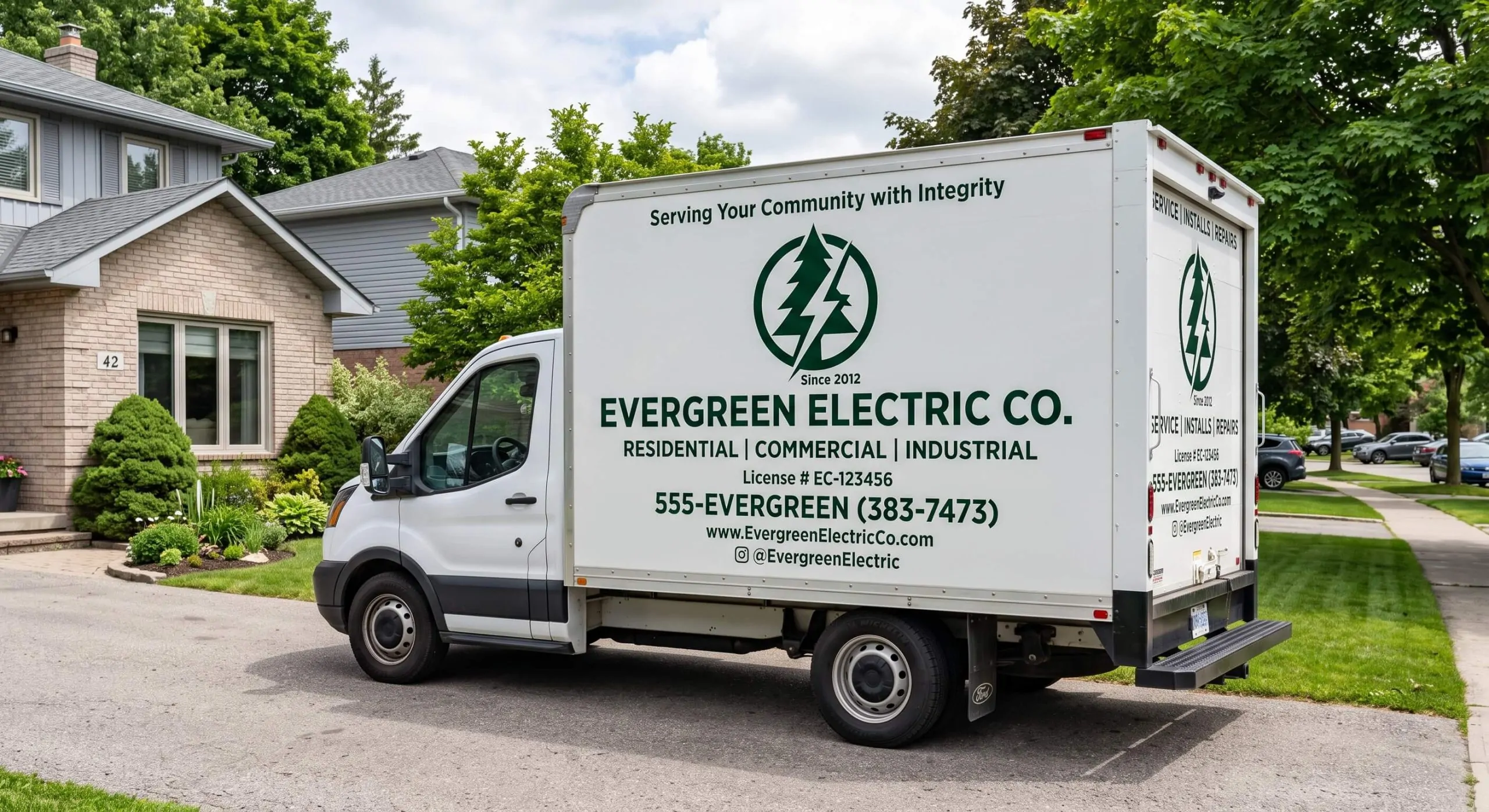
Professional installation
Measured, Produced and Installed by Gogi Signs
Correct sizing and placement are as important as the vinyl itself. We prepare the layout for the actual doors and panels, then install it with consistent alignment, spacing and adhesion.
Layout and preparation
Planned for the actual vehicle
We size and position the lettering against the vehicle's real doors, panels, handles, hinges and body contours before anything is cut.
- Body-specific placement rather than a generic panel diagram
- Readable scale, spacing and contrast checked in the proof
- Required numbers incorporated into the layout from the start
- Old adhesive and surface condition reviewed before installation
- Materials selected for paint, glass or the existing wrap surface
- Approved files retained for future vehicles and replacements
In-house execution
Produced and installed by one team
Gogi Signs completes cutting, weeding, masking, surface preparation and installation through our Linden facility.
- More than 20 years of commercial sign and graphics experience
- 10,000-square-foot production facility in Linden, New Jersey
- 3M-certified installers and professional surface preparation
- 3M, Avery Dennison, ORAFOL and VinylFrog material options
- Shop installation for controlled conditions and efficient turnaround
- Approved on-site scheduling for fleets and working vehicles
What goes on
What Information Should Vehicle Lettering Include?
Effective commercial lettering gives priority to the information a potential customer or inspector needs to identify quickly.
A practical information hierarchy. Most layouts begin with the following elements, adjusted for the business and vehicle.
- Trade, not name : Plumbing. Electrical. Landscaping. A stranger needs to know what you do before they care who you are.
- Phone number, oversized : Bigger than feels comfortable on screen. It is the only element anyone will act on from a moving car.
- Company name : Sized to be read, not to dominate.
- License or certification number : On a home-services vehicle this closes more work than a tagline ever will.
What to leave off. Full service lists, addresses, mission statements, social icons and a website that only exists to show the phone number again. Every one of them shrinks everything else, and none of them is read at distance.
Where it goes matters as much as what it says. Doors are the obvious place and rarely the most valuable one.
- Rear doors carry the most weight : That panel sits in front of stationary traffic at every light, at reading distance.
- Cab doors are for identification : Name, license and DOT numbers. It is what someone reads walking up to the vehicle.
- Keep clear of the shut lines : A word split across a door gap looks like a mistake even when it is not.
- Watch the swage lines : Letters bridging a pressed channel will lift at the edges within a season.
- Rear glass is optional : Cut vinyl works on glass, and so does perforated film if you want more coverage.
Contrast decides legibility, not size. Dark vinyl on a white van reads from three lanes away. The same letters in mid-gray on silver disappear at fifty feet regardless of how big they are.
Our work
Vehicle and Truck Lettering We Have Fitted
Cab doors, rear panels and compliance markings from around New Jersey.
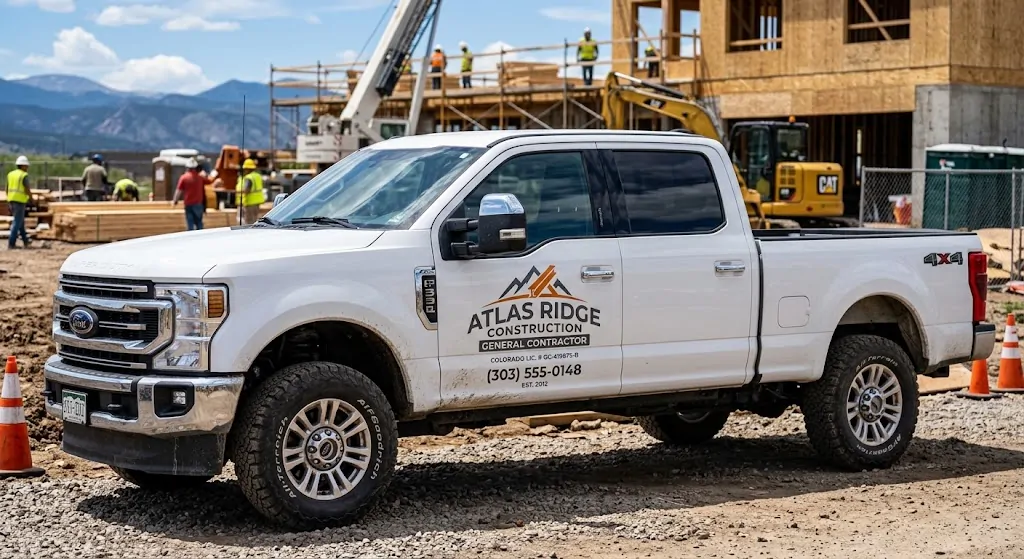
Cab door set
Name, trade and license on factory paint
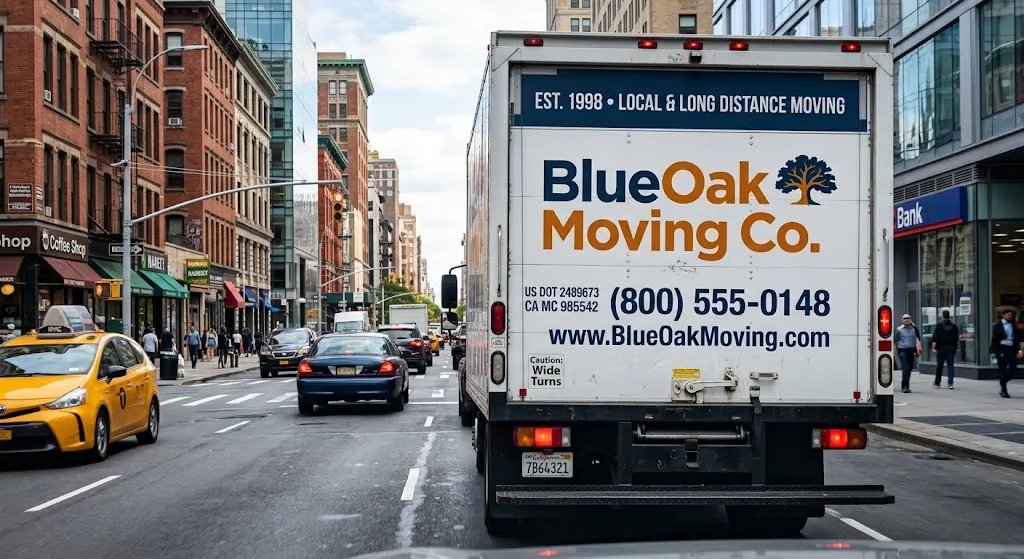
Rear panel
The panel stationary traffic actually reads

Compliance markings
Sized and placed to the regulations
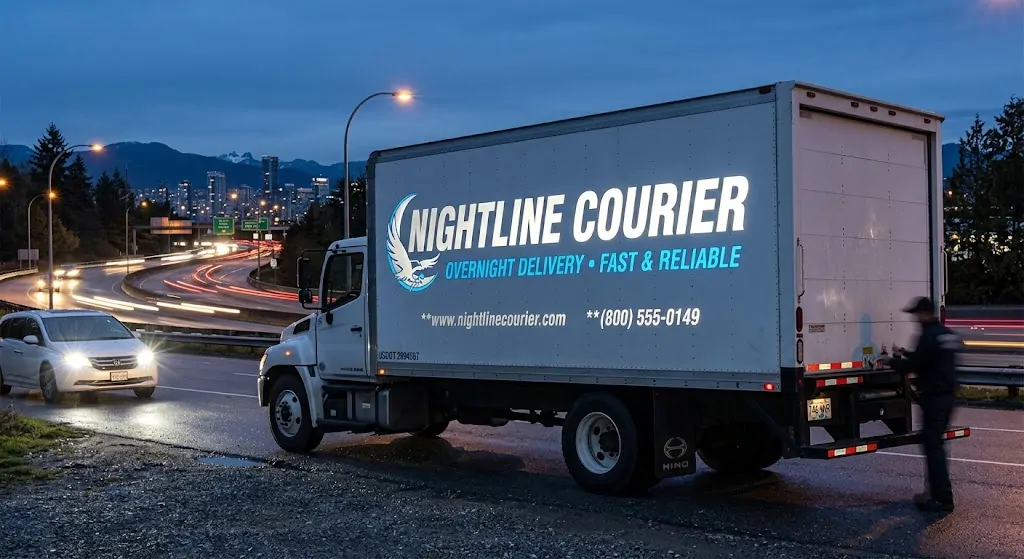
Reflective vinyl
Invisible by day, lit up by headlights
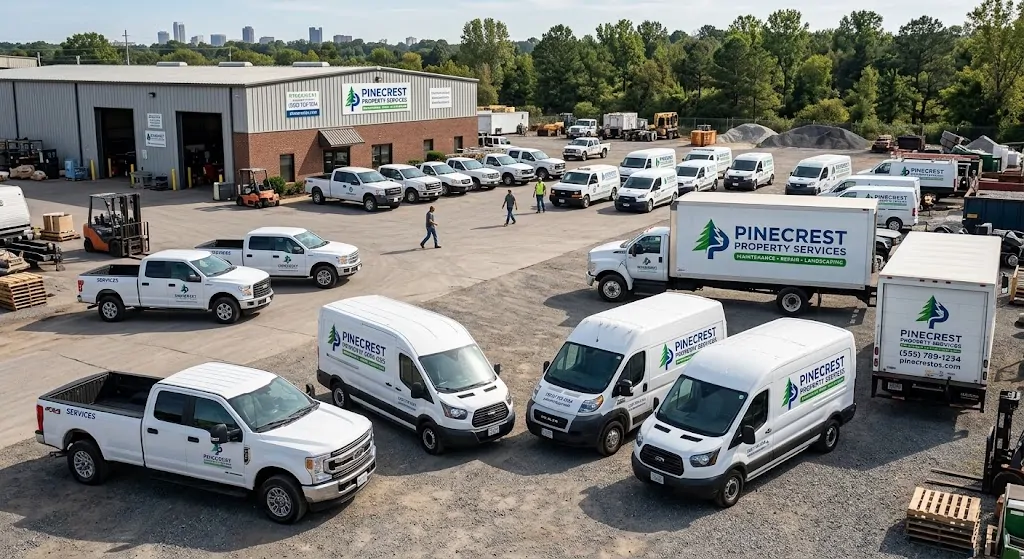
Matched across a yard
One layout applied consistently to a mixed fleet
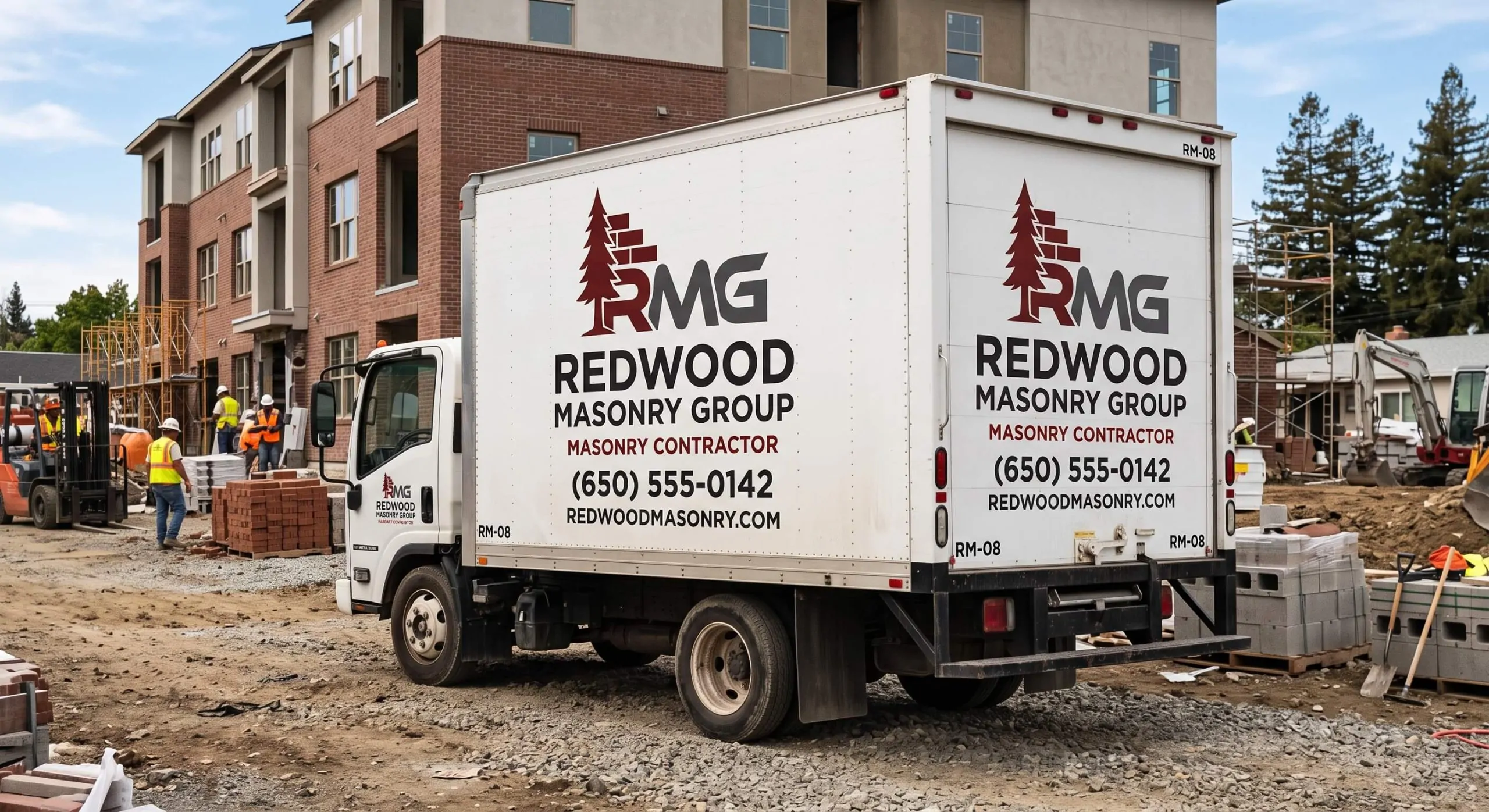
Applied in the bay
Positioned, squeegeed and the tape lifted by us
Compliance
USDOT, MC and License Markings
This is the reason a lot of commercial vehicles get lettered at all, and it has rules that a text box on a print shop’s website will not enforce for you.
Legible from fifty feet, in daylight, while stationary
That is the standard federal motor carrier regulations set for a USDOT number on a commercial vehicle, and it is a lower bar than most people assume, but it is a bar. The marking has to contrast against its background, stay legible, and appear on both sides of the vehicle.
What causes trouble is not the size. It is placement on a panel that curves or carries a seam, contrast against a mid-tone body color, and numbers stuck over a wrap afterwards where they were never planned for.
We lay these in first as fixed content and cut them in a color that will still contrast in five years. If your operating authority changes, they come off and get replaced without disturbing anything around them.
Markings we cut and fit
- USDOT number : Both sides, legible at distance, contrasting with the body.
- MC or docket number : Where your operating authority requires it alongside the DOT number.
- Company name as registered : Matching the name the authority is held in, which is not always the trading name.
- Unit and fleet numbers : Yard identification, usually cab door and rear.
- State and trade license numbers : Contractor, plumbing, electrical, HVAC and home improvement registrations.
- GVWR and capacity markings : Where the body or the operation calls for them.
Requirements depend on what you haul, where you operate and under whose authority. We cut what your operation needs, confirming which markings apply to you is between you and your compliance advisor.
Materials
Vinyl Finishes for Vehicle Lettering
Same cutting process, different material. What you pick changes cost, lifespan and how the vehicle reads at night.
Standard cut vinyl
Solid color, matte or gloss, in a wide color range. What the great majority of commercial lettering is, and the benchmark everything else is priced against.
White and light on dark
The strongest contrast available on a dark or metallic body, and the reason most black vans end up lettered in white rather than a brand color.
Reflective
Reads as a flat color by day and lights up under headlights at night. Worth it on anything parked roadside after dark or working near traffic.
Metallic and chrome
Brushed, gold and chrome-effect finishes for a premium look. More expensive per square foot and less forgiving on a textured or aged panel.
Magnetic panels
Removable, and genuinely useful on a personal vehicle used for work. Not a substitute for applied lettering at highway speed: see the FAQ below.
Etched glass effect
Frosted vinyl for glass panels and rear windows. Common on service vehicles that want a discreet finish rather than a loud one.
Lettering or a wrap
Vehicle Lettering, Partial Graphics or a Full Wrap?
Coverage should be selected according to the message, factory color, budget and visibility goal rather than assuming every vehicle needs a full wrap.
Lettering is the right call when
- The vehicle is white or light, so the paint can act as the background
- You need it legal and legible rather than memorable
- The budget has to cover several vehicles rather than one
- The van is leased short-term or due for replacement
- You park at buildings or in neighborhoods where loud is the wrong note
- Compliance markings are the actual reason you are here
It costs a fraction of a wrap, fits in a fraction of the time, and on the right vehicle it does not look like the cheap option.
A wrap earns its money when
- The paint is dark, metallic or tired, and lettering would fight it
- You want photography, gradients or imagery that requires full-color printing
- The vehicle is customer-facing and the brand has to carry it
- The body is a large flat panel: a box truck or a trailer side
- You want the paint underneath shielded from UV for the life of the film
Partial wraps sit between the two: printed panels low with cut lettering above.
Cost
What Does Vehicle Lettering Cost?
A cost-effective commercial branding option
$350 to $1,500+
This planning range covers many common commercial lettering projects. Final pricing depends on panel count, artwork preparation, vinyl type, removal needs, installation location and the number of vehicles.
- What moves the number
- How many panels : Two cab doors is a small job. Both sides, rear and a tailgate is a different one.
- How much text : Every additional line is more cutting, more weeding and more positioning.
- Material : Standard vinyl is the benchmark. Reflective, metallic and chrome cost more per square foot.
- Artwork state : Vector logos cut straight away. Anything else gets redrawn as cut-ready paths first.
- Old lettering : Previous vinyl and its adhesive come off before new goes on.
- Where we fit it : Our Linden bay is quickest. On-site is priced per visit.
- How many vehicles : One layout applied across a yard costs far less per vehicle than one-offs.
Across a yard
Consistent Lettering for Mixed Commercial Fleets
Not every vehicle in a mixed fleet requires the same level of coverage. A controlled lettering system can carry the same logo, typography, colors and identification standards across vans, pickups, trucks and trailers while reserving full wraps for selected vehicles.
- One layout drawn once and re-cut to each body
- Consistent placement across different makes and door shapes
- Vehicles added later cut from the same file and matched
- See Fleet Graphics
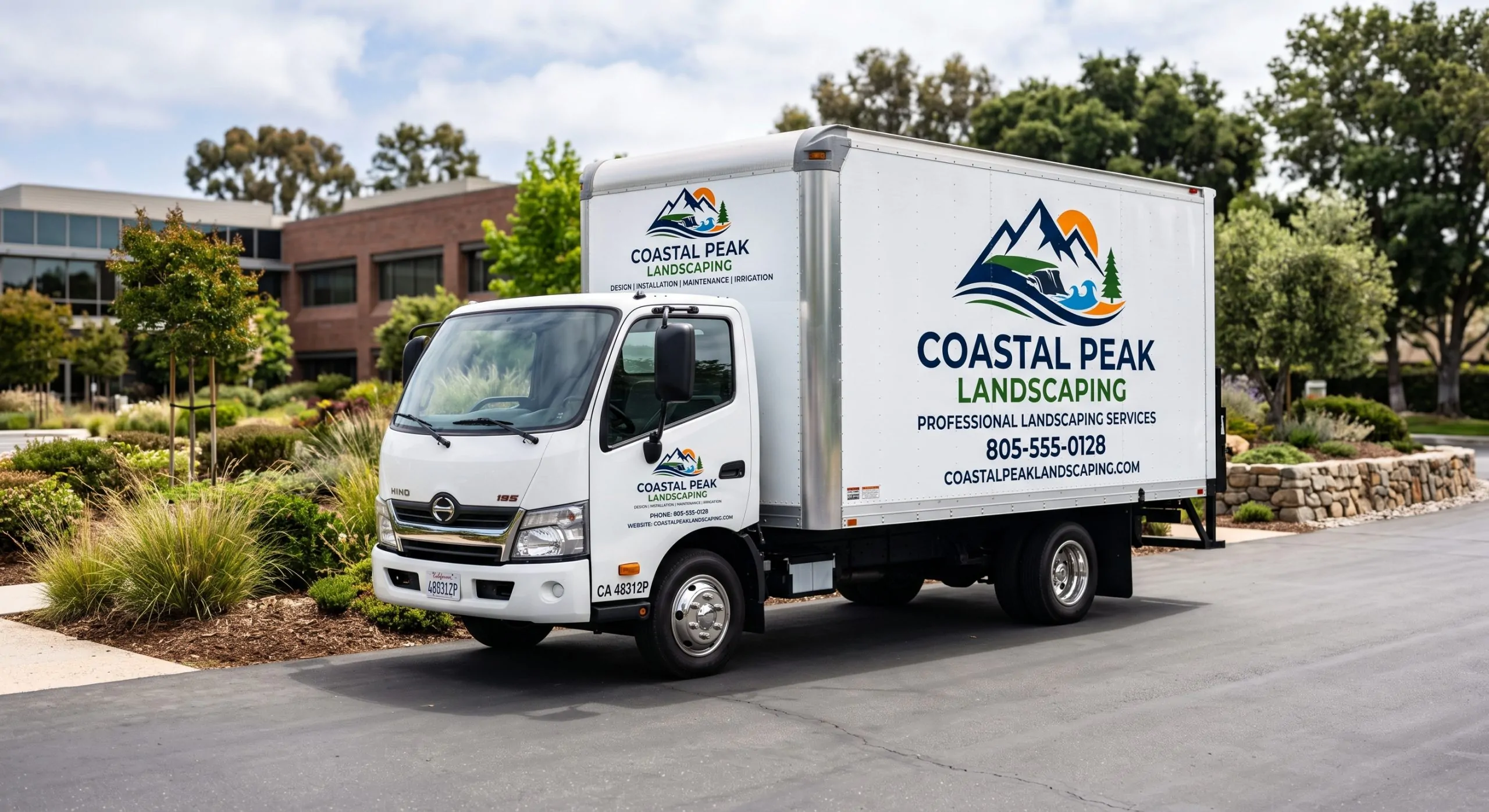
Where we work
Truck and Vehicle Lettering Near You in New Jersey
Our shop is at 7 W Baltimore Ave, Suite B, Linden, NJ. Lettering is the job that most rewards being close: it is usually a single short visit, and there is no version of it that works well by mail.
Bring the vehicle in and most jobs are done and away the same day once the layout is agreed. Where a vehicle cannot be spared, or where a yard has several to do at once, the crew comes out instead and works through them on site.
We cover New Jersey and the wider tri-state area including New York City.
Service area & quotes
Request a Truck or Vehicle Lettering Quote
Send the text you want exactly as it should appear, spelling, punctuation and any license or DOT numbers. Lettering is cut from that text literally, so a typo agreed at proof stage is a typo on the vehicle.
If there is old lettering on the panel already, mark it. Removing previous vinyl and its adhesive is its own step before anything new goes on.
Where we work most
OUR SHOP
7 W Baltimore Ave Suite B, Linden, NJ 07036, United States
Prefer to talk it through?
Get a Vehicle Lettering Quote
The more you fill in, the closer the first number is.
- Cut and fitted by us
- Often same day
- DOT numbers done right
- Wrapping vehicles since 2005
Material guides: magnetic sheeting guide.
FAQs
Frequently Asked Questions About Vehicle Lettering
Plenty of people do, and on a flat panel in good weather with careful preparation it can come out fine. What goes wrong is position judged from a diagram rather than the vehicle, a panel that was not de-waxed, application in the cold, and a misaligned letter that becomes a re-order at your cost. We do the part that decides how it looks, and we own the result.
Many commercial vehicle lettering projects fall between $350 and $1,500, although larger layouts and specialty films can cost more. Panel count, text volume, artwork preparation, material, removal and installation location determine the final quote.
On a personal vehicle used for work, magnets have a real place: they come off when you want the car back. On a working commercial vehicle they are a compromise: they can lift at highway speed, they trap moisture against the paint, and a panel left on for months can mark the finish underneath. We supply them, and we will tell you honestly when applied lettering is the better answer.
Yes, where the paint is sound. Vinyl lifts with heat and the adhesive comes with it. The exception is a panel that was already failing, and a very old set can leave adhesive that needs working off, which is part of why removing previous lettering is quoted as its own step.
Longer than most people expect, because there is far less material on the panel than a wrap and nothing bridging a seam. Washing habits matter more than age: hand washing and keeping a pressure washer off the edges is most of it. We tell you what the vinyl going on yours is rated for.
Often the same day once the layout is agreed. The cutting is fast; what takes the time is settling the wording and the proof. Send the text exactly as it should read and that stage shortens considerably.
Yes, and we lay them into the layout first as fixed content rather than fitting them around the design. They need to contrast with the body and stay legible at distance, which is mostly a matter of color choice against your paint. Confirming which markings your operation requires is between you and your compliance advisor: we cut what you need.
Yes. Adding a phone number, a new license number or updated DOT details to a wrapped vehicle is routine, and it is far cheaper than reprinting a panel. The vinyl goes onto the laminate rather than the paint and lifts off the same way.
It gets redrawn. Lettering is cut along paths, so a photograph or a low-resolution image cannot be cut from at all, unlike printing, where a poor file just looks soft. The studio rebuilds the mark as cut-ready artwork first.
Cut vinyl works on glass, and so does frosted etched-effect vinyl if you want something more discreet. For larger coverage across a rear window, perforated film lets a graphic sit on the glass while the driver still sees out.
Where a vehicle cannot be spared, or a yard has several to work through at once, yes. The bay is quicker for a single vehicle, and temperature matters for adhesion, so on a cold week we would rather have the vehicle indoors.
That is one of the main things lettering is for. One layout is drawn once and re-cut to each body, so a yard of different makes and door shapes still reads as one business, and anything added later is cut from the same file. See fleet graphics.