A safety sign has one job, to be understood in a second by someone who is busy and not looking for it.
Custom safety signs warn people about a hazard in words and symbols they can take in at a glance. Getting them right matters for two reasons: a clear sign prevents injuries, and in workplaces covered by OSHA, the design of accident prevention signs is regulated.
Off the shelf safety signs cover common hazards, but many sites need custom signs that name the specific hazard, the specific protective equipment, or the site’s own rules and contact details. This guide explains how to choose them so they are compliant, durable and actually read.
Start With the Standards
OSHA’s general industry rule for accident prevention signs is 29 CFR 1910.145, and the construction equivalent is 1926.200. These rules set the meaning of danger, caution and safety instruction signs and the colors each uses. In 2013 OSHA updated both rules to recognize signs designed to the ANSI Z535 series, which most modern safety signs now follow.
ANSI Z535.2 is the standard for environmental and facility safety signs. It defines the signal words, colors, symbols and layout that make a sign consistent with what workers see everywhere else, and it is the practical template for most custom safety signs.
Choose the Right Signal Word
The signal word tells people how serious the hazard is. Using the wrong one, or using DANGER for everything, teaches people to ignore the signs.
| Signal word | Header color | Use it for |
|---|---|---|
| DANGER | Red | A hazard that will cause death or serious injury if not avoided |
| WARNING | Orange | A hazard that could cause death or serious injury |
| CAUTION | Yellow | A hazard that could cause minor or moderate injury |
| NOTICE | Blue | Information about property damage or procedures, not personal injury |
| SAFETY INSTRUCTIONS | Green | Safe practices, first aid, emergency equipment locations |
Reserve DANGER for the most serious hazards. A site covered in red DANGER signs for minor risks dilutes the warning for the one hazard that truly needs it.

Use Symbols People Recognize
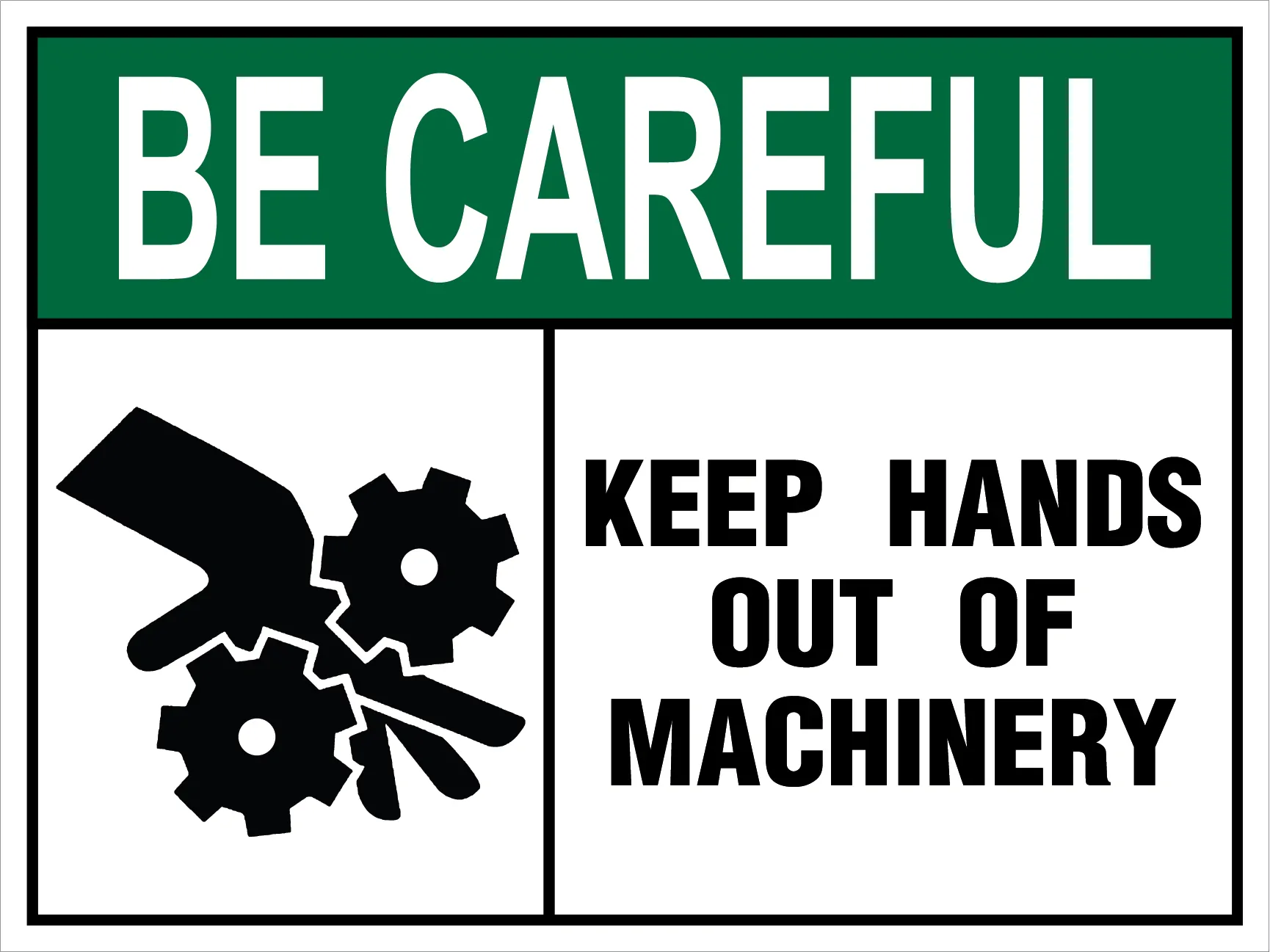
A well chosen pictogram communicates faster than words and works for people who do not read the language on the sign. Use standard symbols, such as the hard hat, ear protection or hand in gears, rather than inventing new ones. ISO 7010 symbols are widely recognized and pair well with ANSI layouts.
Combine the symbol with a short message. “Hard Hats Required Beyond This Point” is clearer than “Use Appropriate PPE”.
Write a Message That Can Be Read in Seconds
Effective safety sign messages follow a simple pattern:
- Name the hazard: what it is, such as “High Voltage” or “Forklift Traffic”.
- State the consequence: what could happen, if it is not obvious.
- Tell people what to do: “Keep Out”, “Wear Eye Protection”, “Authorized Personnel Only”.
Keep the wording short and specific to the site. A custom sign that says “Crane Overhead, Stay Clear of Barricaded Area” is far more useful than a generic “Caution” sign.
Pick Materials for the Location
- Aluminum: durable and rust free, the standard for outdoor and long term signs.
- Rigid plastic or PVC: suits indoor signs and moderate conditions.
- Corrugated plastic: light and low cost for temporary job site signs.
- Vinyl decals: for marking machines, panels and equipment.
- Reflective sheeting: for signs that must be seen in low light or by vehicle headlights.
Outdoor signs face sun, rain and cold, so use UV resistant printing and lamination to keep the colors from fading, since a faded red DANGER header loses its meaning. See our Site Safety Signs page for material options.
Place Signs Where People Will See Them
A safety sign only works if it is seen before the hazard. Mount signs at eye level where possible, at the entry to the hazard area rather than inside it, and far enough ahead for someone to react. Keep them clear of stored materials, doors that swing over them, and clutter.
Exit signs are covered by the building and fire codes rather than OSHA’s sign rule. The International Building Code, which New Jersey adopts, requires exit sign letters to be at least six inches high with strokes of at least three quarters of an inch, and exit signs must be illuminated.
Construction Site Signs
Construction sites, from high rise projects covered by our New York City sign company to warehouse builds that need Secaucus safety signs, combine OSHA signs with signs the permit or the city requires, such as the permit board, contact details and site safety rules. A single custom board that lists the site rules, required protective equipment and emergency contacts is clearer than a scatter of separate signs. See our Job Site Signs page for boards and fence signs.

Keep Them Current
Review safety signs whenever the hazard changes, when equipment moves, and on a set schedule. Replace faded, damaged or outdated signs promptly, and remove signs for hazards that no longer exist, because signs that no longer apply teach people to ignore the rest.
Common Questions About Custom Safety Signs
Do safety signs have to follow OSHA?
Accident prevention signs in workplaces covered by OSHA must meet 29 CFR 1910.145, or 1926.200 on construction sites. Signs designed to ANSI Z535 are recognized as meeting those rules.
What is the difference between DANGER, WARNING and CAUTION?
DANGER means a hazard will cause death or serious injury, WARNING means it could, and CAUTION means it could cause minor or moderate injury. The header colors are red, orange and yellow.
Can I add our company logo to a safety sign?
Usually, as long as it does not interfere with the signal word, symbol or message. Keep the logo small and away from the safety content.
What material is best for outdoor safety signs?
Aluminum with UV resistant printing and lamination for long term signs, and corrugated plastic for short term job site signs.
Are exit signs covered by OSHA?
Exit signs are mainly governed by the building and fire codes, which set their size and illumination. In New Jersey that means the International Building Code as adopted by the state.
How often should safety signs be replaced?
Whenever they fade, get damaged or no longer match the hazard. Review them on a regular schedule and after any change in equipment or layout.
Custom Safety Signs Built to Standard
Gogi Signs designs and prints custom safety, job site and workplace signs across New Jersey and New York City, laid out to the ANSI Z535 conventions and made in materials suited to the site.
See our Site Safety Signs page, then request a free quote with a list of the hazards and locations to be signed.