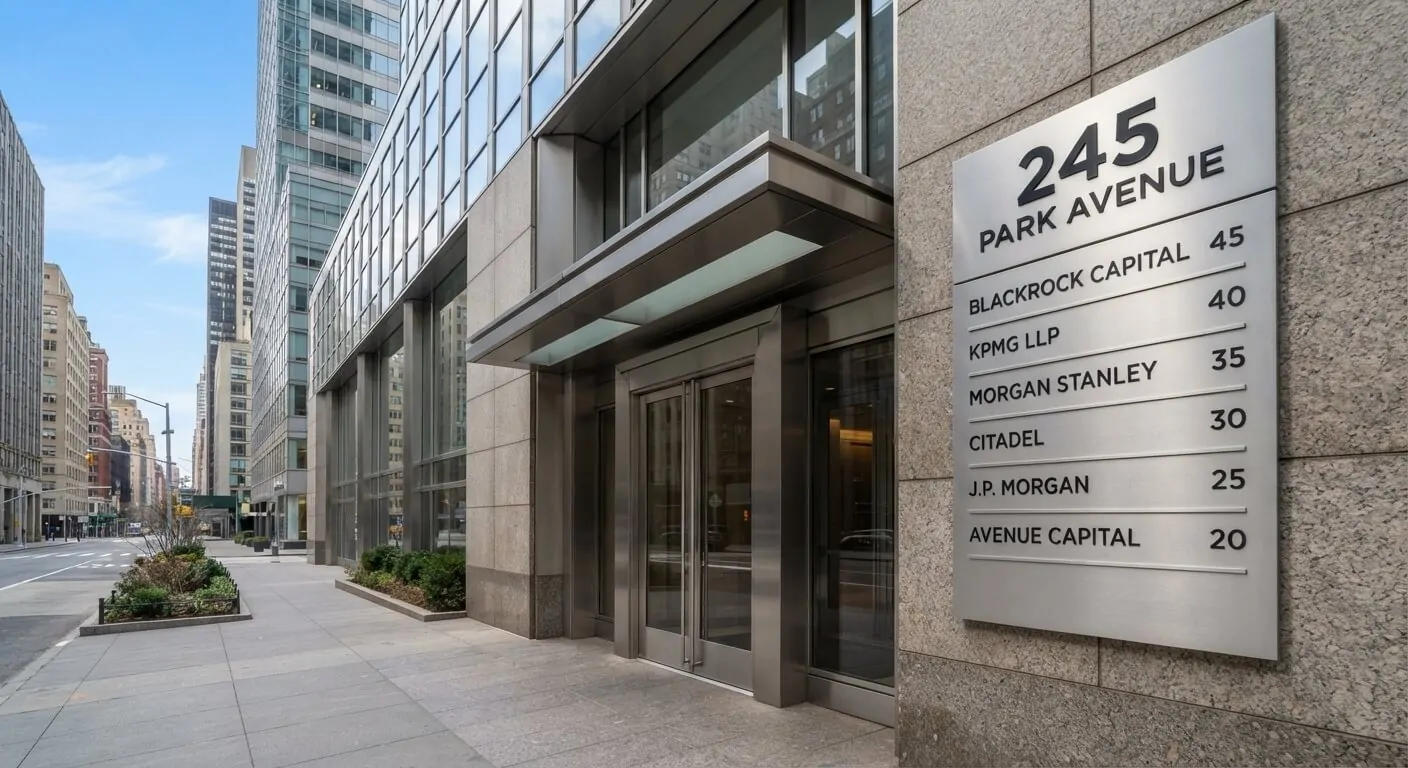
Written tenant sign standards give every tenant the same rules and make the building cheaper to maintain and lease again.
Tenant signs are one of the few parts of a building that change every time a lease does. Without written tenant signage guidelines, each new tenant becomes a negotiation, each approval sets an informal precedent, and within a few turnovers the facade carries a mix of sizes, colors, raceways and abandoned holes that nobody planned.
Good guidelines do three things: they tell tenants what they may submit, they give the property manager a consistent basis for saying yes or no, and they make the building cheaper to maintain and lease again. This guide covers how to write them and how to run the approval and turnover process around them.
What Good Guidelines Cover
| Section | What it should state | Why it matters |
|---|---|---|
| Sign locations | Sign bands, panels, directories and their dimensions | Every tenant works from the same spaces |
| Sign types and sizes | Allowed types, letter heights, length limits | Numbers end arguments that adjectives start |
| Colors and lighting | Brand colors or set color, lighting method and hours | Keeps the facade coherent day and night |
| Mounting and power | Raceways, penetrations, junction box positions | Protects the building fabric |
| Process | Approval package, review time, who signs for the owner | Keeps permits moving |
| Contractors | Insurance, licensing, working hours, site rules | Controls risk on installation day |
| Turnover | Removal, capping, patching and restoration standard | Keeps the cost with the departing tenant |
Start From the Property, Not the Tenant
Guidelines work when they are written around the building’s architecture, whether the property is a strip center with Woodbridge tenant signs, an office building with Morristown directory signs or a mixed use block with Jersey City storefront signs. Before setting any numbers, document each sign location: sign bands and their dimensions, the wall construction behind them, where power is available, canopy and walkway clearances, pylon or monument panels, lobby and directory positions and any approvals already attached to the site.
The town may already have shaped the answer. Several New Jersey municipalities require multi tenant properties to have an approved sign plan. Bridgewater requires shopping centers, industrial parks and multi tenant buildings to submit a coordinated sign plan to the Planning Board covering lettering, lighting, color, materials, height and location, under § 126-195. Where a plan like that exists, the tenant guidelines should follow it, because tenant signs will be checked against it at permit stage.
Define What Tenants May Submit
A clear guideline answers the questions a tenant’s sign company will ask on day one:
- Allowed sign types for each location: channel letter signs, flat panels, blade signs, window graphics
- Maximum letter and logo height, and maximum length as a share of the storefront
- Permitted colors, and whether brand colors are allowed or a single letter color applies
- Illumination method, lighting hours and timer requirements
- Raceway color, mounting method and where penetrations are allowed
- Rules for window graphics, temporary banners and opening signs
- Insurance, licensing and site access requirements for contractors
- Removal and restoration obligations at lease end
Write limits as numbers wherever possible. “Tasteful” and “in keeping with the building” lead to disputes, while “letters no taller than 24 inches, centred in the sign band” does not.
Run a Consistent Approval Process
Keep Owner Approval Separate From Permits
The landlord’s approval and the municipal permit are different decisions. A landlord can refuse a sign the town would allow, and an approved landlord drawing still needs a permit. Make this explicit in the guidelines so tenants do not treat one as the other.
Most towns require the owner’s signed authorization on the tenant’s permit application. Decide in advance who signs, how quickly and what the tenant must show first, because a delay in owner sign off is one of the most common reasons a tenant’s sign permit stalls. Some towns also ask for records only the owner will have, such as the board file number and resolution where the site was approved by a planning or zoning board.
Use a Standard Approval Package
Ask every tenant for the same package and review it against a checklist:
- A scaled elevation of the storefront with the sign in place and dimensions marked
- Sign area, letter heights and the percentage of frontage used
- Colors, materials and finishes
- Illumination method and electrical connection details
- Mounting and penetration locations
- The installing contractor, with insurance certificates
- A statement of who will obtain the municipal permit
Return incomplete packages with a list of what is missing rather than reviewing them piecemeal. Approve in writing, reference the drawing revision and keep the approved set with the lease file.

Handle Exceptions in the Open
Anchor tenants and national brands often ask for exceptions, and some will be worth granting. When they are, record what was allowed, why, and whether it applies only to that tenant or that lease term. Undocumented exceptions become the precedent the next tenant cites.
Control the Work on Site
Installation is where most building damage happens. Require contractors to give notice, follow working hour rules, protect walkways and finishes and use the approved fixing locations. Ask for photographs of the completed work, including the back of the fascia where penetrations were sealed.
Specify hardware if the building needs it. Old Bridge’s ordinance requires signs fixed flat to masonry to use drilled holes with non rusting expansion hardware and prohibits wood or fibre plugs, under § 250-52G. That is a sensible standard for any masonry building, whether or not the local code requires it.
Keep Power and Service Access Usable
Illuminated tenant signs need a circuit, a disconnect and access for maintenance. Decide where junction boxes and power supplies go behind each sign band and how they are reached. Lit signs are built to UL 48 and installed under Article 600 of the National Electrical Code, and inspectors look for the listing label and a properly located disconnect. A building with standard power positions behind every sign band turns each new tenant sign into a routine installation rather than a new electrical project.

Directories and Common Area Signs
Lobby and site directories are the landlord’s responsibility, and they change with every lease. Specify a directory system with replaceable tenant strips so a change costs a strip, not a new panel.
Towns may regulate exterior directories too. Brick allows buildings with three or more businesses one directory: either a wall directory of up to 8 square feet, or a freestanding directory of up to 25 square feet with no more than 2 square feet per tenant, placed 30 to 60 inches above grade so drivers can read it, under Chapter 245 of its code.
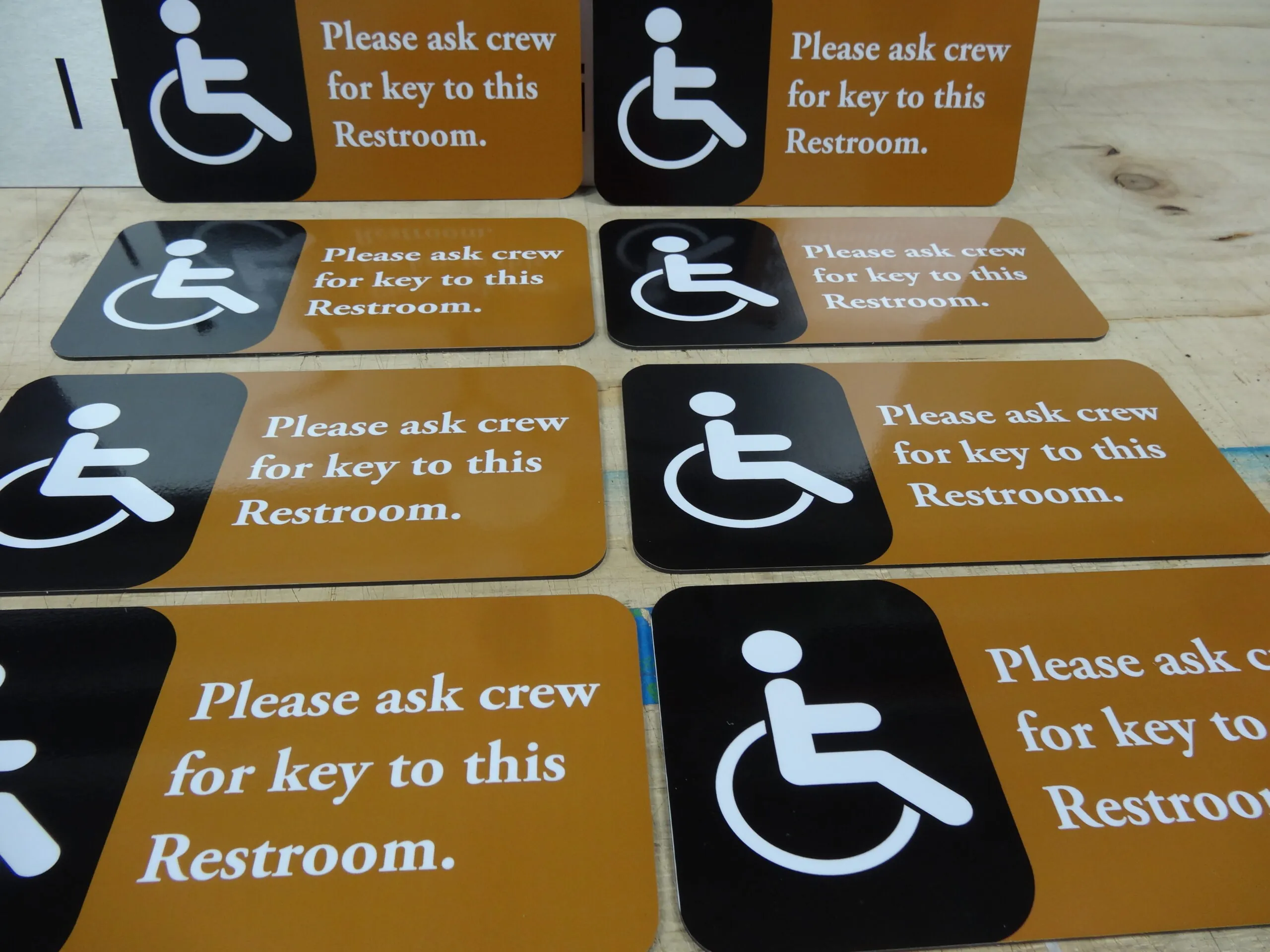
Common area room signs, such as restrooms, stairs, exits and suite numbers, fall under the 2010 ADA Standards, including tactile characters and braille, mounting height and location beside the door. Our guide to ADA sign requirements covers the details, and interior wayfinding signs should be planned as one system so tenant additions do not crowd it.
Plan Turnover Before a Tenant Leaves
The lease should state what the tenant must do with its signs at the end: remove them, cap the electrical, patch penetrations and restore the fascia to an agreed standard. Without that clause, the landlord usually pays.
Some ordinances add their own deadlines, commonly between 30 and 90 days after a business stops operating or after notice. Leaving an old sign up can therefore become a code issue for the property, not just a cosmetic one. Schedule sign removal as part of the move out inspection, and see our guide on who removes old business signs for what a proper removal includes.
Keep Records and Inspect on a Schedule
A simple register for each property saves time at every turnover and repair:
- Location and tenant: where each sign is and whose it is.
- Approval: approved drawing and revision.
- Permit: municipal permit number and date.
- Installation: installer, date and photographs.
- Electrical: circuit and disconnect location.
- Condition: notes and repair history.
Some towns make part of this visible on the sign itself. Atlantic City’s ordinance requires most signs to be marked with the name of the installing company and the permit number, which is a useful practice anywhere.
Walk the property’s signs at least seasonally, checking lighting outages, loose letters, water entry, faded faces and damaged raceways. Route problems to the tenant or to commercial sign repair under the lease terms. For the tenant’s side of this process, see shopping center sign requirements.
Common Questions About Tenant Signage Guidelines
What should tenant signage guidelines include?
Allowed sign types per location, maximum letter and logo heights, colors, illumination and lighting hours, mounting and penetration rules, temporary sign rules, contractor requirements and removal obligations at lease end. Write limits as numbers wherever possible.
Does the municipality care about our tenant guidelines?
Sometimes directly. Several New Jersey towns require multi tenant properties to have an approved sign plan, and tenant signs are then checked against it at permit stage. Where a plan exists, the guidelines should follow it.
Who is responsible for a tenant's sign permit?
Usually the tenant or its sign company, but most towns require the property owner’s signed authorization. Decide in advance who signs for the owner and how quickly, because delayed owner sign off is a common cause of stalled permits.
Do lobby directories and room signs need to meet ADA rules?
Room identification in common areas, such as restrooms, stairs, exits and suite numbers, falls under the 2010 ADA Standards, including tactile characters, braille and mounting location. Directories have visual requirements but generally not tactile ones.
How quickly must a former tenant's sign come down?
Check both the lease and the town. Town deadlines commonly fall between 30 and 90 days after a business closes or after notice. A clear removal and restoration clause keeps the cost with the departing tenant.
One Sign Standard Across Your Properties
Gogi Signs helps property teams turn building conditions into written tenant sign standards, supplies directory systems with replaceable strips and handles removal and fascia restoration at turnover. If you manage several buildings, we can survey them on one schedule.
Request a free quote, or see our Directory Signage page.