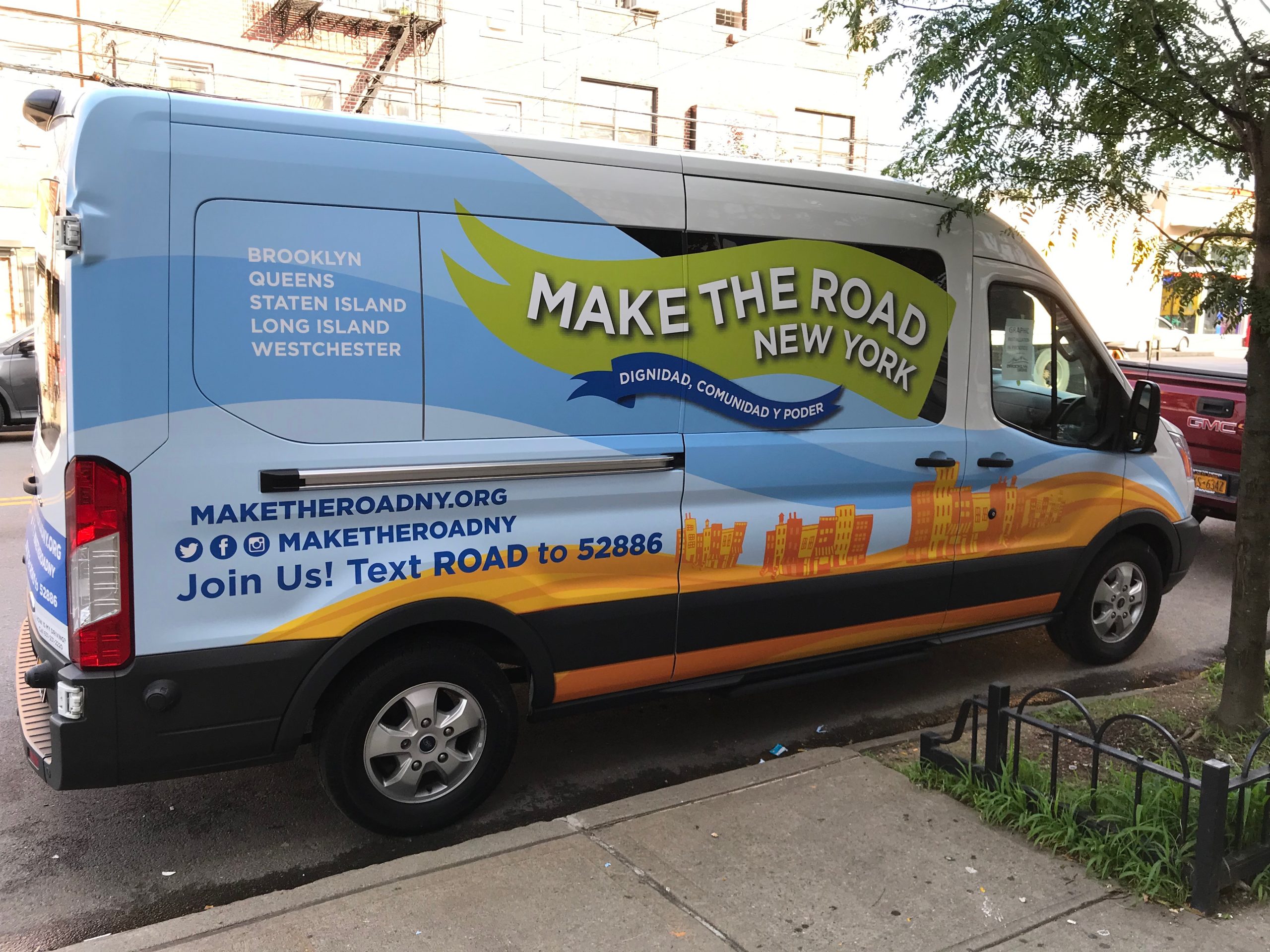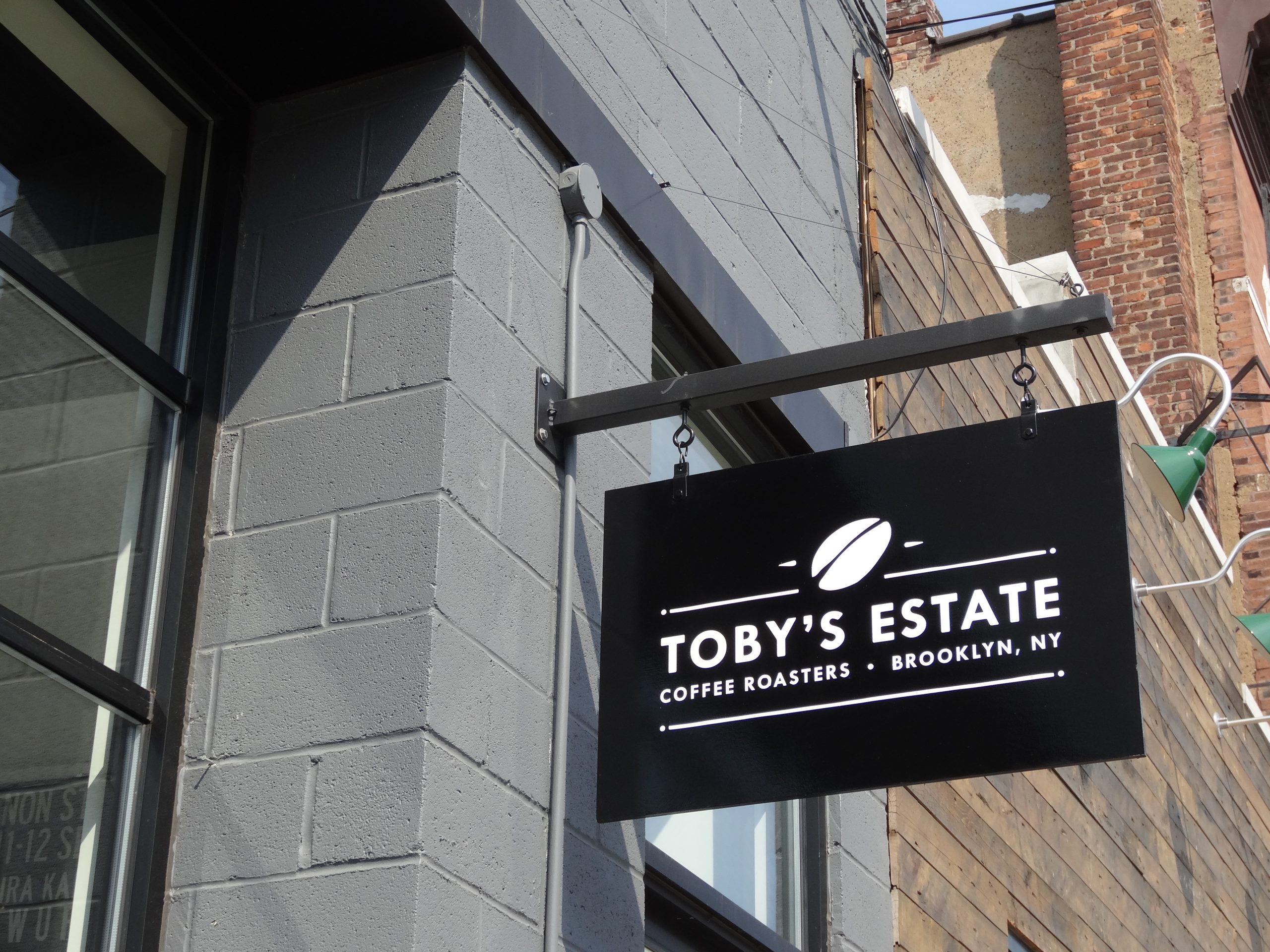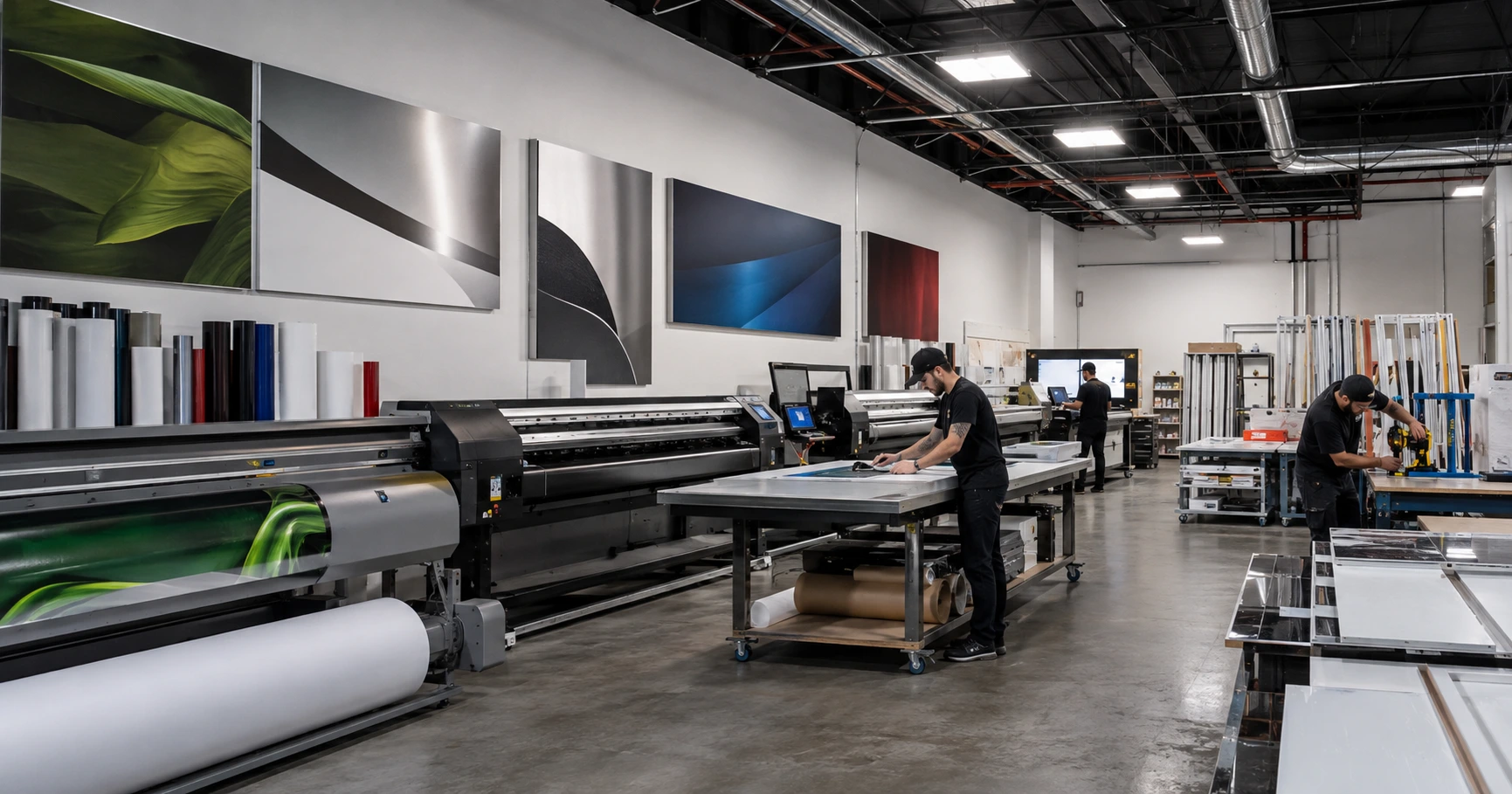
The best evidence of a sign company is not its website. It is its shop floor, its finished jobs and how it answers awkward questions.
To choose the right sign company, look past the design mockup and the price. A sign is a manufactured, electrical and structural product that has to be approved by a town, fixed safely to a building and kept working for years. The company that builds it should be able to show it can handle every one of those steps, or tell you exactly who will.
Most problems with sign projects are not about how the sign looks. They are about permits filed late, signs that fail inspection, installers who were not licensed for the job or nobody answering the phone when a letter goes dark.
These eight checks separate companies that sell signs from companies that deliver them. If you are in New Jersey specifically, our guide on how to choose a custom sign company in New Jersey adds the state specific detail.
The Eight Checks at a Glance
| Check | Why it matters | How to verify |
|---|---|---|
| What they do in house | Control over quality, schedule and accountability | Ask who designs, builds, wires and installs |
| Electrical listing | Inspectors expect listed signs | Ask how their illuminated signs are listed and labeled |
| Licensing | Some work legally requires a licence | Ask for licence numbers and check them |
| Insurance | Protects you and the landlord on installation day | Request a certificate of insurance |
| Permit experience | Local rules decide size, timing and approval | Ask which towns they file in regularly |
| Portfolio | Proof they have built signs like yours | Look at completed work, ideally in person |
| Warranty and service | Signs need support for years | Get terms in writing and ask about response time |
| Communication | Projects involve landlords, towns and trades | Notice how clearly and quickly they answer now |
1. What They Do In House
Some sign companies design, fabricate, wire and install everything themselves. Others sell and design, then subcontract fabrication or installation. Both models can work, but you should know which you are buying, because it decides who controls quality and who is accountable when something goes wrong.
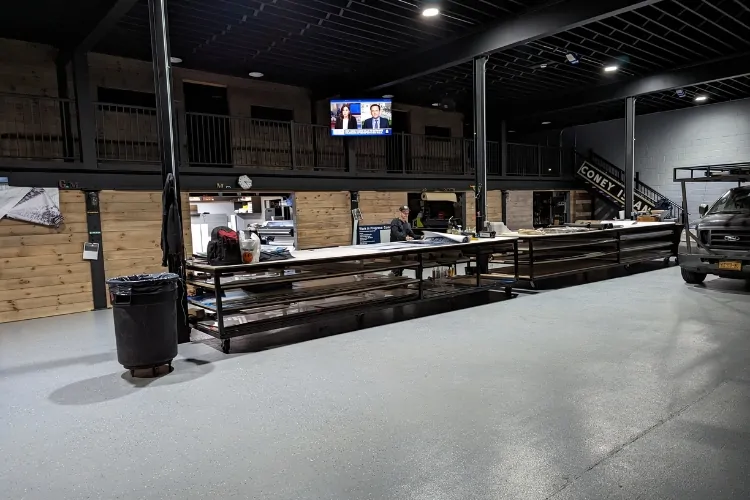
Ask directly: who builds the sign, where, who does the electrical connection and who installs it. A visit to the shop answers most of these questions at once. See our Sign Fabrication page for how work moves through our Linden shop.
2. Electrical Listing for Illuminated Signs
The National Electrical Code requires electric signs to be listed and installed according to that listing, which is what the label from a recognised testing laboratory shows. Guidance for electrical inspectors published by IAEI advises confirming that a local sign shop maintains its listing status with a nationally recognised testing laboratory.
For an owner, the practical question is simple: will the finished sign carry a listing label, and how? A company that builds illuminated signs regularly will answer without hesitation.
3. Licensing for the Work Involved
Licensing depends on the work and the place.
- New Jersey electrical work: the state’s Board of Examiners of Electrical Contractors treats electrical contracting as a single licensed category, so wiring and connecting a sign needs a licensed electrical contractor. Licences can be checked through the state’s license verification service.
- New York City sign hanging: signs over 75 square feet or 25 pounds must be hung by or under a licensed sign hanger. A special sign hanger licence covers signs up to 150 square feet and 1,200 pounds, while a master sign hanger licence has no size limit.
- Sealed drawings: some towns require permit drawings signed and sealed by a licensed design professional, so ask whether the company works with one.
4. Insurance
Installation means ladders, lifts and drilling into someone else’s building above a public sidewalk. Ask for a certificate of insurance before work starts, and check whether the landlord or property manager needs to be named on it, as many leases require.
5. Permit Experience in Your Town
Every New Jersey municipality writes its own sign rules, and New York City adds its own permit, zoning and licensing requirements. A company that files regularly in your town knows what the zoning office expects, which documents it wants and how long it takes. Ask which towns they work in most, for example whether they file regularly for Newark sign permits, Hackensack business signs or signs in Edison, and how they handle a sign that exceeds the limit. See our Sign Permits page and our service areas for where we file.

6. A Portfolio of Similar Work
Photos of signs like yours are better evidence than any description. Look for the same sign type, such as channel letters, a blade sign or a reception logo, at a similar size and in similar settings, such as a shopping center, a historic downtown or a high rise lobby. If possible, visit one in person, ideally after dark if it is illuminated, and ask how long ago it was installed. Our sign gallery shows completed projects across New Jersey and New York City.
7. Warranty and Service
Ask for the LED, power supply, workmanship and labor warranty terms separately, in writing. Then ask what happens after the warranty: whether the company services its own signs, how quickly it responds and whether it can repair signs it did not build. Our guide to sign warranties and maintenance plans explains what good terms look like.
8. Communication
A sign project involves the business, the landlord, the town, the electrician and sometimes a general contractor. The company in the middle has to keep everyone informed. The way a company handles the quote stage, how quickly it replies, how clearly it explains the scope, whether it asks good questions, is usually how it will handle the project.

Red Flags When Choosing a Sign Company
- A firm price with no site photos, measurements or survey.
- No mention of permits, or a suggestion that a permit is not needed for a large or lit sign.
- Vague answers about who builds and installs the sign.
- No certificate of insurance, or reluctance to provide licence numbers.
- A single warranty figure with no detail.
- Pressure to pay a large deposit immediately.
How to Make the Final Choice
- Shortlist two or three companies: with relevant work in your area.
- Give each the same brief: photos, measurements, artwork, lease criteria and deadline.
- Compare scope, not just price: line quotes up item by item.
- Verify licences and insurance: before signing anything.
- Check the warranty and service terms: in writing.
- Choose the company you trust to answer the phone in five years: signs last a long time.
Our guide on understanding business sign quotes shows how to compare proposals line by line, and our list of questions to ask before ordering custom signs covers what to ask at each stage.
Common Questions About Choosing a Sign Company
Should I choose a local sign company?
Usually, yes. A local company knows the town’s rules and permit process, can survey the site easily and can return quickly for service. Our guide to the benefits of a local sign company covers this in more detail.
Do sign companies need a licence?
It depends on the work. In New Jersey, the electrical connection for an illuminated sign is licensed electrical work. In New York City, larger signs must be hung by a licensed sign hanger. Ask which licences apply to your project and who holds them.
What does UL listed mean for a sign?
It means the sign has been evaluated for electrical safety by a recognised testing laboratory and carries its label. The electrical code requires electric signs to be listed, and inspectors look for the label at the final inspection.
Is the cheapest sign company a bad choice?
Not necessarily, but compare the scope first. A lower price often means permits, electrical work, installation access or removal of the old sign are excluded, or that lighter materials are being used.
How can I check a sign company's work?
Ask for photos of similar projects, visit completed signs if you can, and ask how long ago they were installed. Signs that still look good after several years say more than a new installation photo.
What should a sign company provide before I sign?
A written proposal with dimensions, materials, lighting, permits, installation, removal, warranty terms, a payment schedule and a timeline, plus a certificate of insurance.
Meet the Team Behind Your Sign
Gogi Signs designs, fabricates, permits and installs signs from our own shop in Linden, New Jersey, for businesses across New Jersey and the five boroughs. We are glad to show you the shop, the work and the paperwork before you decide.
Request a free quote, or see our About Us page to learn more about how we work.