Hunterdon County, New Jersey
Sign Company Serving Hunterdon County, New Jersey
Gogi Signs designs, fabricates, prints, installs, repairs and replaces commercial signs throughout Hunterdon County: roadside identification along Routes 31 and 202, storefronts and blade signs in Flemington, Clinton and Lambertville, and the facility, entrance and directional signage that industrial and agri-tourism properties need.
20+ Years Experience
Serving New Jersey Since 2005
In-House Production
Fabrication & Large-Format Printing
Commercial Installation
Insured Installation Crew
Hunterdon County Coverage
Downtowns, Corridors & Commercial Properties

Sign Company Serving Hunterdon County
A Different Sign Market From the Rest of North Jersey
Hunterdon County combines traditional downtowns, Route 31 and Route 202 commercial corridors, professional offices, healthcare, industrial properties, local retail, restaurants, agricultural businesses, tourism and smaller business centers spread across a large county.
The county’s 2024 Growth Management Plan identifies several future land-use patterns, Centers, River Communities, Economic Development Corridors, rural and farming areas, and Highlands communities, and directs growth toward established centers and corridors rather than treating the county as one continuous commercial strip. The result is a service area where a downtown storefront, a highway retailer, an office building and an industrial property can sit a few miles apart and need entirely different signage.
Gogi Signs has handled storefront signs, channel letters, dimensional lettering, custom awnings, blade signs, window graphics, office signs, directories, ADA signage, facility identification, vehicle graphics and tenant changes throughout Hunterdon County since 2005.
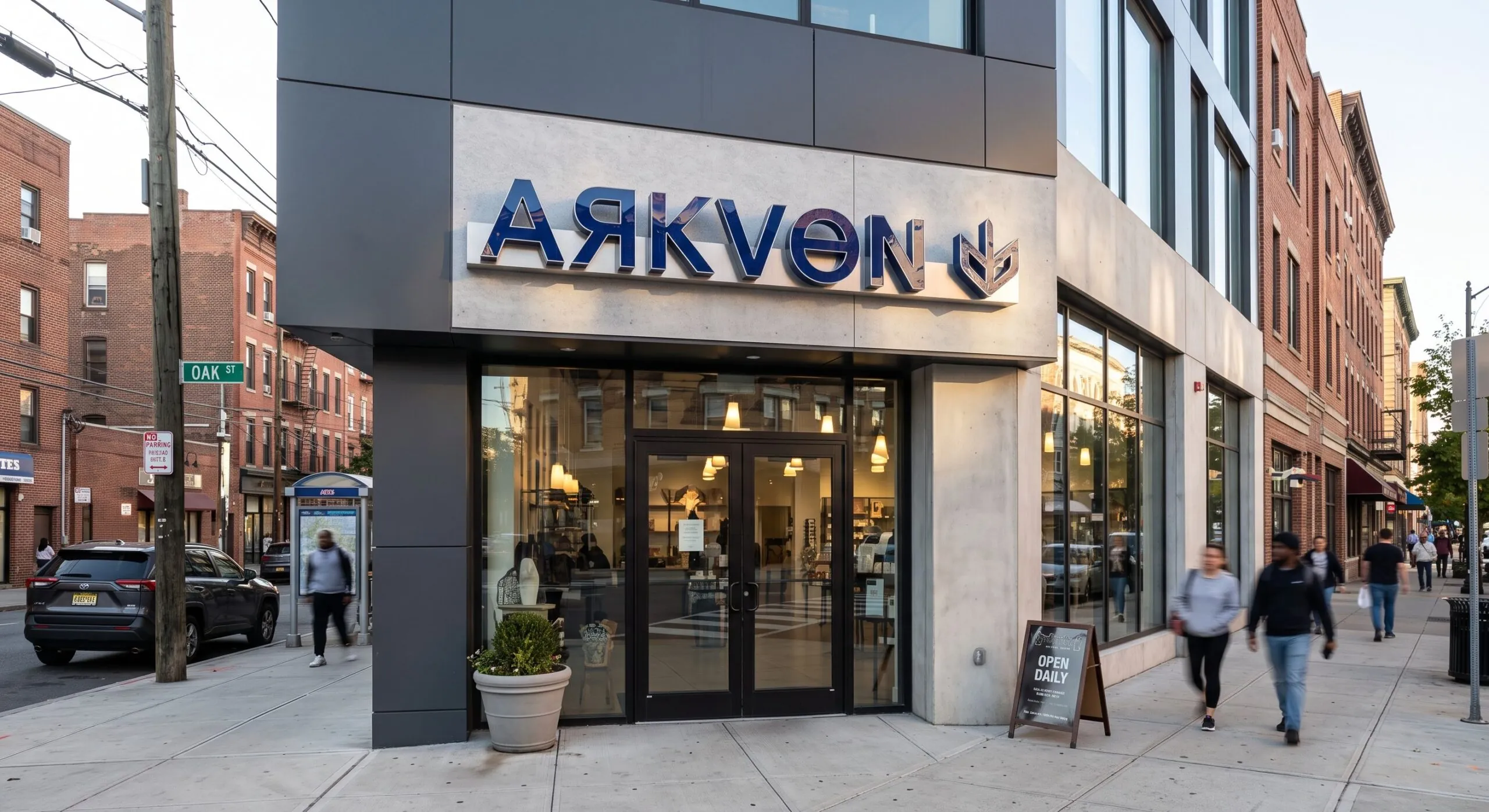
Three Environments
Three Broad Sign Environments in One County
The county is the service area. The property is the actual sign specification.
Economic Development Corridors
Highway Corridors
Route 31, Route 202, Route 22, I-78, Route 173 and the other commercial corridors support retail, offices, industrial businesses, service companies and larger commercial properties: all read at greater viewing distances.
Centers
Traditional Downtowns
Flemington, Clinton, Lambertville, Frenchtown, High Bridge and other communities hold established Main Street environments, where storefront scale, architecture, windows, awnings, blade signs and pedestrian visibility carry the work.
Business & Industrial
Office and Facility Properties
Office parks, healthcare, industrial buildings, manufacturing, research and distribution properties, needing directories, facility identification, parking, directional signs and interior systems more than a single fascia.
Rules by Municipality
There Is No Single Hunterdon County Sign Code
Sign regulation here is municipal, and the boundaries matter more than the distances. A sign permitted in Flemington should not be assumed to meet the rules in Clinton or Lambertville.
Each of them can maintain its own:
- Zoning districts
- Sign area limits
- Wall-sign rules
- Blade-sign rules
- Awning requirements
- Window-sign limits
- Illumination standards
- Historic review
- Temporary-sign requirements
- Permit process
County planning reinforces the point by concentrating future development inside the established centers and economic-development corridors, which means the regulatory environment changes sharply over short distances rather than blending gradually. So the exact property address is the first piece of information we need. The permit application is filed by you or your landlord. We assist with permits; we do not file them on your behalf.
Routes 31 & 202
Corridor Businesses Need Strong Roadside Identification
Commercial growth here has historically concentrated along the highway corridors, with county economic-development material identifying office, industrial and retail growth along Route 31, Route 173, I-78 and the other major routes. A roadside sign is read differently from a downtown storefront sign, and six decisions change with it:
- Viewing distance. The customer may see the business across several lanes of traffic or through a large parking area.
- Letter size. Proportions come from the actual viewing distance, not from filling the available wall.
- Building scale. A broad commercial façade needs identification proportional to the building.
- Contrast. Enough separation from brick, stone, metal panels, glass, landscaping and neighboring businesses.
- Illumination. Where the municipality and property allow it, for businesses operating after dark.
- Copy. The name and logo carry the primary message; hours, contact details, service lists and promotions work better on windows, doors, temporary graphics or interior signs.
Filling the available wall is the most common way a corridor sign goes wrong: the wall is not the measurement, the approach is.
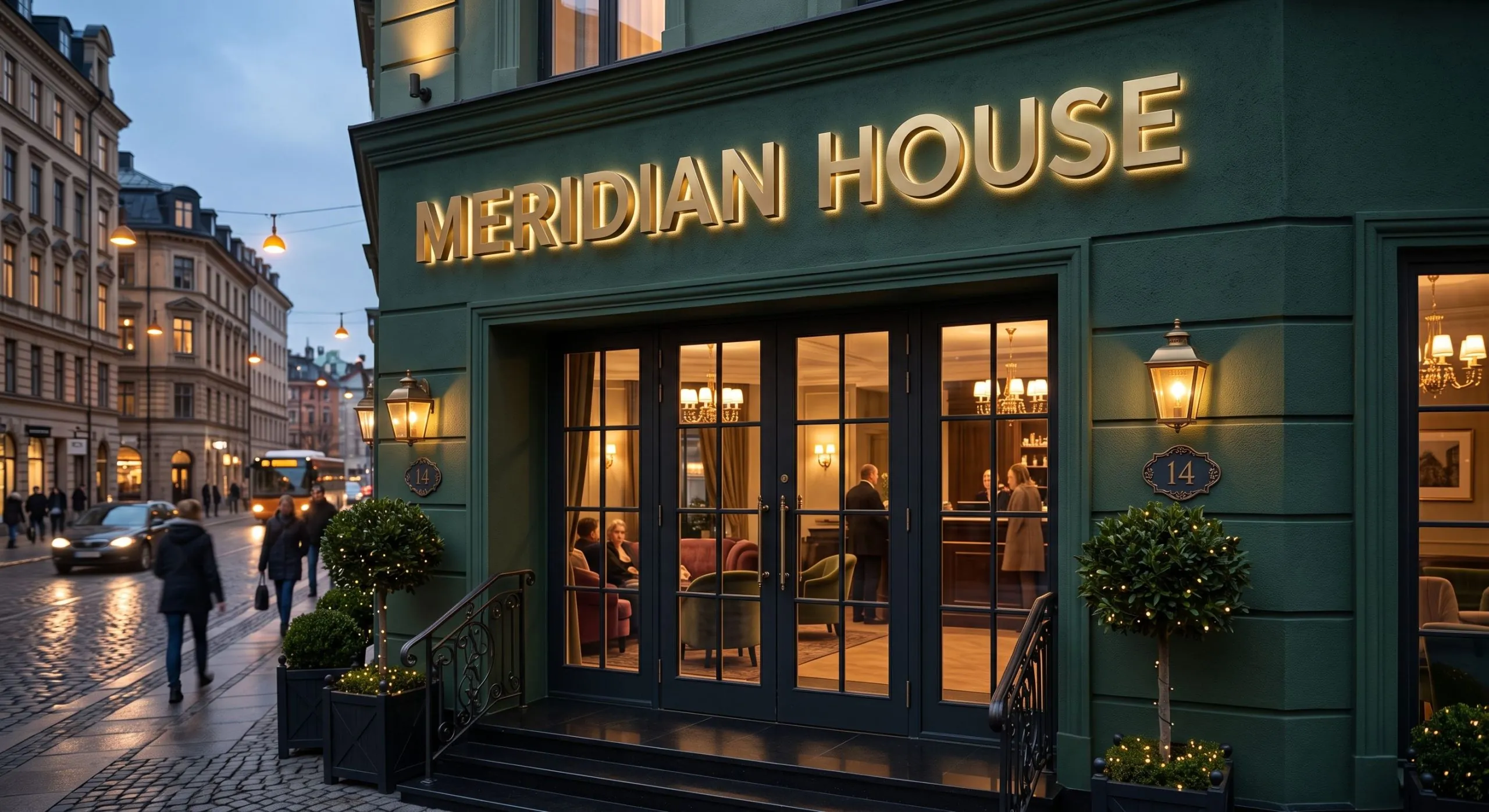
Downtowns & Historic
Downtown Signs Work at Pedestrian Scale
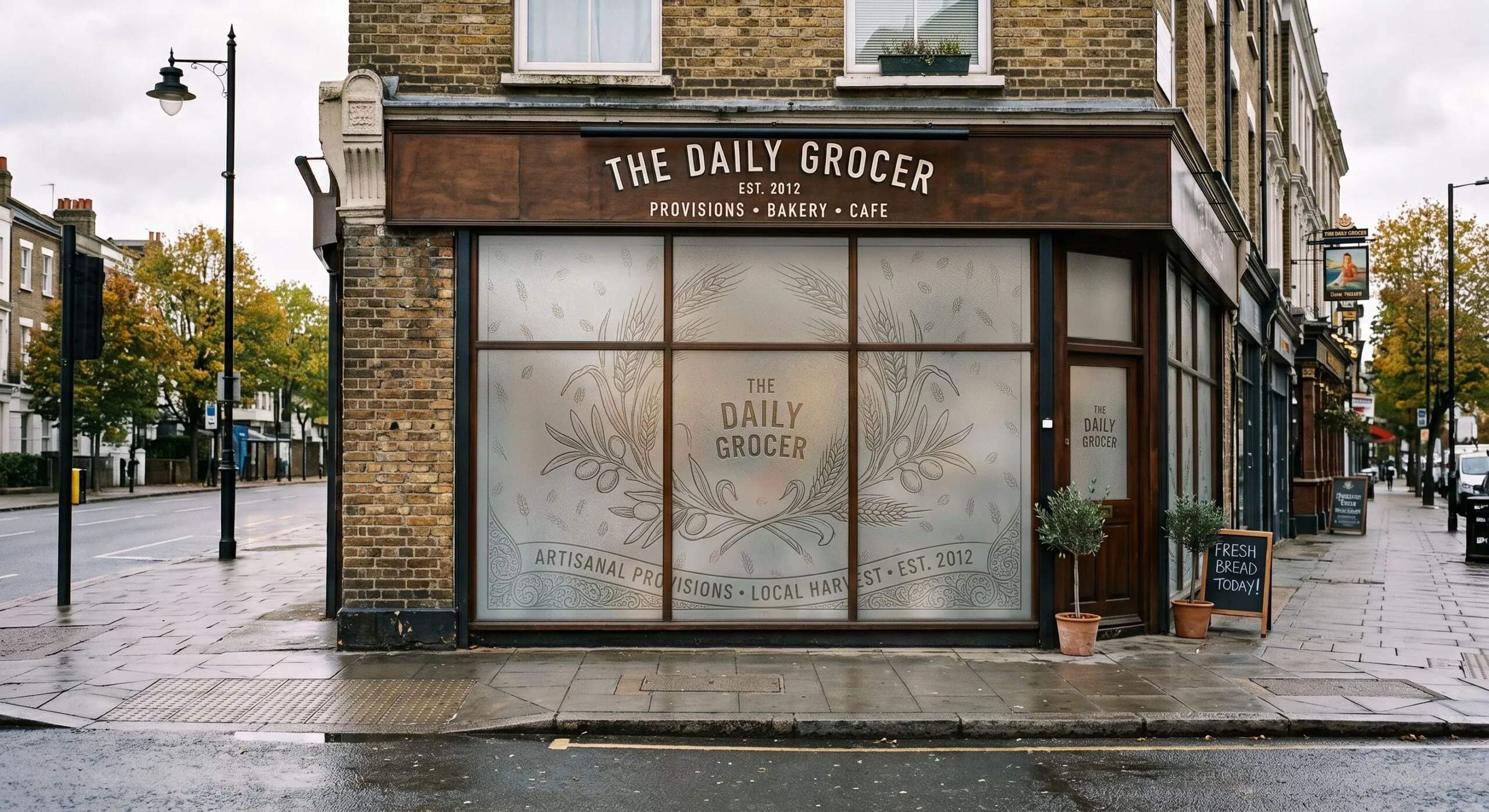
Several Hunterdon municipalities maintain traditional downtown and Main Street districts, each with its own mix of local services, retail, tourism and historic character. Those centers also carry older building stock, and sign design there has to work around the existing masonry, cornices, traditional storefront proportions, window openings, transoms, existing brackets, awning locations, historic review and municipal design standards.
Products that tend to suit older façades:
- Dimensional metal letters
- Routed sign panels
- Blade signs
- Fabric awnings
- Window lettering
- Painted identification
- Exterior plaques
- Restrained illuminated letters where allowed
The goal is not to make every new business look historical. The sign should fit the architecture rather than cover it, and the storefront reads best when primary identification stays separate from secondary information, with the glass carrying hours, suite details, privacy film and temporary promotions instead of repeating the business name a third time.
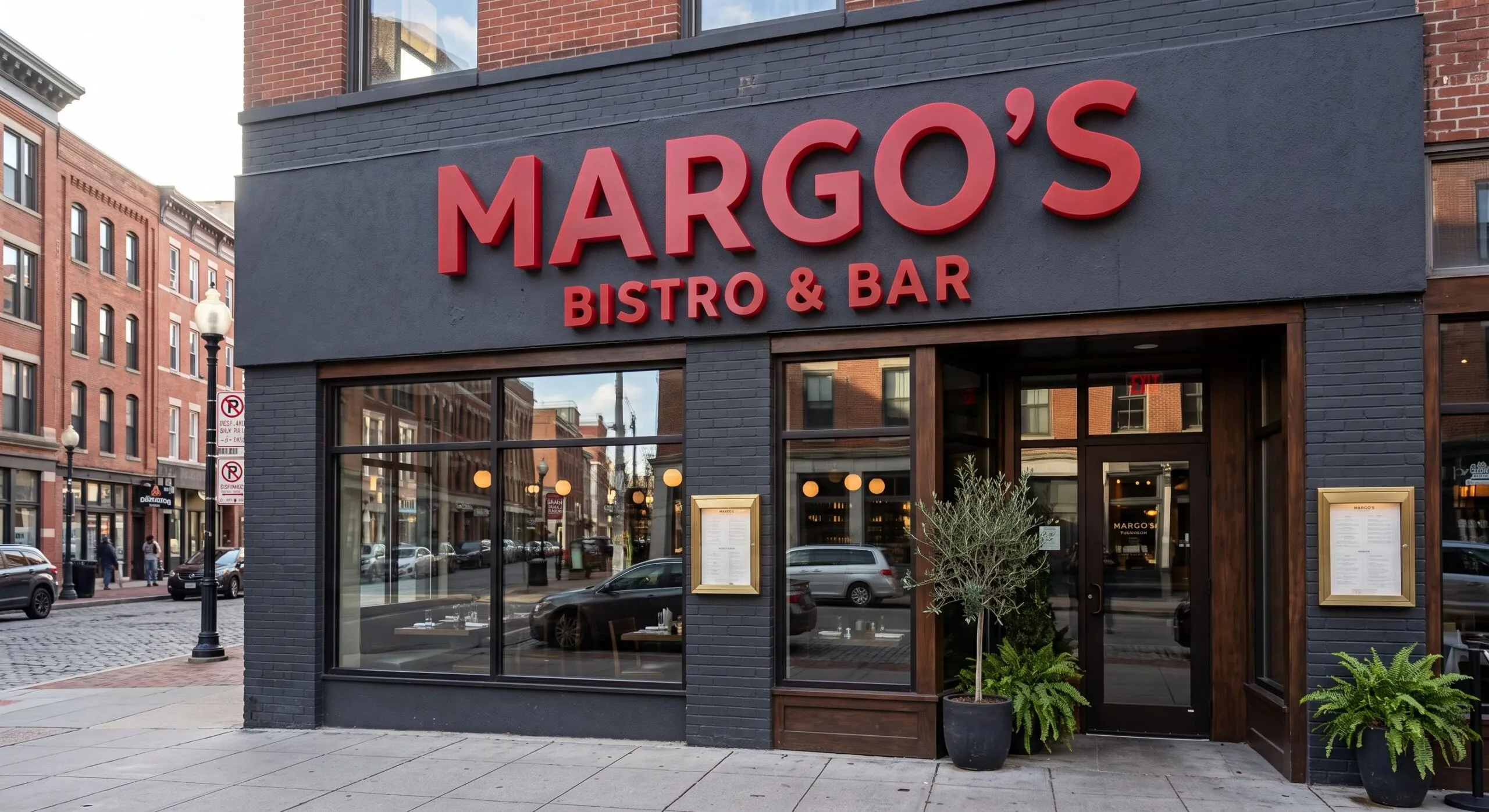
Our Products
Signs We Make Throughout Hunterdon County
Our New Jersey shop produces fabricated, printed, exterior, interior, temporary and replacement signage for businesses across the county.
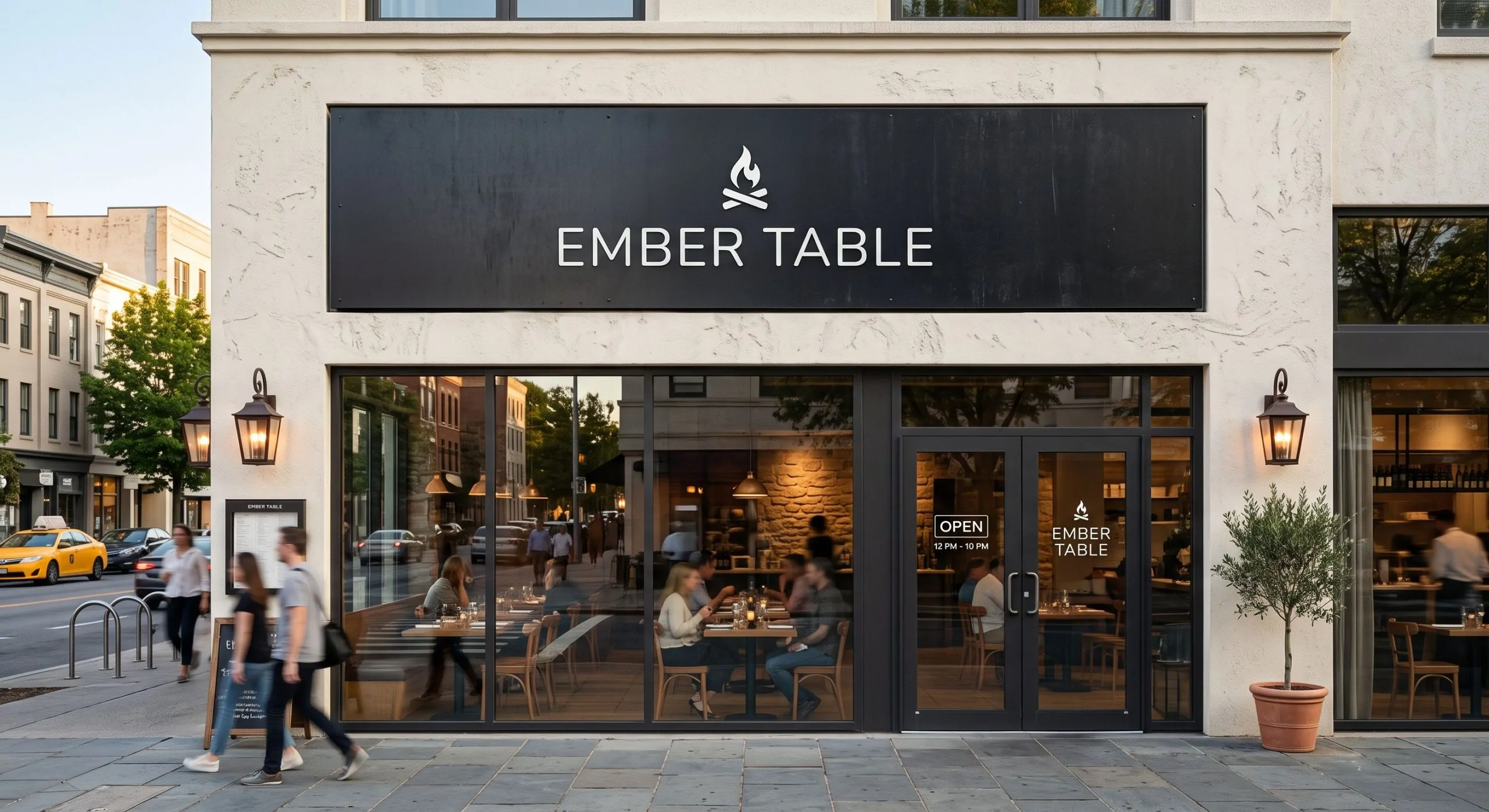
Storefront Signs
Custom exterior identification built around the actual tenant frontage, sign band, architecture and property conditions.
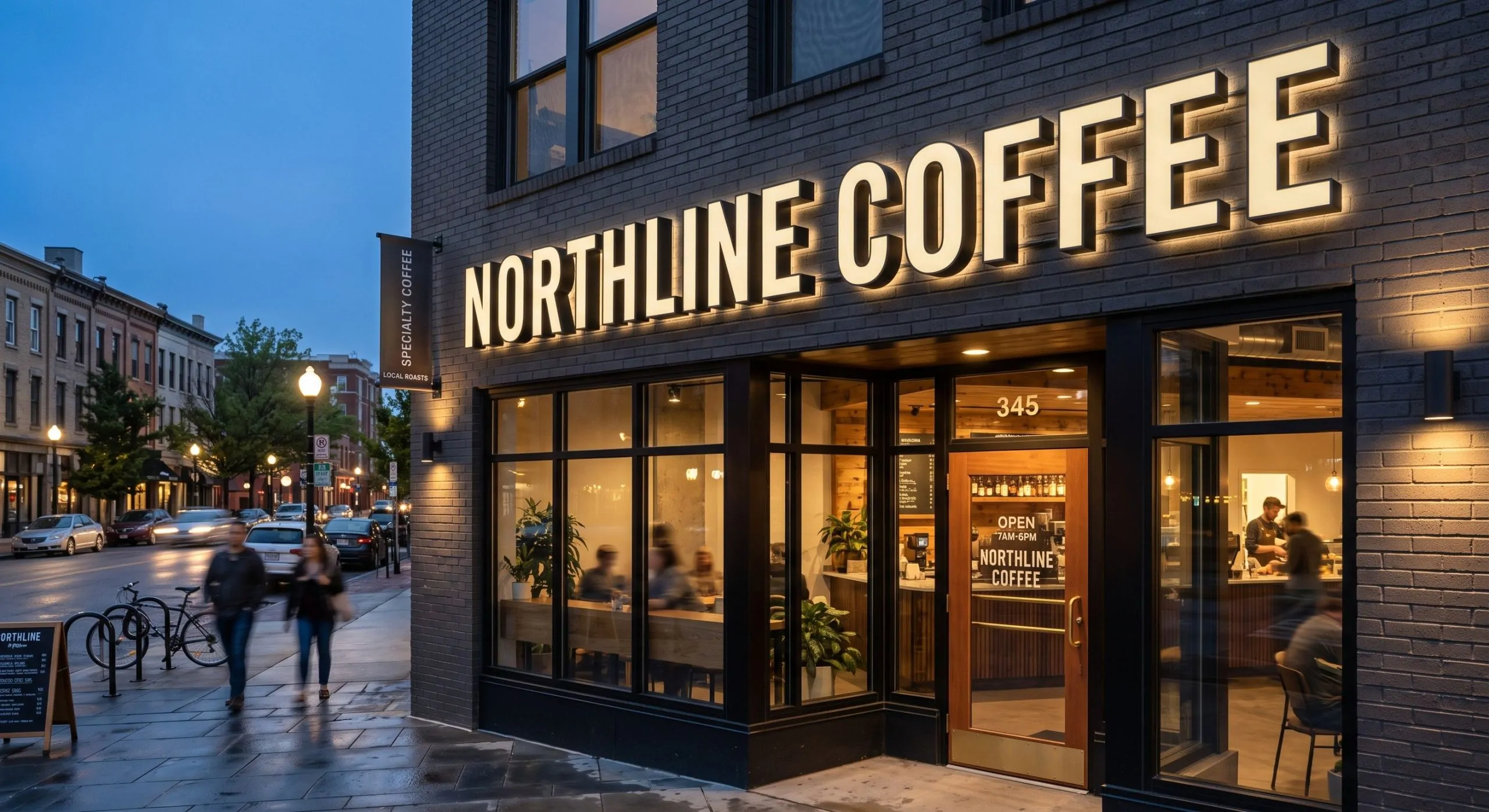
Channel Letters
Fabricated illuminated and non-illuminated letters for retail, restaurants, offices, healthcare and commercial properties.

Dimensional Letters and Logos
Metal, acrylic and PVC lettering for storefronts, exterior walls, entrances, lobbies and reception areas.
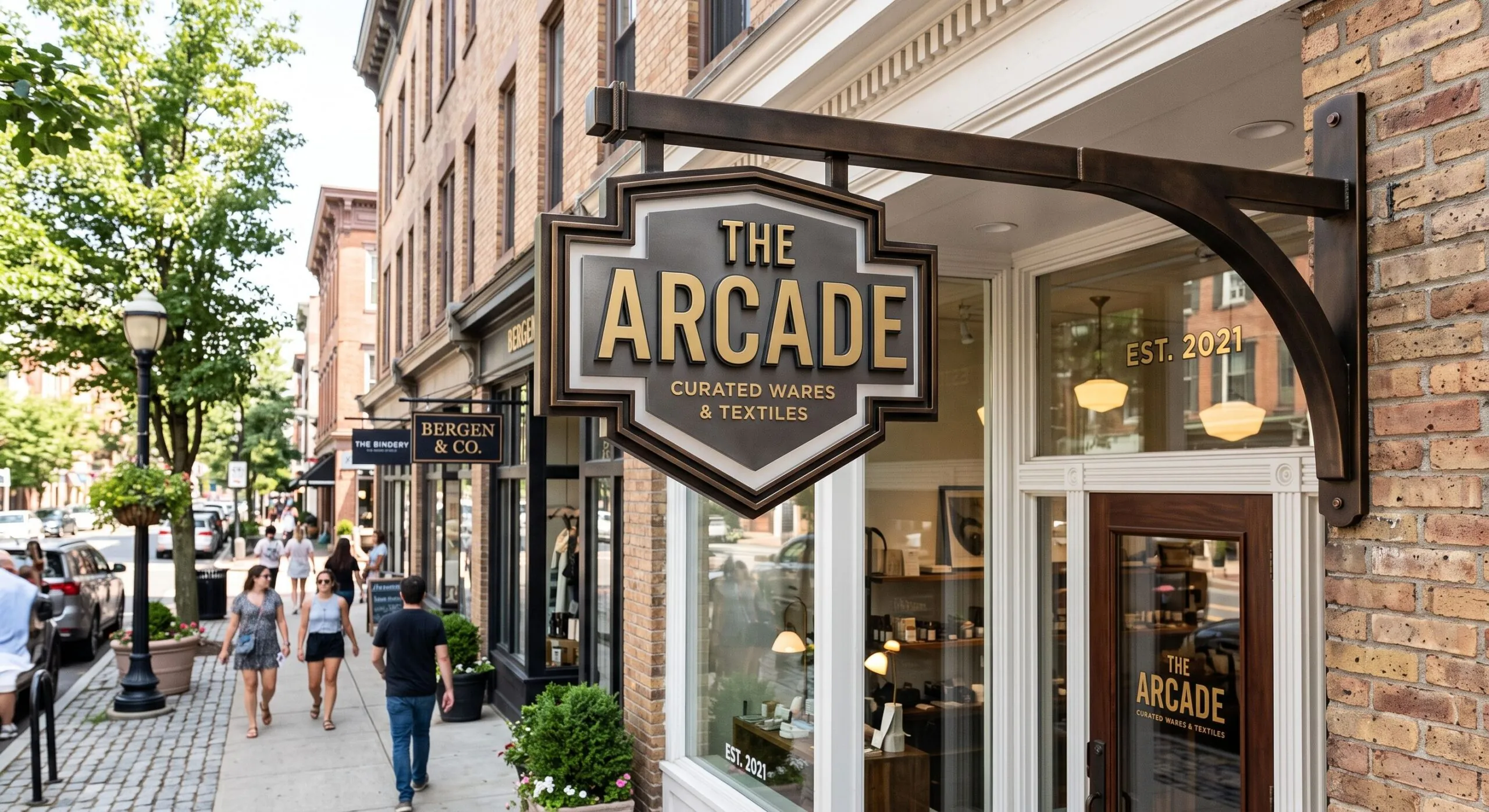
Blade Signs
Perpendicular storefront identification for eligible downtown properties where customers approach along the sidewalk.

Custom Awnings
Fabric awnings with business names, logos, custom colors and valance graphics, plus recovering for sound frames.
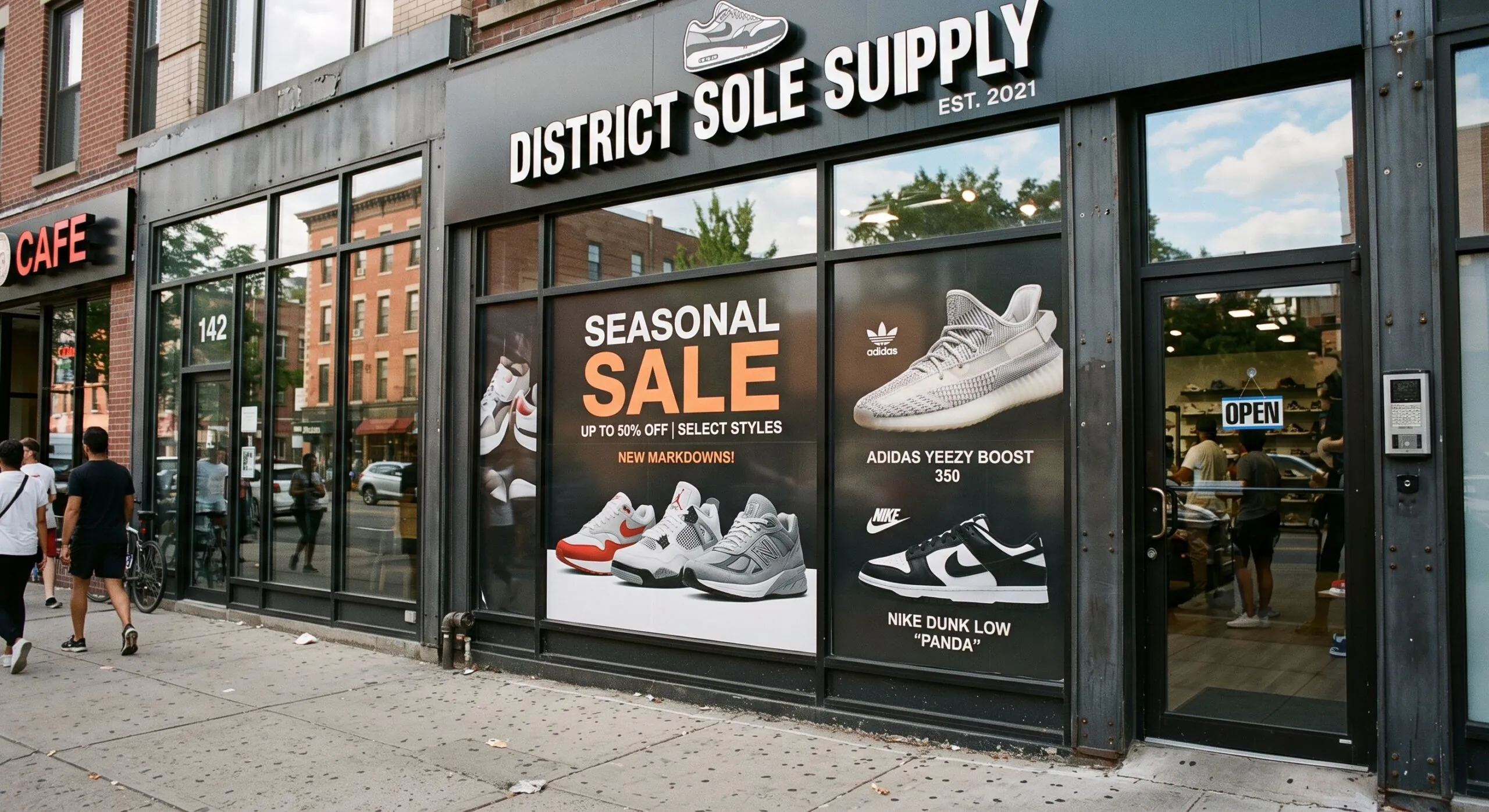
Window Graphics and Lettering
Printed graphics, cut vinyl, logos, operating hours, privacy film, decorative film and temporary campaigns.
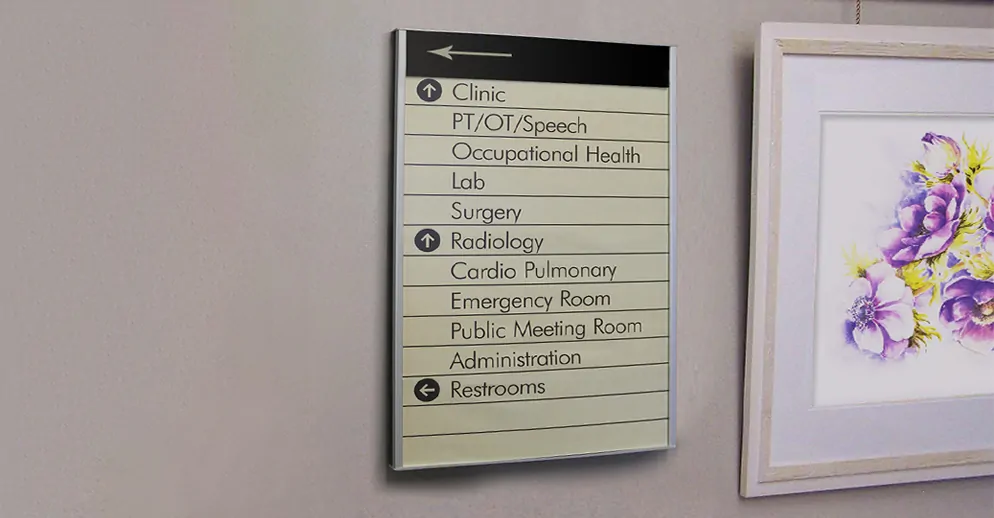
Directories and Wayfinding
Building, floor, office and tenant directories, plus entrances, exits, visitor parking, deliveries and pickup points.
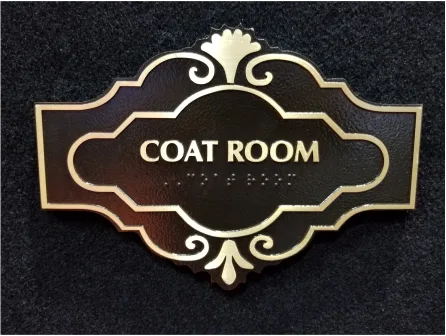
ADA, Office and Suite Signs
Tactile room identification, Braille signs, restroom identification, room numbers, plaques and replaceable tenant nameplates.
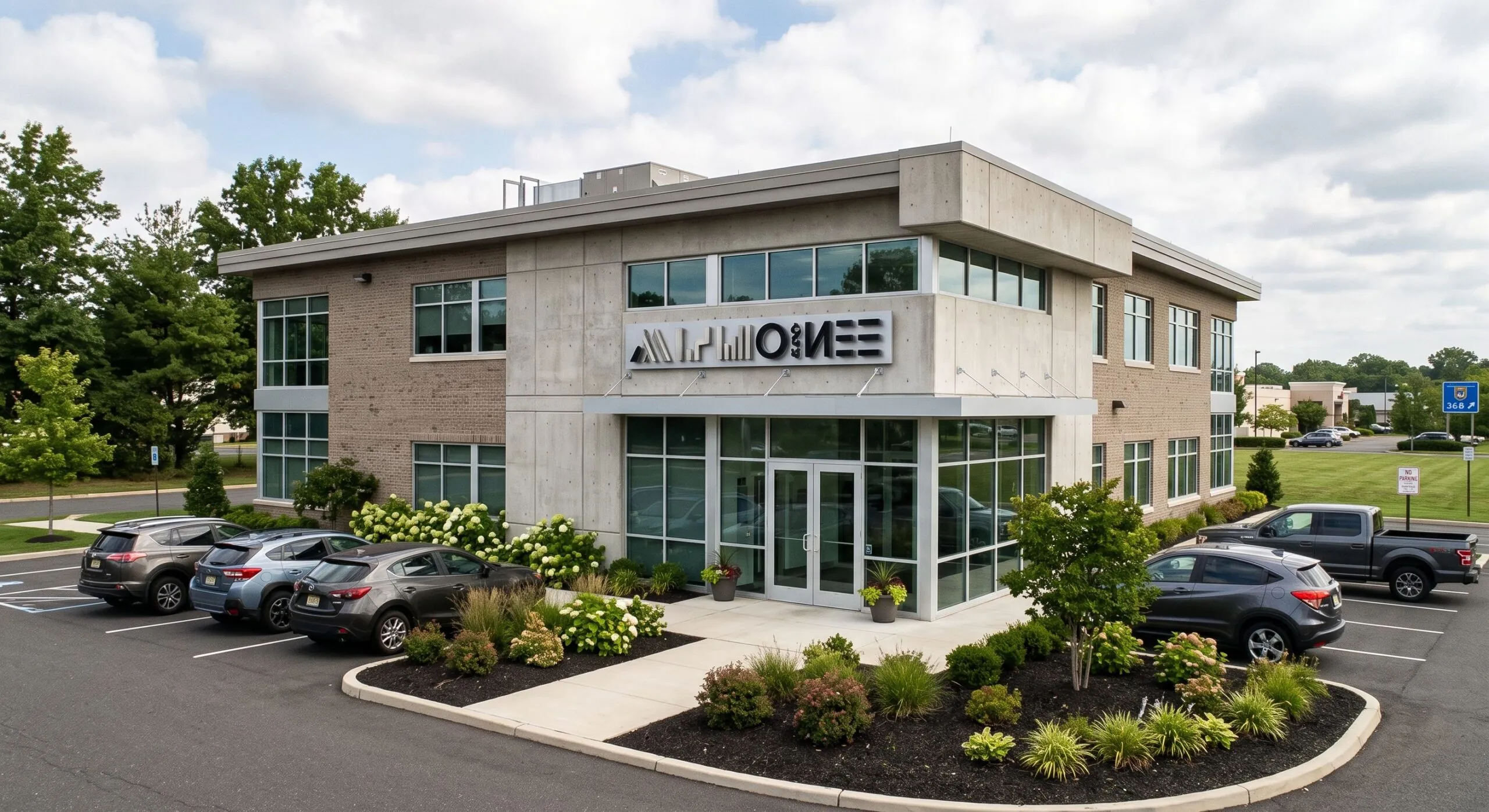
Facility Signs
Building identification, door numbers, department signs, shipping and receiving identification and interior facility signage.
How It Works
From Site Survey Through Installation
Gogi Signs has served New Jersey businesses since 2005, and handles projects from site measurements through fabrication, installation, repair and future changes.
01
Site Survey
We measure the storefront, commercial building, office, facility or interior area and document the existing signage and mounting conditions.
02
Design and Planning
Artwork is fitted to the actual property, available sign area, materials, viewing conditions, construction and that municipality’s requirements.
03
Fabrication and Printing
Approved work moves through fabrication, cutting, large-format printing, vinyl production, finishing and electrical assembly where applicable.
04
Installation
When tenant information changes, lighting needs repair, graphics need replacement or another location opens, we continue from the existing sign program.
05
Ongoing Service
When tenant names change, lighting requires repair, vinyl needs replacement, or additional locations open, we can continue from the existing project specifications.
Offices & Medical
Professional Offices Need More Than a Name Outside
Hunterdon County holds medical, legal, financial, professional, corporate and service-sector businesses in office parks and shared commercial buildings, where the exterior sign usually only gets the visitor to the building. The rest of the package covers building-mounted signs and tenant identification, entrance signs, lobby directories carrying tenant names, floor information and suite listings, reception signs, suite signs with room numbers and departments, privacy film for offices, treatment rooms and conference spaces, ADA tactile and Braille identification, and wayfinding connecting parking, entrances, stairs, elevators and shared areas.
Medical and healthcare businesses put the same system under more pressure, because patients regularly arrive somewhere they have never been. Identifying the building, finding the correct entrance, locating the floor or suite, finding the practice and reaching the correct room are five separate decisions, each carried by a different sign, supported by restroom identification, department signs and temporary relocation notices.
What makes it hold together is consistent terminology from the parking area to the reception desk. On multi-tenant properties, replaceable tenant components then keep every future change small.

Industrial Sites
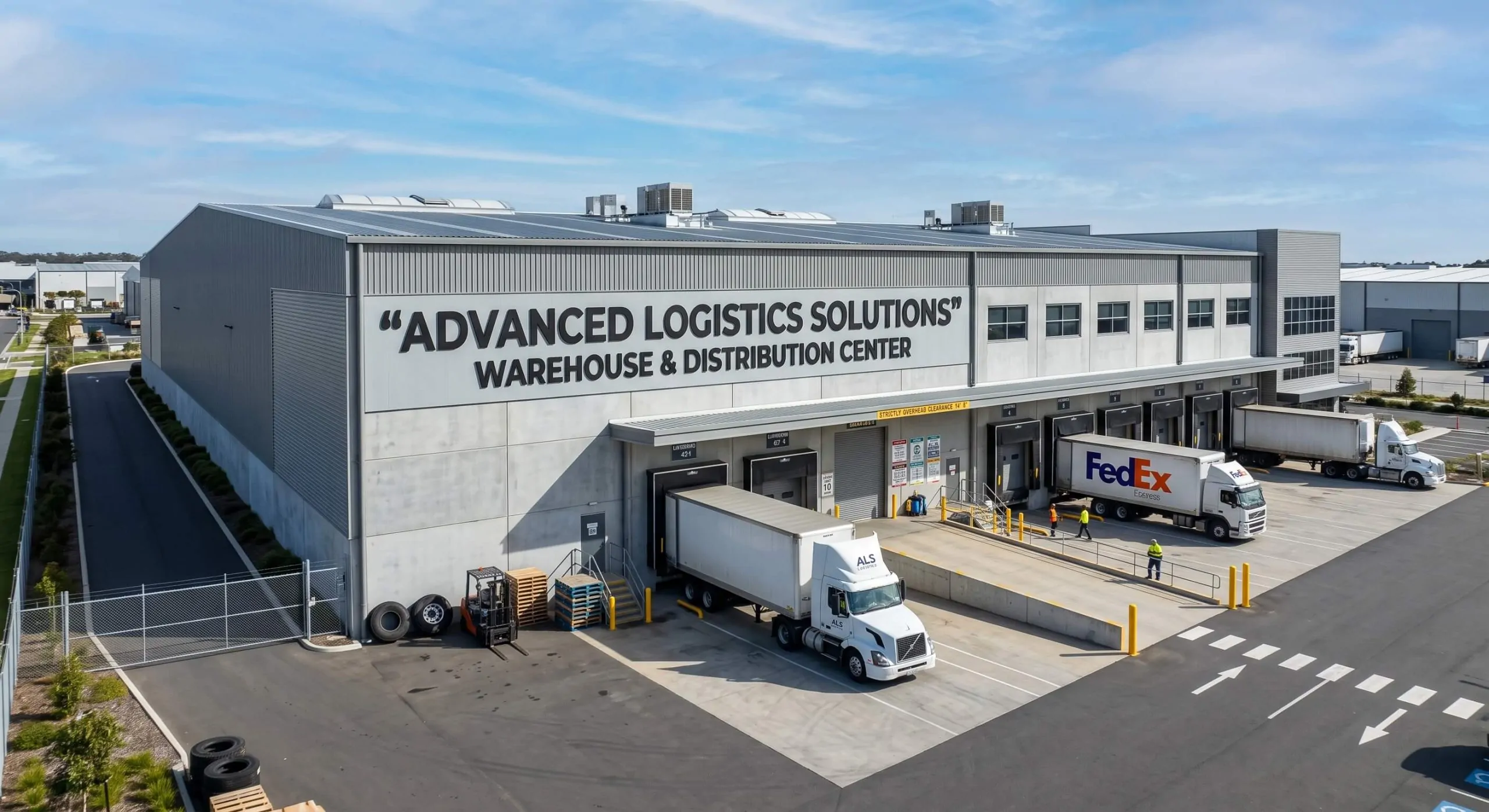
Industrial and Manufacturing Properties Need Site-Wide Identification
The county has targeted advanced manufacturing, life sciences, technology and agribusiness among its economic-development sectors, and those properties rarely need one exterior sign: they need a site that can be navigated.
- Building identification: exterior letters, logos and wall-mounted signs
- Door and bay numbers: service doors, overhead doors, loading positions, production areas
- Shipping and receiving: freight operations separated from visitor entrances
- Directional signs: parking, offices, receiving, deliveries, service areas, site circulation
- Interior facility signs: departments, rooms, restricted areas, operational spaces, safety identification
- Vehicle graphics: the same identity carried away from the property
A facility works when all of those follow one naming and numbering system. On a site where door numbering was added in stages, a delivery driver ends up with paperwork that names a door the building does not.
Agribusiness & Tourism
Farm Markets, Wineries and Visitor Businesses
Hunterdon’s planning strategy identifies agriculture, agri-tourism, outdoor recreation, historic character and tourism as important parts of the local economy, and that produces sign projects for businesses that look nothing like a traditional retail storefront.
Farm markets, wineries, event businesses, hospitality properties, tourism destinations, restaurants, local producers, visitor-oriented businesses and recreation businesses all share a particular problem: the property layout matters more than the storefront does. A visitor arriving off a rural road needs to find the entrance, know where to park, know which building to walk to and know where the event or tasting room actually is, before any of the branding matters.
So the packages here lean toward building identification, entrance signs, directional signs and parking signs, then window graphics, interior identification, event graphics, banners, temporary signs and vehicle lettering. It is closer to wayfinding on an industrial site than to a Main Street fascia, and it is worth planning as a route rather than as a sign.
How It Works
Businesses We Serve Across Hunterdon County
Main Street retail and dining, the offices and medical practices in the business parks, the manufacturers along the corridors, and the farms and visitor businesses that make this county different from the rest of North Jersey.
Towns we serve in Hunterdon County: Flemington sign company.
Retail Stores
Storefront signs, channel letters, dimensional lettering, window graphics, awnings and temporary promotions.
Restaurants and Hospitality
Exterior signs, blade signs, awnings, menu graphics, window lettering and interior identification.
Professional Offices
Building signs, directories, suite identification, reception signs, privacy graphics and ADA signage.
Medical and Healthcare
Exterior identification, directories, reception signs, privacy film, ADA signs and interior wayfinding.
Industrial and Manufacturing
Building identification, door numbers, facility signage, directional signs, office signs and vehicle graphics.
Agribusiness and Tourism
Entrance signs, building identification, parking and directional signs, event graphics, window signs and vehicle lettering.
Property Managers
Tenant changes, directories, replacement signs, repair work, leasing graphics and sign removal.
Contractors and Service
Vehicle lettering, office signs, building identification, decals, banners and commercial graphics.
Tenant Changeover
Moving Into an Existing Hunterdon County Business Space?
Incoming tenants inherit sign infrastructure, and on older downtown buildings the brackets and mounting points already approved for the façade are usually worth more than the signs hanging from them.
What you may inherit
- Channel-letter mounting and existing electrical wiring
- Sign cabinets
- Awning frames and blade-sign brackets
- Window graphics and door lettering
- Directory systems, suite plaques and reception signs
- Facility signs
A usable cabinet may need only a new face, an awning frame may suit recovering, a directory may need one tenant panel and existing mounting may work with new signage. Other components come out because they are damaged, outdated, unsafe or incompatible with the incoming business.
What the changeover covers
- Previous sign removal and existing-condition survey
- Storefront or building measurements
- New exterior identification and channel-letter replacement
- Replacement sign faces and awning recovering
- Blade-sign replacement
- Window-vinyl removal and new window graphics
- Door lettering, directory updates and suite signs
- Temporary opening graphics, then final installation
Businesses here often run from one municipality while keeping another office or facility elsewhere in the county. We hold common artwork and production specifications while adapting each project to its municipality, building dimensions, historic conditions, viewing distance, landlord criteria and interior layout, so each location looks like the same company without the same sign being forced onto every building.
Repair & Refacing
Sign Repair, Refacing and Replacement
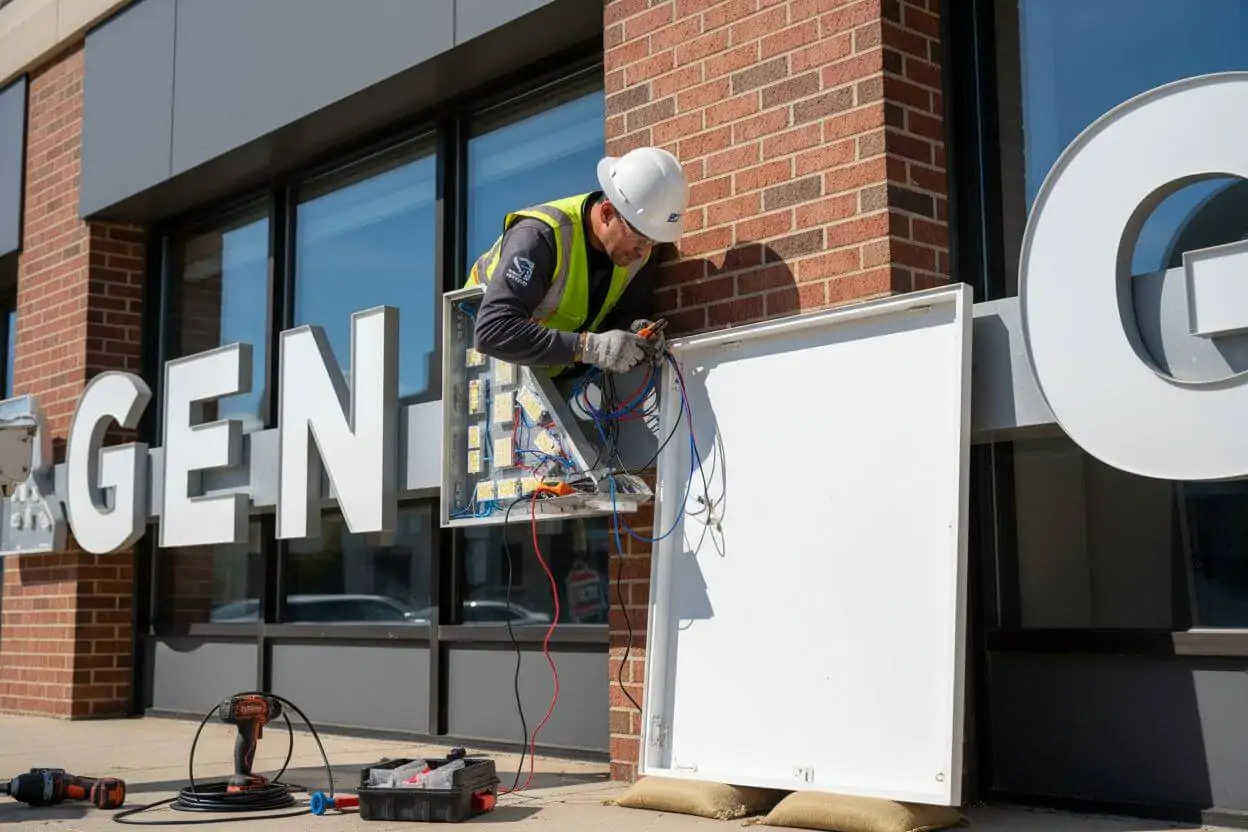
The county carries a large inventory of existing commercial signage across older downtown properties and newer commercial corridors alike. LEDs fail, sign faces crack, letters loosen, vinyl fades, awning fabric wears, brackets deteriorate, tenant names change and directories go out of date.
Gogi Signs repairs and updates commercial signage even when another company originally fabricated it:
- Channel-letter repair
- LED and electrical service
- Replacement sign faces
- Dimensional-letter repair
- Blade-sign repair
- Awning recovering
- Window-vinyl replacement
- Directory updates
- Tenant-panel replacement
- Sign removal
- Interior sign replacement
- New tenant conversion
Where the existing structure remains useful, repair or refacing usually makes more sense than replacement, and on a historic downtown façade it avoids a second round of review as well as a second set of holes. Where continued repairs are no longer practical, we fabricate new signage to what that municipality allows.
Serving Hunterdon County
Serving Businesses Throughout Hunterdon County
Gogi Signs serves commercial properties across Hunterdon County, including:
- Flemington
- Raritan Township
- Clinton
- Clinton Township
- Readington
- Lambertville
- Frenchtown
- High Bridge
- Lebanon
- Tewksbury
- Ringoes
- Whitehouse Station
The 2024 Growth Management Plan continues to direct growth toward established centers and economic-development corridors while preserving the county’s rural and historic character.
That creates a service area where a downtown storefront, a highway retailer, an office building and an industrial property may sit only a few miles apart and still need very different signage, which is why each project starts from the address rather than from a county template.
2005
Serving New Jersey since
12
Municipalities covered
Insured
Commercial installation crew
In-house
Fabrication & large-format printing
Get Started
Planning a Sign Project in Hunterdon County?
Whether you are opening a Flemington storefront, updating a Clinton office, identifying an industrial property, adding signage to a professional building, marking the entrance to a farm market or winery, changing tenants or repairing existing signage, start with the exact property address and photographs.
Gogi Signs can handle site measurements, sign drawings, fabrication, large-format printing, installation, repair and future sign changes from our New Jersey shop.
OUR SHOP
7 W Baltimore Ave Suite B, Linden, NJ 07036, United States
Prefer to talk it through?
Request a Quote
The property address and a photograph of the building start the job.
- Serving New Jersey since 2005
- In-house fabrication and printing
- Insured installation crew
- Repair and refacing on existing signs
FAQs
Frequently Asked Questions About Signs in Hunterdon County
No. Sign regulations are municipal. Flemington, Clinton, Lambertville, Readington, Raritan Township and the other Hunterdon County municipalities can maintain different sign and zoning standards.
Yes. We serve businesses throughout Hunterdon County, including Flemington, Raritan Township, Clinton, Readington, Lambertville, Frenchtown, High Bridge, Lebanon and the surrounding communities.
Yes. We produce close-range storefront signs, blade signs, awnings and window graphics, as well as channel letters and larger building identification for highway-oriented commercial properties.
Yes. We produce building identification, door and bay numbers, shipping and receiving signs, parking signs, directional signage, interior facility signs and vehicle graphics.
Yes. Those projects usually lean toward entrance signs, building identification, parking and directional signage, event graphics and vehicle lettering, because the property layout matters more than the storefront does.
Yes. We produce exterior identification, lobby directories, suite signs, ADA signs, floor identification, reception signs, privacy graphics, and interior wayfinding.
Yes. We design dimensional letters, blade signs, awnings, plaques and other products around older buildings, but the local historic-review requirements need checking for the exact address.
Yes. Where the existing sign system supports individual replacement pieces, we manufacture a new tenant panel, suite sign or directory component without rebuilding the full system.
Sometimes. We inspect existing cabinets, wiring, mounting, awning frames and brackets before deciding whether reuse or refacing is practical.
Yes. We produce directories, reception signs, suite identification, tactile and Braille room signs, privacy graphics and interior wayfinding.
Yes, and it is worth doing them together. Design is charged once, the run prints in one pass so the color holds, and the approved file is kept so a bus added to the fleet later still matches. See fleet graphics.
Send the exact property address, photographs of the storefront or installation area, your logo or artwork, photographs of existing signage, and any landlord or property criteria you already have.