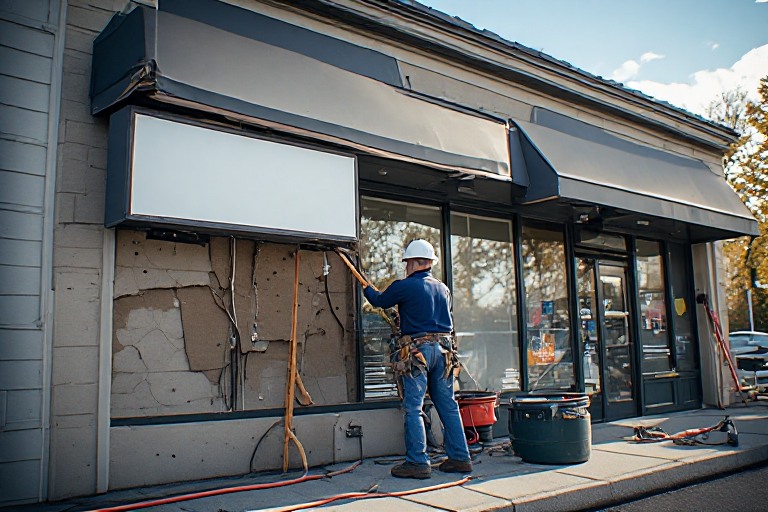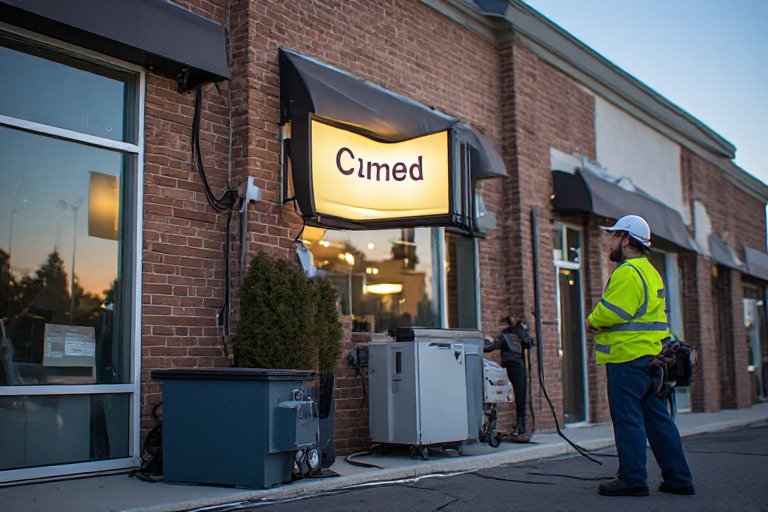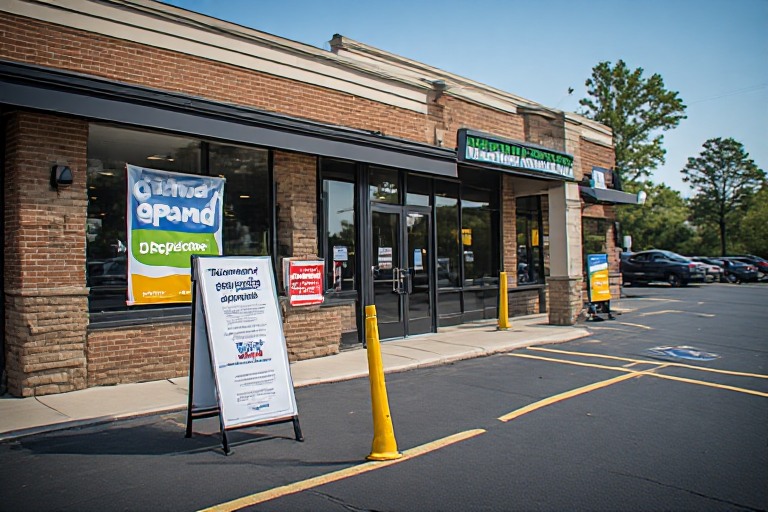
“Temporary” describes how long a sign is intended to stay, not whether it is free from rules. A grand-opening banner, window poster, portable sign, feather flag, construction sign, or seasonal promotion can still be regulated by the municipality and property owner.
The exact rule is local. Some jurisdictions allow specified temporary signs for a limited number of days; others require a permit, restrict certain formats, or count temporary display area toward a broader sign allowance. Always verify the ordinance for the installation address.
Duration is only the first condition
A local code may limit consecutive display days, total days per calendar year, or the number of temporary permits issued to a business. It may distinguish a grand opening from a recurring sale or special event. The display clock may begin on installation rather than the event date.
Record approval and removal dates in the business calendar. A banner left in place after its authorized period can become a violation and quickly look neglected.

Format and placement shape the review
Temporary signs often include banners, rigid yard signs, A-frames, flags, posters, inflatable devices, and window graphics. An ordinance may permit some while prohibiting or separately regulating others.
Placement rules can address:
- attachment to a building or approved support;
- setbacks from roads and property lines;
- sidewalk and accessible-route clearance;
- visibility at driveways and intersections;
- attachment to trees, utility poles, fences, or traffic-control devices;
- maximum area, height, and quantity;
- illumination, movement, or changeable messages;
- resistance to wind and weather.
A sign that blocks a driver’s view or narrows an accessible path is a safety problem even if the promotional message is short-lived.

Property permission comes before installation
Tenants should obtain written landlord or management approval. Shopping centers may designate exact banner zones, installation hardware, colors, and display periods. They may prohibit lawn signs, flags, or sidewalk displays even where the municipality would otherwise allow them.
Ask whether the property has permanent attachment points. Improvised ropes, masonry screws, roof fasteners, and adhesives can damage the building envelope or create liability. The removal method should be planned with the installation.
Temporary signs need real materials and hardware
Cheap materials can fail before the campaign ends. Specify for the location and exposure:
- use hemmed, reinforced edges and appropriate grommet spacing for banners;
- consider wind slits only with advice suited to the banner and site—they are not a universal cure;
- use rated supports and ballast for portable systems;
- keep sharp edges and trip hazards away from pedestrian routes;
- choose window media compatible with the glass and expected sun exposure;
- inspect ties, frames, and anchors during the display period.
Remove or secure outdoor temporary signs when severe weather is forecast. A marketing deadline never justifies leaving a loose panel or unstable frame in public space.
Window signs require special attention
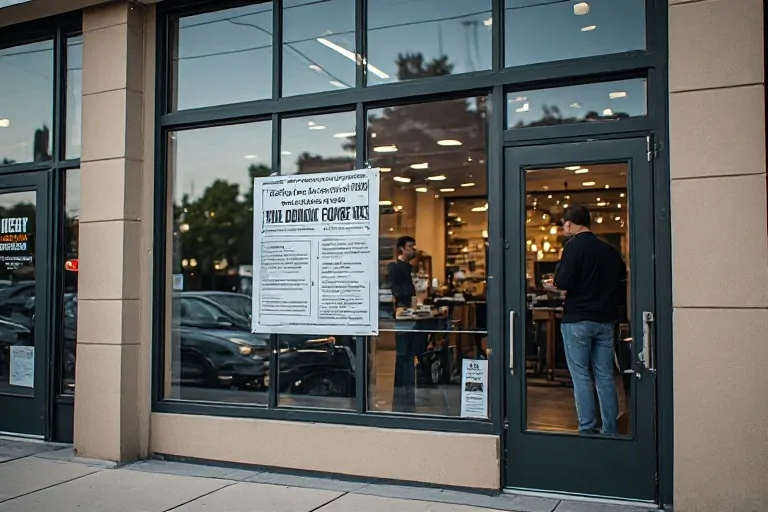
Window graphics may feel like interior décor, but codes can regulate them based on visibility and percentage of glazing covered. Large opaque displays can also affect natural surveillance, emergency visibility, or lease requirements.
Measure the window area and proposed coverage rather than estimating by eye. Decide whether the display is inside or outside the glass, how it will read through reflections, and whether adhesive removal could damage tint or coatings.
Accessibility is not suspended for promotions
Federal ADA sign scoping includes an exception for certain temporary signs used seven days or less, but that narrow exception should not be read as permission to block an accessible route, entrance, parking sign, or required permanent information. Local accessibility and building requirements still deserve review.
Keep A-frames, queue signs, and display stands out of clear routes. Do not cover permanent room, exit, entrance, or parking information with promotional materials.
Create a temporary-sign campaign sheet
For each campaign, record the sign type, dimensions, exact location, display dates, permit or exemption confirmation, landlord approval, installer, inspection frequency, and removal owner. Include a site photo and the approving emails.
This simple record is valuable for businesses running repeated seasonal promotions. It prevents staff from reinstalling an old sign in a location that was never approved or leaving it up because nobody owns removal.
Match the temporary format to the exposure
Short indoor event
A tabletop sign, easel, or removable wall graphic may be suitable when it does not narrow circulation or cover required information. Confirm stability, trip risk, adhesive compatibility, and the expected viewing distance.
Storefront promotion
Window media, a managed banner zone, or an approved poster case can communicate without placing loose hardware on a sidewalk. Check glazing coverage, reflections, interior lighting, landlord criteria, and removal residue.
Outdoor site event
Freestanding and flexible signs face wind, rain, vehicles, landscape equipment, and public access. Use a system intended for the exposure, follow its setup instructions, inspect it during the event, and remove it when conditions exceed safe use.
Construction or phased opening
Temporary identification may need to last longer and coordinate with shifting entrances, barriers, and delivery paths. Use consistent destination names and dates. Replace weathered panels rather than letting an interim system become progressively less readable.
Separate the message from the hardware
For recurring campaigns, invest in approved, serviceable infrastructure and change only the message panel. Record the maximum insert size, material, attachment, display duration, and storage method.
This approach can improve appearance and safety while reducing repeated installation decisions. It also allows the business to design new campaign graphics inside a known physical and regulatory envelope.
Inspect while the sign is in use
Assign staff to check attachment, leaning, edge lifting, obstruction, water, and damage at opening and closing. After wind or heavy rain, add a condition check. If the sign moves, tears, or blocks a route, remove it until it can be made safe.
Choose permanent infrastructure for recurring messages
If a business promotes offers every month, a series of improvised banners is rarely the best system. Consider an approved poster case, changeable tenant panel, window zone, digital display, or permanent frame designed for replaceable inserts. Upfront planning can produce cleaner branding, faster changeovers, and fewer permit questions.
Before the sign goes up
- Confirm the municipal definition of the proposed sign.
- Verify whether a permit or zoning approval is required.
- Record allowed dimensions, quantity, location, and dates.
- Obtain property-owner approval.
- Select weather-appropriate hardware and material.
- Protect sidewalks, accessible routes, and sight lines.
- Assign inspections and a firm removal date.
- Store proof of approval with the campaign file.
Temporary signs work best when they look purposeful for their entire authorized life. Treating compliance, mounting, maintenance, and removal as part of the campaign protects both the public space and the brand.
Close the campaign deliberately
Removal is part of the installation scope. Take the sign down on the recorded date, remove ties and temporary fasteners, clean compatible adhesive residue, and inspect the mounting surface. Return reusable hardware to labeled storage.
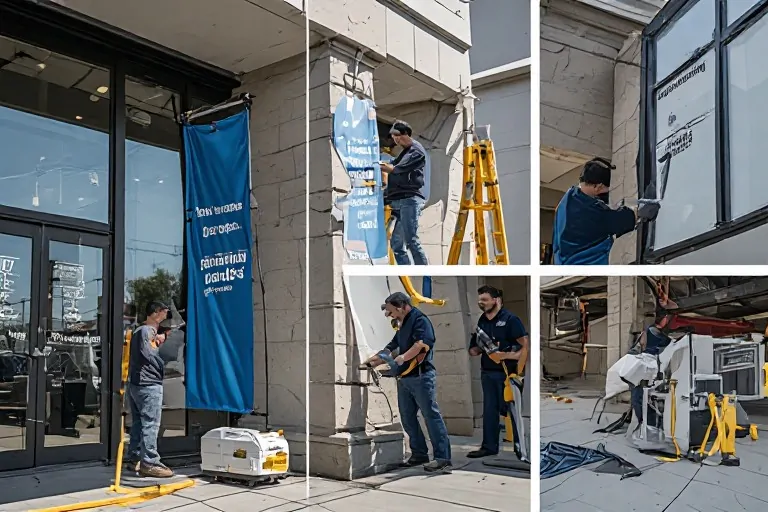
Photograph the cleared area and close any permit or management requirement. Note what worked: whether the sign was visible, whether hardware loosened, whether customers acted on the message, and whether another format would better serve the next campaign. Those notes turn a temporary display into a repeatable practice.
If the business uses the same message repeatedly, compare the temporary format with a permanent changeable system using temporary versus permanent signage. Before the next installation, review the local controls in understanding sign regulations.