A banner feels temporary to the business that hangs it. To the zoning office it is a sign with a start date, an end date and a size limit.
Temporary sign regulations catch more businesses out than permanent sign rules do. A permanent sign goes through drawings, a quote and a permit, so somebody checks the code. A banner, an A frame or a window poster usually goes up the same week it is printed, and nobody asks whether the town allows it until a zoning officer leaves a notice.
The rules are not hard to follow once you know where to look. Most towns regulate temporary signs by four things: how big the sign is, where it sits, how long it stays up and whether it needed a permit first.
This guide walks through each of those with examples from real New Jersey ordinances, explains what changes in New York City, and ends with a checklist to run before ordering anything.
Temporary Signs at a Glance
| Sign type | What towns usually control | Example from a New Jersey code |
|---|---|---|
| Grand opening banner | One display, a fixed number of days, a permit | Old Bridge allows a grand opening display of up to 30 days and prohibits other banners |
| Promotional banner | Times per year, days per display, share of the facade | Brick allows four displays a year of up to 30 days each, covering no more than 15% of the first floor facade |
| Sidewalk A frame | Zones where allowed, size, clear walking path | Brick allows one per business in its B 1 to B 3 zones, at least 10 ft from the pavement |
| Window poster | Percentage of the glass covered | Atlantic City caps temporary window signs at 33% of a window, Brick at 50% |
| Event or sale sign | How early it goes up, how soon it comes down | Marlboro allows event signs 45 days ahead, removed within 7 days |
| Construction sign | One sign for the length of the job | Marlboro allows a contractor one sign of up to 6 sq ft |
How Towns Regulate Temporary Signs
Every New Jersey municipality writes its own sign ordinance, so two stores on the same highway can face different rules a mile apart. The structure, though, is usually similar. A temporary sign section lists the allowed types, sets a maximum size and duration for each, says whether a zoning permit is required and lists what is prohibited outright, such as flashing lights, pennant strings or signs in the public right of way.
Why Content Matters Less Than It Used To
Older codes defined temporary signs by what they said: grand opening, going out of business, special sale. In 2015 the U.S. Supreme Court ruled in Reed v. Town of Gilbert that sign rules based on the message are subject to strict scrutiny. Since then many towns have been rewriting their temporary sign sections around size, placement and time instead. You will still find message based categories in plenty of codes, so read the version currently in force rather than a neighbour’s summary.
State Construction Rules Are a Separate Layer
Zoning sets what is allowed. The New Jersey Uniform Construction Code decides whether a construction permit is also needed, and it exempts a sign only when it is ground supported, not wired to an electrical circuit, no larger than 25 square feet on one side and no more than six feet high. A large banner frame fixed to the building, or anything lit, falls outside that exemption.
Banners and Grand Opening Signs
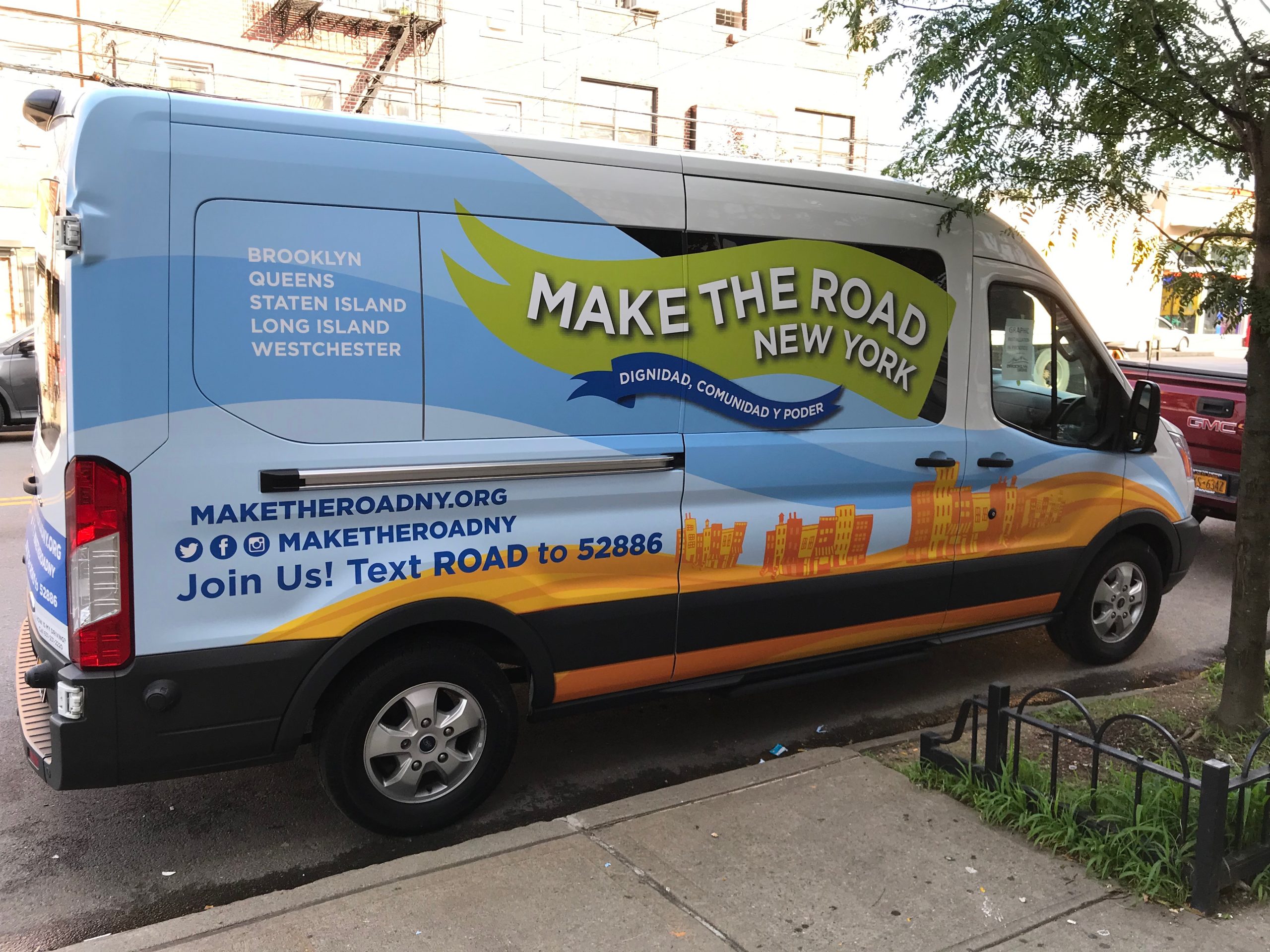
Banners are the most regulated temporary sign because they are the easiest to leave up forever. Towns typically limit how many times a year a business may display one, how long each display lasts and how much of the wall it covers.
- Brick Township: a banner may be hung four times a year for up to 30 consecutive days each, never within two months of the previous permit, covering no more than 15% of the first floor facade. The permit must be displayed while the banner is up, under § 245-313 of the township code.
- Old Bridge Township: banners and pennants are prohibited except for a grand opening display of up to 30 days, under § 250-52G.
- South Brunswick: in its commercial, office and industrial districts, one temporary grand opening sign is allowed for up to 30 days within the first four months after the certificate of occupancy, with its own zoning permit stating the start and end dates.
Shopping centers often restrict banners further than the town does, so a tenant needs both the landlord and the zoning office to agree. See our Vinyl Banners page for material and finishing options, and our Mesh Banners page for fences and windy elevations.

Sidewalk A Frame Signs
Sidewalk signs are allowed in some districts and banned in others, and the difference is usually about pedestrians. Where they are allowed, the rules focus on keeping a clear walking path and bringing the sign inside at night.
Brick allows them in its B 1 to B 3 zones, portable with no posts, at least 10 feet from the edge of the pavement and one per business. Atlantic City prohibits A frame, sidewalk and curb signs unless a specific district regulation allows them, under § 163-71 of its code.
For businesses ordering temporary signs in Hoboken or Jersey City sidewalk signs, sidewalk space is tight, so confirm the clear path rule before ordering a frame. On a public sidewalk the accessibility rules also matter. A sign that leaves too narrow a path, or that a cane cannot detect, is a hazard as well as a violation. See our Sidewalk Signs page for frame and insert options.
Window Signs and Posters
Window signs are the temporary sign most often overlooked, because they sit inside the building. Many codes still count them, usually as a share of each window.
- Brick Township: temporary window signs may cover no more than 50% of the window they are on.
- Atlantic City: temporary window signs may cover no more than 33% of a window and may go up 45 days before an event.
- Bridgewater Township: signs inside a building that are meant to be read from outside count toward the maximum sign area, which can use up the allowance for a permanent sign.
- Perth Amboy: window sale signs need no permit but may go up only 14 days before the sale, must show its dates and come down when it ends.
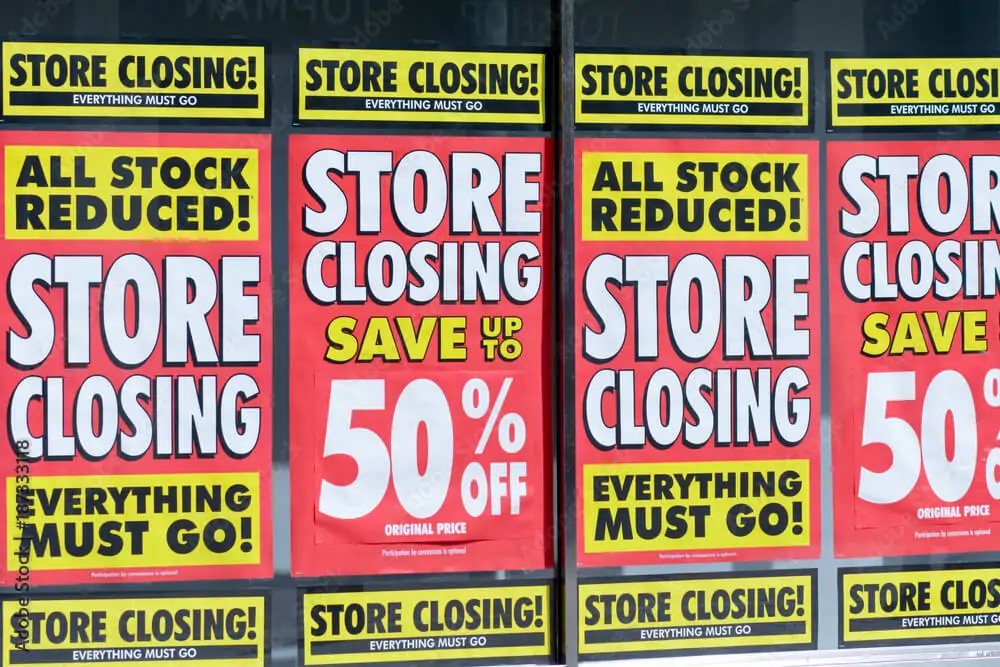
Coverage limits matter for more than compliance. Glass that is fully covered hides the store from people walking past and blocks the view in for safety. See our window decal printing page for removable options that are easy to change when a promotion ends.
Event, Sale and Real Estate Signs
Signs tied to a date usually have two clocks: how early they may go up and how quickly they must come down. Marlboro allows event signs to go up 45 days ahead and requires them to come down within 7 days after, under § 220-99E. Andover Township, by comparison, limits special sale and grand opening signs to 10 square feet, posted no more than 30 days ahead and removed within five days after the event.
Real estate signs are often handled under their own section, with size limits that differ for residential and commercial property. Our Yard Signs page covers the stakes and sign boards most often used for these.
Construction and Coming Soon Signs
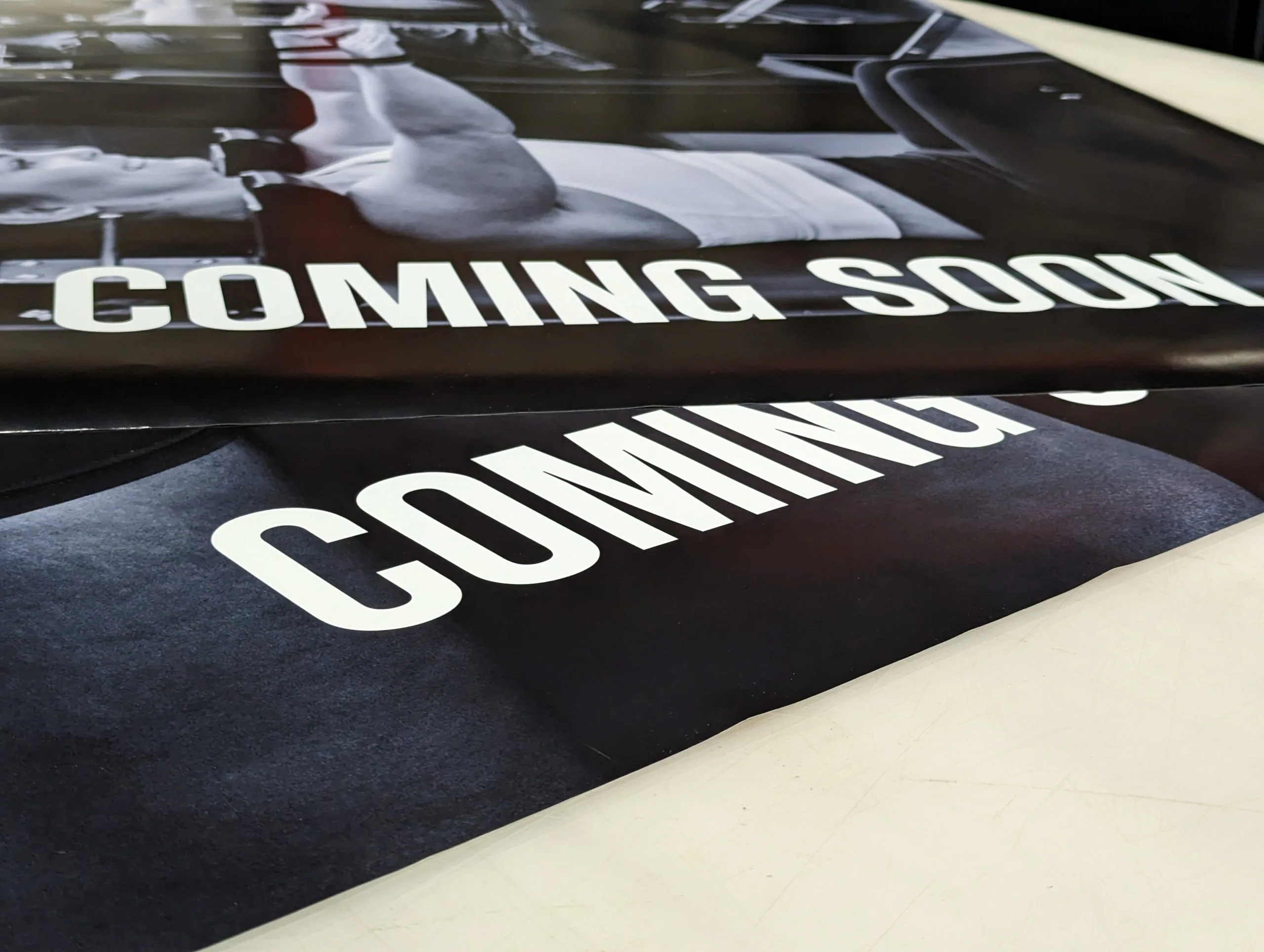
A sign announcing the contractor or the future tenant is usually allowed for the length of the job. Marlboro, for example, lets a contractor place one sign of up to 6 square feet while the work lasts. Coming soon signs on a storefront under fit out tend to be treated as temporary window signs or banners, so the same coverage and duration limits apply.
Job sites have their own required notices as well, such as permit placards and safety signs, which are not counted as advertising. See our Construction Signs page for job site boards and fence banners.
Temporary Signs in New York City
New York City’s Department of Buildings regulates signs in all five boroughs, so a Manhattan storefront sign, a Brooklyn business sign and a sign in Queens all answer to the Construction Code and the Zoning Resolution rather than a town by town ordinance. Its guidance lists permit exemptions that include painted signs, non illuminated wall signs of six square feet or less, and ground or temporary real estate signs of 12 square feet or less. Temporary signs put up during construction or alteration work are also exempt from the licensed sign hanger requirement.
Exempt does not mean unregulated. Exempt signs still have to meet zoning limits, and anything projecting over the sidewalk is limited by how far it may extend past the street line. The DOB sign permit requirements page is the place to confirm whether a specific sign needs filing.
- Rules set by each municipality
- Zoning permit often required for banners
- Size, days and times per year capped
- Ground signs up to 25 sq ft and 6 ft exempt from construction permit
- Rules set citywide by DOB and zoning
- Small unlit wall signs exempt from permit
- Temporary real estate signs up to 12 sq ft exempt
- Projection past the street line limited
Checklist Before You Order a Temporary Sign
- Find the town’s temporary sign section: search the municipal code for banner, temporary sign or window sign, and note the size, duration and permit rules.
- Check the lease: shopping centers and office parks often ban banners or require approval, even where the town allows them.
- Size the sign to the limit: measure the facade or window first, then design to the allowed percentage or square footage.
- Apply for the permit early: some towns want dates on the application, and some will not issue a second permit too soon after the first.
- Put the end date in the calendar: most violations are signs that stayed up after the permit expired.
- Plan the removal: take the sign down cleanly and keep it flat if it will be used again.
Common Questions About Temporary Sign Regulations
Do I need a permit for a banner in New Jersey?
Often, yes. Many New Jersey towns require a zoning permit for each banner display and limit how many displays are allowed a year. Brick, for example, requires a permit for every display, and Old Bridge allows banners only for a grand opening.
How long can a grand opening banner stay up?
Usually around 30 days, but it depends on the town. Old Bridge and South Brunswick each allow a grand opening display of up to 30 days, and South Brunswick ties it to the first four months after the certificate of occupancy.
Are sidewalk A frame signs allowed?
Sometimes. Some towns allow them in downtown business districts with size and placement limits, while others prohibit them unless a district rule allows them. They almost always have to come inside when the business closes.
Do window posters count as signs?
In many towns they do. Codes commonly cap temporary window signs at a share of each window, such as 25%, 33% or 50%, and some count interior signs read from outside toward the total sign area.
Can I leave a banner up until the permanent sign arrives?
Only within the time the permit allows. If the permanent sign will take longer, ask the zoning office whether a second permit is possible, or use a coming soon window graphic that stays inside the coverage limit.
What happens if a temporary sign stays up too long?
The zoning officer usually issues a notice first, then fines if the sign is not removed. Marlboro’s code, for example, sets fines of $100 to $1,250 and treats each day after notice as a separate offense.
Plan Your Temporary Signs
Gogi Signs prints banners, window graphics, sidewalk signs and job site signs for businesses across New Jersey and New York City, and we check the town’s temporary sign rules before anything goes to print. That way the sign is sized to the limit and ready for the permit application.
Browse our Event Signage range, or request a free quote with your dates and location and we will tell you what the town allows.