A sign company can provide a more useful quote when it understands the message, property, construction, approvals, and installation. Incomplete information forces the estimator to use assumptions or provide a range that may change after survey.
You do not need every technical answer. You do need to separate confirmed facts from unknowns.
Describe the Sign’s Job
Explain who needs to see it, from where, and what they should understand or do. State whether the sign is exterior identification, wayfinding, a lobby feature, a directory, vehicle graphics, or a temporary message.
Provide the Exact Location
Share the address, suite, property contact, working hours, access restrictions, and whether the space is occupied or under construction.
Identify the proposed wall, window, monument panel, vehicle, or interior area.
Send Useful Photographs
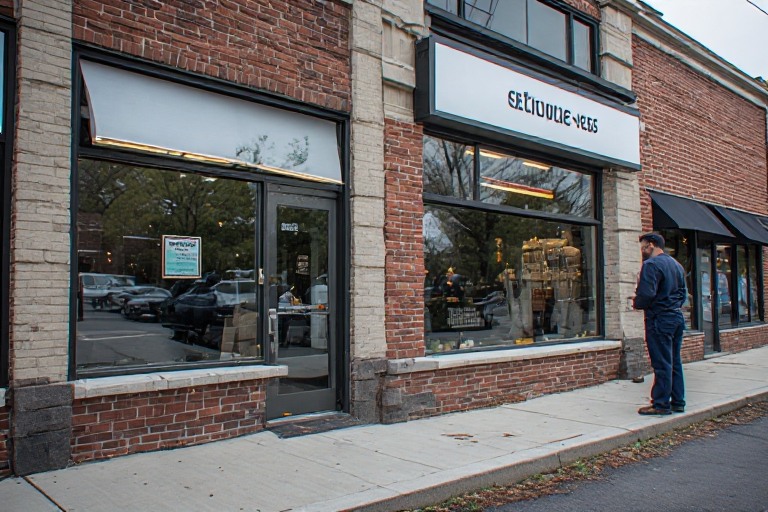
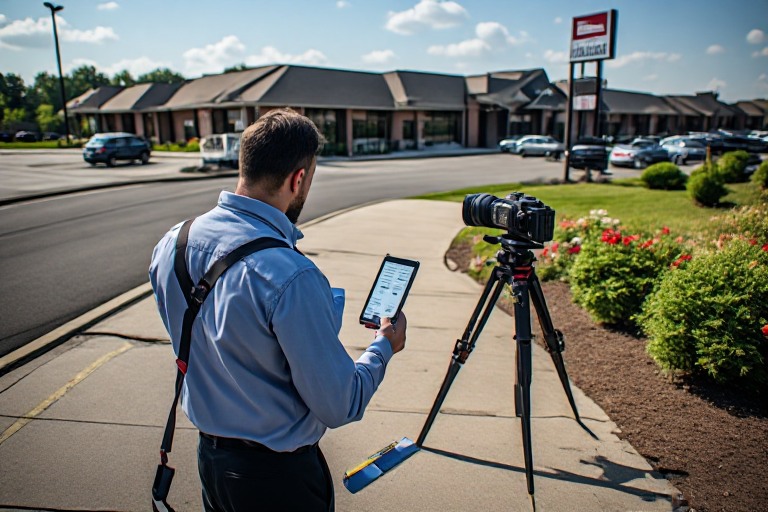
Include wide views of the full building, customer approaches, proposed installation area, existing signs, nearby power, obstructions, and access conditions.
Close-ups alone do not show height or equipment needs. Avoid screenshots when original photos are available.
Share Measurements and Their Source
Provide available dimensions, elevations, architectural drawings, sign criteria, or existing sign records. State whether measurements are field verified or approximate.
A professional survey may still be required before final design and fabrication.
Supply Brand Files
Send vector logos, brand standards, approved colors, typography, alternate logo arrangements, and exact business-name spelling.
If those files do not exist, state whether design or logo preparation is part of the request.
Confirm the Message
List all proposed copy: business name, descriptor, hours, suite, departments, phone, website, directions, or legal information.
Mark uncertain details. Do not approve permanent production simply because a placeholder was included in the quote.

Provide Landlord or Property Rules
Share lease provisions, sign criteria, approved sign bands, monument rights, mounting restrictions, materials, colors, illumination, and submission procedures.
Identify who grants landlord approval and whether fees or special insurance apply.
Explain Existing Signs and Removal
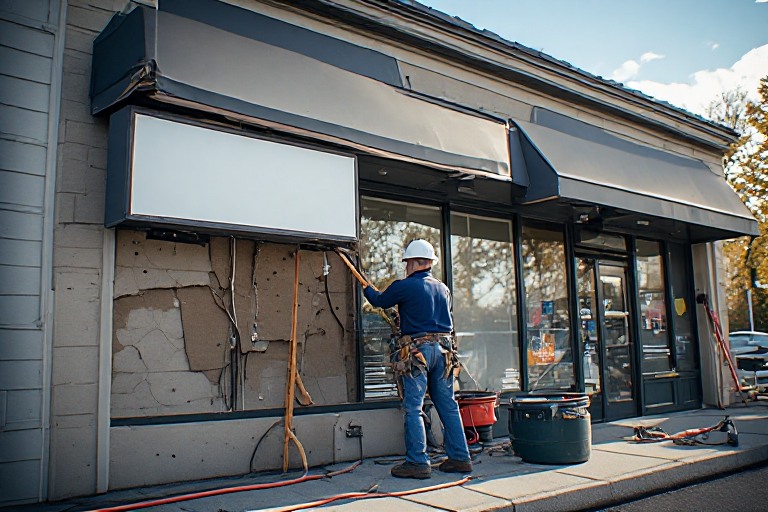
State what must be removed, whether it is illuminated, who owns it, and what restoration the lease requires.
Photograph the face, mounting, wall, wiring, and surrounding surface. Hidden conditions may still require contingency.
Describe Electrical Conditions
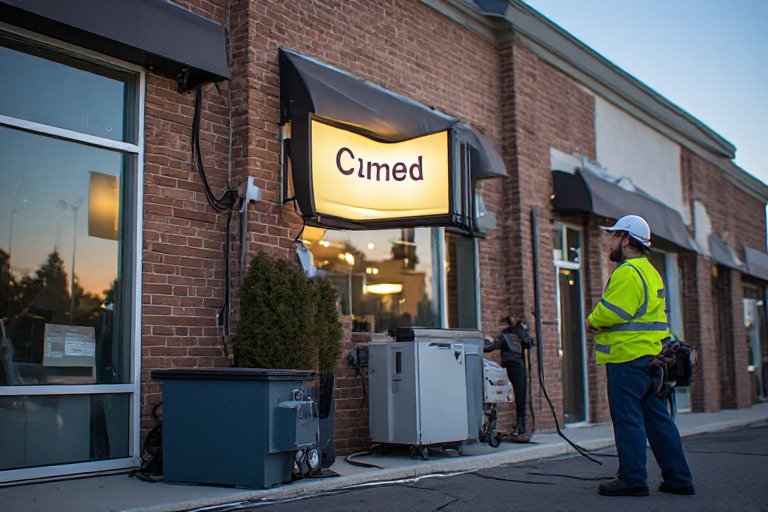
For illuminated signs, share available plans, power location, circuit information, and electrician or contractor contact.
State whether the quote should include power, final connection, controls, permits, and inspection.
Identify Installation Constraints
Note height, lift access, roof permissions, narrow sidewalks, traffic, landscaping, loading limits, security, escorts, after-hours rules, union labor, and active customer areas.
State Quantity and Location Variations
For multiple signs or sites, provide a schedule showing quantities, sizes, messages, vehicle types, and known differences.
Do not assume one prototype fits every property without survey and approval.
Share the Target Schedule
State opening, construction, campaign, or lease dates and whether temporary signs are needed.
Distinguish the desired installation date from a date already supported by landlord and municipal approvals.
Define the Requested Scope
Ask the company to include or exclude design, surveys, permits, engineering, fabrication, electrical work, removal, repair, installation, inspection, and maintenance.
Written scope makes proposals easier to compare.

State the Budget When It Helps
A realistic budget range allows the company to recommend an appropriate sign system rather than develop options far outside the available investment.
The company should still explain what the proposed budget includes and what tradeoffs it creates.
Identify Decision Makers
List the business approver, property contact, architect, contractor, and other stakeholders. Establish who provides final approval and how feedback will be consolidated.
Provide a Preliminary Sign Schedule
List each expected sign with a working code, message, quantity, location, approximate size, illumination, and status. Include primary identification, secondary entrances, directories, parking, receiving, accessibility, hours, safety notices, and temporary opening needs.
Mark unknown entries instead of omitting them. A vendor can price an allowance or recommend a survey; a missing item may not appear until installation.
Share Property Documents
Provide the lease sign exhibit, tenant criteria, landlord contact, storefront drawing, site plan, and prior approvals. If the building is in a historic district, redevelopment area, or managed campus, say so.
For an existing sign, share photographs, dimensions, permits, electrical information, and service history if available. State whether it should be removed, reused, inspected, or refaced.
Describe Site Access
Tell the estimator about height, sidewalks, slopes, landscaping, canopies, wires, restricted parking, fire lanes, loading times, roof access, security, and work hours. Include wide photos showing where equipment could stand.
Access changes labor and equipment. A close photo of the sign face is not enough to price installation.
Define the Desired Deliverable
Say whether the request is for a planning allowance, budget estimate, permit-ready proposal, or fixed scope ready for production. State when pricing is needed and when the decision will be made.
If vendors are bidding, give each the same information and response format. Request separate prices for unknown or optional work rather than allowing different hidden assumptions.
Include Operational Priorities
Explain which messages are required at opening, which can follow, and which must remain visible during construction. Note customer approaches, nighttime use, deliveries, languages, and accessibility needs.
These details help the company recommend a sign system, not merely reproduce a list of panels.
Better Inputs Produce Better Comparisons
Use a quote-request cover sheet
A short cover sheet keeps a complex attachment package understandable. Include the project name and address, business and property contacts, response deadline, target installation period, requested proposal format, and list of supplied files.
State the assumptions every vendor should use. Identify whether pricing includes permit preparation but excludes government fees, whether standard work hours apply, whether an existing circuit is believed to be available, and whether removal should be shown as an alternate.
Ask vendors to identify departures instead of silently substituting a different scope. If one recommends another construction, it should explain why and show the change as an alternate.
Photograph the customer approach
Provide more than close façade images. Photograph each road entrance, parking approach, pedestrian route, and interior decision point. Add simple captions showing travel direction and the proposed sign location.
For an existing sign, include day and night views, mounting surface, nearby obstructions, and wide photographs of equipment access. Do not open enclosures or climb to obtain details without qualified personnel.
Record unknowns explicitly
Use a question log for facts that cannot yet be confirmed: whether an old structure is approved and reusable, whether the landlord requires a mounting pattern, whether the apparent circuit is dedicated, whether sealed details are required, whether lift access is available, and who repairs the wall.
Assign each question, due date, and pricing treatment. An explicit allowance is easier to manage than a missing responsibility discovered after award.

Review the package before sending
Confirm that filenames, drawing revisions, business names, quantities, and dimensions agree. Remove obsolete artwork. Ask someone unfamiliar with the project whether the documents clearly identify the desired signs, locations, responsibilities, and deadline.
Accurate site, brand, scope, and schedule information reduces allowances and helps every party understand what remains to be verified. After the bids arrive, normalize them using understanding business sign quotes and investigate the provider through how to choose the right sign company.