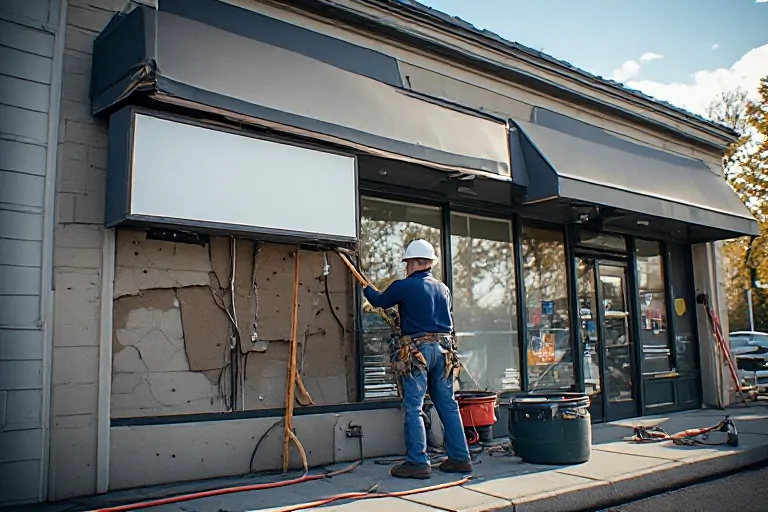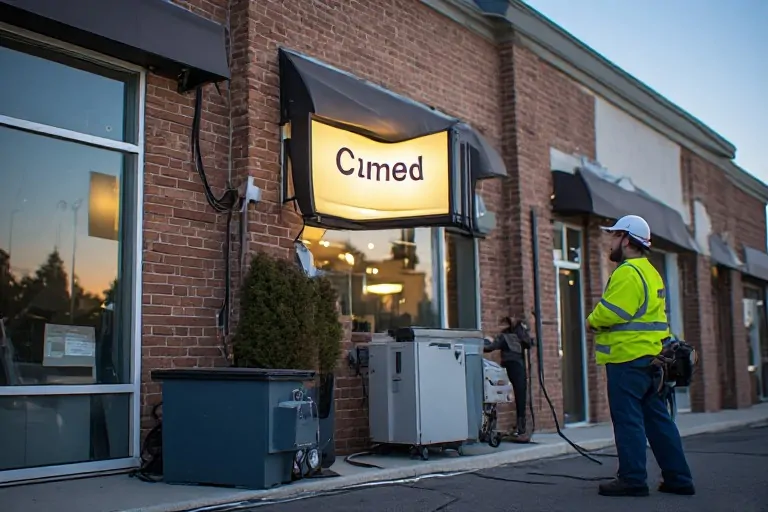
A commercial sign does not have one universal expiration date. Its useful life depends on material, construction, finish, lighting system, climate, orientation, installation, maintenance, and the point at which the sign no longer represents the business well.
One component may age before the rest. Vinyl can fade while the aluminum panel remains sound. LEDs can continue operating while power supplies fail. A cabinet may be reusable even though its face and branding need replacement. Planning around components produces better decisions than asking for one blanket number.
Separate physical life from useful life
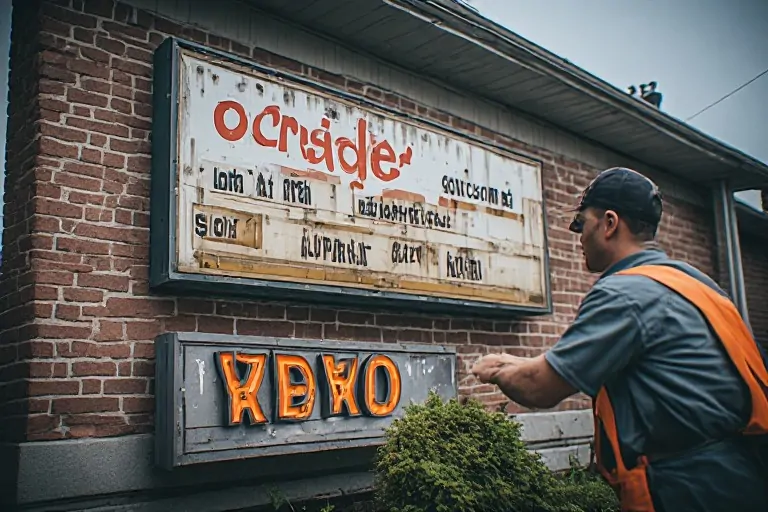
Physical life is how long a sign remains intact and serviceable. Useful life is how long it stays readable, accurate, on-brand, compliant, and economical to maintain.
A structurally sound sign can reach the end of its useful life because the business rebranded, the surrounding trees grew, a façade changed, the lighting became patchy, or repeated repairs made the face look uneven. Conversely, an old structure may remain valuable if it is inspected and professionally refaced.
What shortens sign life
Sun and orientation
Ultraviolet exposure can fade pigments, chalk coatings, embrittle plastics, and reduce contrast. South- and west-facing signs often receive stronger sun than sheltered elevations. Dark colors and some brand-specific hues may show change differently.
Water and temperature
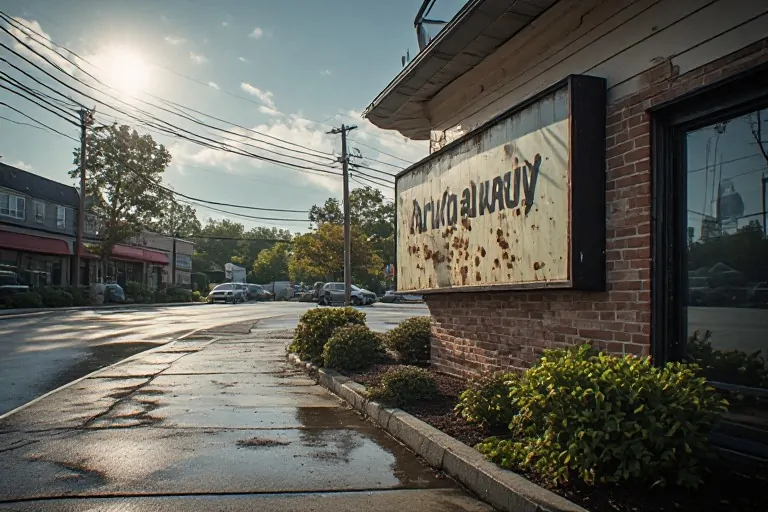
Failed seals, blocked drains, freeze-thaw cycles, condensation, and standing water can damage faces, wiring, coatings, and fasteners. Temperature cycling stresses joints and dissimilar materials.
Wind and movement
Freestanding signs, projecting signs, flexible faces, and banners experience repeated wind loads. Loose hardware can enlarge holes and accelerate fatigue. Storm exposure should prompt observation even when no obvious panel has fallen.
Pollution and cleaning practices
Road film, salt, grease, bird waste, and industrial residue can stain finishes and hold moisture. Harsh solvents, abrasive pads, and pressure washing at close range can damage graphics or force water into assemblies.
Installation quality
Correct attachment, drainage, compatible metals, protected wiring, sealed penetrations, and service access influence long-term performance. A premium face cannot compensate for trapped water or inaccessible power supplies.
Component-by-component expectations
Avoid publishing exact lifespan promises without a manufacturer’s specification, warranty, and site context. Instead, inspect how each component is aging.
Metal structures and cabinets
Aluminum and properly protected steel can support long service when drainage, coatings, welds, anchors, and corrosion are maintained. Inspect bases, seams, fasteners, and areas where dissimilar metals meet.
Acrylic and polycarbonate faces
Plastic faces can fade, yellow, crack, bow, or become brittle. Large faces may show stress near retainers. Replacement timing depends on material grade, exposure, thickness, and cabinet design.
Vinyl and printed graphics
Film performance varies by product series, ink, laminate, surface, orientation, preparation, and climate. Edge lifting, shrinkage, cracking, loss of gloss, and color change are common replacement signals. Use manufacturer-approved combinations and obtain the applicable warranty in writing.
Paint and coatings
Coatings may lose gloss, chalk, fade, blister, or corrode at damaged edges. Touch-ups can protect small areas but may remain visible. A full refinish is often better when color consistency matters.
LEDs, lamps, and power supplies
Light output can decline gradually, while individual modules or drivers may fail suddenly. Heat, moisture, electrical quality, component selection, and access affect service. Uneven illumination is a customer-facing defect even if most components still operate.
Build an inspection rhythm
Observe signs during daylight and after dark. A practical property review can check:
- loose panels, letters, trim, or hardware;
- cracks, sharp edges, or open seams;
- corrosion, staining, and water entry;
- fading, peeling, chalking, or loss of contrast;
- dark letters, flicker, hot spots, and color mismatch;
- blocked sight lines from vegetation or new construction;
- damaged bases, landscaping impacts, or vehicle strikes;
- exposed wiring and open electrical compartments;
- outdated business hours, tenant names, or directions.

High signs and electrical enclosures should be evaluated by qualified personnel. Ground-level observation does not replace a professional safety inspection.
Repair, reface, retrofit, or replace
Repair isolated failures when the main assembly remains sound and matching components are available. Reface a cabinet when the structure, permits, location, and dimensions still suit the business. Retrofit lighting when the enclosure is suitable and the chosen system is documented for the application.
Replace the sign when structural deterioration, repeated water entry, obsolete components, poor visibility, major brand change, noncompliant location, or cumulative repair cost makes continued work a weak investment. Also consider whether a new sign can reduce service access problems or improve wayfinding.
Use a condition score instead of age alone
Score the sign across structure, attachment, enclosure, face, finish, graphics, illumination, electrical components, water control, readability, and service access. Mark each area acceptable, monitor, service, or urgent.
Add the service history and business role. A primary roadside sign with repeated dark sections deserves a different priority from a lightly worn back-of-house panel. A low condition score does not automatically require replacement, but it exposes where another isolated repair may not address the system.
Plan inspections around seasons and events
Spring reviews can reveal freeze-thaw damage, winter salt, water entry, and landscape growth. Fall reviews can prepare lighting, seals, access, and foundations for winter. Add checks after severe wind, vehicle impact, roof or façade work, power events, and nearby construction.
Night observations are essential for illuminated signs. Record complete outages, individual failures, color shift, flicker, hot spots, and controls that operate at the wrong time.

Preserve evidence for the next decision
Take consistent photographs from the same customer approaches. Record the date, weather, observed condition, action, component, technician, and cost. Store manufacturer, material, paint, vinyl, circuit, permit, and warranty information with the asset.
Over time, the record shows whether the sign is stable, deteriorating in one location, or generating repeated cost across unrelated components. That evidence supports a better capital decision than visual memory.
Use warranties correctly
Separate warranties for fabrication, installation, paint, film, lighting, and power supplies may have different terms. Labor, lift access, travel, storm damage, vandalism, normal fading, improper cleaning, and electrical faults may be excluded.
Keep dated photos, invoices, product information, color specifications, permits, and maintenance records. Follow required cleaning and inspection instructions. A warranty is easier to use when the owner can identify the installed product and document the condition.
Plan the lifecycle at purchase
Ask how faces, lighting, and power supplies will be accessed; which components are replaceable; how water drains; what cleaning method is recommended; and what records will be delivered at closeout. Budget for cleaning, electrical service, vegetation control, periodic fastener checks, and eventual refacing.
A commercial sign lasts longest when design, fabrication, installation, and care are treated as one system. The better question is not only “How many years will it last?” but “What will we inspect, maintain, and renew so it keeps doing its job?”
Set a condition baseline after installation with day and night photographs. Future inspections can compare actual change instead of relying on memory. When a repair is made, record the component and cause; repeated failures in one area may indicate water, heat, power, access, or installation conditions that a simple part swap will not solve.
Turn those observations into recurring work with the outdoor sign maintenance guide. When service calls begin to cluster, use when to replace a business sign to compare another repair with refacing, retrofit, or complete replacement.