— Northern New Jersey
Sign Company Serving North Jersey
Gogi Signs designs, fabricates, prints, installs, repairs and replaces commercial signs throughout North Jersey — from Bergen and Hudson through Essex, Passaic, Morris and Union County. Storefronts and channel letters, awnings and window graphics, directories and ADA signage, warehouse and facility identification, and recurring work for multi-location businesses.
20+ Years Experience
Serving New Jersey Since 2005
In-House Production
Fabrication & Large-Format Printing
Commercial Installation
Insured Installation Crew
North Jersey Coverage
Cities, Downtowns & Commercial Corridor
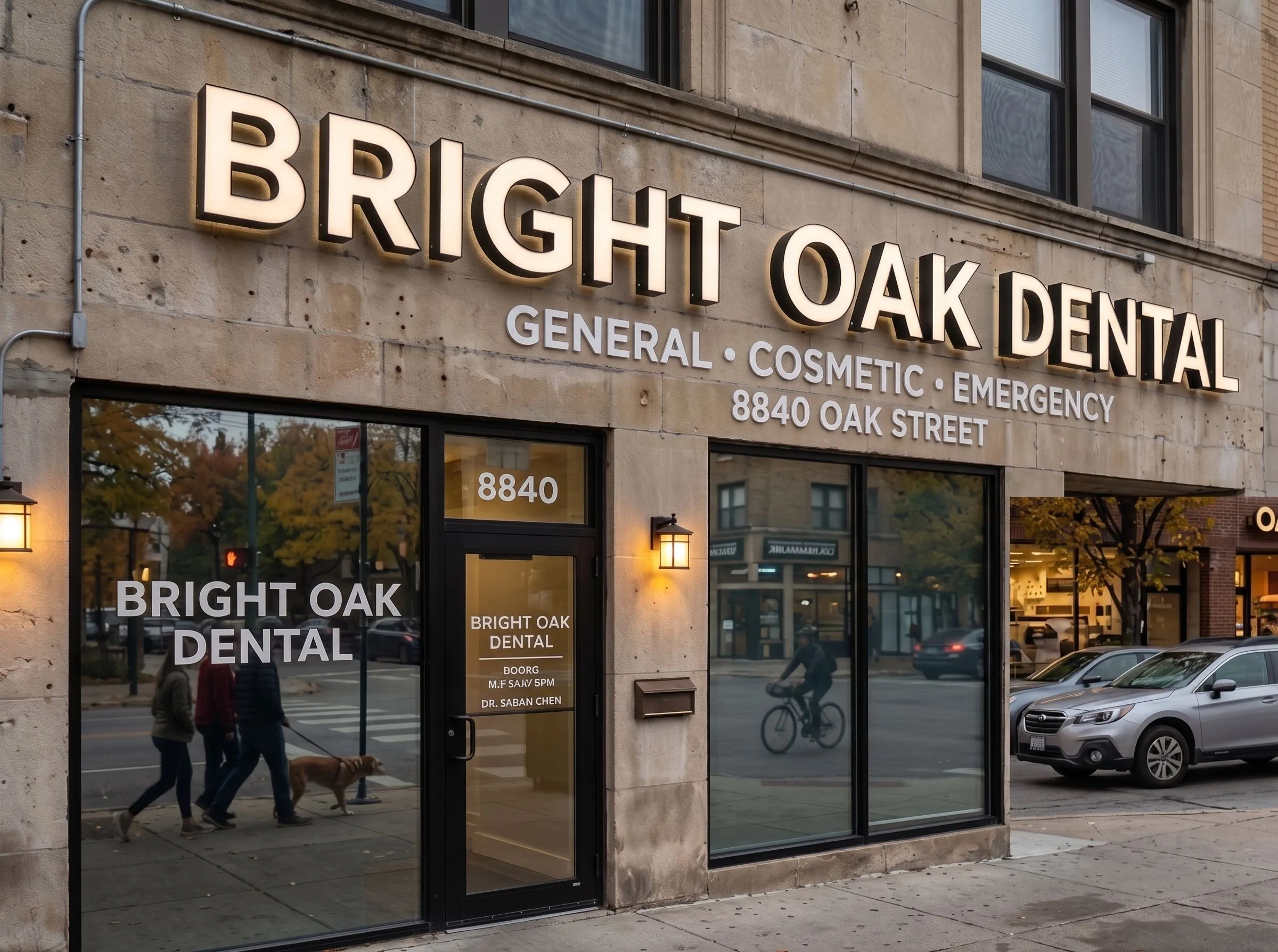
— Sign Company Serving North Jersey
North Jersey Is a Network, Not a Market
It is a network of dense downtowns, highway retail corridors, mixed-use communities, office districts, healthcare centers, warehouses, industrial properties, restaurants, neighborhood storefronts and businesses operating directly alongside the New York metropolitan economy.
The state’s current workforce planning groups Bergen, Essex, Hudson, Newark, Passaic, Union and the Northwest New Jersey area that includes Morris County within the northern region — but grouping them does not make the sign conditions the same. A Paramus retailer needs signage designed for a busy commercial corridor. A Hoboken restaurant works at pedestrian scale. A Jersey City business may occupy a mixed-use tower with storefront, lobby, directory and ADA requirements at once. A Newark warehouse needs building identification, dock numbers, facility signs and fleet graphics. A Morristown office sits in a walkable downtown of older building stock.
So we treat North Jersey as the service region, not the sign specification. The exact property still determines what gets built.
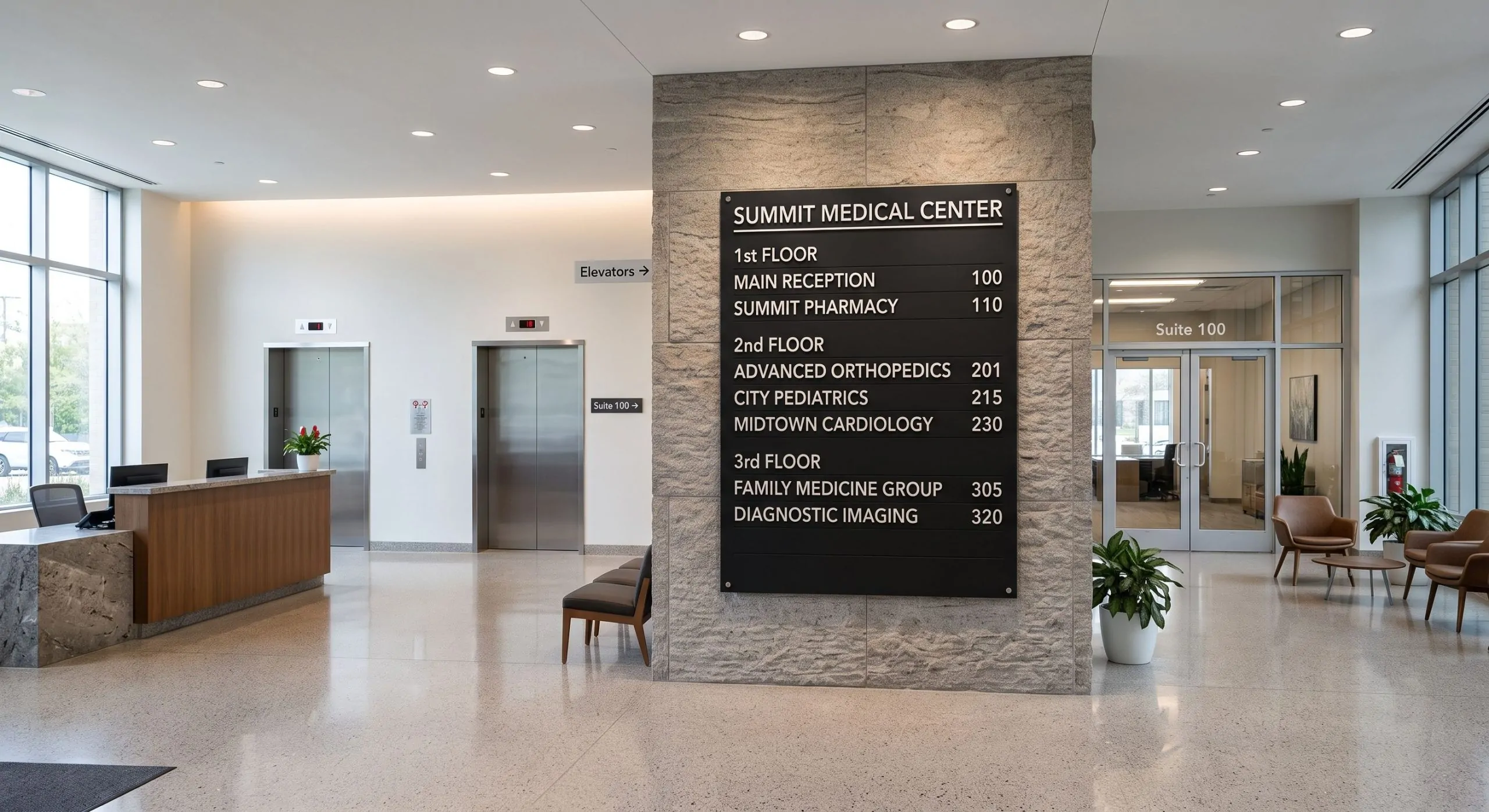
— Four Environments
Four Sign Environments That Cut Across the Counties
Businesses a few miles apart can require completely different sign approaches — and the dividing line is the property type, not the county line.
Pedestrian Scale
Downtown Business Districts
Jersey City, Hoboken, Montclair, Morristown, Newark, Hackensack and the other established districts, where customers approach primarily from the sidewalk and storefront signs, blade signs, awnings, window graphics and interior identification share the work.
Regional Corridors
Highway Commercial
Paramus, Clifton, Wayne and the Route 46, 17, 4 and 3 corridors. NJDOT has historically identified routes 3, 4, 17, 23, 46, 208 and I-287 among the major employment and development corridors in northern New Jersey.
Vertical
Mixed-Use and High-Rise
Hudson County and parts of Bergen and Essex, where street-level businesses, offices, residences and other tenants share one property — and the project needs exterior and interior signage together.
Industrial
Logistics and Facilities
Newark, Elizabeth, Kearny, Secaucus and the transportation-oriented parts of Passaic and Union Counties, where signs identify the facility itself rather than only the company on it.
— Counties We Cover
Six Counties, Each With Its Own Page
Every one of these has its own municipalities, its own ordinances and its own commercial character. Start with the county, then the town, then the address.
Bergen County
From the Paramus retail corridors to the dense storefronts of Fort Lee, Edgewater and Palisades Park, plus Hackensack’s redevelopment downtown and Fair Lawn’s five separate business districts.
Essex County
Newark’s office, warehouse and transportation properties, Montclair’s walkable downtowns, and the neighborhood corridors of Bloomfield and East Orange — twenty municipalities, twenty rulebooks.
Hudson County
Jersey City, Hoboken, Bayonne, North Bergen and Secaucus — mixed-use towers, dense storefronts and the warehouse and distribution properties behind them.
Morris County
Morristown’s historic downtown and professional core, the Parsippany corporate market, and the office parks and light industrial properties across the western townships.
Passaic County
Paterson and Passaic’s urban districts, Clifton and Wayne’s regional corridors, and the Totowa and Woodland Park industrial belt — sixteen municipalities inside one county.
Union County
Elizabeth, Linden, Rahway, Union Township and Westfield, covering everything from downtown storefronts to the port-adjacent industrial properties — and where our own shop is based.
— Rules by Municipality
There Is No Single North Jersey Sign Code
The region contains dozens of municipalities across several counties, and each can maintain its own zoning, land-use, sign, historic-preservation, redevelopment and permitting requirements.
A sign permitted in Paramus may not receive the same treatment in Jersey City. Hoboken may require historic review on a property that would not require it elsewhere. Morristown has its own sign-area and district standards. Newark, Clifton, Paterson, Montclair, Fort Lee, Hackensack and the rest each need checking separately. Depending on the municipality, the requirements can cover:
- Sign size
- Number of signs
- Wall signs
- Window coverage
- Awnings
- Projecting signs
- Illumination
- Mounting
- Historic review
- Temporary signage
- Permit applications
- Redevelopment-area standards
Landlord or shopping-center criteria then add another set on top, and on a managed property those are frequently the tighter of the two. The state’s own planning framework recognizes the role of municipal and county planning rather than treating northern New Jersey as one land-use jurisdiction — New Jersey adopted its current State Development and Redevelopment Plan on 17 December 2025.
Which is why we need the exact address before final production. The permit application is filed by you or your landlord. We assist with permits; we do not file them on your behalf.
— Downtown Storefronts
Five Surfaces, Five Jobs
North Jersey holds dozens of traditional downtown and neighborhood business districts, and the sign needs there are driven by short viewing distances and dense surroundings. A customer sees the business from across the street, then again while walking directly beside it — which produces five distinct surfaces:
- The fascia. The primary business name and logo.
- The projecting view. A blade or projecting sign where permitted, for customers approaching from either end of the block.
- The awning. Secondary identification and a clear visual definition of the entrance.
- The windows. Hours, logos, privacy film, promotional graphics and the information customers need closer in.
- The door. Final entrance details, suite identification, pickup information and operating hours.
Planning those together produces a cleaner storefront than repeating the same information on each of them — and it means each surface can be smaller, which matters where the ordinance caps the total.
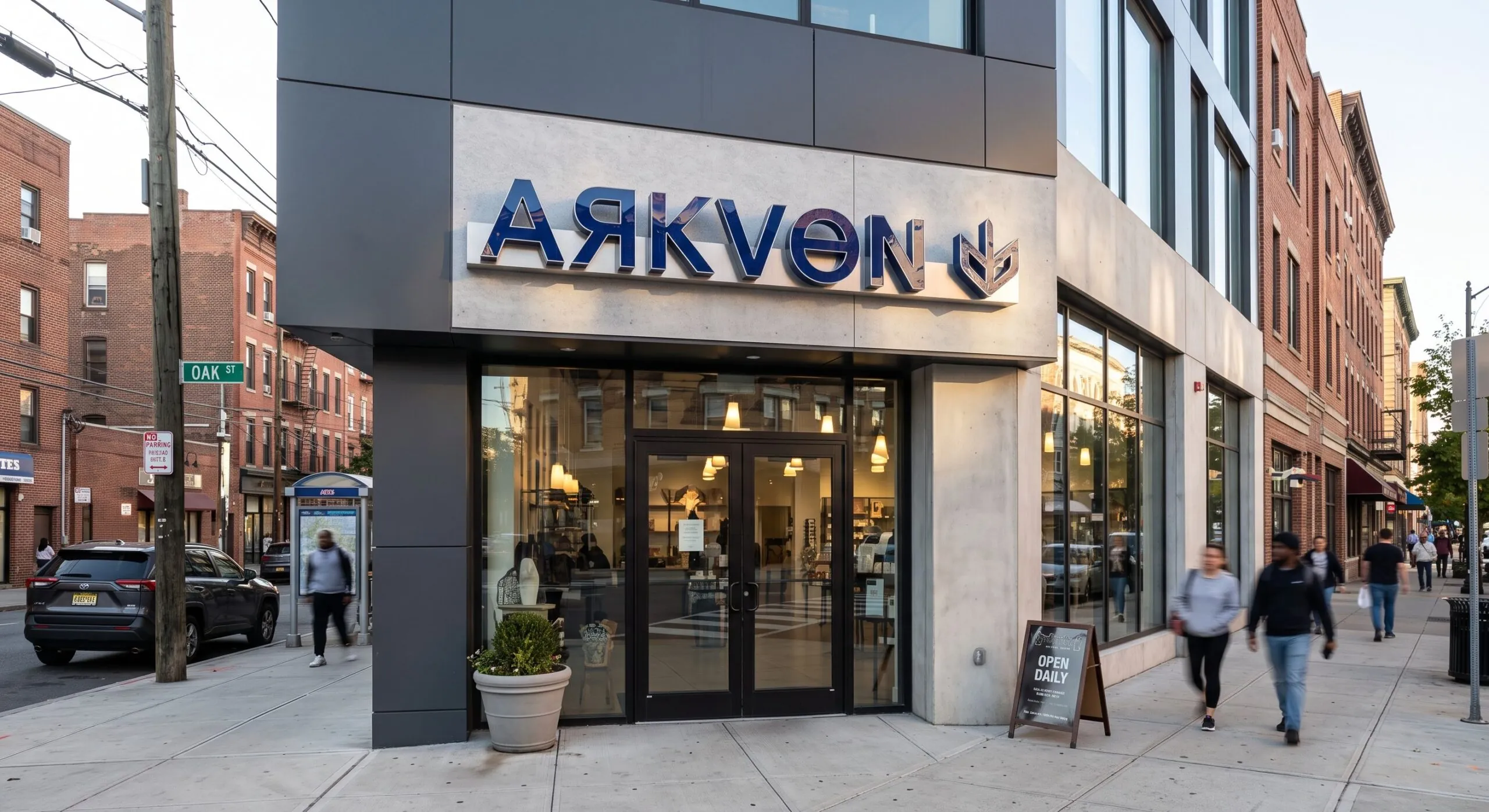
— Our Products
Signs We Make Throughout North Jersey
Our New Jersey shop produces fabricated, printed, exterior, interior and temporary commercial signage for businesses across the region.
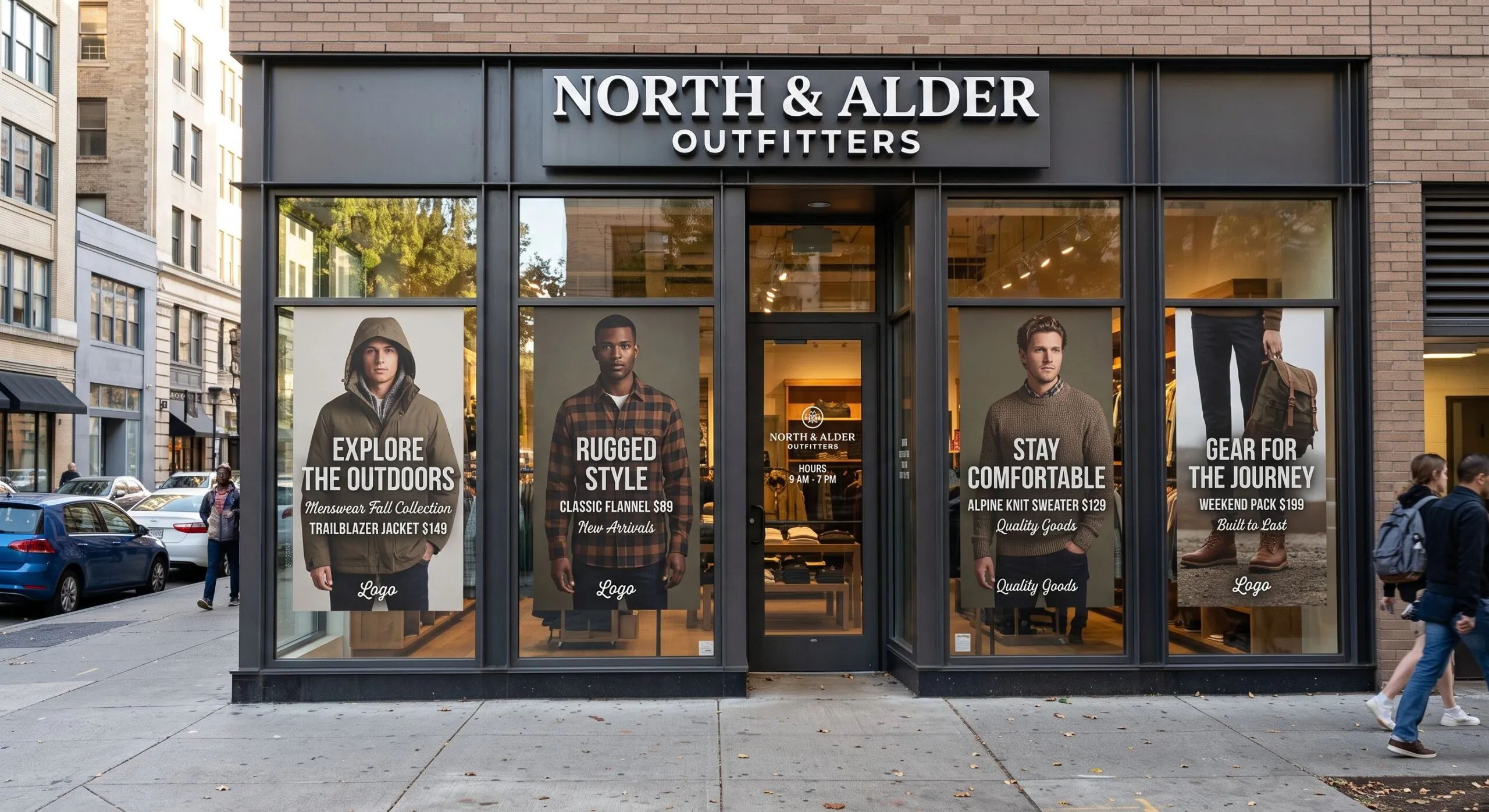
Storefront Signs
Custom exterior identification built around the storefront, tenant space, architecture, viewing direction and local requirements.
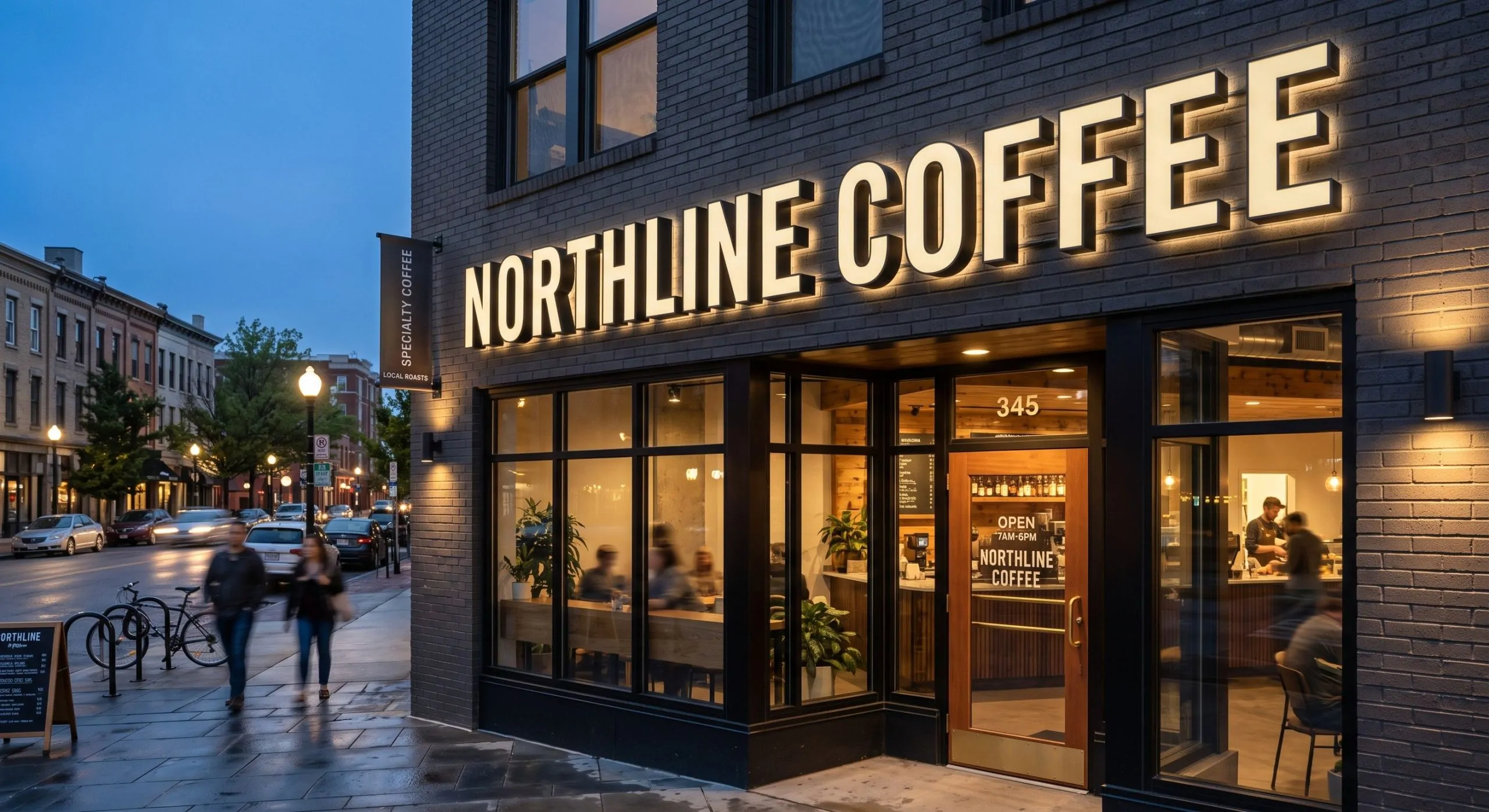
Channel Letters
Fabricated illuminated and non-illuminated letters for retail, restaurants, offices, healthcare and commercial buildings.

Dimensional Letters and Logos
Metal, acrylic and PVC lettering for storefronts, exterior walls, entrances, offices, lobbies and reception areas.

Custom Awnings
Fabric awnings for restaurants, retailers, offices, cafés, salons and building entrances, plus recovering for sound frames.
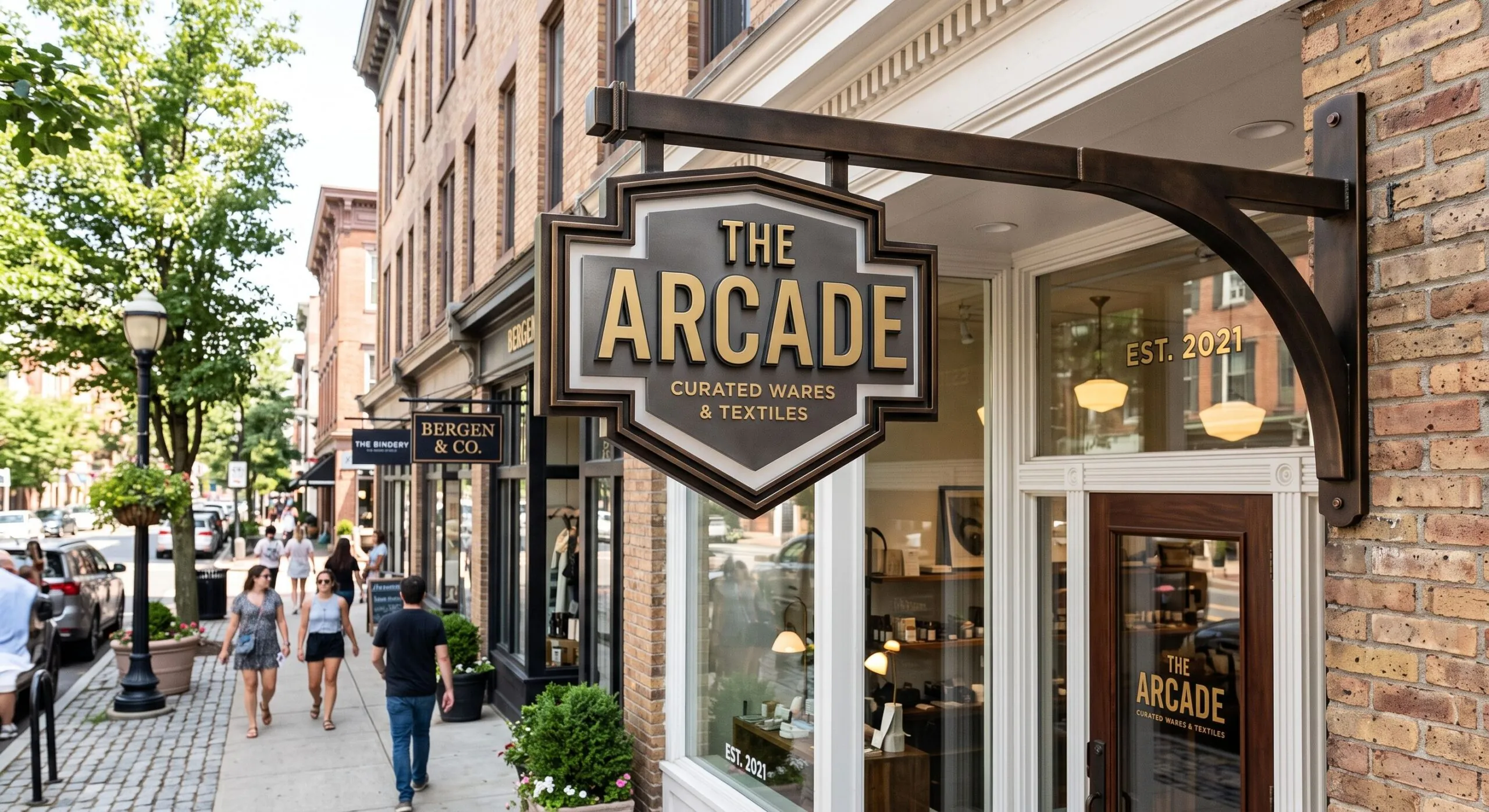
Blade and Projecting Signs
Perpendicular building signs for pedestrian-oriented locations where the local requirements permit them.
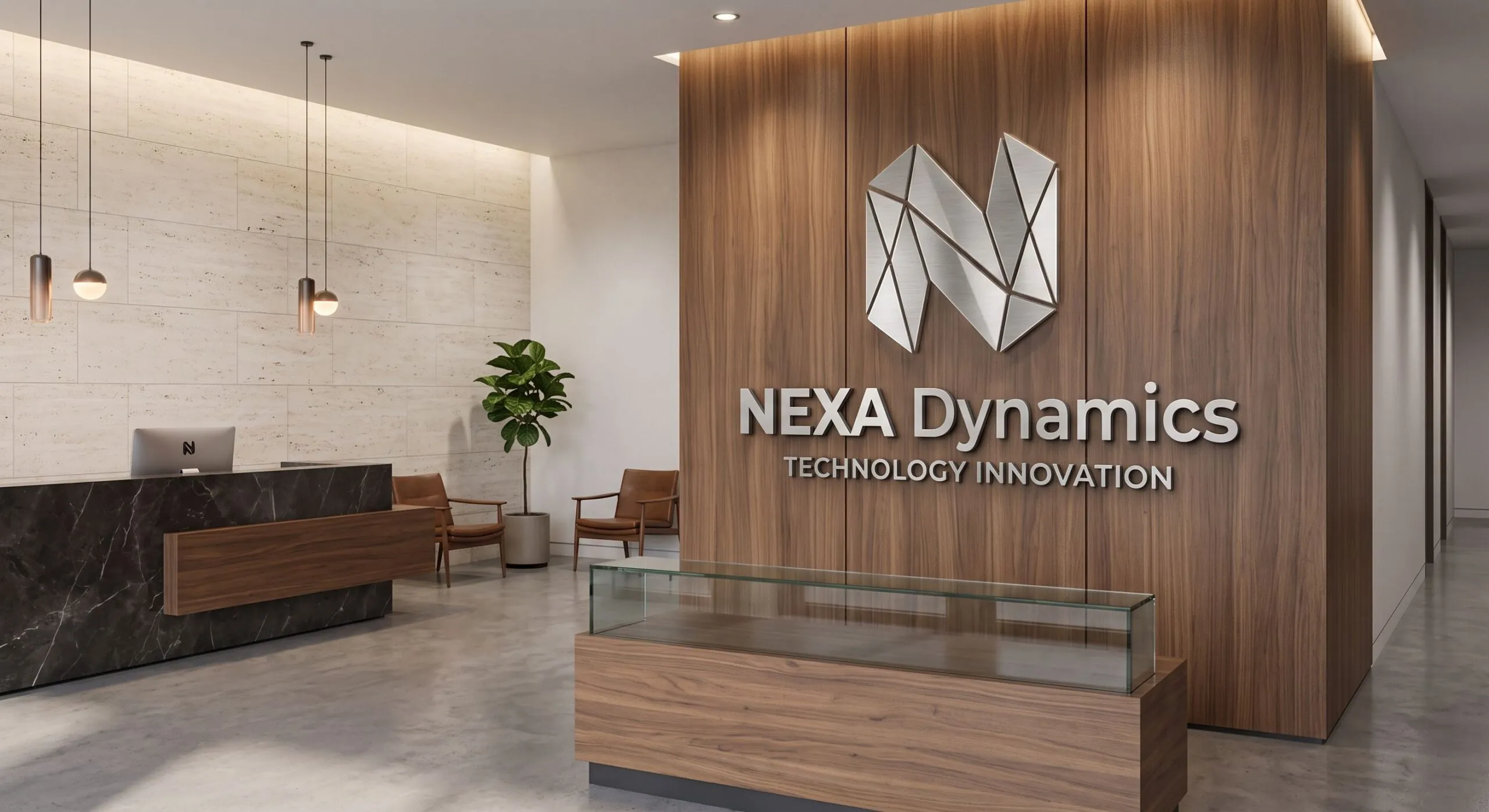
Lobby and Reception Signs
Dimensional logos, acrylic signs, metal lettering, plaques, wall graphics and branded reception identification.
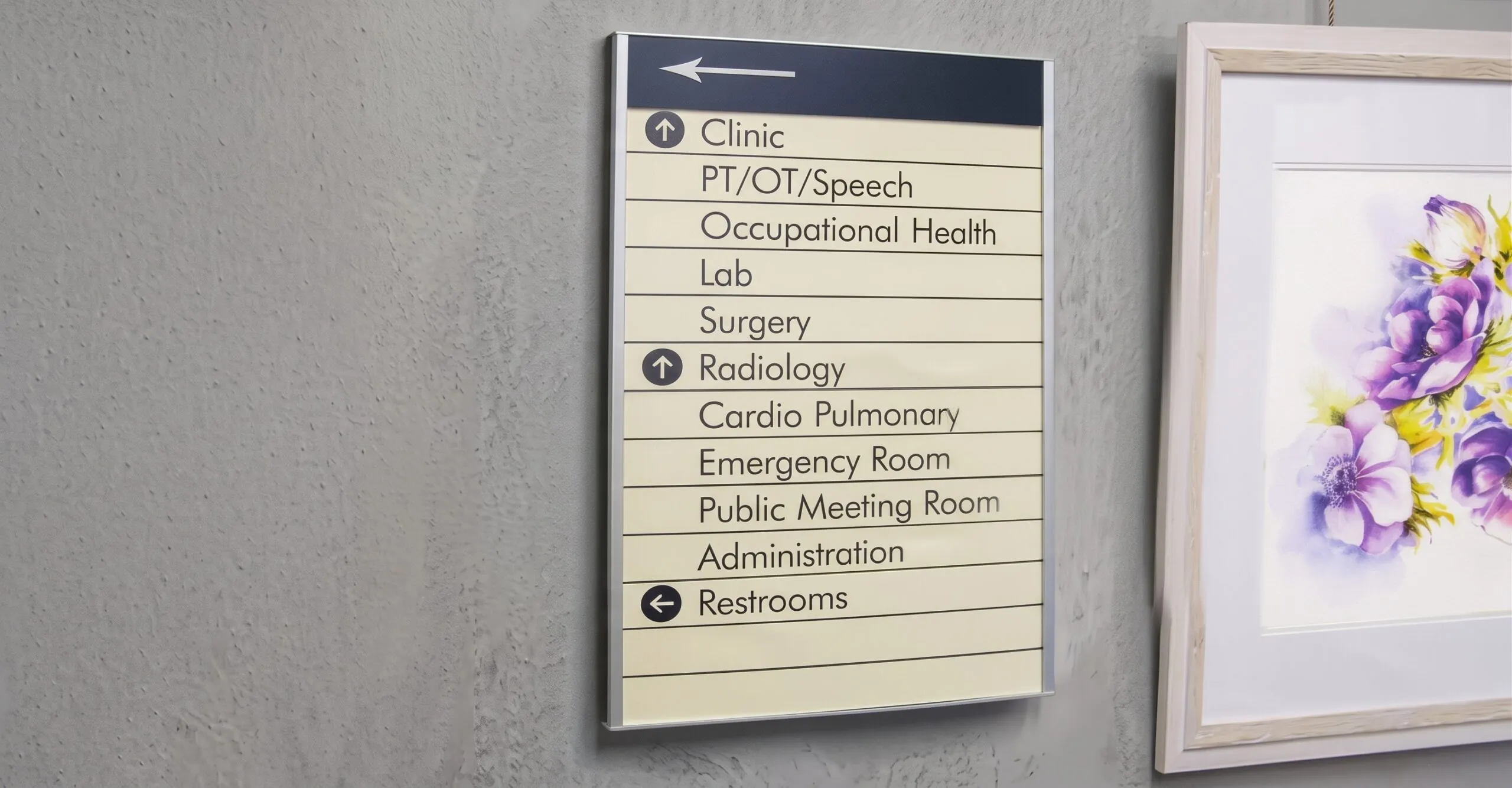
Directories and Wayfinding
Building, floor, tenant, department and office directories, plus entrances, parking, loading, pickup and internal directions.
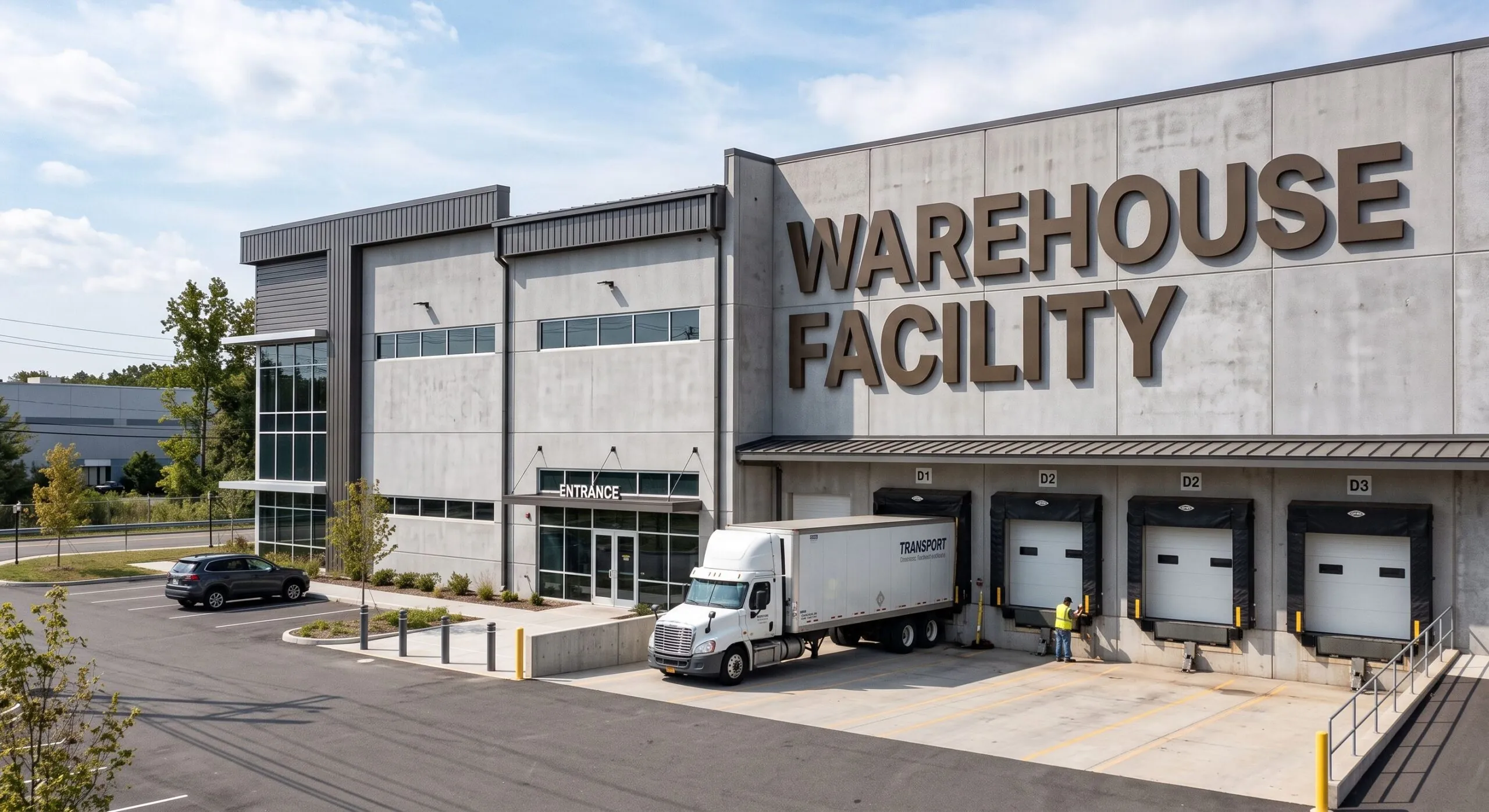
Warehouse and Facility Signs
Building identification, dock numbers, door numbers, safety signs, department signs and facility wayfinding.
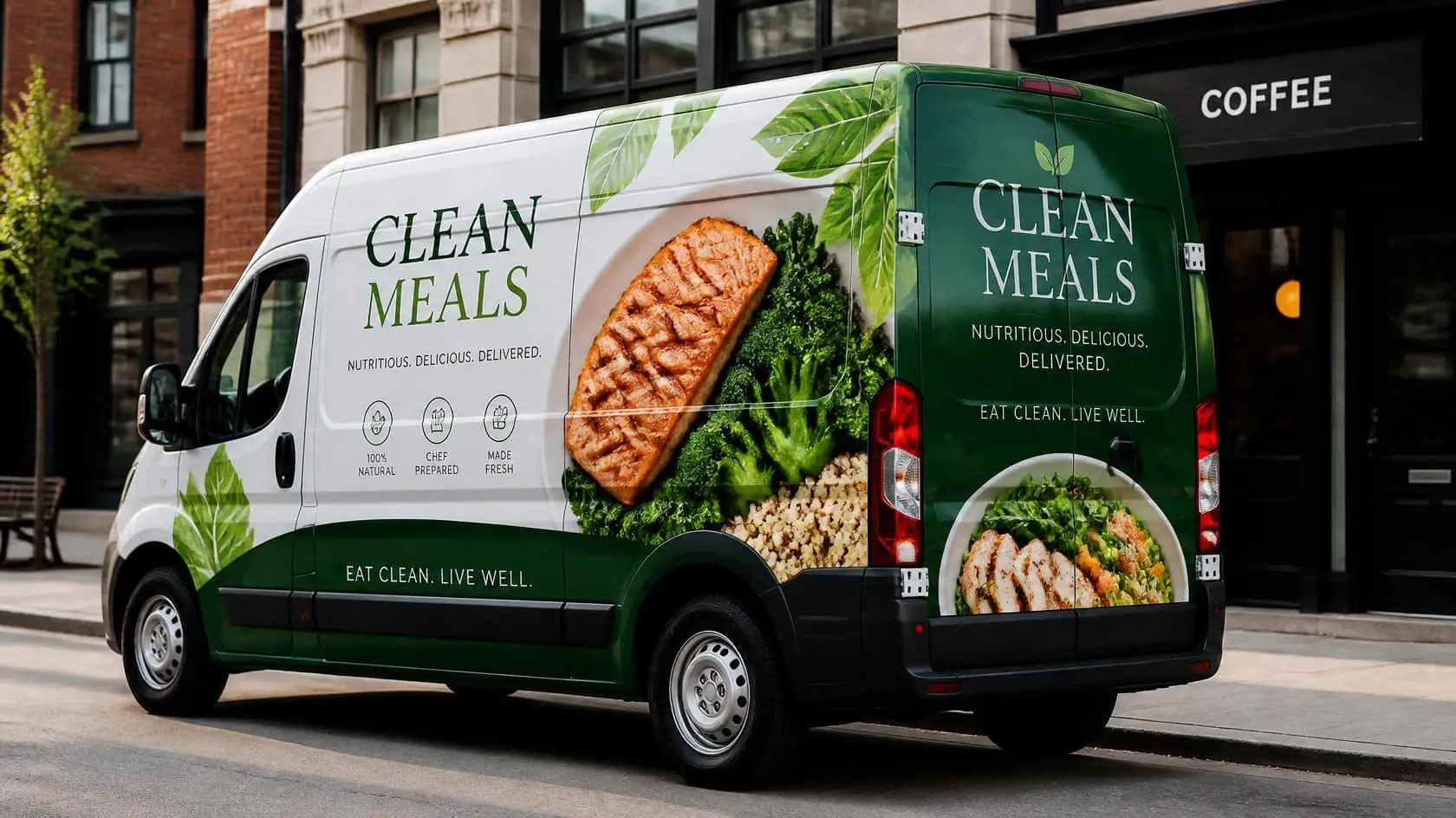
Vehicle Graphics and Lettering
Commercial lettering, business logos, decals, DOT identification where required and fleet graphics.
— How It Works
From Site Survey Through Installation
Gogi Signs has served New Jersey businesses since 2005, and handles the project before fabrication as well as production, installation and future service.
01
Site Survey
We measure the storefront, commercial building, warehouse, office or interior area and document the existing signage and mounting conditions.
02
Design and Planning
Artwork is fitted to the actual property, dimensions, materials, sign construction, viewing conditions and that municipality’s requirements.
03
Fabrication and Printing
Approved work moves through fabrication, cutting, large-format printing, vinyl production, finishing and electrical assembly where applicable.
04
Installation
Our insured installation crew coordinates site access, removes old signage where that is included, and installs the completed signs or graphics.
05
Future Service
When tenant information changes, lighting fails, vinyl needs replacement or another location opens, we return to the existing sign program.
— Commercial Corridors
Suburban and Highway Properties Bring the Opposite Problem
Customers may first see the building from hundreds of feet away, with the sign competing against traffic, neighboring businesses, parked vehicles, landscaping and large commercial elevations. Five things follow:
- Viewing distance. Letter height reflects where the building becomes visible, not the maximum space available on the façade.
- Contrast. Letters and logos need separation from the wall color and the surrounding visual activity.
- Building scale. The sign has to feel proportional to the elevation rather than lost on a large commercial building.
- Illumination. Where the municipality and property permit it, for businesses operating at night.
- Copy. The farther the customer, the less the primary sign should carry — the name and logo matter more than phone numbers, websites, service lists or taglines.
Those routes carry real weight in the region’s economy, which is part of why the corridor properties are so competitive visually: NJDOT has identified routes 3, 4, 17, 23, 46, 208 and I-287 among northern New Jersey’s major employment and development corridors. On roads that busy, restraint reads better than volume.
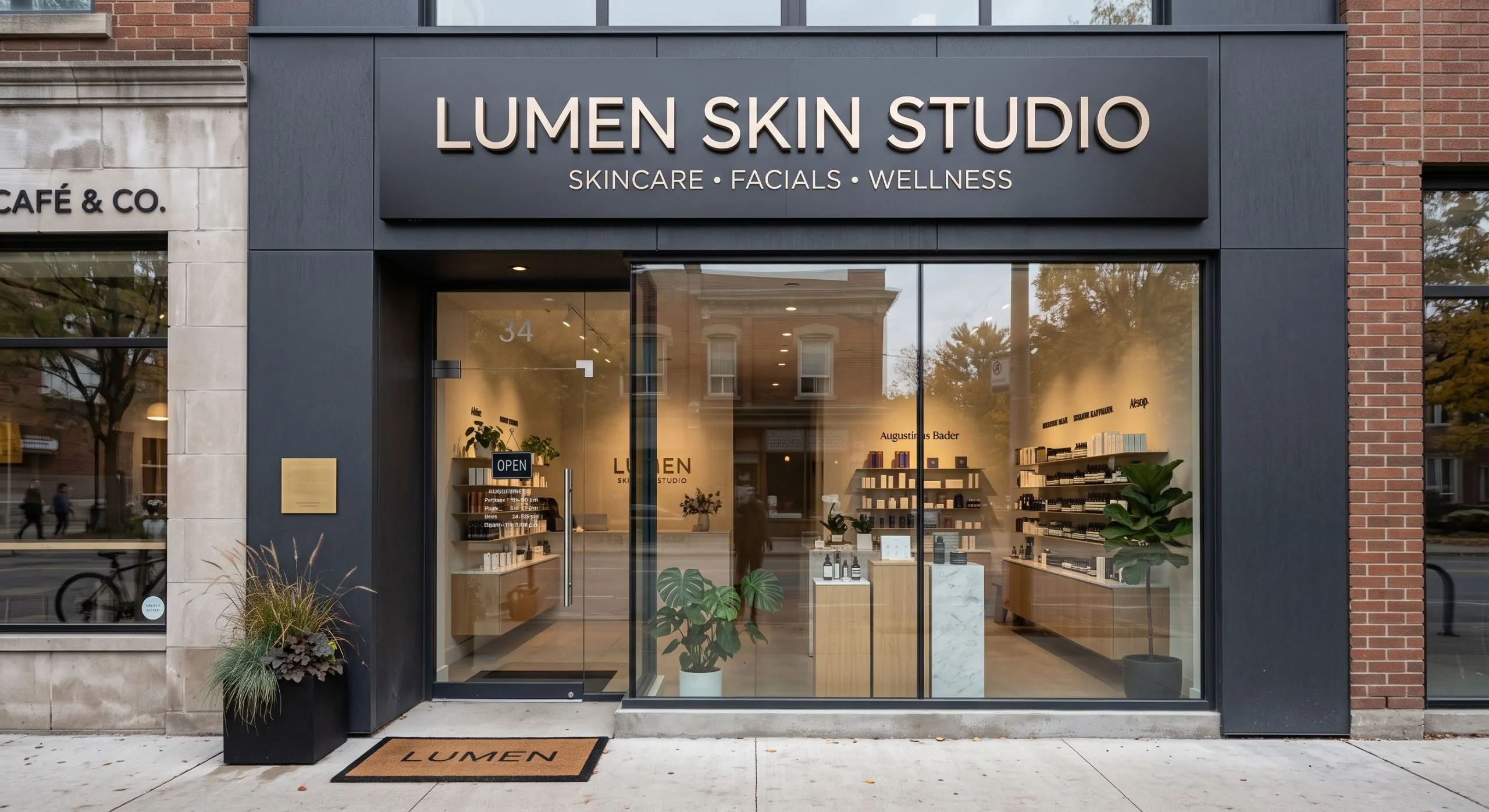
— Warehouse & Logistics
Facilities Need Identifying, Not Just Naming
North Jersey is tied to one of the largest transportation and logistics systems in the Northeast. NJDOT’s Liberty Corridor description includes Bergen, Essex, Hudson, Passaic and Union among the counties connected to a major multimodal network serving the port, the airport, the rail system, the highways and the wider northeastern market.
That translates into a great deal of warehouse, distribution, industrial and service-property signage — and those facilities need more than one exterior sign:
- Building identification — company names and logos sized for the approach
- Dock and door numbers — loading docks, overhead doors, shipping, receiving, service areas
- Entrance signs — visitor, employee, truck, delivery, service and receiving
- Directional signs — parking, loading, shipping, receiving, offices, pickup, internal circulation
- Facility signs — departments, safety information, restricted areas, warehouse sections
- Vehicle graphics — the same company identity carried beyond the property
Produced as one coordinated facility package rather than a series of unrelated orders, the site stays legible to drivers, vendors, staff and visitors at the same time — which on a property receiving freight all day is worth considerably more than a larger sign out front.
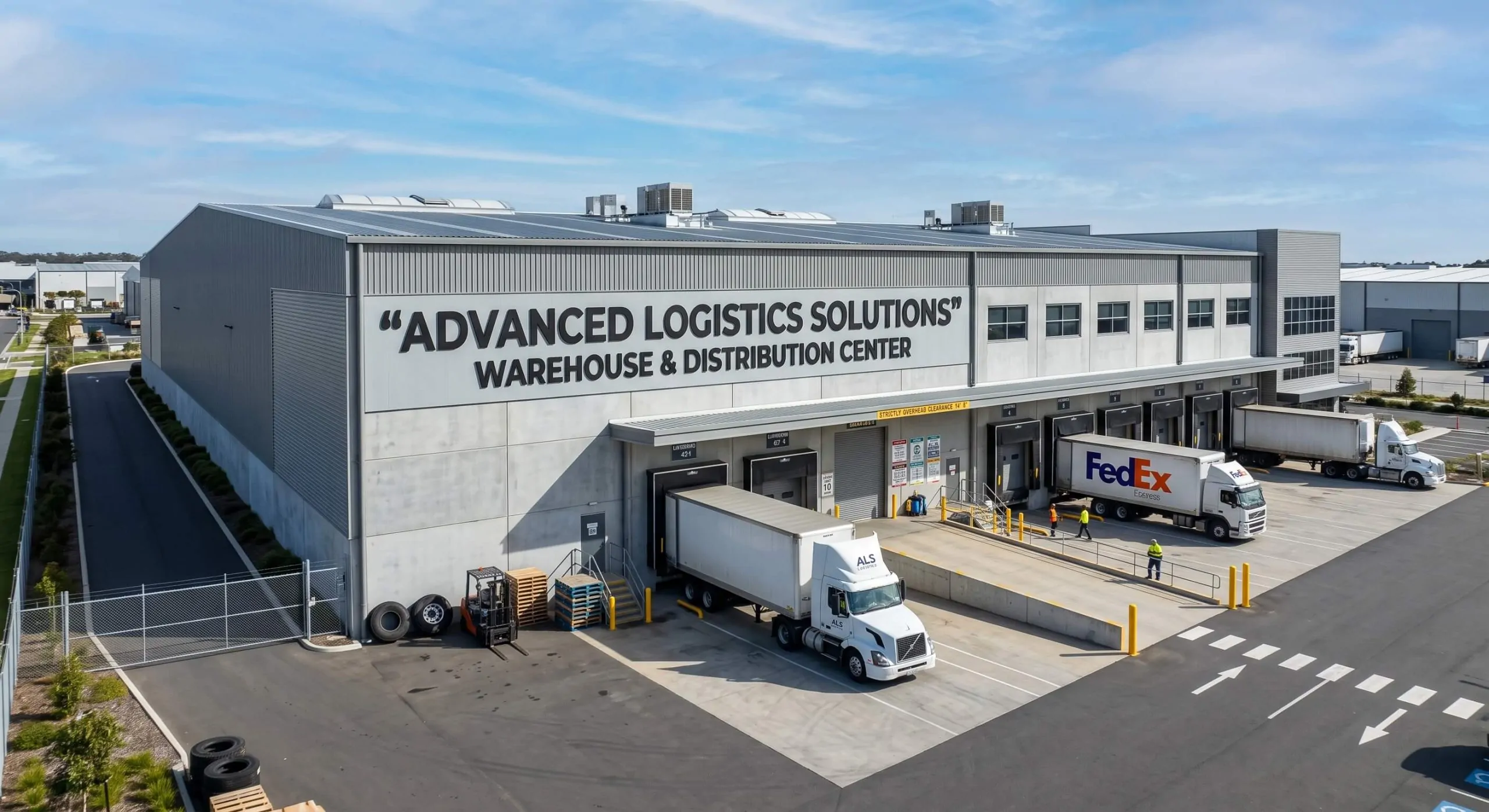
— Office & Medical
A Directory Should Not Be Remade Because One Tenant Moved
North Jersey holds a large concentration of healthcare, professional, financial, office and service-sector employment, with business centers from Hackensack and Morristown through Newark, Jersey City, Montclair and Fort Lee. For those businesses the exterior identification is only the beginning.
A coordinated office or medical package covers exterior building identification, entrance signs, lobby and floor directories, reception signs, suite identification, office plaques, ADA room signs, restroom signs, elevator identification, privacy film, conference-room graphics, department signs and interior wayfinding.
On a multi-tenant building the thing that matters most is replacement capability. A directory built as a single fabricated panel has to be remade every time a business leaves; one built as a frame with individual listings does not. We design changeable systems so future tenant updates stay small — which, across a portfolio of buildings, is the difference between a recurring production order and a recurring redesign.
— Who We Work With
Industries We Serve Across North Jersey
Downtown retail and dining, the healthcare and professional market spread across six counties, the warehouse and logistics properties feeding the port and airport, and the managers holding multi-tenant buildings together.
Retail Stores
Storefront signs, channel letters, window graphics, awnings, temporary promotions and interior signage.
Restaurants and Hospitality
Exterior signs, awnings, window lettering, menus, interior graphics, directories and wayfinding.
Healthcare and Medical
Building identification, reception signs, directories, ADA signs, privacy graphics and directional signage.
Professional Offices
Reception signs, suite identification, directories, privacy film, room signs and dimensional logos.
Warehouses and Logistics
Building identification, dock numbers, entrances, directional signs, facility signs and vehicle graphics.
Property Managers
Tenant changes, directories, replacement panels, repairs, sign removal and recurring property signage.
Contractors and Service
Vehicle lettering, office signs, warehouse identification, banners, decals and building signs.
Franchises and Multi-Location
Recurring sign programs adapted to each municipality and individual property rather than repeated unchanged.
— Tenant Changeover
Turnover Is the Most Common Reason for Sign Work
A retailer takes over an existing storefront. A restaurant replaces another restaurant. A medical practice moves into a shared building. An office changes floors. Across a region this dense, that cycle never stops.
What you may inherit
- Channel-letter raceways and wiring
- Sign cabinets and mounting points
- Awning frames and projecting-sign brackets
- Window vinyl and door graphics
- Directory systems and suite plaques
- Interior signs
A sound cabinet may need only a new face, an awning frame may be recoverable, a directory may need one tenant panel and existing mounting may be reusable. Other components come out because they are damaged, unsafe, incompatible with the new branding — or no longer permitted for the proposed use, which is worth checking rather than assuming.
What the changeover covers
- Old sign removal and window-vinyl removal
- Site survey and storefront measurements
- New exterior identification and channel-letter replacement
- Sign-face replacement and awning recovering
- New window graphics and door lettering
- Directory updates and suite signs
- Interior identification
- Temporary opening graphics, then final installation
For property managers running office buildings, retail centers, mixed-use properties, medical buildings and neighborhood shopping strips, we establish repeatable sizes, materials, artwork standards and replacement methods so every future change is smaller than the last one.
— Repair & Refacing
Most Projects Here Begin With an Existing Sign
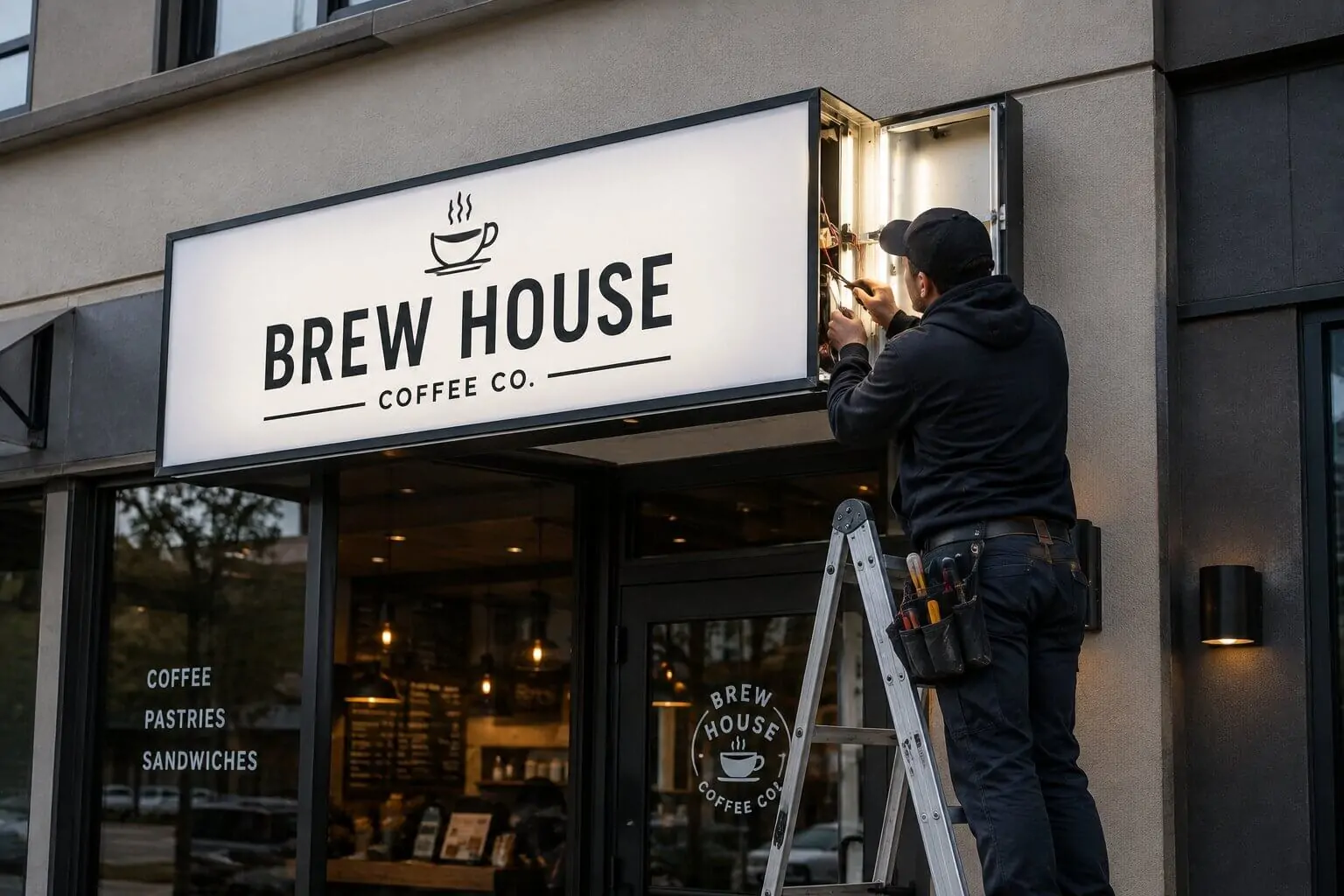
North Jersey has an enormous installed base of commercial signage, so a great deal of the work starts with something already on the building rather than an empty wall. LEDs fail, faces crack, letters loosen, vinyl fades, awning fabric wears, tenants move and directories change.
Gogi Signs repairs and updates commercial signage even when another company originally fabricated it:
- Channel-letter repair
- LED and electrical service
- Sign-face replacement
- Damaged letter replacement
- Tenant-panel replacement
- Directory updates
- Window-vinyl replacement
- Awning recovering
- Sign removal
- Interior sign replacement
- New tenant conversion
- Bracket and mounting repair
Where the existing structure remains usable, repairing or refacing it usually makes sense — and keeps the property inside an approval it already holds. Where the sign has reached the end of its useful life, replacement is the better use of the budget, built to whatever that municipality currently allows.
— Serving North Jersey
Serving Businesses Across North Jersey
Gogi Signs serves commercial properties across Bergen, Essex, Hudson, Morris, Passaic and Union Counties, including:
- Newark
- Jersey City
- Hoboken
- Paramus
- Hackensack
- Clifton
- Paterson
- Elizabeth
- Montclair
- Morristown
- Fort Lee
- Secaucus
- North Bergen
- Wayne
- Bayonne
- Fair Lawn
- Union
- Westfield
- Rahway
The region holds New Jersey’s largest concentration of urban, suburban, transportation, commercial and employment infrastructure. NJDOT’s current statewide transportation program places Bergen, Essex, Hudson, Morris, Passaic and Union within the North Jersey Transportation Planning Authority region, alongside several adjoining counties.
For businesses with several North Jersey locations — a restaurant group in Jersey City, Hoboken and Montclair, a medical practice across Bergen, Essex and Morris, a contractor with an office in one municipality and a warehouse in another — our Linden shop provides one production and installation base while each address is still handled according to its local conditions.
6 counties
Bergen to Union, one shop
2005
Serving New Jersey since
Insured
Commercial installation crew
In-house
Fabrication & large-format printing
— Get Started
Planning a Sign Project Anywhere in North Jersey?
Whether you are opening a storefront, changing tenants, branding an office, identifying a warehouse, replacing window graphics, updating a directory, repairing an existing sign or preparing signage for several locations, start with the property address and photographs.
Gogi Signs can handle site measurements, drawings, fabrication, large-format printing, installation, repair and future sign changes from our New Jersey shop.
Also working nearby
- Bergen County
- Essex County
- Hudson County
- Passaic County
- Union County
- All service areas →
OUR SHOP
7 W Baltimore Ave Suite B, Linden, NJ 07036, United States
Prefer to talk it through?
Request a Quote
The municipality decides the rules — the address tells us which.
- Serving New Jersey since 2005
- In-house fabrication and printing
- Insured installation crew
- Repair and refacing on existing signs
— FAQs
Frequently Asked Questions About Signs in North Jersey
We serve businesses throughout Bergen, Essex, Hudson, Morris, Passaic, Union and the surrounding North Jersey areas. The exact project coverage depends on the work and the installation requirements.
No. Sign requirements are municipal. Every city, town, township and borough can have its own zoning and sign standards, which is why we need the exact property address before final production.
Work down from the county. The county narrows the market, the municipality sets the ordinance, and the address settles the dimensions — each county listing names the municipalities it covers and what changes between them.
Yes. We maintain common artwork and production specifications while adapting each sign package to the building, municipality and landlord requirements — so a brand stays consistent without the same sign being forced onto every property.
Yes. Managed properties often have their own sign standards in addition to the municipal rules, and on many properties those are the tighter constraint. Send the criteria package with the location information.
Sometimes. We inspect the existing cabinet, wiring, raceway, bracket, mounting, awning frame and directory before determining whether reuse makes sense — and check that the format is still permitted.
Yes. Where the existing structure remains usable, we produce an individual replacement face, tenant panel, suite sign or directory component.
Yes. We produce reception signs, directories, office and suite signs, ADA identification, privacy graphics, wall graphics and interior wayfinding.
Yes. We produce building identification, dock numbers, door numbers, entrance signs, safety identification, directional signs and interior facility signage.
Send the exact property address, photographs of the installation area, your logo or artwork, photographs of any existing signs, and landlord or property criteria if available.