— Long Branch, New Jersey
Sign Company in Long Branch, NJ
Gogi Signs designs, fabricates, prints, installs, repairs and replaces commercial signs throughout Long Branch — oceanfront hospitality and Pier Village tenant signage, Broadway and West End storefronts, projecting signs sized to the district, and the directories and ADA signage that mixed-use buildings need inside.
20+ Years Experience
Serving New Jersey Since 2005
In-House Production
Fabrication & Large-Format Printing
Commercial Installation
Insured Installation Crew
Long Branch & Monmouth County
Downtown to the Oceanfront
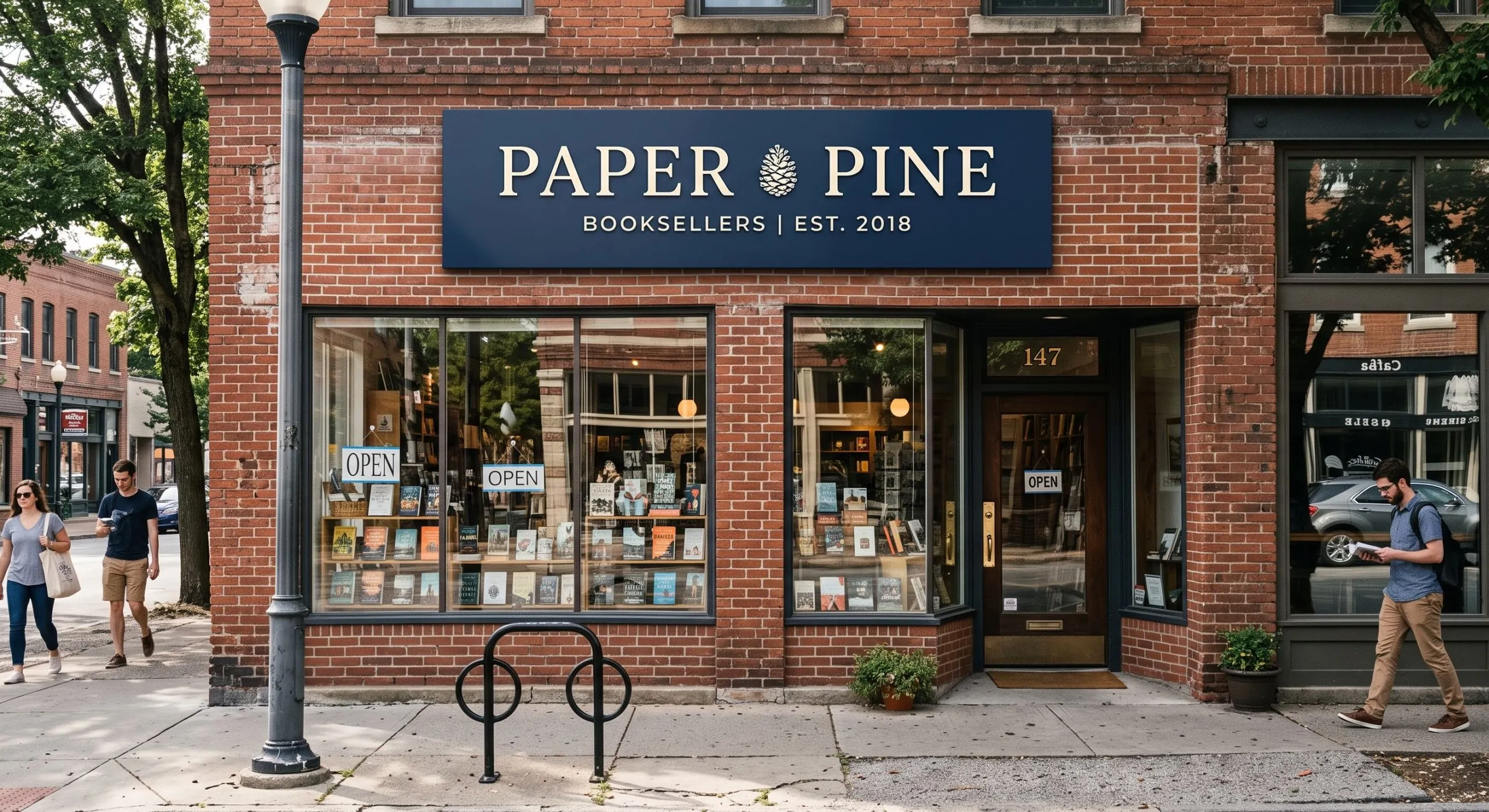
— Sign Company in Long Branch
More Than One Commercial Sign Market in One City
Long Branch combines oceanfront hospitality, Pier Village retail and dining, Broadway businesses, West End storefronts, medical offices, professional services, mixed-use development, neighborhood commercial properties and businesses serving both year-round residents and seasonal visitors.
A restaurant near the beachfront does not need the sign package a professional office farther inland needs — and the zoning code agrees, treating commercial districts differently with separate sign standards for the C-1 district and for the C-2, C-3, C-4 and C-7 districts. Sign quantity, permitted area, projecting signs, directories and other conditions can all change with the location.
Gogi Signs handles storefront signs, channel letters, dimensional lettering, custom awnings, projecting signs, window graphics, office signs, directories, ADA signage, hospitality graphics, tenant changes, vehicle lettering and commercial sign repair — from site survey through installation.
— Sign Rules
Chapter 284 Sets the Allowance From the Facade
Long Branch maintains a dedicated sign chapter with separate permit provisions and district-specific standards. The wall-sign figure is the one to start from.
- Wall signs, C-1. One identification wall sign, up to 15% of the façade on which it is installed.
- Ground floor in a multistory building. The calculation uses the first-floor façade area, not the whole elevation.
- Same 15% limit applies in the C-2, C-3, C-4 and C-7 districts.
- Projecting signs, C-1. Up to 12 square feet per side, extending no more than five feet from the wall.
- Projecting signs, C-2/3/4/7. Generally up to eight square feet per side, again with a five-foot maximum projection.
- Clearances. Projecting signs are perpendicular to the wall and require clearance from the sidewalk, curb line, roofline and the ends of the façade.
- Directory of occupants. An illuminated directory sign may be up to eight square feet, wall-mounted or projecting — the same allowance across all five districts.
- No moving parts. Flashing or blinking lights, series lights, rotating parts and moving parts are all prohibited.
- No roof signs. Signs installed on building roofs, or extending above the roofline, are prohibited.
- Disrepair. Signs must remain in safe condition; signs maintained in a state of disrepair are prohibited.
— District Differences
One Rule Is Uniform Here, and One Is Not
The wall sign is the same everywhere: 15% of the façade, in C-1 and in C-2, C-3, C-4 and C-7 alike. The projecting sign is not. C-1 allows 12 square feet per side; the other four districts generally allow eight.
That is a third less sign on the same street corner depending on which district line the property falls behind — and at eight square feet against twelve, it is the difference between a logo with the business name beside it and a logo alone. Both cap projection at five feet from the wall, so the change is in the face, not the reach.
Projecting signs earn their place on restaurants, boutiques, cafés, salons, professional services, specialty retail and any business with a narrow storefront, because they face the people already walking beside the building rather than across the street from it. The exact mounting height and location are confirmed before fabrication, since the clearances run against the sidewalk, the curb line, the roofline and the ends of the façade at the same time.

— Storefront Signs
Street-Level Businesses Have Several Places to Identify Themselves
The storefront usually offers more surfaces than a single sign uses, and splitting the message across them keeps each one readable:
- Storefront signs. Custom wall-mounted signs built around the available façade, storefront width, architecture and the applicable sign allowance.
- Channel letters. Fabricated illuminated and non-illuminated letters for restaurants, retailers, hospitality businesses, offices and other commercial properties.
- Dimensional letters and logos. Metal, acrylic and PVC lettering for exterior walls, entrances, reception areas and branded interiors.
- Projecting signs. Perpendicular identification keeping the business visible to customers approaching along the sidewalk.
- Custom awnings. For restaurants, cafés, retail stores, offices, salons and commercial entrances.
- Window and door identification. Business names, logos, hours, printed graphics, privacy film, seasonal campaigns, suite details, pickup instructions and accessibility information.
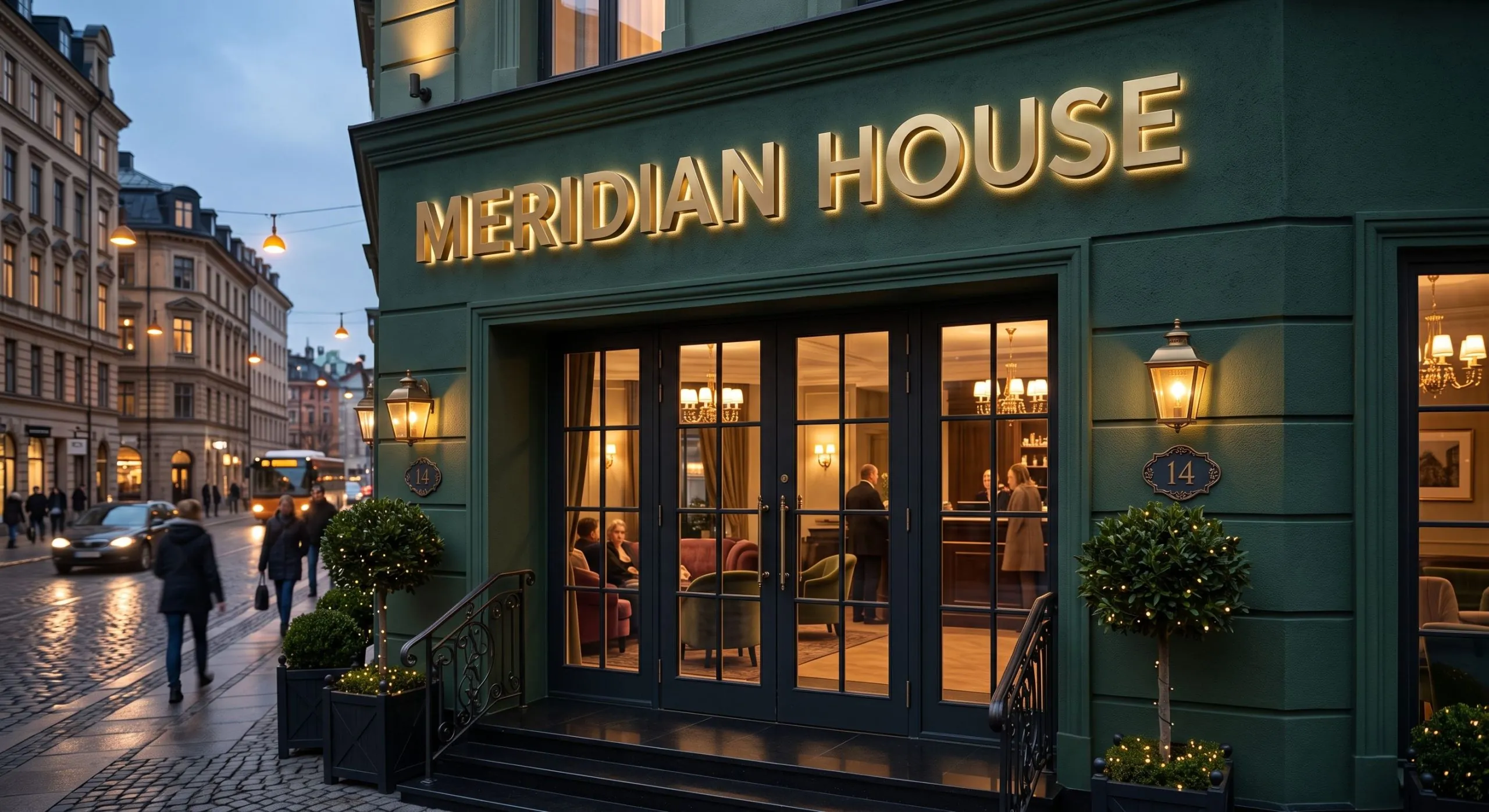
— Our Products
Signs We Make for Long Branch Businesses
Our New Jersey shop produces fabricated, printed, exterior, interior, temporary and replacement signage for businesses throughout Long Branch.

Dimensional Letters and Logos
Metal, acrylic and PVC dimensional letters for exterior walls, entrances, lobbies, reception areas and offices.
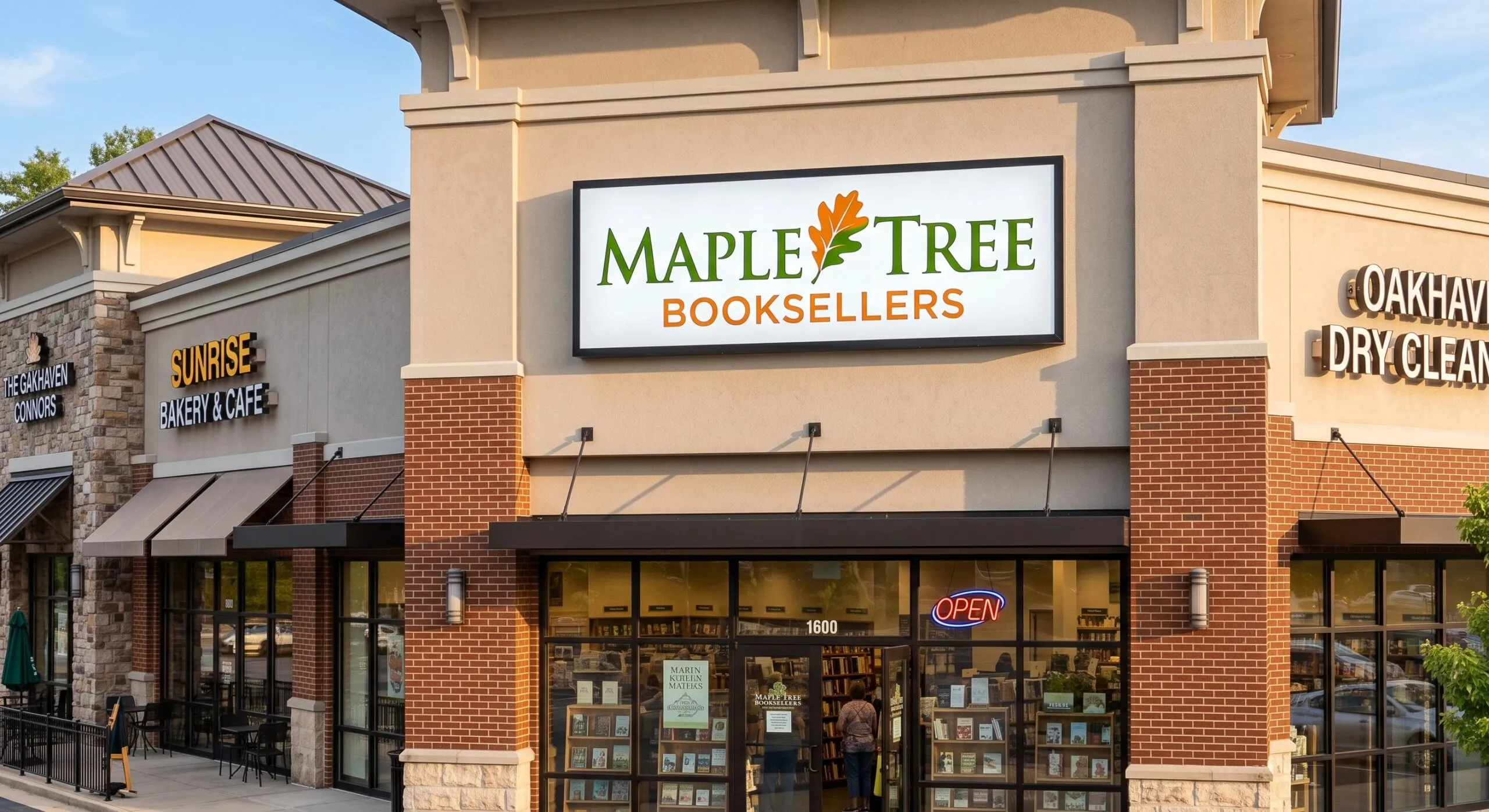
Projecting Signs
Perpendicular storefront identification for eligible commercial properties, sized to the district allowance.
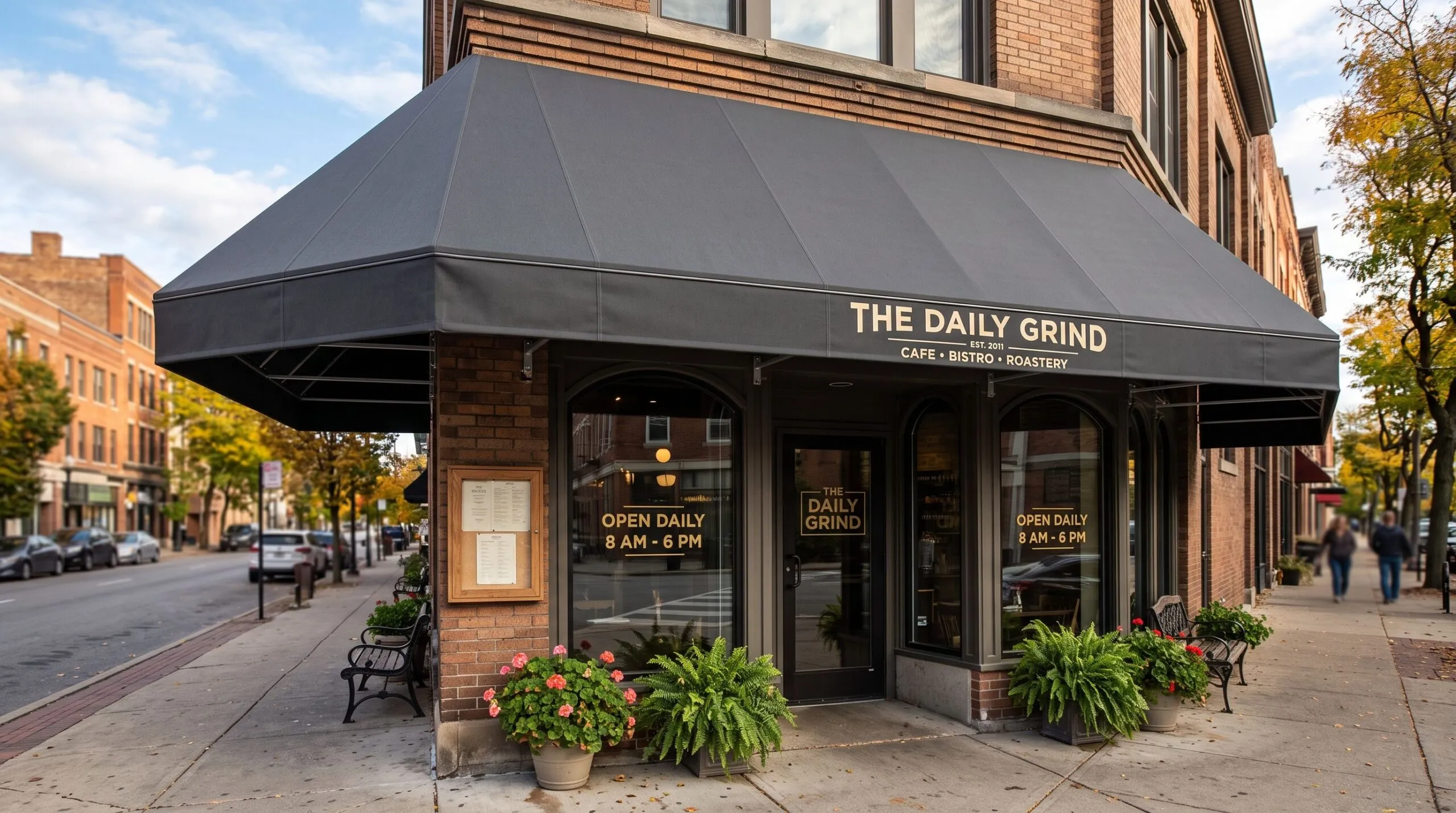
Custom Awnings
Fabric awnings with custom colors, business names, logos and graphics, plus recovering for sound existing frames.
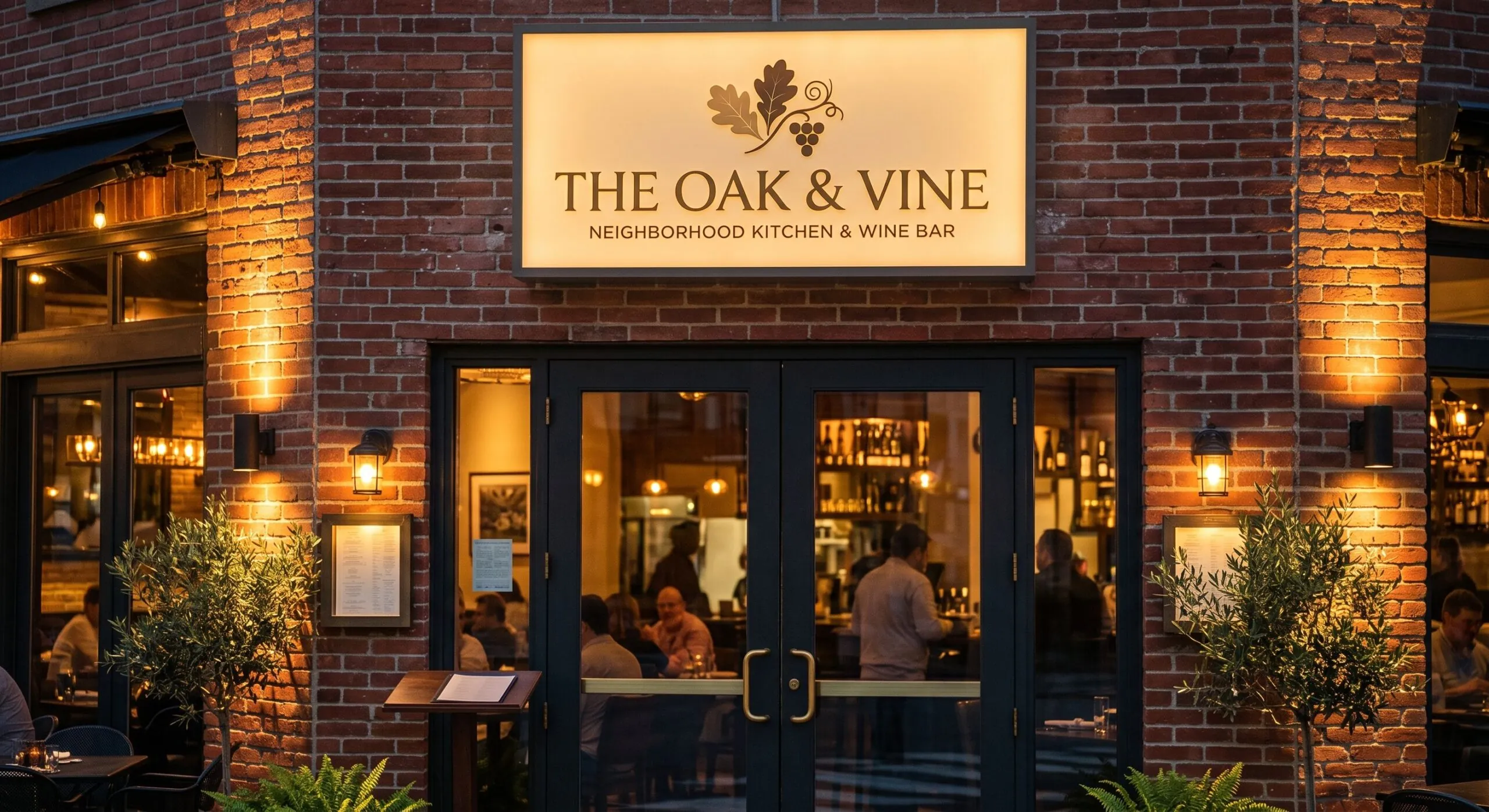
Sign Cabinets and Replacement Faces
Replacement faces, tenant updates, graphics and lighting service for suitable existing cabinet signs.
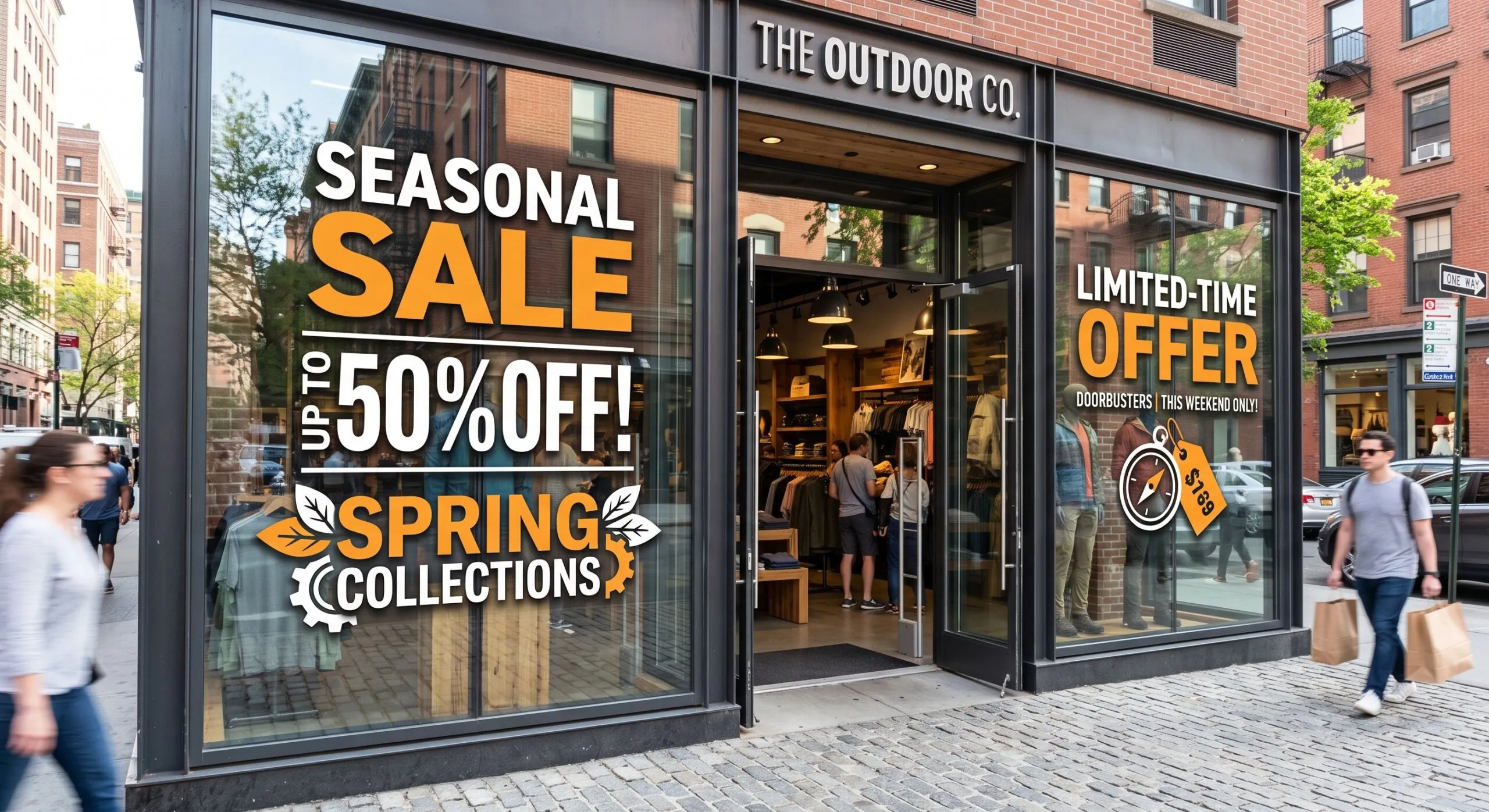
Window Graphics and Lettering
Printed graphics, vinyl lettering, logos, operating hours, decorative film, privacy film and seasonal graphics.
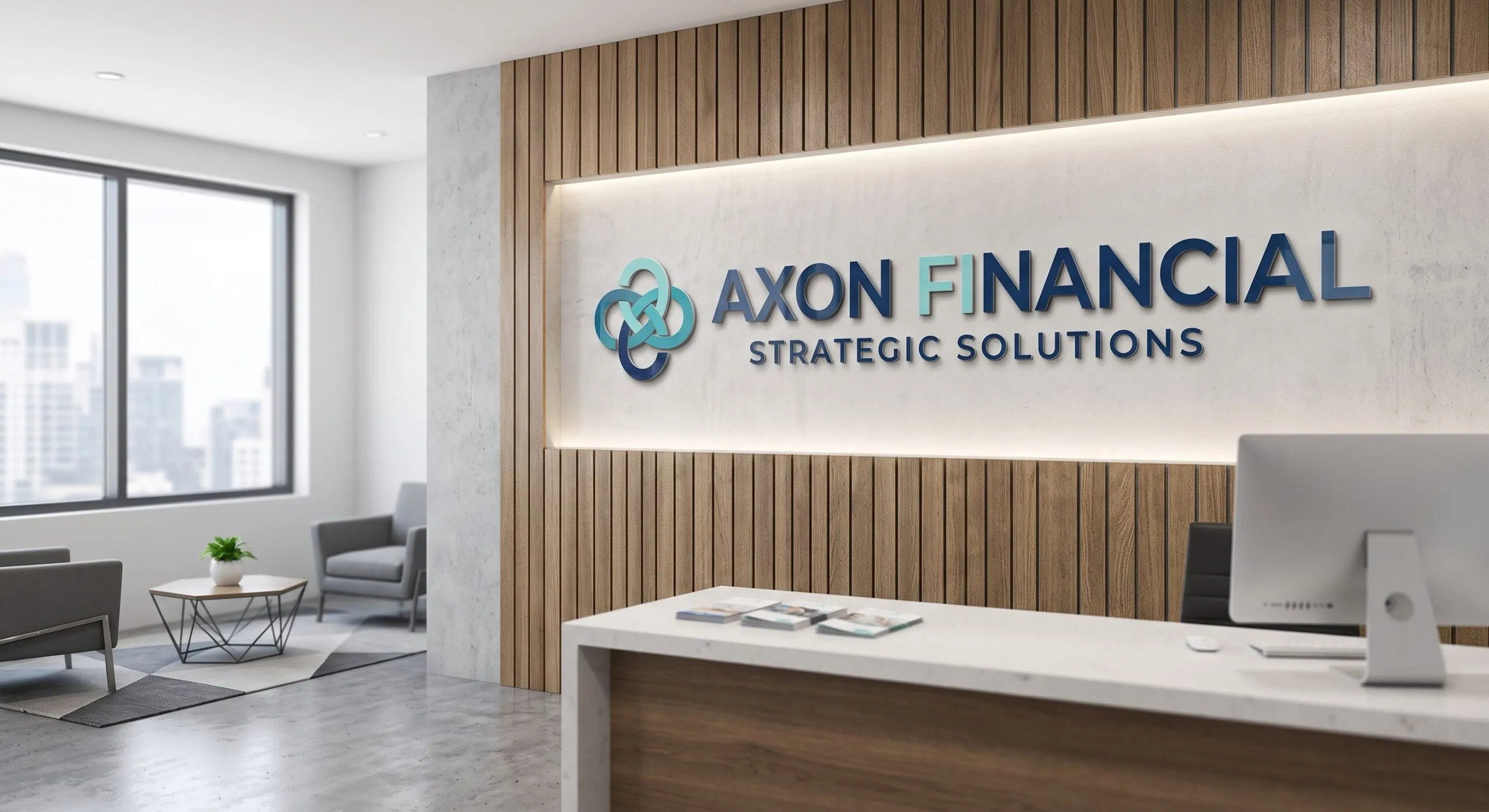
Lobby and Reception Signs
Dimensional logos, acrylic panels, metal lettering, plaques and branded wall signs.
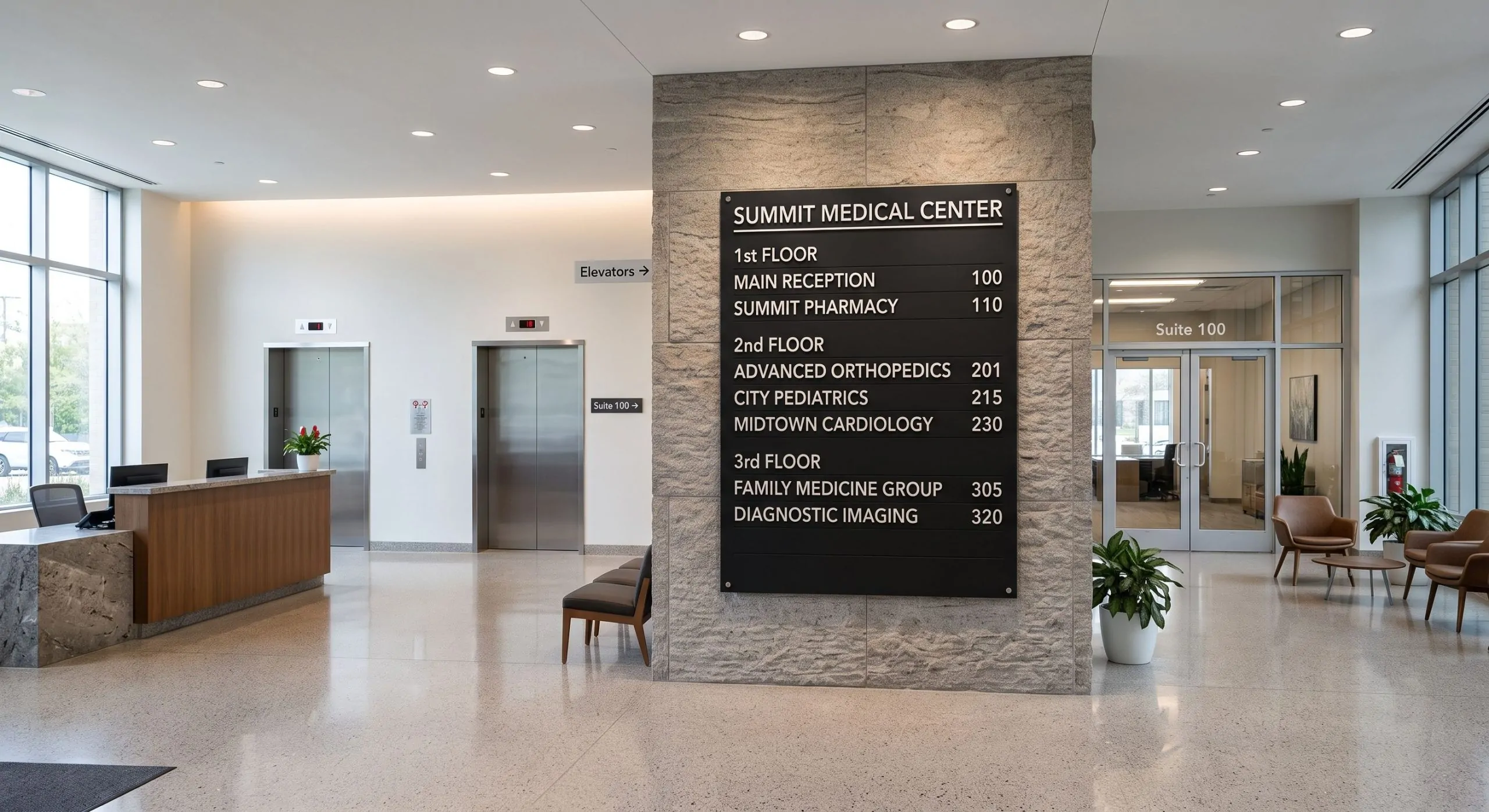
Directories
Building, floor, office, tenant and department directories, built for individual tenant replacement.
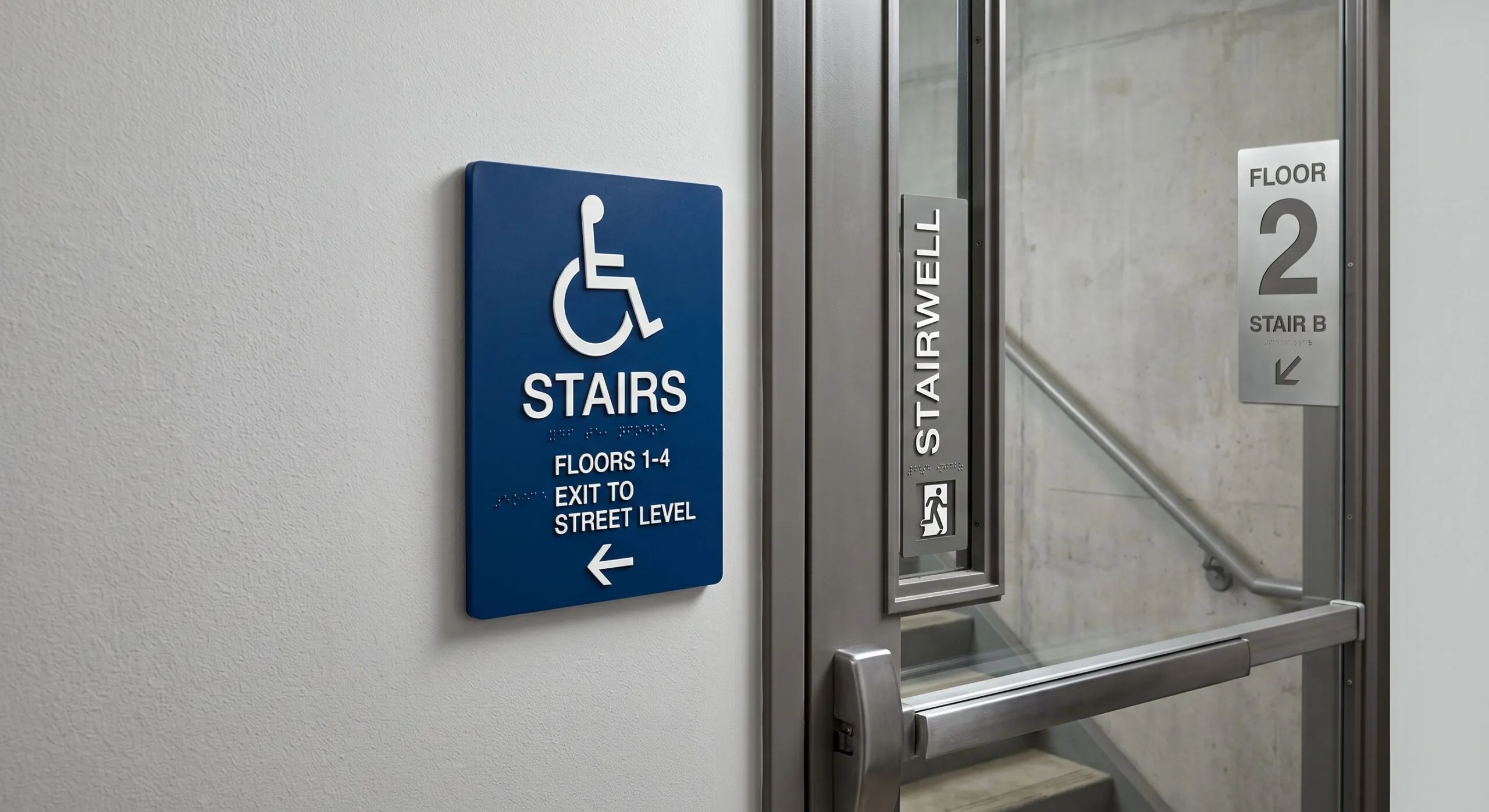
ADA and Suite Signs
Tactile room identification, Braille signs, accessible restroom identification, room numbers, plaques and replaceable tenant nameplates.
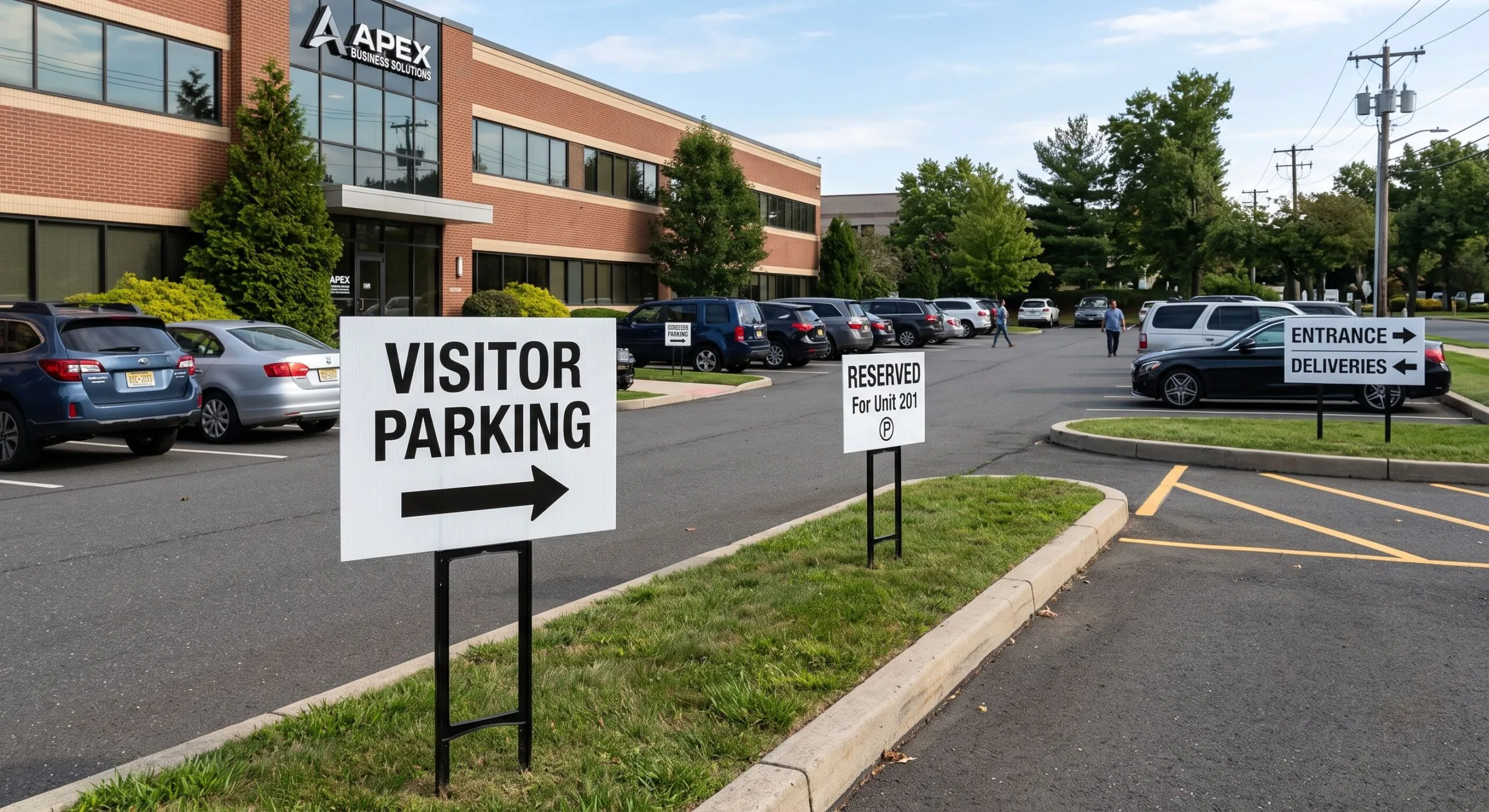
Parking and Directional Signs
Entrances, exits, customer parking, employee areas, pickup locations, loading areas and internal directions.
— How It Works
From Site Survey Through Installation
Gogi Signs has served New Jersey businesses since 2005, and handles the project from initial measurements through production, installation, repair and future changes.
01
Site Survey
We measure the storefront, building, office, lobby or interior area and document the existing signs, mounting conditions, windows, awnings and customer approaches.
02
Design and Planning
Artwork is fitted to the actual property, available sign area, materials, construction, visibility conditions and the applicable district requirements.
03
Fabrication and Printing
Approved projects move through fabrication, cutting, large-format printing, vinyl production, finishing and electrical assembly where applicable.
04
Installation
Our insured installation crew coordinates site access, removes old signage where that is included, and installs the completed signs and graphics.
05
Future Service
When lighting needs repair, a tenant changes, graphics need replacement or another sign is required, we can return to the property.
— Waterfront & Visitors
Hospitality Signage Has to Work for People Who Have Never Been There
Long Branch draws customers who do not know the property or the surrounding streets. Hotels, restaurants, entertainment businesses, event spaces, retail stores and mixed-use waterfront properties serve first-time visitors constantly, and that lengthens the chain of things a sign system has to answer: the correct property, the main entrance, parking, reception, a restaurant or tenant, an elevator or floor, an event room, then restrooms and shared spaces.
A hospitality package therefore covers exterior identification, storefront signs, channel letters, entrance signs, lobby signs, directories, floor identification, ADA signs, event graphics, window graphics, interior directional signs and temporary promotional displays. The exterior sign brings the visitor to the property; the interior system is what lets them finish the trip.
Seasonal businesses here also change promotions far more often than an inland professional office does — summer campaigns, event graphics, restaurant promotions, retail displays, holiday material. Those belong on the windows, kept separate from the permanent storefront identification, so the sign above the business still works when the seasonal graphics come down.
— Mixed-Use Property
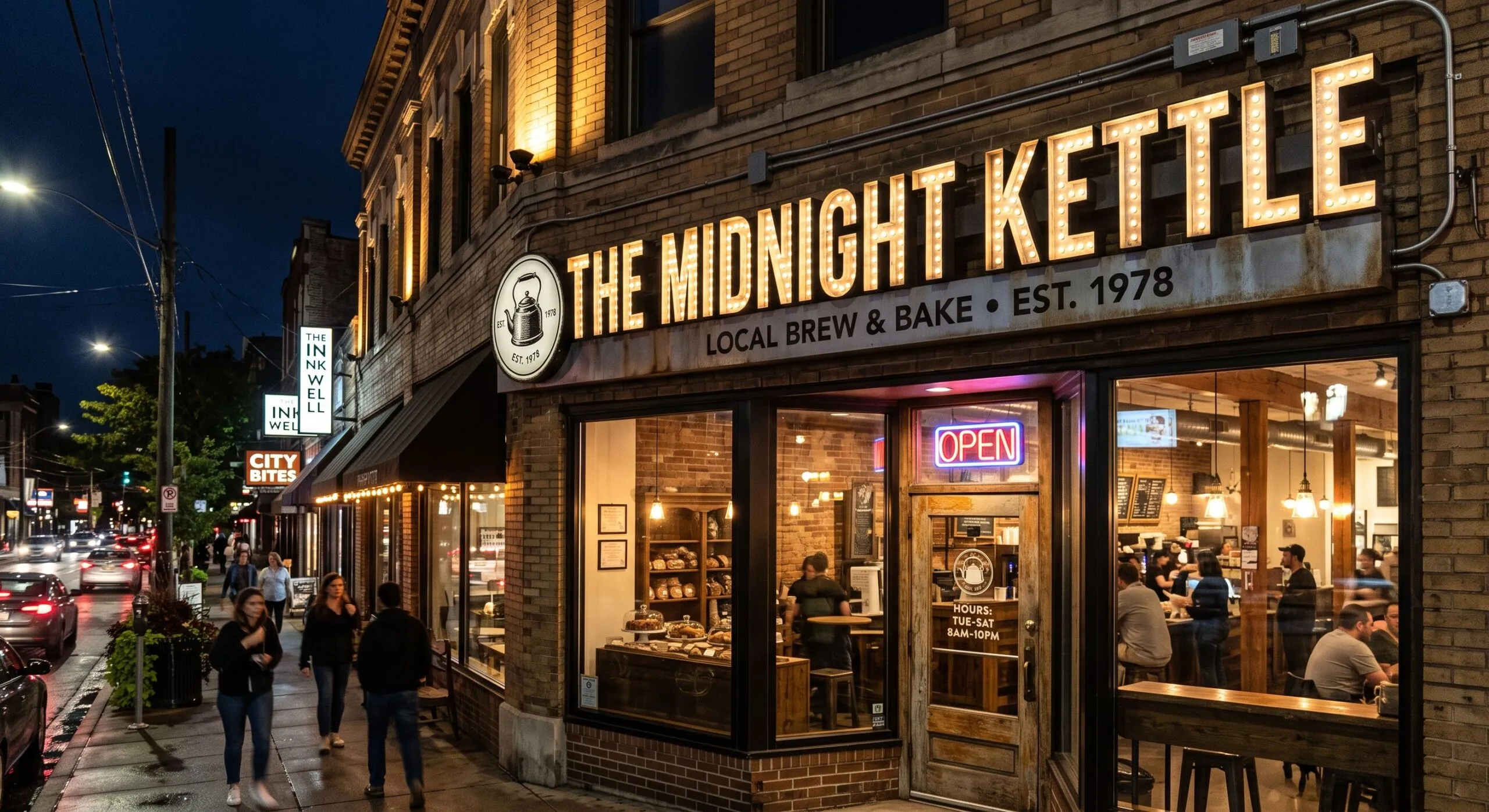
Street-Level Tenants Under Residential and Hospitality Floors
Large mixed-use properties pose a different problem from standalone businesses. A restaurant or retailer may sit beneath residential units, hospitality uses, offices or shared building space, which means several levels of identification stacked on one address.
- Street level. Storefront signs, channel letters, windows, awnings and projecting signs.
- Shared entrances. Building names, tenant listings, suite information and door identification.
- Lobbies. Directories, reception signage and directional information.
- Upper floors. Suite signs, floor identification, ADA signs and office plaques.
- Tenant interiors. Reception logos, privacy film, room signs and branded wall graphics.
For property managers the components that turn over are the tenant-specific ones, so a replaceable directory and suite-sign system is what keeps a changeover from touching the rest of the building.
— Restaurants
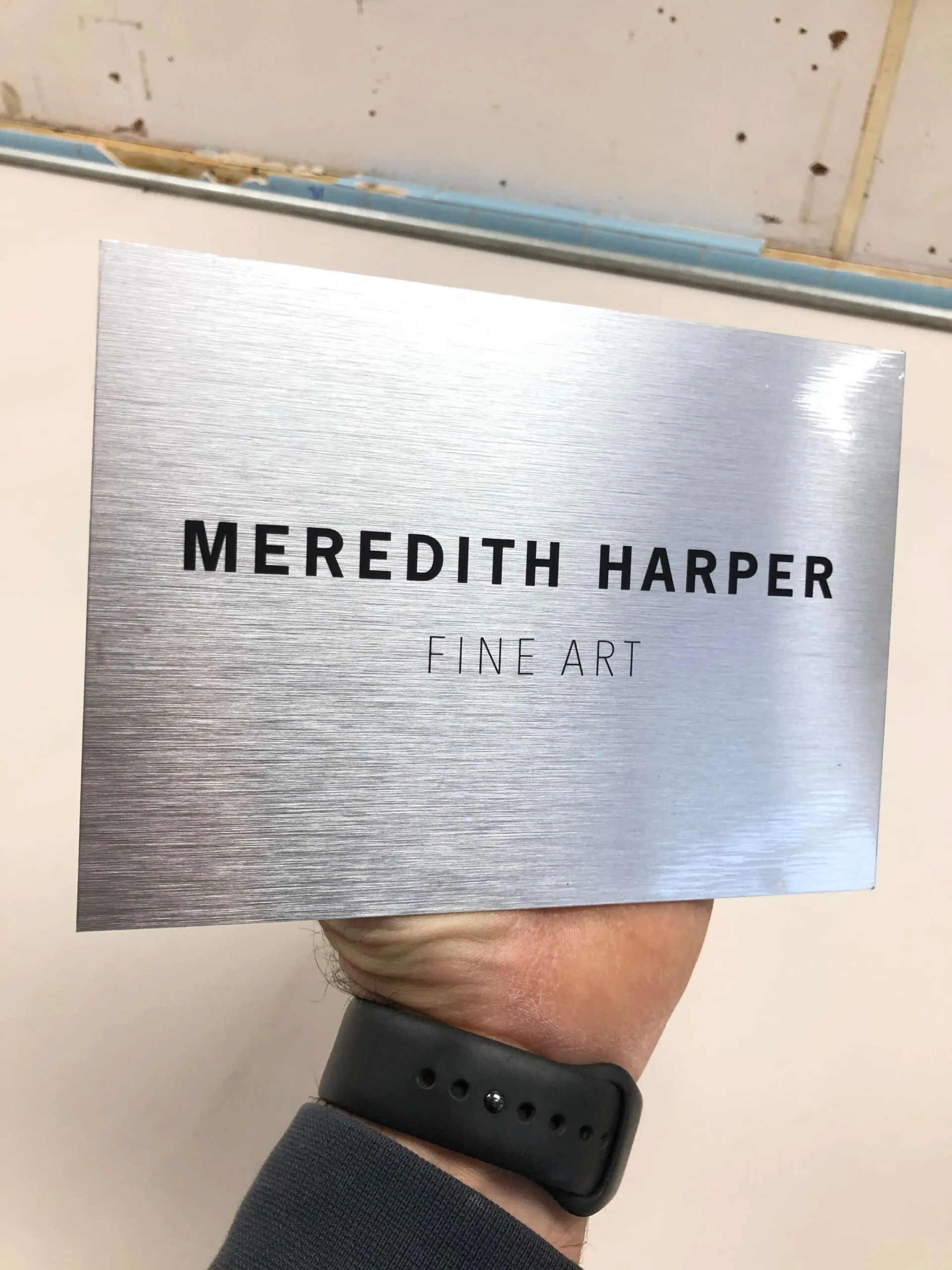
A Restaurant Is Read Four Times Before Anyone Walks In
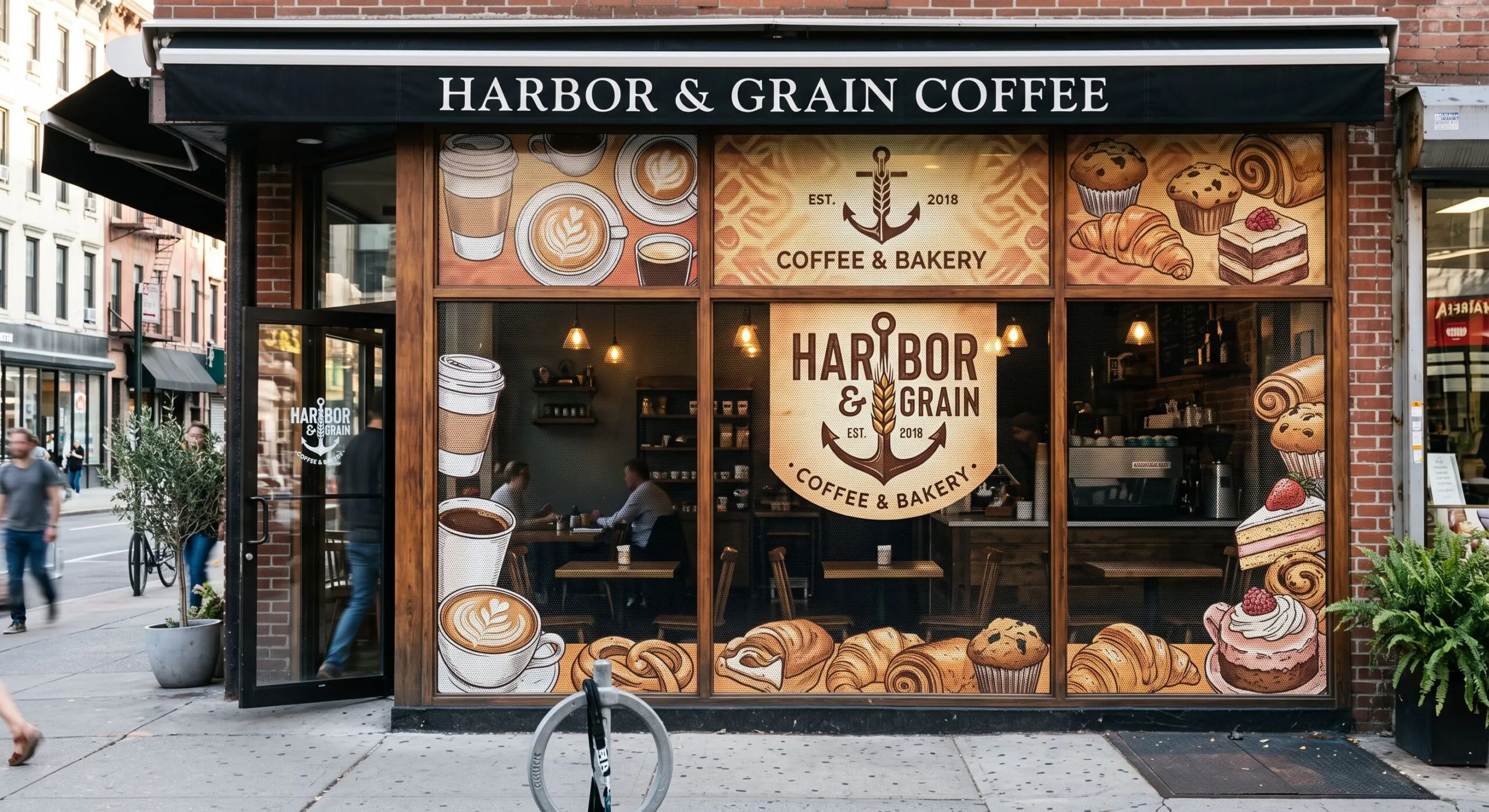
Long Branch has a strong restaurant and hospitality market, and customers meet the signage repeatedly on the way to the door: the business name and logo from across the street, a projecting sign or awning as they approach the storefront, hours, reservation information, pickup instructions and menu details at the entrance, then menu boards, wall graphics, restroom signs, ADA identification and wayfinding once inside.
A restaurant package covers storefront signs, channel letters, dimensional letters, projecting signs, custom awnings, window graphics, door lettering, menu displays, pickup signs, interior wall graphics, ADA signs and event graphics.
Separating those messages is what keeps the main exterior sign readable. A fascia carrying the name, the cuisine, the hours and the phone number is a fascia doing four jobs badly — and it is also using up a 15% allowance that the business may want back later.
— Offices & Directories
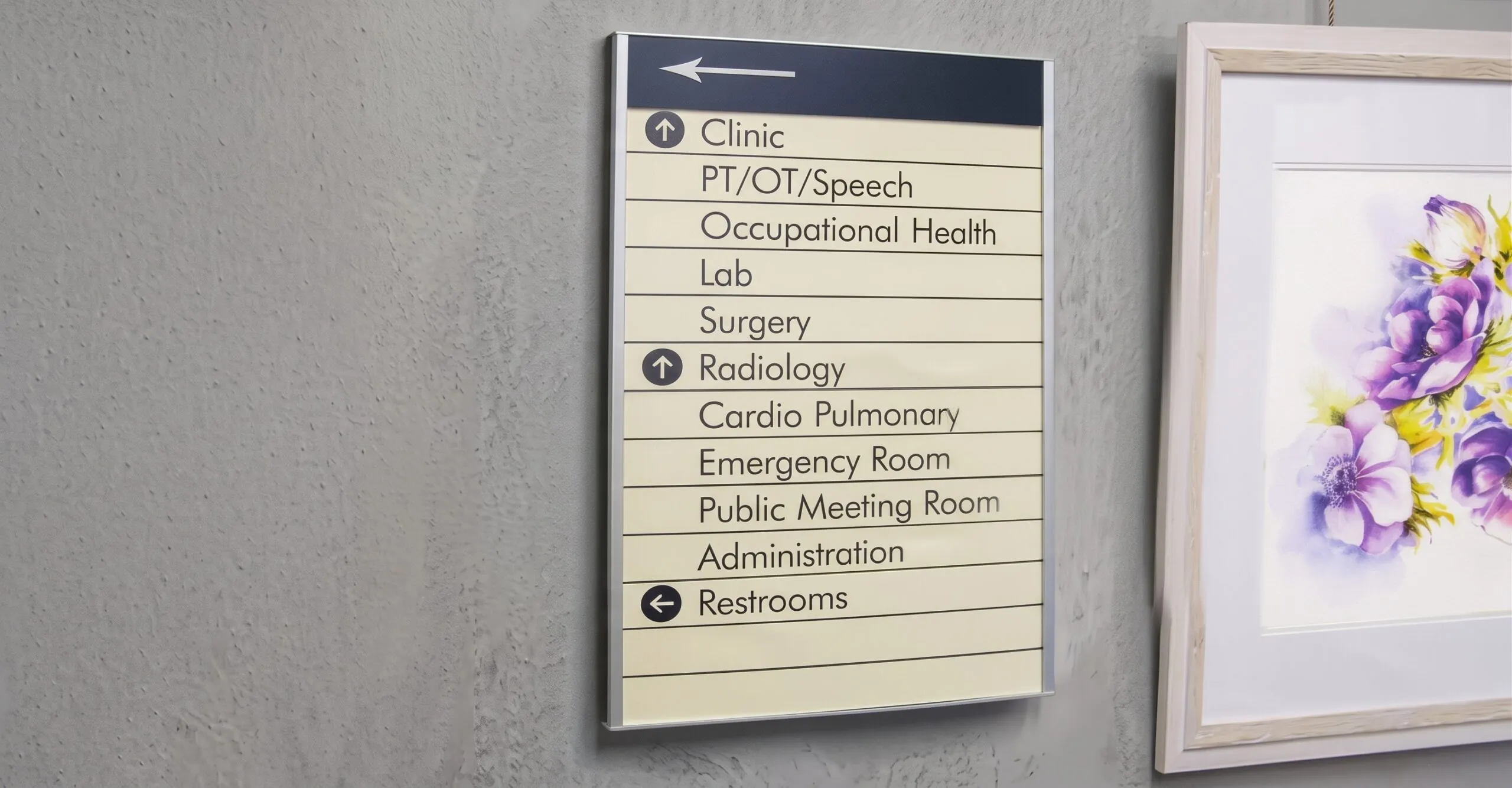
The Directory Is a Regulated Sign Here, Not an Afterthought
Long Branch’s ordinance separately recognizes directory-of-occupants signs, allowing an illuminated directory up to eight square feet, wall-mounted or projecting, in C-1 and equally in C-2, C-3, C-4 and C-7. That makes the directory a designed element with a known size rather than something added once the tenants arrive.
It matters most on office buildings, medical properties, mixed-use buildings, multi-tenant commercial property and shared entrances — the places where the exterior sign identifies the building and visitors still have to find the right business. A coordinated office package covers building-mounted identification and tenant signs; lobby directories with tenant names, floor information and suite listings; reception signs; suite signs with room numbers, departments and replaceable tenant identification; privacy graphics for offices, treatment rooms, conference rooms and glass partitions; ADA tactile and Braille identification; and wayfinding connecting entrances, elevators, offices, treatment rooms and shared areas.
Eight square feet divides well if it is planned to — we build directories with replaceable tenant components, so one business can change without the sign being remade. All of it works better under one terminology and one visual style across the property.
— Who We Work With
Businesses We Serve Throughout Long Branch
Oceanfront hospitality and Pier Village dining, the Broadway and West End storefronts, the medical and professional practices inland, and the managers holding the mixed-use buildings together.
Restaurants and Cafés
Storefront signs, channel letters, awnings, projecting signs, window graphics, menu graphics and interior identification.
Hotels and Hospitality
Exterior signs, reception signs, directories, event graphics, ADA signs and interior wayfinding.
Retail Stores
Storefront identification, dimensional letters, window graphics, temporary promotions and tenant changes.
Professional Offices
Directories, suite signs, reception logos, privacy film, ADA signs and office identification.
Healthcare and Medical
Exterior identification, reception signs, directories, ADA signage, privacy graphics and wayfinding.
Property Managers
Tenant changes, directories, replacement signs, repair work, sign removal and recurring property identification.
Contractors and Service
Vehicle lettering, building signs, office identification, banners, decals and commercial graphics.
Multi-Location Businesses
Recurring signage adapted to the individual property and the district requirements that apply to it.
— Tenant Changeover
Moving Into an Existing Long Branch Storefront?
A projecting-sign bracket already mounted and approved is worth more than the sign hanging from it — particularly where the clearances have already been worked out against the sidewalk, curb and roofline.
What you may inherit
- Wall-sign mounting points and electrical wiring
- Channel-letter raceways and sign cabinets
- Awning frames and projecting-sign brackets
- Window vinyl and door graphics
- Directory systems and interior plaques
- Reception signs
A suitable cabinet may need only a new face, an awning frame may be recoverable, a directory may need one tenant listing changed and existing attachment points may work with new signage. Other components come out because they are damaged, outdated, unsafe or incompatible with the incoming business.
What the changeover covers
- Previous sign removal and existing-condition survey
- Storefront measurements
- New exterior identification and channel-letter replacement
- Sign-face replacement and projecting-sign replacement
- Awning recovering
- Window-vinyl removal and new window graphics
- Door lettering, directory updates and suite signs
- Temporary opening graphics, then final installation
For property managers running mixed-use buildings, retail centers, professional properties and hospitality sites, tenant-specific components built to be replaced individually let the property change one business name without rebuilding every sign around it.
— Repair & Refacing
Sign Repair, Refacing, and Replacement
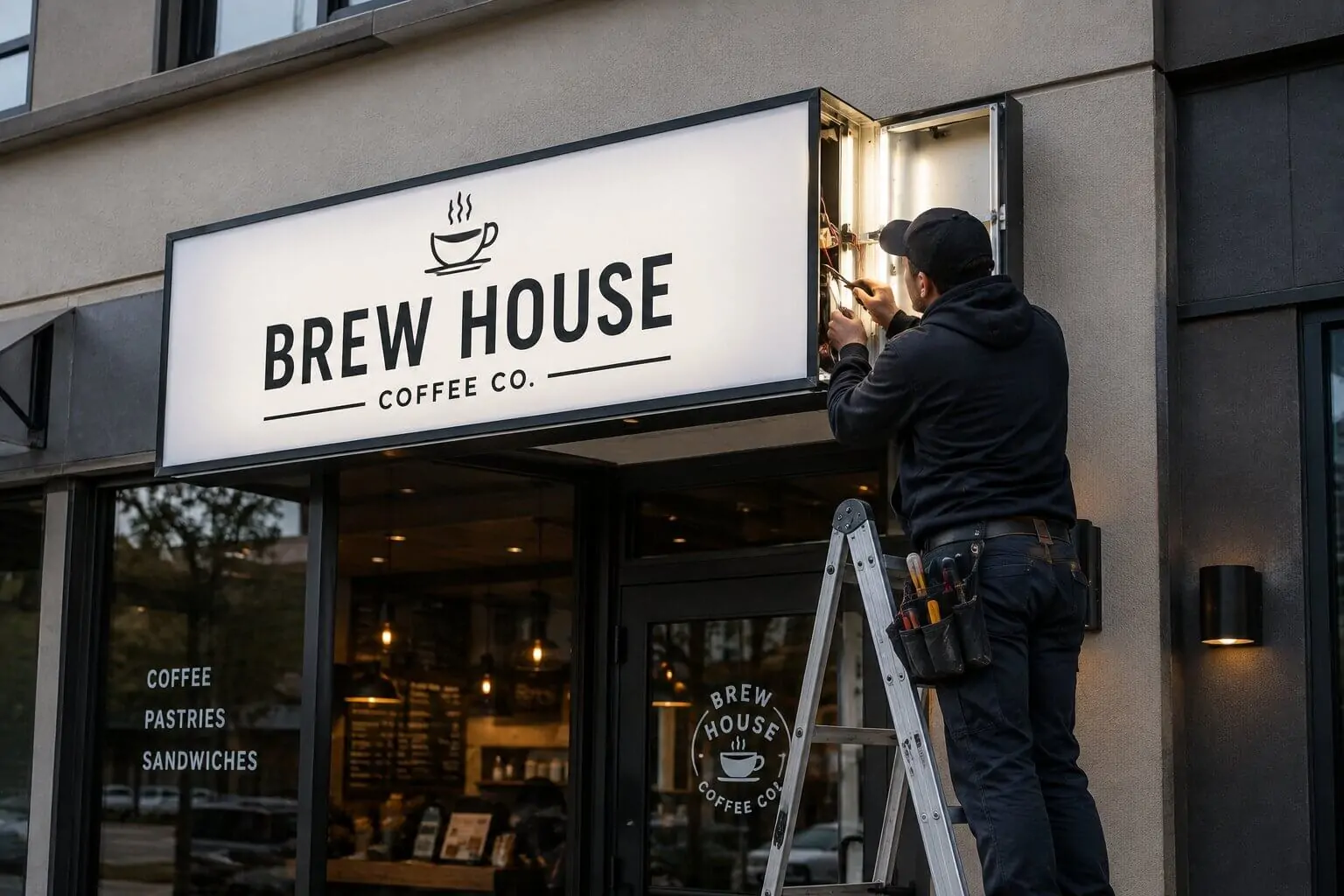
Long Branch carries a large amount of existing commercial signage across downtown, waterfront, office, retail and mixed-use properties. LEDs fail, letters loosen, faces fade, vinyl ages, awning fabric wears, brackets deteriorate, tenant names change and directory information goes out of date — and this close to the ocean, weathering runs faster than it does inland.
Gogi Signs repairs and updates commercial signage even when another company originally fabricated it:
- Channel-letter repair
- LED and electrical service
- Replacement sign faces
- Dimensional-letter repair
- Projecting-sign repair
- Awning recovering
- Window-vinyl replacement
- Directory updates
- Tenant-panel replacement
- Sign removal
- Interior sign replacement
- New tenant conversion
The code also requires signs to remain in safe condition and prohibits signs maintained in a state of disrepair, so deferred maintenance is a compliance question here rather than only a cosmetic one. Where repair makes sense we service the existing sign; where the structure has reached the end of its useful life, replacement is the better route.
— Serving Long Branch
Serving Long Branch and Monmouth County
Gogi Signs serves commercial properties throughout Long Branch, including businesses around:
- Pier Village
- Ocean Avenue
- Broadway
- West End
- Brighton Avenue
- Joline Avenue
- The Oceanfront
The combination of waterfront hospitality, mixed-use development, commercial districts, restaurants, offices and visitor traffic makes Long Branch a substantially different signage market from inland Monmouth County — and the district-specific sign standards reflect that.
Our service footprint continues through West Long Branch, Eatontown, Ocean Township, Deal, Monmouth Beach, Asbury Park, Red Bank, Neptune and the surrounding areas. For businesses with several locations, our New Jersey shop can provide one production and installation source while each property is handled to its own municipality and building conditions.
15%
Of façade, all five districts
12 or 8 sq ft
Projecting sign, by district
Insured
Commercial installation crew
In-house
Fabrication & large-format printing
— Get Started
Planning a Sign Project in Long Branch?
Whether you are opening a waterfront restaurant, updating a Pier Village tenant space, replacing a Broadway storefront sign, installing office directories, producing hotel graphics, changing tenants or repairing existing signage, start with the exact property address and photographs.
Gogi Signs can handle site measurements, sign drawings, fabrication, large-format printing, installation, repair and future sign changes from our New Jersey shop.
OUR SHOP
7 W Baltimore Ave, Suite B, Linden, NJ 07036, United States
Prefer to talk it through?
Request a Quote
The zoning district changes what a projecting sign may be.
- Serving New Jersey since 2005
- In-house fabrication and printing
- Insured installation crew
- Repair and refacing on existing signs
— FAQs
Frequently Asked Questions About Signs in Long Branch
In the C-1, C-2, C-3, C-4 and C-7 commercial districts, identification wall signs may generally occupy up to 15% of the façade on which they are installed. For a ground-floor business in a multistory building, the first-floor façade is used for the calculation.
Yes, in several commercial districts, subject to district-specific size limits. C-1 allows up to 12 square feet per side, while C-2, C-3, C-4 and C-7 generally allow up to eight square feet per side.
Because the wall-sign allowance is the same across all five districts but the projecting-sign allowance is not. A third of the face can depend on which district line the property sits behind, so it gets confirmed rather than assumed.
The commercial district standards generally cap projection at five feet. The City’s general definition also requires sidewalk, curb, façade and roofline clearances.
An illuminated directory-of-occupants sign may be up to eight square feet, wall-mounted or projecting — the same allowance in C-1 and in C-2, C-3, C-4 and C-7.
No. Long Branch prohibits rooftop signs and signs attached to buildings from projecting above the roofline.
No. The general sign regulations prohibit flashing and blinking lights, series lights, rotating parts and moving parts.
Yes. We inspect existing cabinets, wiring, mounting, awning frames, brackets and directories to determine whether reuse or refacing makes sense.
Yes. We produce exterior identification, storefront signs, lobby directories, reception signs, ADA signs, floor identification, event graphics and interior wayfinding.
Send the exact property address, photographs of the storefront or installation area, your logo or artwork, photographs of existing signage, and any landlord or property criteria you have.