
— Custom Food Truck Wraps
Build a recognizable mobile food brand with custom wrap design, durable printed graphics and certified installation for food trucks, concession trailers and carts.
Custom design
Built around your food brand
Flexible coverage
Full, partial or panel graphics
Multiple formats
Trucks, trailers and carts
Built for service
Planned around working openings
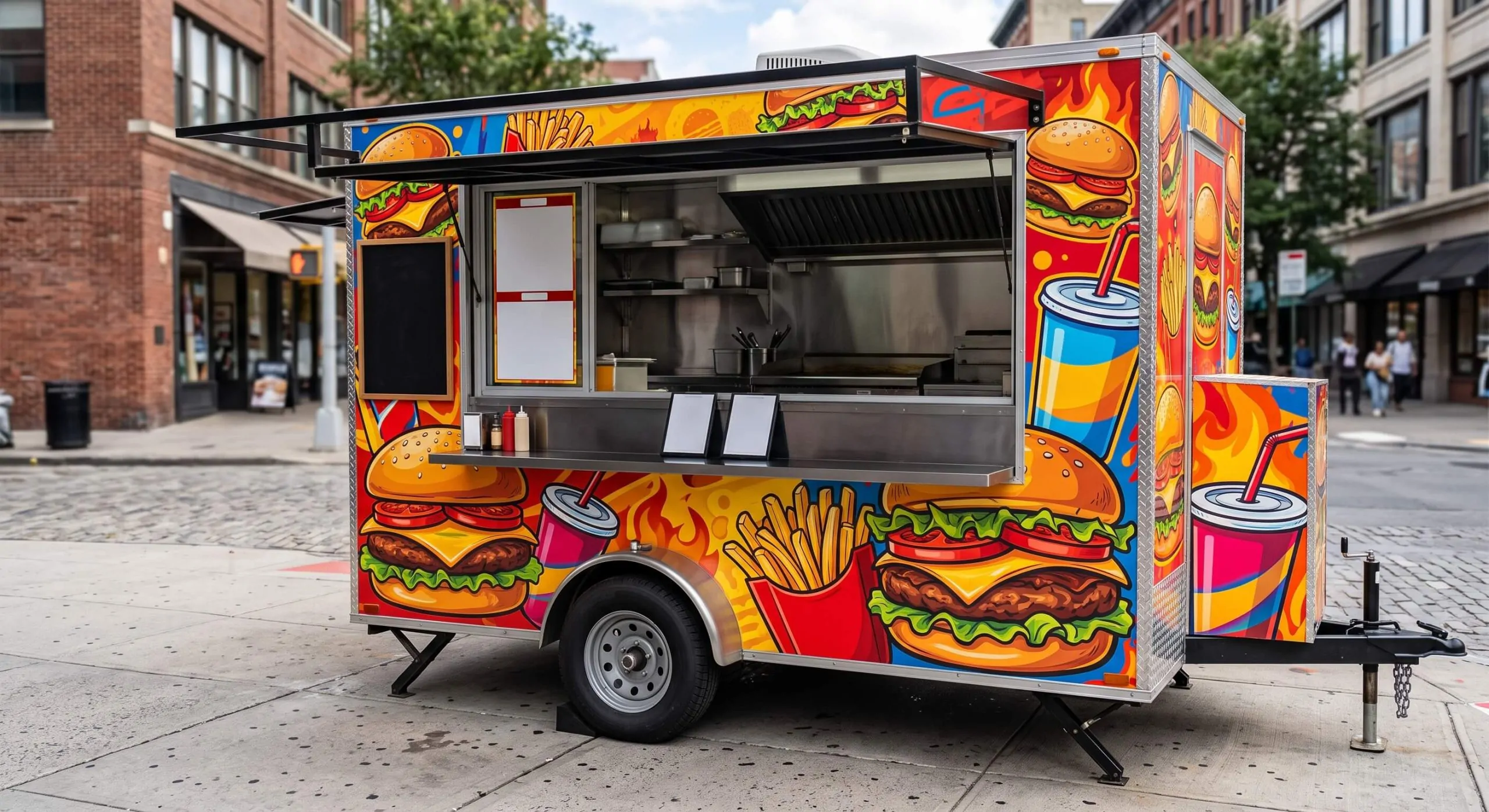
— Branding for mobile food businesses
Customers often decide whether to approach a food truck before they read the menu. Gogi Signs helps independent operators, restaurants and caterers turn the exterior into a clear brand experience—one that communicates the food, the personality and where to order within seconds.
We design and install graphics for step vans, converted box trucks, concession trailers, coffee carts and other mobile units. A project may include a full or partial wrap, logos and lettering, a service-side layout, social and ordering details, or replaceable menu panels that can be updated without rebuilding the entire wrap.
Every kitchen body is measured before artwork begins. Serving windows, awnings, vents, propane lockers, access doors, diamond plate and permit locations are treated as part of the layout, so the truck looks intentional when it is open and serving customers—the moment the branding matters most.
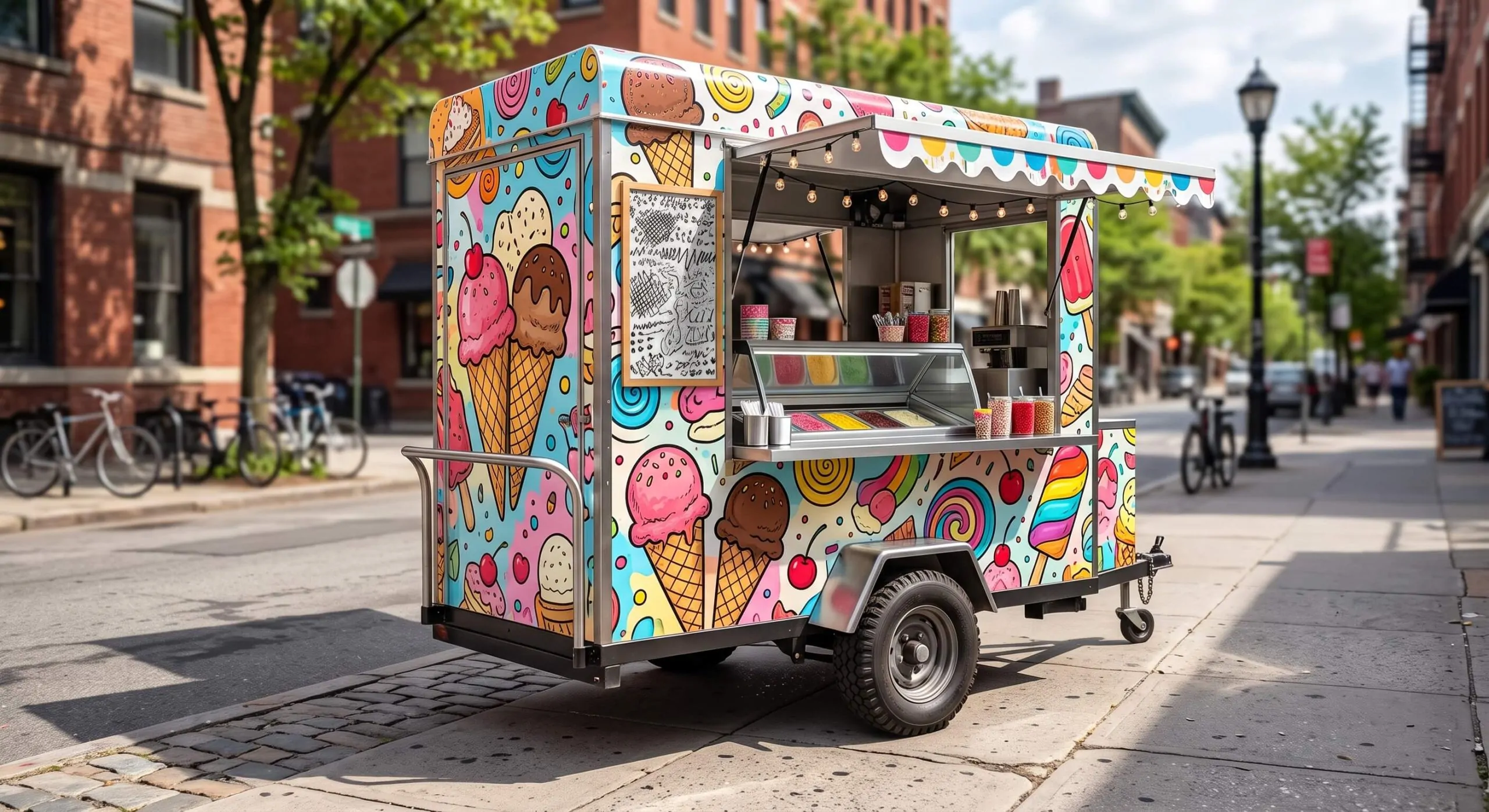
— Why Gogi Signs
Good food truck graphics must support ordering, service and brand recognition—not just fill the available panels with artwork.
We establish a visual order for the brand, cuisine, menu direction and ordering point, then test how the message reads from the approach and service side.
Menu prices, QR codes, social handles and seasonal offers can be planned as replaceable elements instead of being locked into the permanent wrap.
Our team handles design, printing, lamination and installation inside a 10,000-square-foot facility, keeping color and fit decisions with one shop.
After more than 20 years in signs and graphics, we know where edges, cleaning products, heat and service equipment should influence material and placement choices.




— Coverage
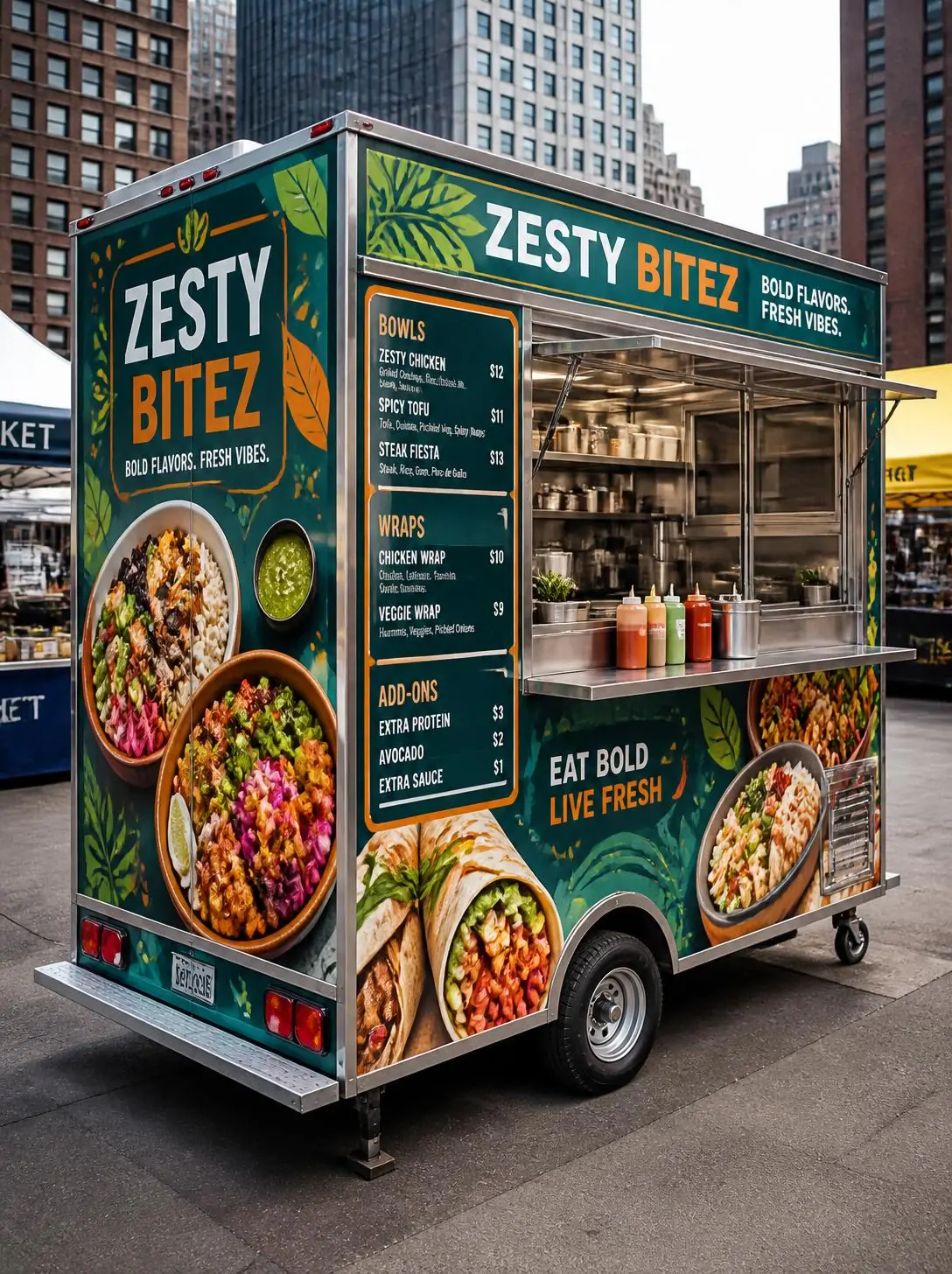
Printed graphics cover the main body panels, including the service side, opposite side, rear and front where suitable. This provides a consistent presentation when customers approach from different directions at markets and events.
Events, festivals and touring
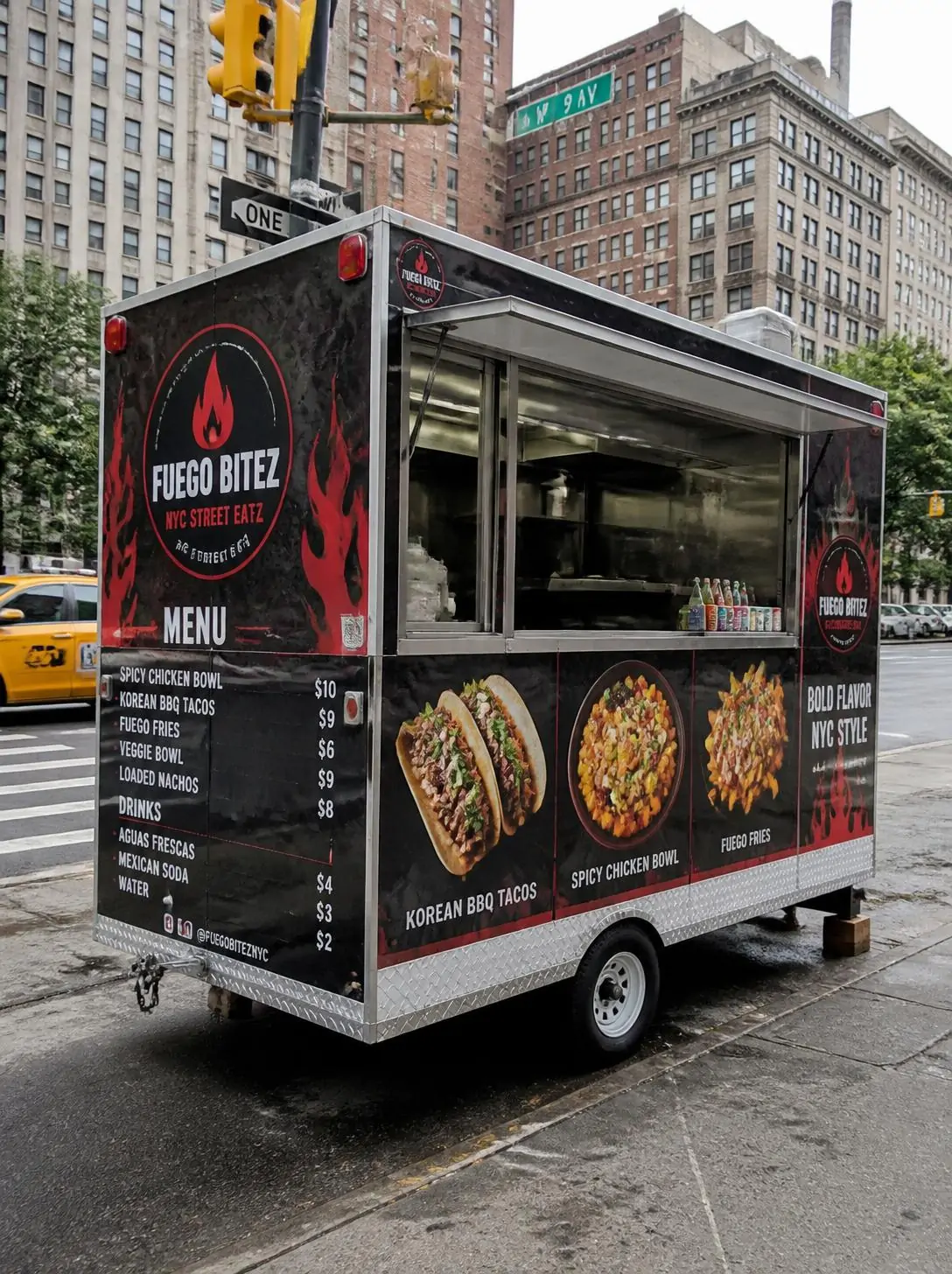
The trade face and the rear printed, off side left plain. On a fixed pitch the off side faces a wall or a road, and printing it buys almost nothing.
Fixed pitches and street trading
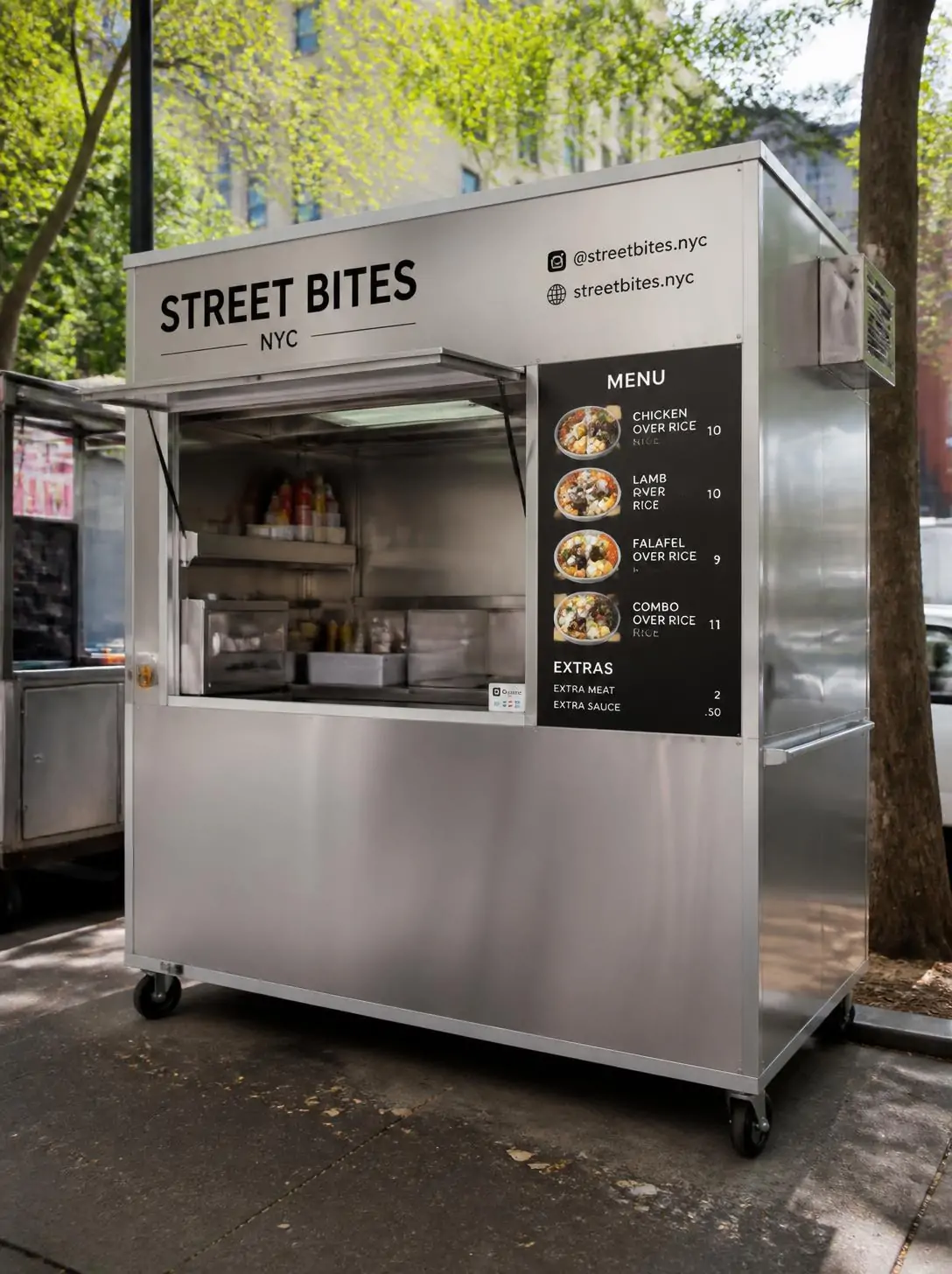
A printed block framing the serving hatch carrying the name and the menu, on an otherwise plain body. The cheapest way to look intentional rather than unfinished.
New operators and clean bodies
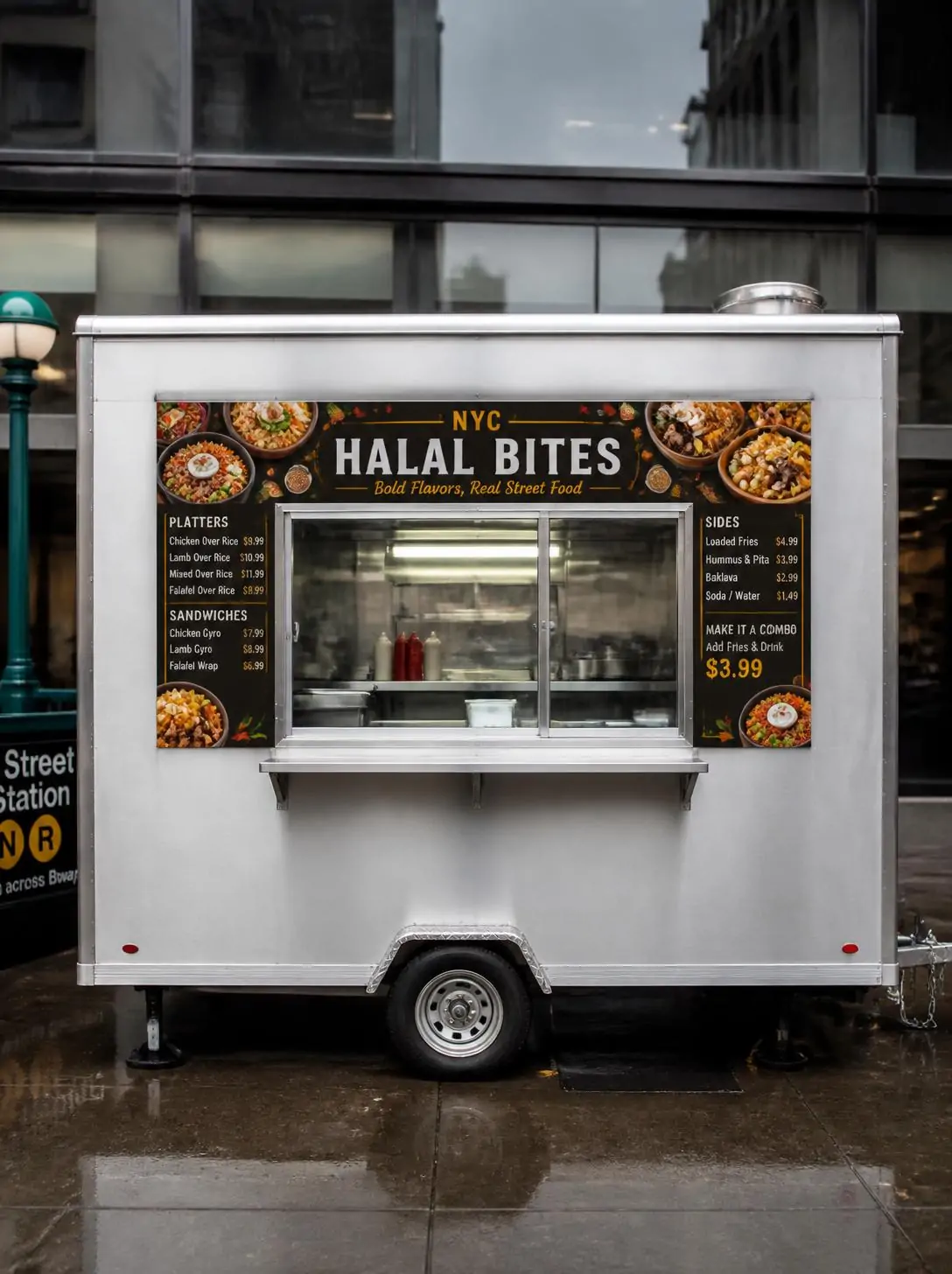
Cut vinyl name and socials plus a printed menu board. The menu is the part that changes, so it is built to be replaced on its own.
Carts, kiosks and seasonal traders
A truck working festivals and a truck on a fixed office-park pitch want different answers. Tell us where you trade and we will say which one applies.
— The build
Serving windows, ventilation, access doors and kitchen equipment can make the printable area very different even between similar vehicles, so each unit is reviewed individually.
The most valuable area on the truck. Film is cut around the frame, the awning arms and the hinge line, and the layout is checked with the hatch open — because open is how it looks whenever anyone is actually buying.
Propane, generator, water fill, shore power, utility access. Each is cut and finished on its own so it keeps opening, and nothing important in the artwork straddles one.
Textured aluminum will not hold printed film reliably, and anyone promising otherwise is booking a callback. It gets designed around as a fixed material, or replaced with smooth panel first if you want that area printed.
Around a cooking hood the panel runs hot and collects airborne grease. Film edges are held back from it, because grease creeping under an edge is how a wrap starts letting go.
Health department permits, mobile vendor licenses and unit numbers have to stay readable. They go into the layout as fixed content at the start rather than getting stuck over the finished job.
Most food trucks are step vans, and a step van is rounded at every corner — considerably curvier than a cargo van. That geometry is where the hours go and why a full wrap sits where it does on price.
—Project gallery
Completed mobile food brands will be added here.
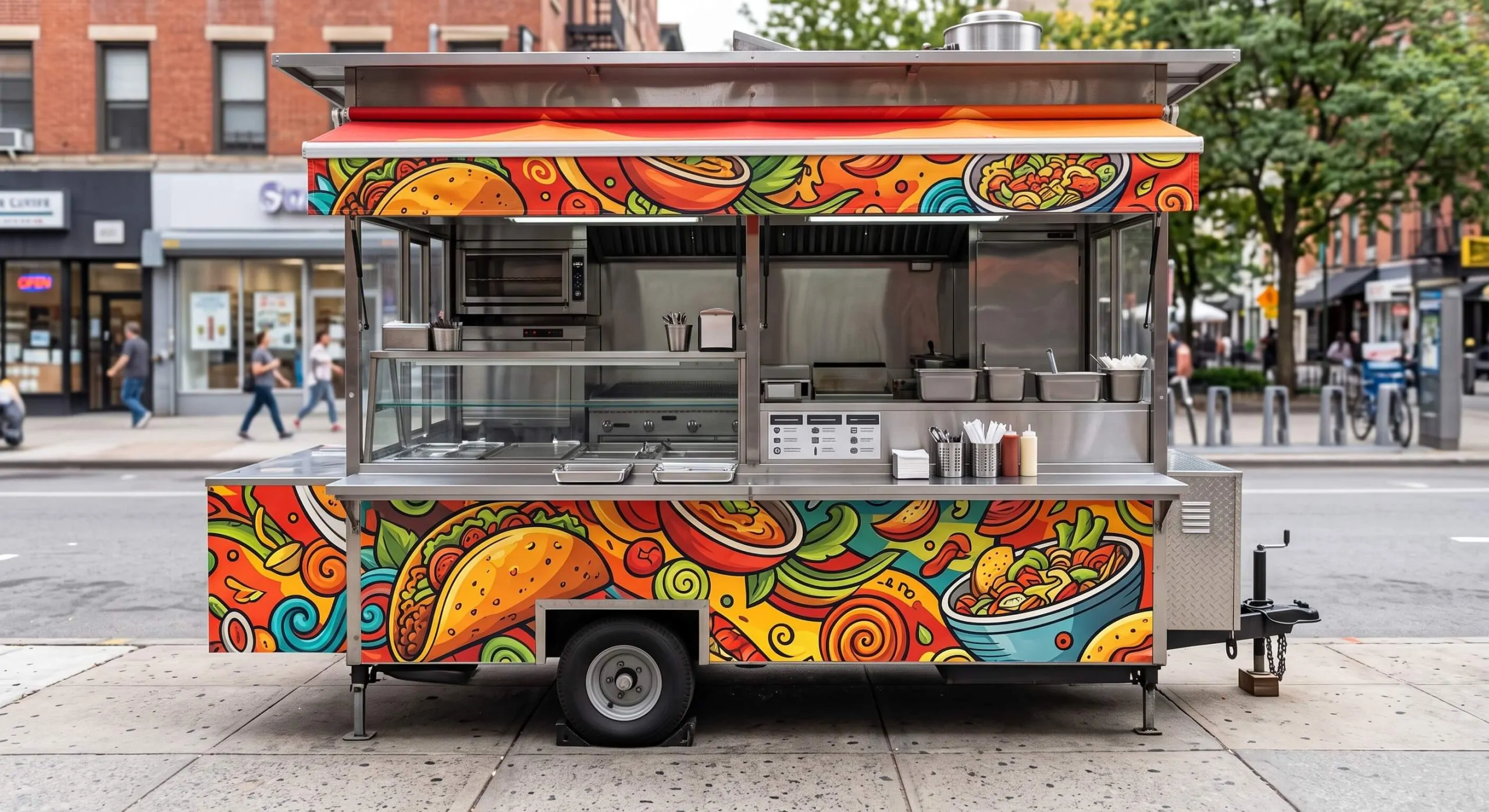
The customer-facing layout in its working position
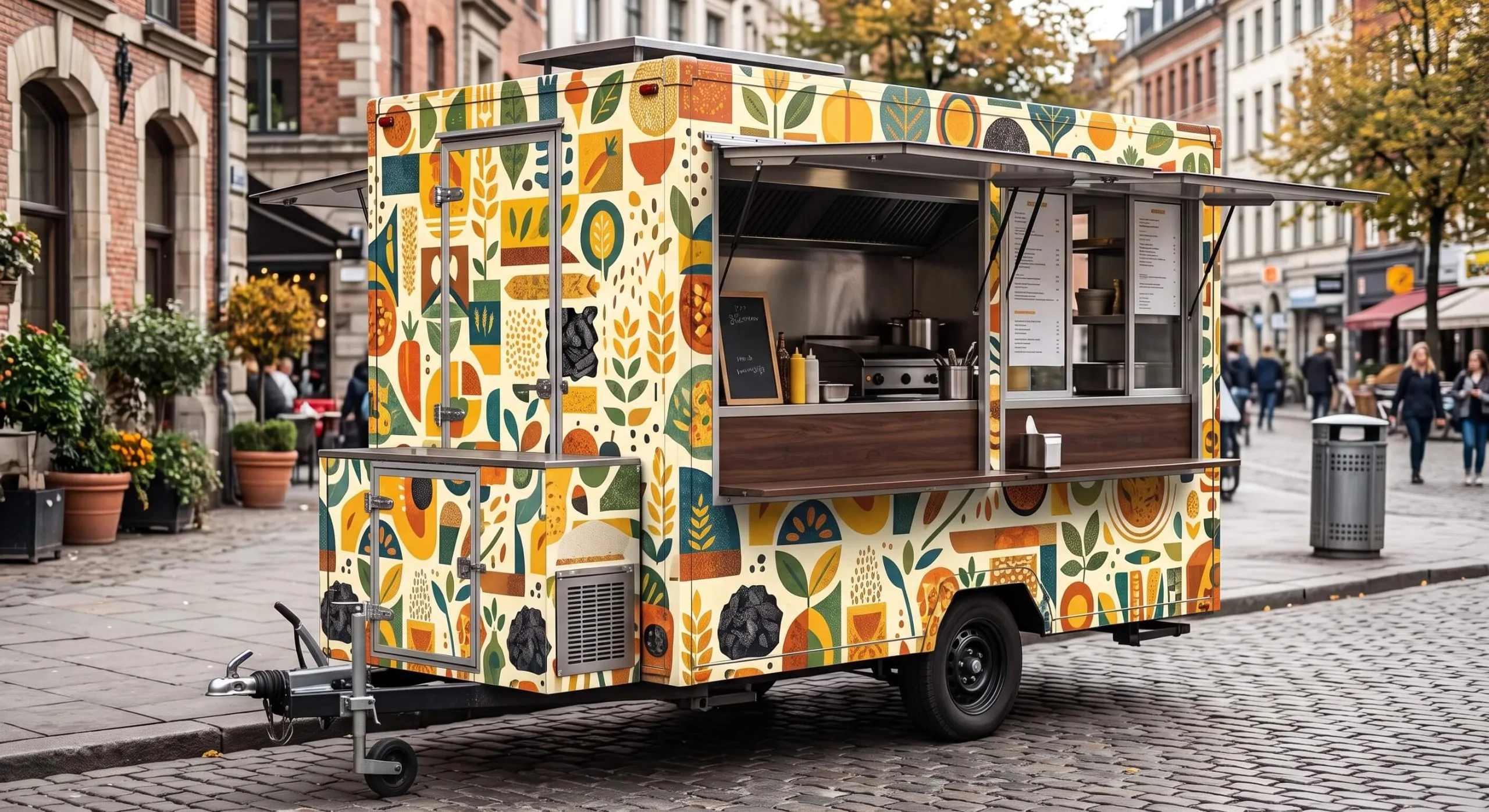
A cohesive brand across panels and equipment
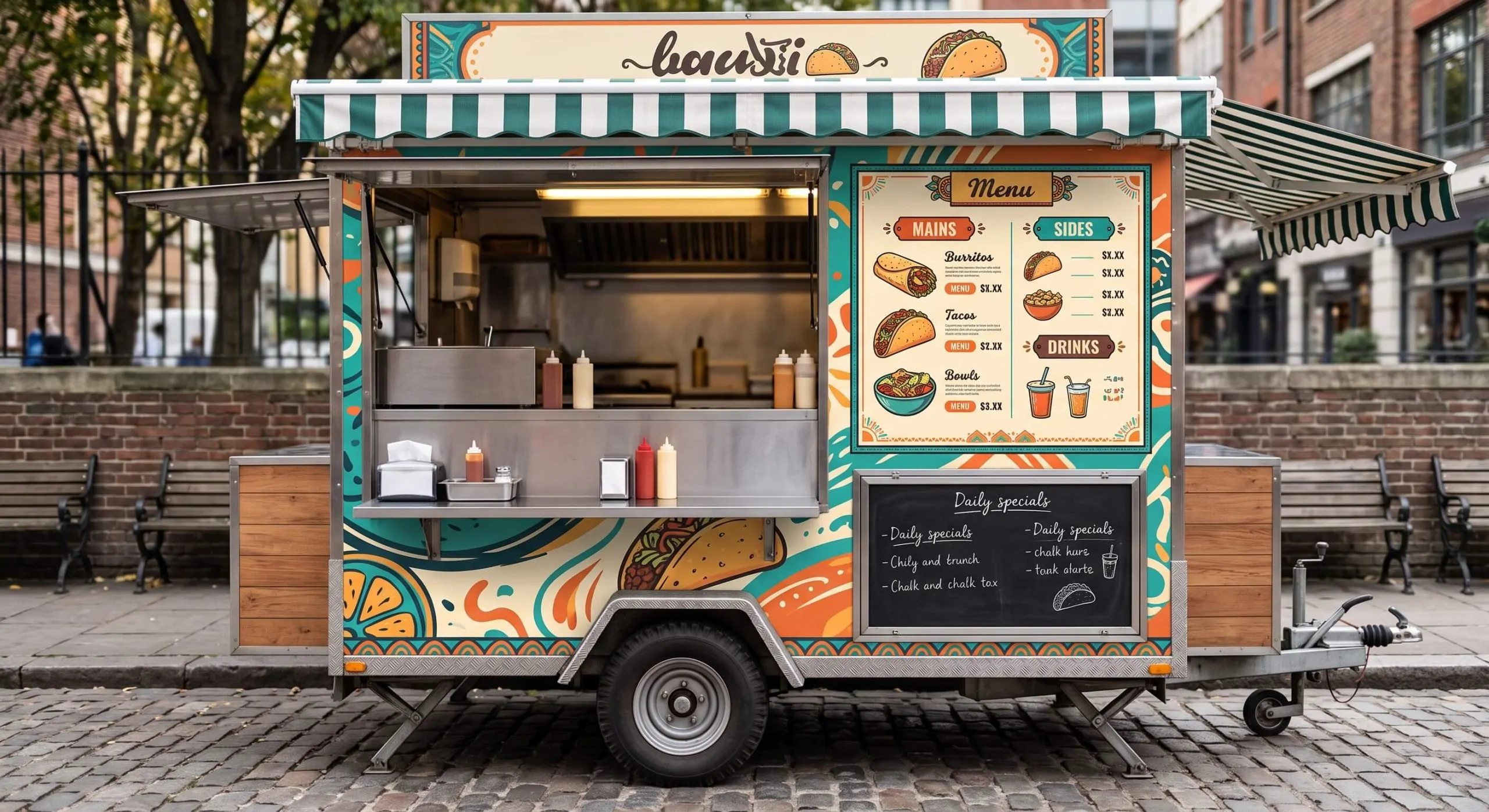
Changeable information integrated with the wrap
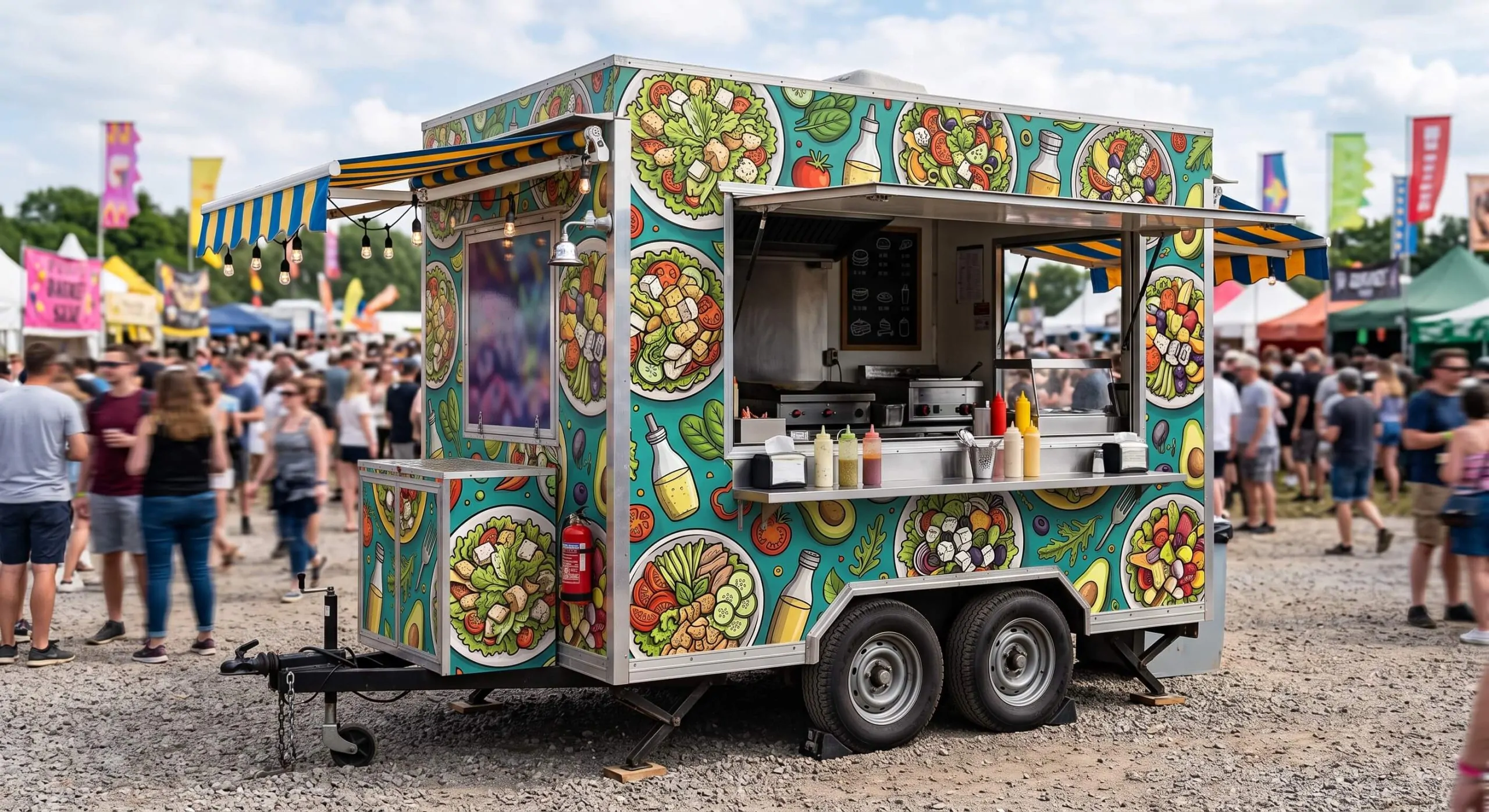
Brand visibility for markets and festivals
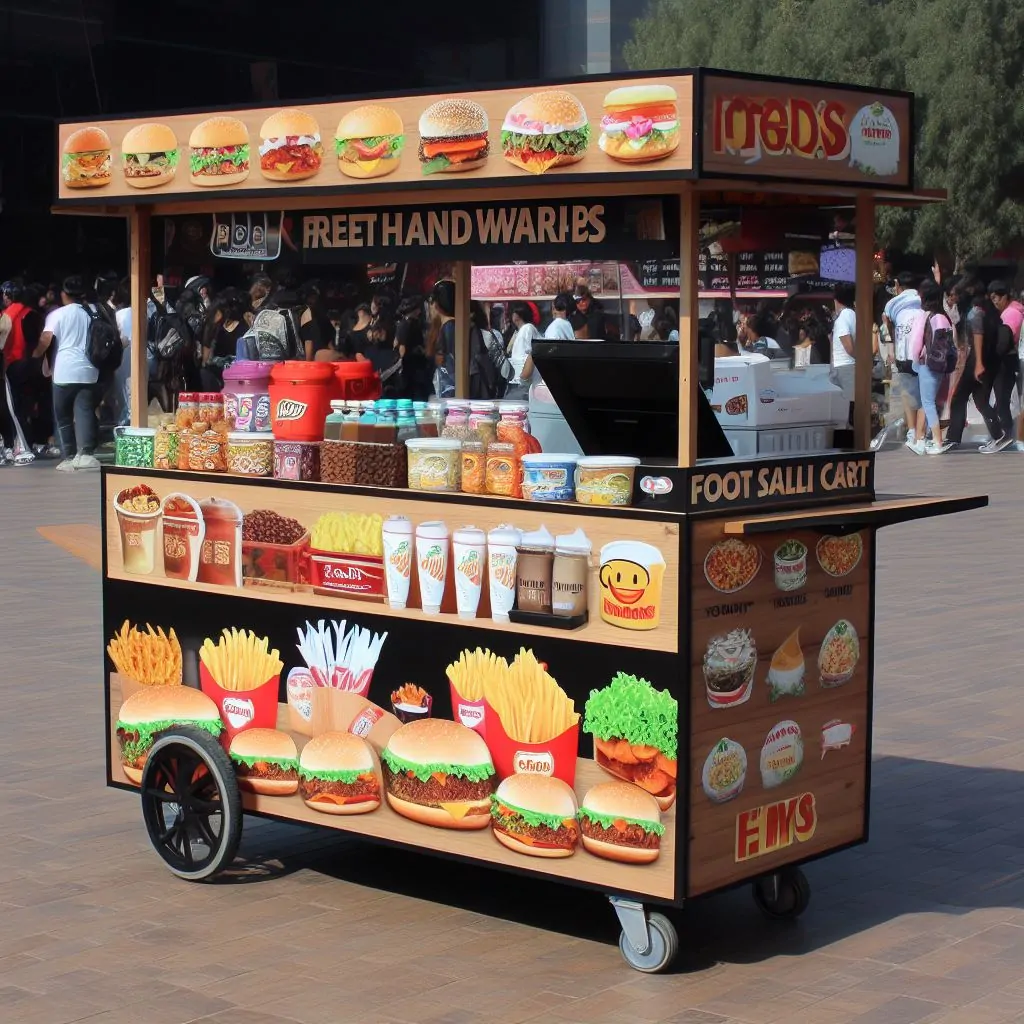
Focused graphics for smaller surfaces
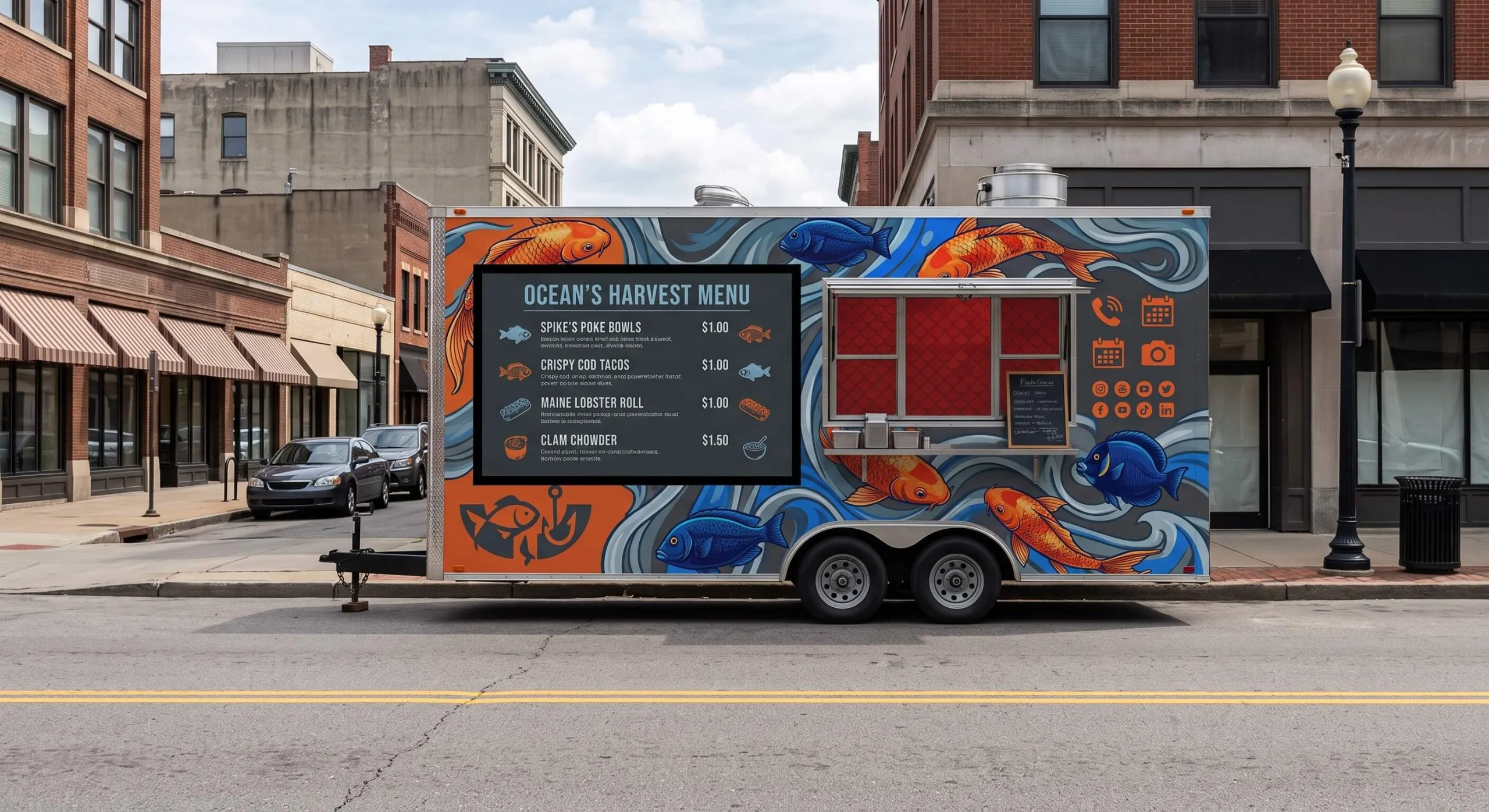
Booking and social information at distance
— Design
Food truck graphics must work both at a distance and at close range while customers review the brand, menu and ordering information.
Six feet, standing still. Your customer is close enough to read a price list and has already stopped walking. Detail that would be wasted on a box truck earns its place here, and the decision being made is whether to eat rather than whether to remember a phone number.
Then design the rear separately. The back of the truck is the only face read at distance, between pitches, by traffic. Name and one line about the food is the whole job there. Treating the rear and the serving side as one design is why so many trucks work up close and vanish on the road.
Menus and prices move. Wraps do not. The most common expensive mistake on a food truck is printing prices into the wrap itself, then eating the cost of a panel every time the menu changes.
Vector, or the studio rebuilds it. Food branding tends to arrive as a logo someone made for Instagram. At queue distance a soft edge is visible in a way it never is on a highway vehicle, so low-resolution marks get redrawn before layout begins.
— In-house
Measurements, artwork, printing, lamination, installation and inspection are completed in-house and coordinated around serving openings, access panels and the operating schedule.
A template drawn from your specific build, with every opening, vent and plate plotted before a single element is placed.
Serving side and rear worked as two separate problems, with the menu built as its own replaceable piece from the start.
Appetite photography and flat brand color in the same pass, then laminated — which on a unit meeting degreaser nightly is what turns one season into several.
Our certified crew, working whichever slot your trading calendar leaves open — at the Linden bay if the unit can travel, at your lot or commissary if it cannot.
Every hatch, door and window opened and closed by hand after fitting, and every edge near water or grease sealed before the unit trades again.
— Cost
Typical planning range
$3,500–$8,500+
Industry planning ranges commonly begin around $3,500 for partial or smaller-unit coverage and reach $8,500 or more for larger trucks with full custom graphics. The exact quote depends on printable area, existing finishes, artwork requirements and the number of openings that must be detailed.
— A second unit
Food operations grow by adding units, usually a season or two apart, and a second truck that is nearly right reads as a different business. The approved file stays here, so unit two prints from it rather than being redesigned from memory.
— Who trades from them
The operating environment helps determine which panels need the strongest visibility and how much supporting detail belongs in the design.
Step vans on office-park and lunch pitches, seeing the same faces weekly. Recognition beats persuasion after the first month.
Usually: serving side and rear
Towed units at fairgrounds and county events, approached from every direction across an open field.
Usually: full wraps
Compact units where there is no wasted surface and everything is read from arm's length.
Usually: full wraps
Units booked for weddings and corporate days, where the truck has to suit the event as much as the brand.
Usually: serving side and rear
An existing kitchen adding a truck. The wrap has to match a brand that already exists, down to the exact color.
Usually: brand-standard
Seasonal units on shore routes and in parks often benefit from distinctive colors, clear product imagery and branding that is easy for families to recognize.
Usually: full wraps
For operators attending busy weekend markets, distinctive graphics help customers identify the cuisine and brand among neighboring vendors.
Usually: full wraps
Trucks rented out or run to a franchise standard and rebranded between operators. Removal is planned in from day one.
Usually: wrap plus removal
— Where we work
The shop is at 7 W Baltimore Ave in Linden, Union County — a short run from Newark, Elizabeth, Jersey City and the shore routes, and from most of the commissaries operators in this state work out of.
Timing matters more here than on any other vehicle we handle. A wrapped van off the road for a week costs a trade some appointments. A food truck off the road for a week takes no money at all. So the calendar is built backwards from your pitches: quiet weekdays, the gap between market seasons, or a slot before a season opener.
Where a unit genuinely cannot leave, the install comes to your lot or commissary instead. Our range takes in the whole state, New York City and the surrounding tri-state area.
— Service area & quotes
Photographs of every side, approximate dimensions and the desired coverage level allow us to prepare a more accurate estimate.
They matter more here than on anything else we quote. Two trucks of the same make can differ by a third in printable area depending on where the build put the window, the vents and the plate — and no spec sheet tells us that.
Tell us your trading days as well. The schedule gets built around them wherever the calendar allows.
Where we work most
OUR SHOP
7 W Baltimore Ave, Ste 301 Linden, NJ 07036
Prefer to talk it through?
— FAQs
On a personal vehicle used for work, magnets have a real place — they come off when you want the car back. On a working commercial vehicle they are a compromise: they can lift at highway speed, they trap moisture against the paint, and a panel left on for months can mark the finish underneath. We supply them, and we will tell you honestly when applied lettering is the better answer.
It is the part we plan first. Film is cut around the frame, the awning arms and the hinge line, and the layout gets checked with the hatch open — because open is how the truck looks whenever anyone is actually buying from it.
If it is planned that way from the start, yes. We build the menu and price area as its own panel in the same material, so it can be reprinted and swapped on its own for a fraction of a wrap. Printing prices into the main artwork is the expensive mistake here.
Use warm water, mild detergent and a soft sponge on the exterior. Keep kitchen-strength degreasers away from wrap edges, and do not direct a pressure washer closely or squarely at seams and cut lines.
The schedule gets built backwards from your pitches. Quiet weekdays, the gap between market seasons, or a slot before a season opener. Where the unit genuinely cannot leave at all, the install comes to your lot or commissary.
They stay visible. Permits, mobile vendor licenses and unit numbers go into the layout as fixed content at the start, rather than being stuck over a finished wrap and looking like an afterthought.
Common, and it changes the order of work. The old film comes off first and the panel underneath gets inspected before the new job is priced, because what is under a six-year-old wrap is not always what the seller described.
Towed trailers, coffee carts and kiosks as well as step vans and converted box trucks. Where an operator runs a truck and a trailer together, both are worked from one file so they read as one business despite the different bodies.
Yes. The code should be sized for the expected viewing distance and placed on a relatively clear area with enough surrounding space to scan reliably.
Coverage sets it. A menu panel and lettering is quick. A full wrap on a step van with a lot of openings is the long end, because every cut edge is finished individually. The day count comes with the quote so it can be traded around.