Atlantic City, Atlantic County
Atlantic City Sign Company for Boardwalk and Pacific Avenue Businesses
Gogi Signs builds lit storefront signs, projecting signs, awnings and event graphics for Atlantic City businesses on the Boardwalk, Pacific Avenue and Atlantic Avenue. We make them in our Linden shop with hardware chosen for salt air, and we prepare the drawings and area calculations for the city’s land use compliance application.
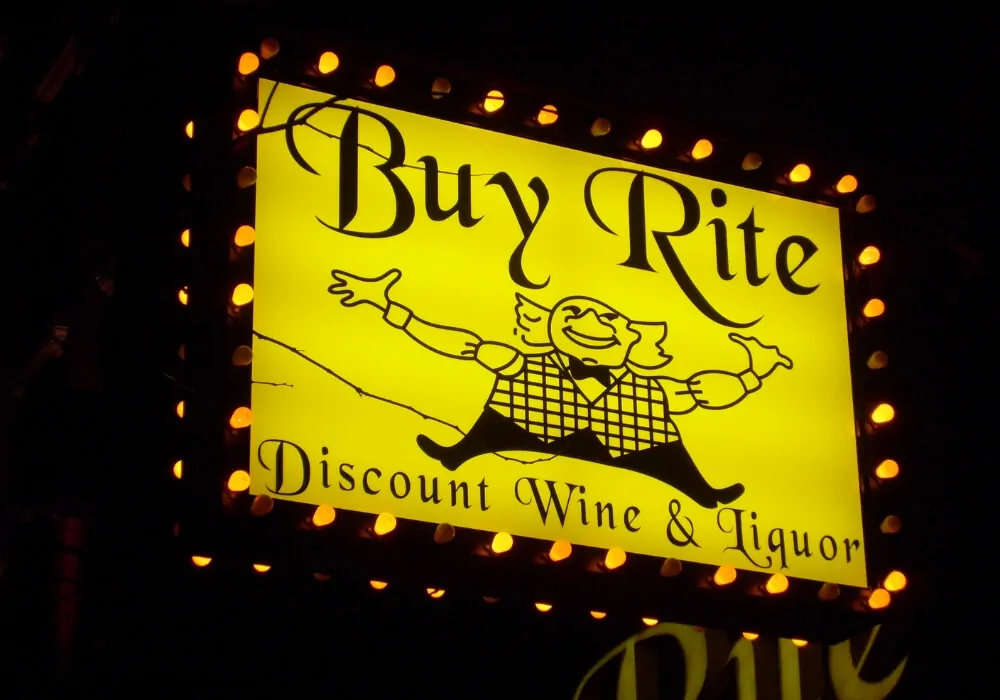
Signs made to be seen at night
Lit cabinets and letters for a city that stays open late.
Salt Air
A Sign Near the Ocean Is Built Differently
Salt spray and wind off the ocean wear out ordinary signs faster than they would inland. For Atlantic City we specify aluminum cabinets and faces, sealed LED modules and power supplies, and stainless or coated fasteners, so the sign is not rusting at the bolts after its first winter.
The same thinking applies to awnings and printed graphics. Fabric, vinyl and laminate are chosen for UV and moisture. The city also requires an Underwriters Laboratories label on any sign with electrical parts, and the installer’s name and permit number marked on every sign, so we plan for both before fabrication.
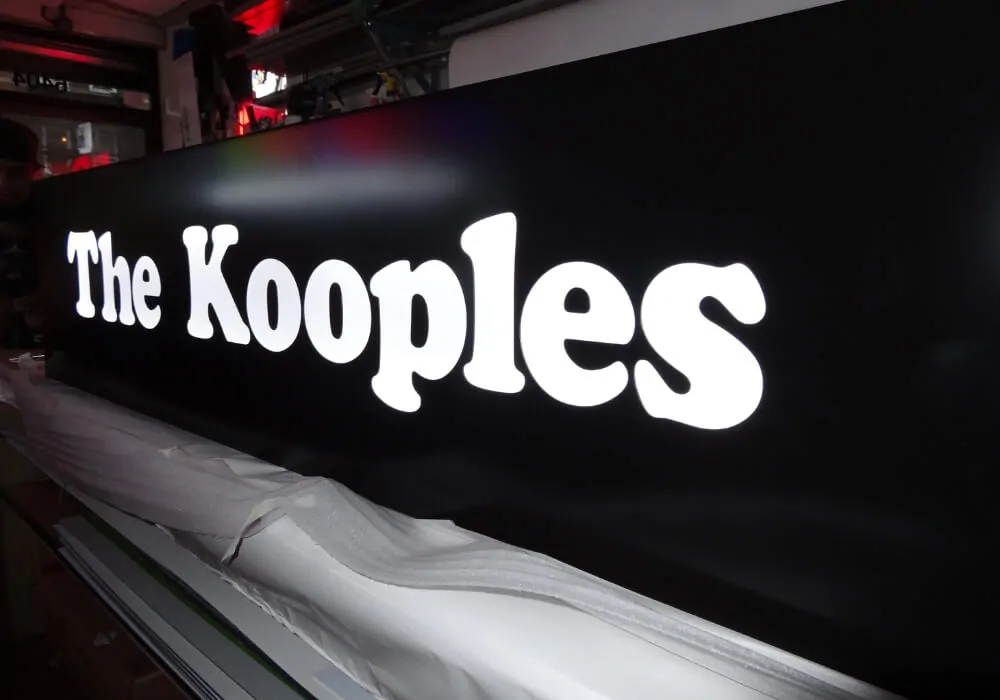
City Rules
What Atlantic City Allows on a Commercial Building
Atlantic City’s commercial districts do not cap the number of signs, but they cap the total. These are the limits that shape most of our quotes here.
Who We Build For
Atlantic City Businesses We Make Signs For
Boardwalk Shops
Storefront letters, light boxes and window graphics for shops facing the walkway.
Restaurants and Bars
Lit signs, awnings and menu boards, kept dark after 11 pm if the sign faces a residential district and the business is closed.
Hotels and Venues
Directional, room and ADA signs, plus banners for conventions and shows.
Events
Backdrops, banner stands and neon rentals for one night or a season.
Work We Do
Sign Types That Suit Atlantic City
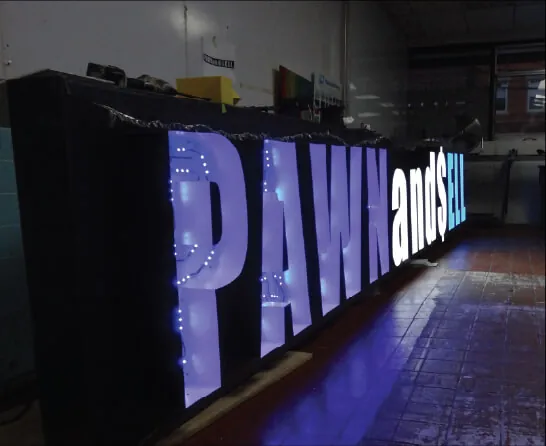
Lit Channel Letters
Letters that stay bright and readable after dark.

Awnings
Shade, weather cover and a name on the valance.

Window Decals
Temporary window signs may cover up to 33% of a window.
Why Gogi Signs
Fabricated in Linden, Installed in Atlantic City
Gogi Signs has made signs since 2005. We prepare the scaled drawing, the photos of existing signs and the sign area calculation the city asks for, and our licensed and insured crew installs. We also repair and reface signs we did not build.
NJ & NYC Service Area
Serving Businesses Across New Jersey
What Atlantic City's sign ordinance allows
Atlantic City is in Atlantic County. These are the rules from Atlantic City's own sign ordinance that most often shape what a business can put up.
Source: Atlantic City Code, Chapter 163, § 163-71.
Commercial district limits
In the NC-1, NC-2, MC, AC, CBD, HWC, L-1 and TRS districts there is no cap on the number of signs, but their combined area may not exceed 25% of the wall surface on each elevation. Pole and roof signs are not permitted.
§ 163-71I(2)-(4)Heights
Awning, canopy, marquee and projecting signs may go no higher than 20 feet or the second-floor window sill, whichever is lower. Ground signs are limited to 5 feet tall and must sit 5 feet from every lot line. Wall signs may not rise above the roofline of the wall they are on.
§ 163-71I(5)-(6)Projecting signs
A projecting sign may extend no more than 4 feet from the wall, must stay at least 2 feet back from the curb line, must project at 90 degrees, may not come off a building corner and must clear grade by 8 feet.
§ 163-71D(13)Awnings
Signs on awnings, canopies and marquees may not extend beyond the awning and must be at least 10 feet above the sidewalk. Nothing may be placed on top of a marquee or canopy.
§ 163-71E(2)(a)Illumination
Indirect or internal white light and neon are permitted. Flashing, animated or bare-bulb signs are allowed only on Pacific Avenue frontages in the NC-2 and CBD districts, and strobes are banned everywhere. Signs facing a residential district must be dark from 11 pm to 7 am unless the business is open.
§ 163-71I(7), D(1)Electrical and labeling
Every sign with an electrical component must carry an Underwriters Laboratories label, and every sign other than residential nameplates must be marked with the name of the company that installed it and its permit number.
§ 163-71D(2), D(10)How area is measured
Supporting structure is excluded from sign area unless it forms part of the message. A sign with a backing is measured by its backing. Individual letters without a backing are measured by the smallest regular shape around the whole message.
§ 163-71D(12)Window signs
Temporary window signs may cover no more than 33% of a window and may go up 45 days before an event.
§ 163-71F(8)Landmarks
No ground, pole, roof or projecting sign may stand within 50 feet of a designated landmark's lot line where it is visible from that line.
§ 163-71D(14)Sandwich boards
A-frame, sidewalk and curb signs are prohibited unless a specific district regulation allows them.
§ 163-71G(7)(c)Getting a sign permit in Atlantic City
Approval
No sign may be erected, enlarged or altered without a certificate of land use compliance. The application needs a scaled drawing, photographs of every existing sign on the property, a calculation of existing sign area and a signed statement that the total stays within the limit. Changing a sign's message or routine maintenance does not count as an alteration.
§ 163-71COrdinances are amended from time to time, and zone, overlay and lease requirements all apply on top of the figures above. We confirm the current requirements with Atlantic City for your specific property during the site survey, before anything is designed.
Other New Jersey areas we serve
Atlantic City is one of the Atlantic County communities we serve from Linden, alongside our other New Jersey service areas.
Frequently asked questions about signs in Atlantic City
How big can a business sign be in Atlantic City?
In the NC-1, NC-2, MC, AC, CBD, HWC, L-1 and TRS districts there is no cap on the number of signs, but their combined area may not exceed 25% of the wall surface on each elevation. Pole and roof signs are not permitted. (§ 163-71I(2)-(4).) The exact allowance depends on the zone and the building, which we confirm during the site survey.
Do I need a permit for a sign in Atlantic City?
No sign may be erected, enlarged or altered without a certificate of land use compliance. The application needs a scaled drawing, photographs of every existing sign on the property, a calculation of existing sign area and a signed statement that the total stays within the limit. Changing a sign's message or routine maintenance does not count as an alteration. (§ 163-71C.) We prepare the drawings and details the application asks for, and help you or your landlord file it.
What kinds of signs do you make for Atlantic City businesses?
Storefront and building signage, channel letters, illuminated cabinets, interior and ADA signage, wayfinding, window and wall graphics, and vehicle graphics. If you are not sure which suits the site, the survey usually settles it.
Can you replace just the face of an existing sign in Atlantic City?
Often yes, when the cabinet's structure, size, location and electrical condition are still sound. Replacing a face can still count as new signage under some ordinances, so we check whether the existing sign conforms before quoting a reface.
Do you work with landlords and property managers in Atlantic City?
Regularly. Lease sign criteria are often stricter than the town's rules, and both have to be cleared, so we read the criteria alongside the ordinance before a design is finalized.