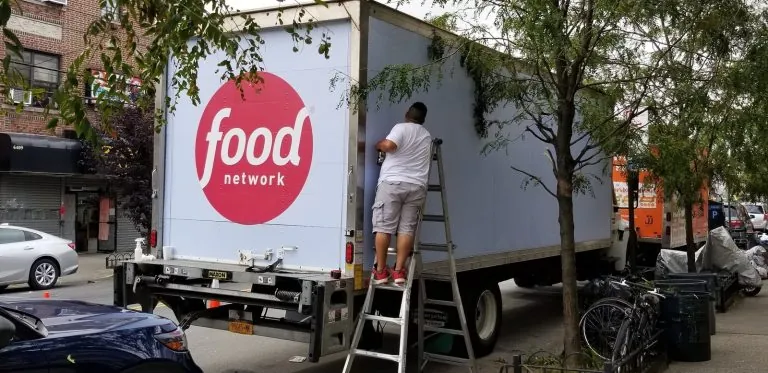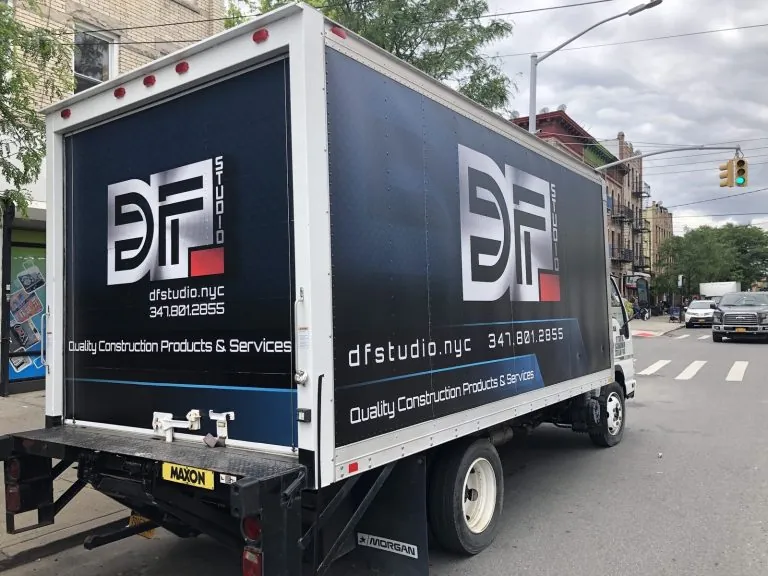
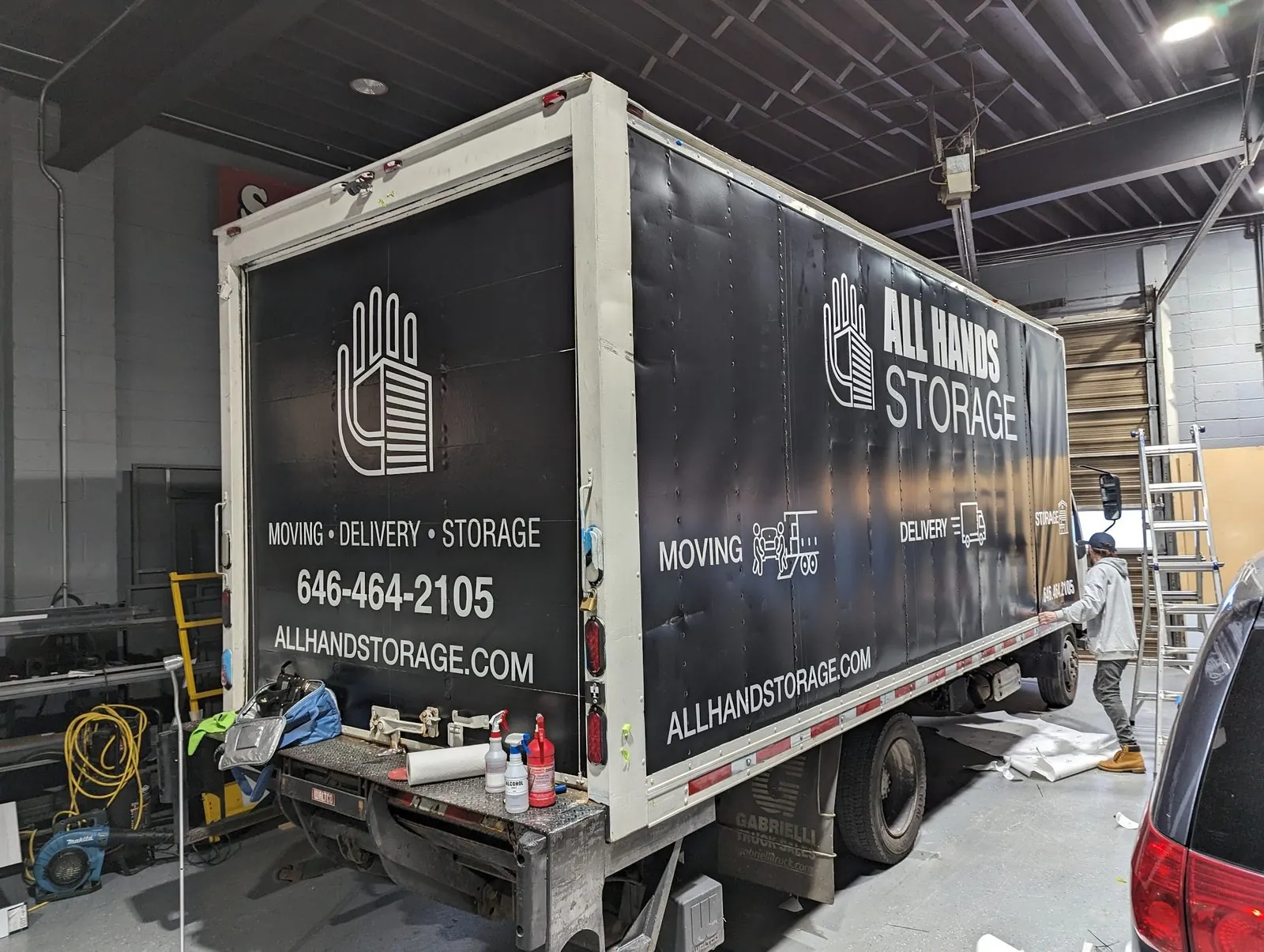
A box truck looks like the easiest vehicle to wrap. The sides are big, flat and square. Then the truck comes back a few months later with film lifting around every rivet, bubbles along the seams and a rear door that peels each time it rolls up. Wrapping box trucks is mostly about the details that are easy to miss on a quote.
This guide covers the trouble spots on a box truck, why film fails there and what a careful installer does about each one. It helps you compare quotes and ask the right questions before your truck goes in the bay.
In this guide
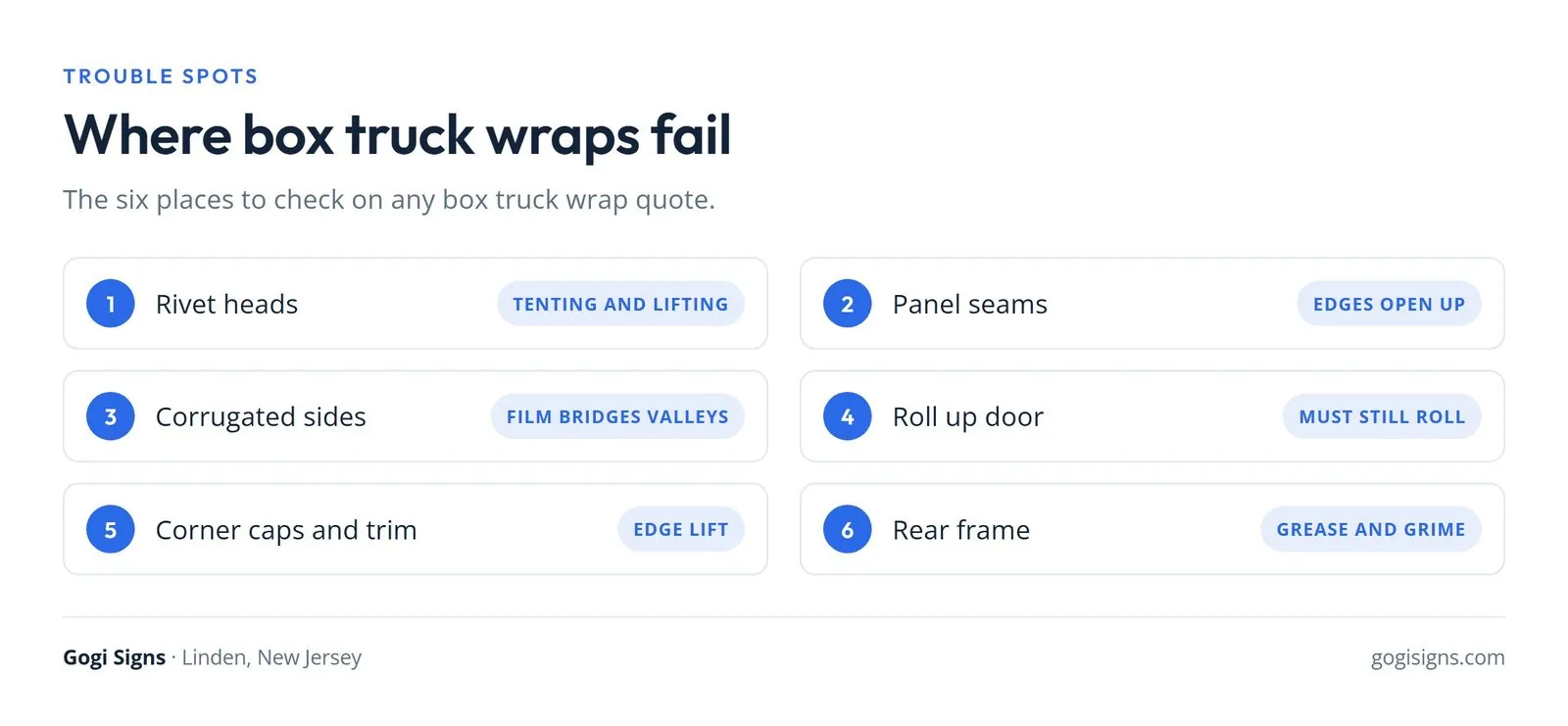
Trouble Spots at a Glance
Why Box Truck Wraps Fail
Almost every failure on a box truck comes down to film that was stretched or bridged and never told where to stay. Vinyl has memory. If it is pulled over a rivet head or across a valley and left that way, it slowly pulls back toward its original shape. Heat, cold, truck washes and the flex of the body speed that up.
- Tenting. Film bridges around a rivet head and leaves a ring of air that grows over time.
- Edge lift. Film ends on a seam or a dirty edge and starts to peel.
- Shrinkback. Calendered film used where cast film belongs pulls away from recesses.
- Cracking. Film that was overstretched without a matching laminate splits in the cold.
The fix starts with the right material. Printed cast film such as 3M IJ180mC with its matching laminate is made for rivets and curves. A cheaper film can look the same on install day and fail first at the rivets.
Rivets
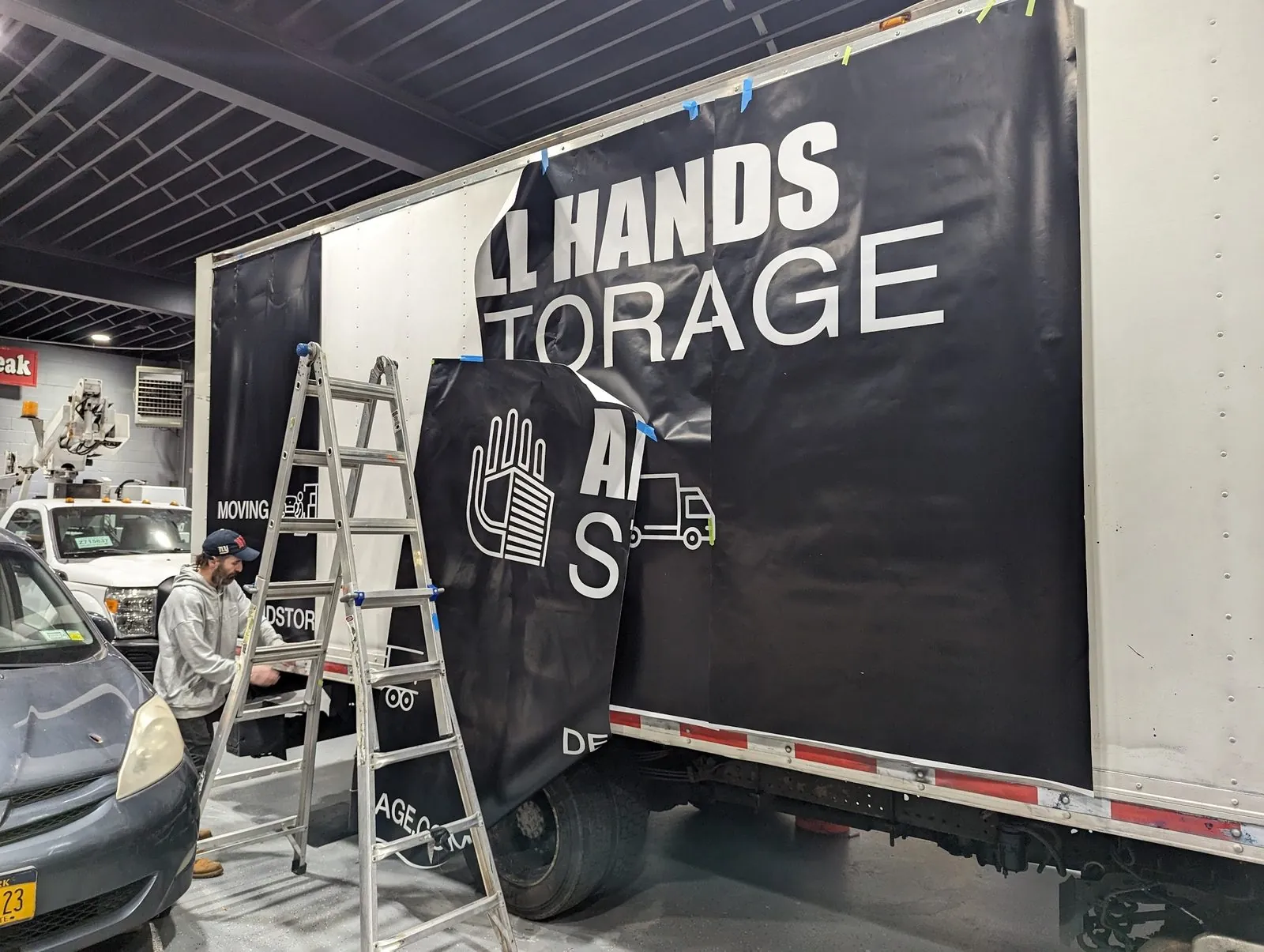
Riveted aluminum boxes are the most common body in the region and the slowest to wrap well. Each rivet line is worked by hand. The installer lays the film flat, presses it around each head with a rivet brush or soft tool, adds heat and makes tiny relief punctures so trapped air can escape. Then the whole area gets a final heat pass so the film sets in its new shape.
Film makers describe the same steps. The Avery Dennison bulletin on cast films over irregular surfaces covers rivets and corrugations, and it is a good read if you want to know what a careful install looks like.
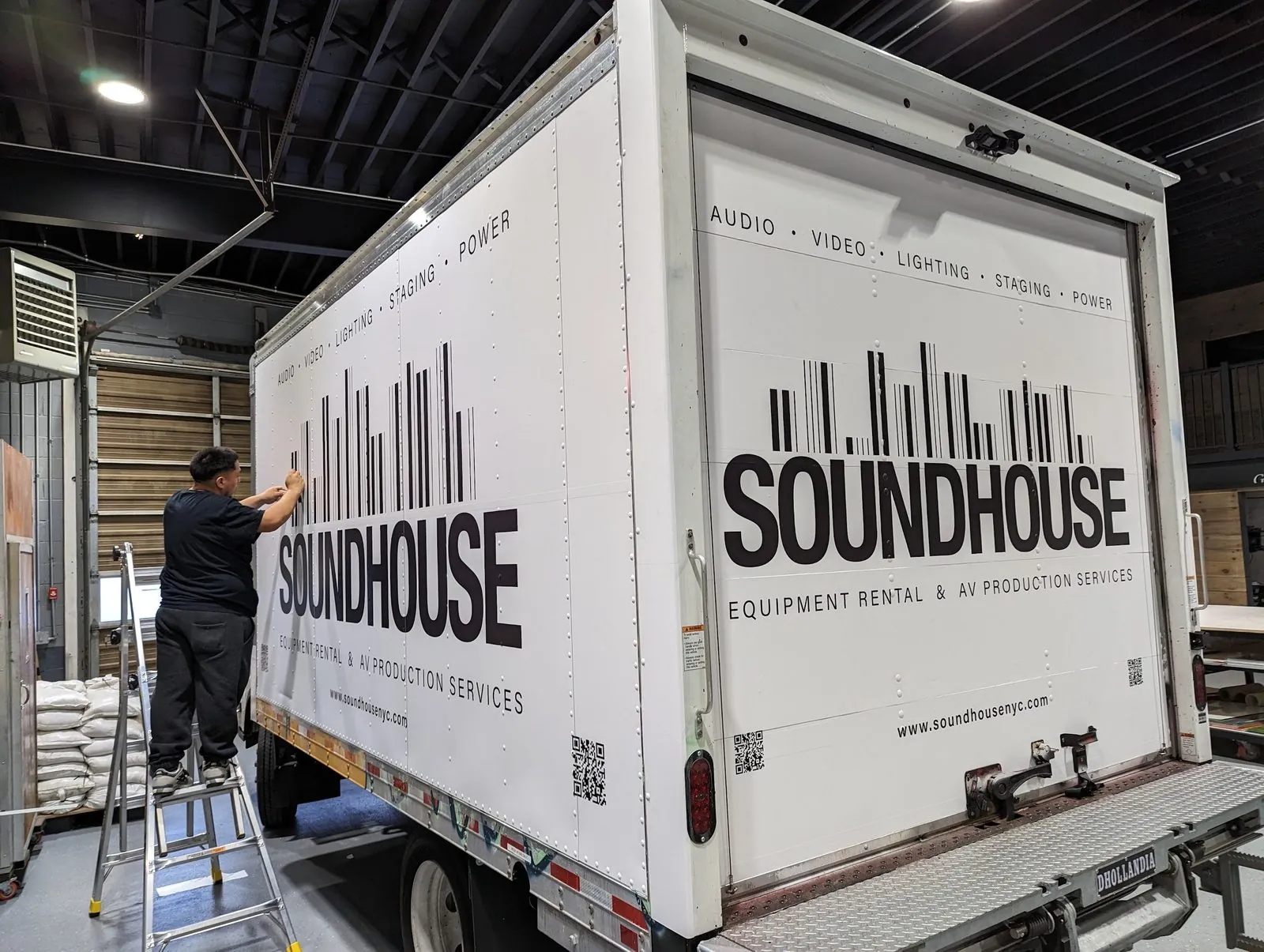
Smooth, Riveted and Corrugated Bodies
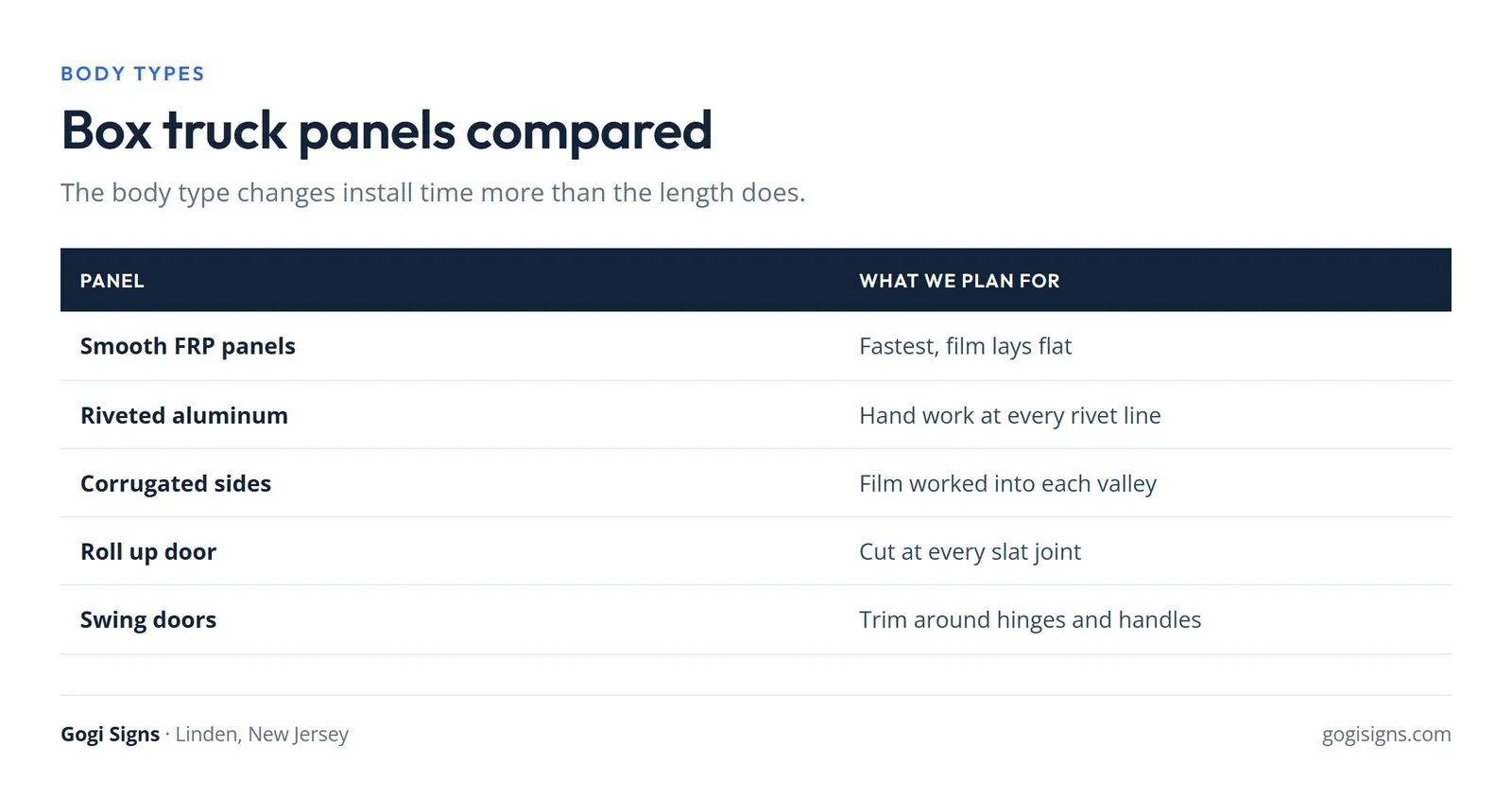
The body type changes the install time more than the length of the truck does.
| Body | What it means for the wrap | Install time |
|---|---|---|
| Smooth FRP panels | Film lays flat with few relief cuts | Fastest |
| Riveted aluminum | Every rivet line worked and post heated | Longer |
| Corrugated sides | Film worked into each valley, or key text kept on flat areas | Longest |
| Roll up rear door | Each slat wrapped and cut so the door still rolls | Extra |
| Swing rear doors | Trimmed around hinges, handles and lock rods | Moderate |
Roll Up Doors
A roll up door bends at every slat each time it opens. Film laid across the door as one sheet cracks or peels at the joints within weeks. The right way is to apply the print across the closed door so the design lines up, then cut it at each slat joint and wrap the film around the slat edges. The door rolls freely and the picture still reads as one image when it is down.
Many owners keep the rear door simple. A large logo and phone number on a white or solid door is cheaper, easier to repair after a dock bump and still reads well in traffic. Our guide to box truck wrap cost in NJ, NYC and Philadelphia shows how rear door choices change the price.
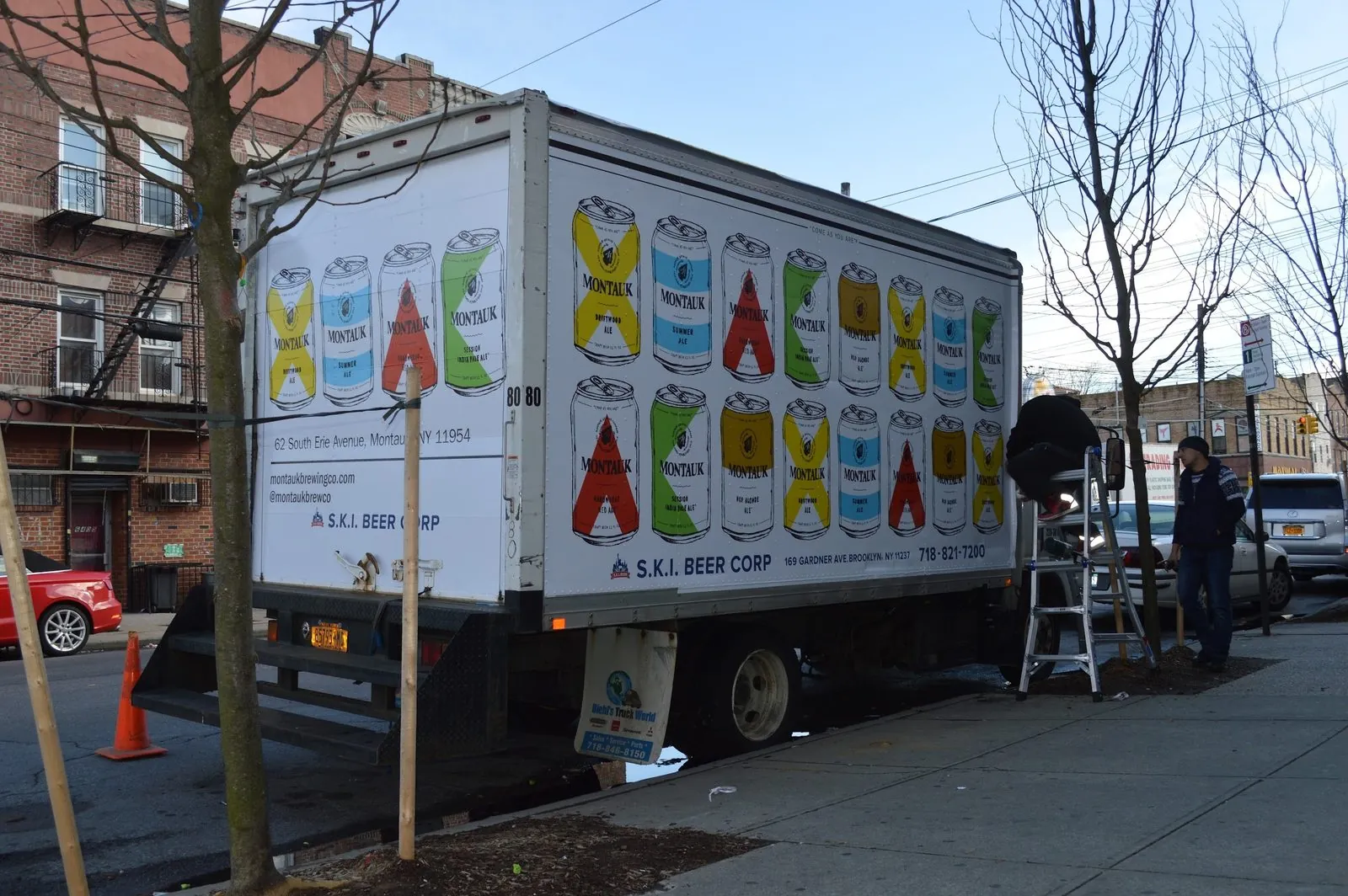
Corrugated Panels
Corrugated sides have deep valleys that film has to follow. There are two honest ways to handle them. The first is to work the film into every valley with heat, which takes time and the right film. The second is to design around the shape, with the logo, phone number and other key text placed on the flat areas and simple color across the ribs.
What you should not accept is film bridged across the tops of the ribs. It looks fine for a few weeks, then the bridges split and peel. Ask any shop how they plan to handle corrugation before you sign.

Seams, Edges and Trim
Box trucks have seams where the side panels meet the corner posts, the roof cap and the rear frame. Film that stops on a seam gives water and dirt a way in. Good installs wrap film around panel edges or finish it under trim, and they never end a panel in the middle of a rivet line. Corner caps and the rear frame collect road grime, so they get extra cleaning before any film goes on.
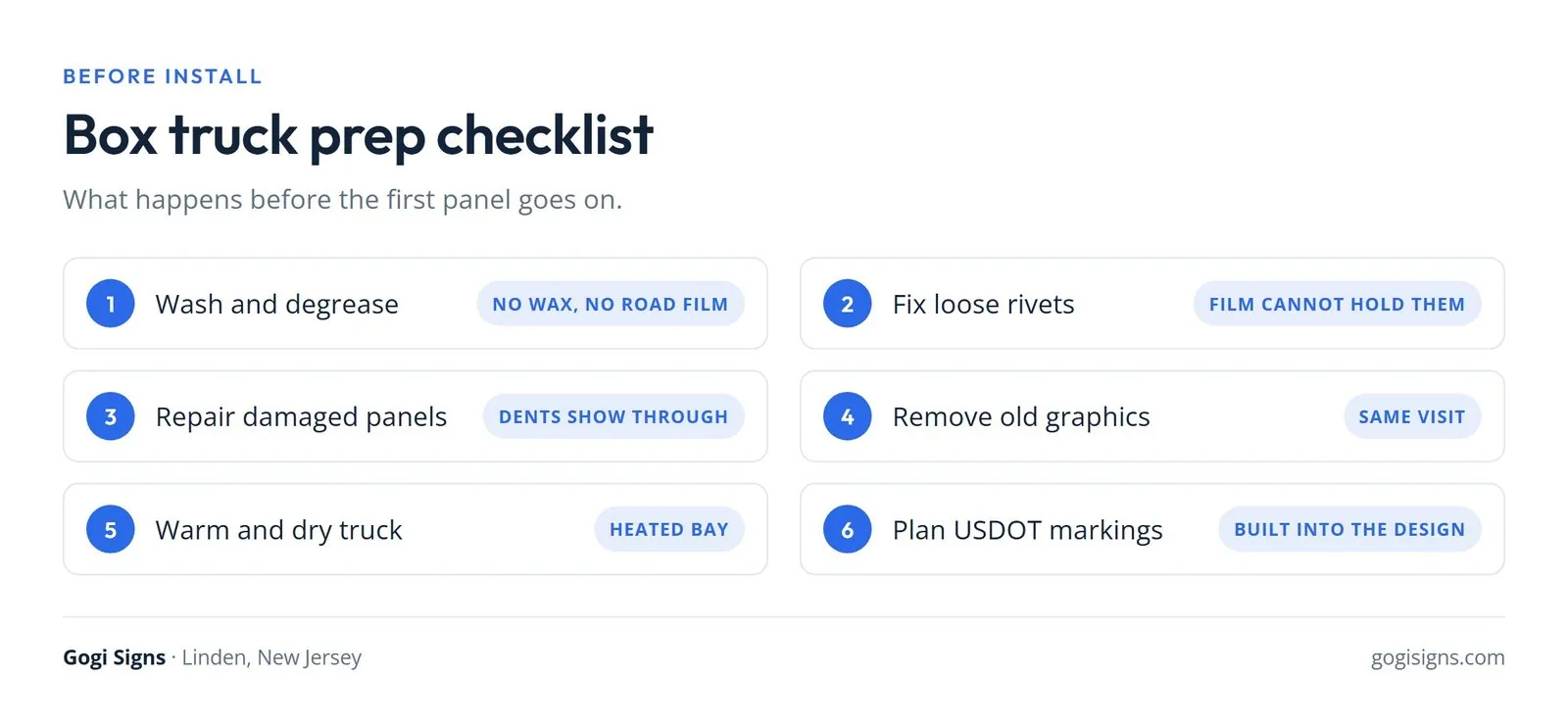
Prep for Wrapping Box Trucks
- Wash and degrease the truck. Road film and wax stop adhesive from bonding.
- Fix loose rivets and damaged panels. Film shows every dent and will not hold a loose rivet down.
- Remove old graphics. Old vinyl and adhesive come off before the new film goes on.
- Keep the truck dry and warm. We install in our heated bay, or at your yard when the weather allows.
- Plan required markings. USDOT numbers and the company name go into the design, not on top of it later. See our USDOT number lettering guide.
For trucks that cannot leave the route, read about mobile truck wrap installation at your yard. For care after the install, see how long a vehicle wrap lasts.
How We Handle Truck Wrap Jobs
Every truck wrap job at Gogi Signs follows the same path. We measure the vehicle at our Linden, New Jersey shop or at your location, and our sign design team sets your artwork on a template of the exact make and model. We print and laminate in house, and our own crews handle graphics installation in our heated bay or at your yard across New Jersey, New York City and the Philadelphia area. Old graphics come off in the same visit, and lettering is cut through our vinyl cutting service.
Most clients pair box truck wraps with trailer wraps, fleet wraps and truck lettering. We wrap trucks for distributors from truck wraps in Newark to truck wraps in Queens. Sign shops and agencies can order the same work through our wholesale program. See every option on our vehicle graphics page or browse more guides on the Gogi Signs blog.
Common Questions
Will the wrap lift around the rivets?
Not when it is installed right. Cast film, hand work at each rivet and a final heat pass keep it down. Lifting rivets are almost always an install or film problem.
Can you wrap a roll up door?
Yes. Each slat is wrapped and cut at the joints so the door still rolls and the design still lines up.
Do riveted or corrugated trucks cost more to wrap?
Usually, yes. They take more install time than smooth FRP panels, and the quote should say so.
Which film works best over rivets?
A printed cast film with its matching laminate. Calendered film is fine for flat lettering, not for rivets.
Can I pressure wash a wrapped box truck?
Yes, with care. Keep the wand back from edges and seams and use a wide spray. Hand washing is gentler still.
How long is the truck out of service?
Usually a few days in our bay for a full box. Partial wraps and lettering are quicker, and yard installs are possible.
Our Take
Rivets, seams, corrugation and the rear door decide whether a box truck wrap lasts. Ask every shop which film they use and how they handle each one. See finished trucks on our truck wraps page, or send us photos of your truck and we will tell you how we would wrap it.
Sources and further reading
- 3M: Print Wrap Film IJ180mC product bulletin
- Avery Dennison: cast films on irregular substrates
- Avery Dennison: application instructions for cast films
- Avery Dennison: Supreme Wrapping Film
- ORAFOL: ORACAL 751C high performance cast film
- 3M: Preferred Graphics Installer program
- FMCSA: 49 CFR 390.21T, marking of vehicles
- N.J.S.A. 39:4-46: commercial vehicle names and GVWR