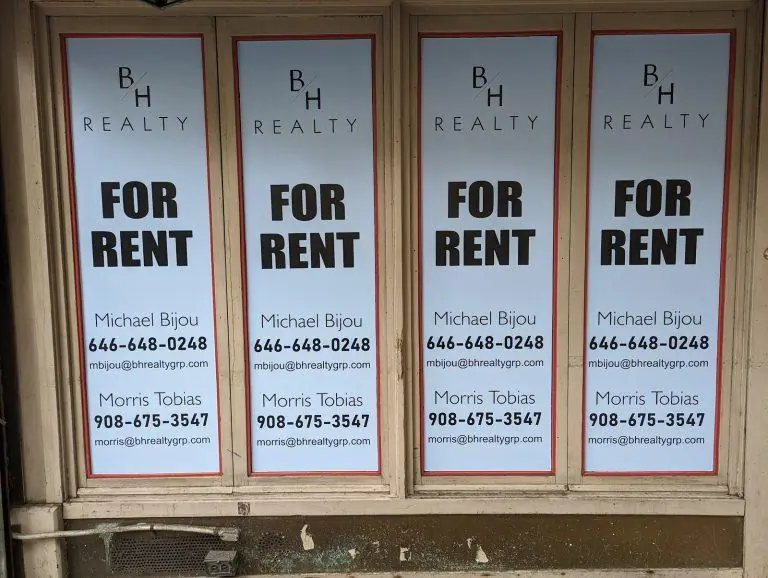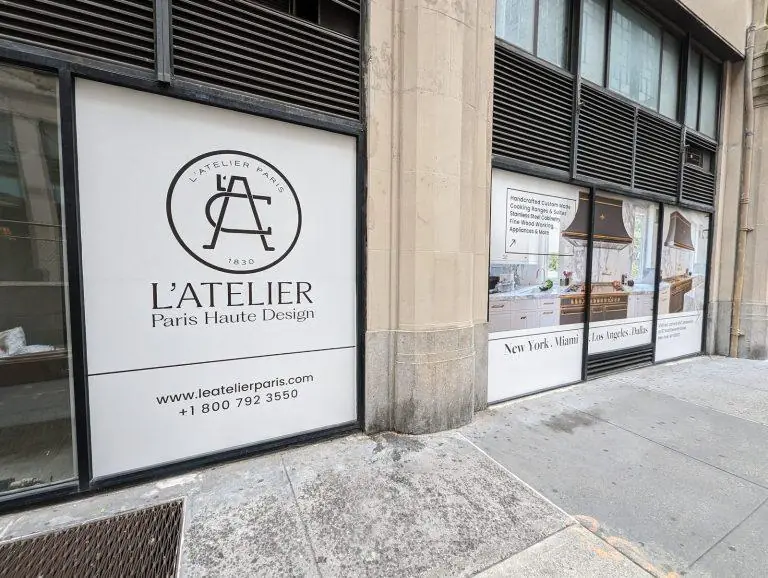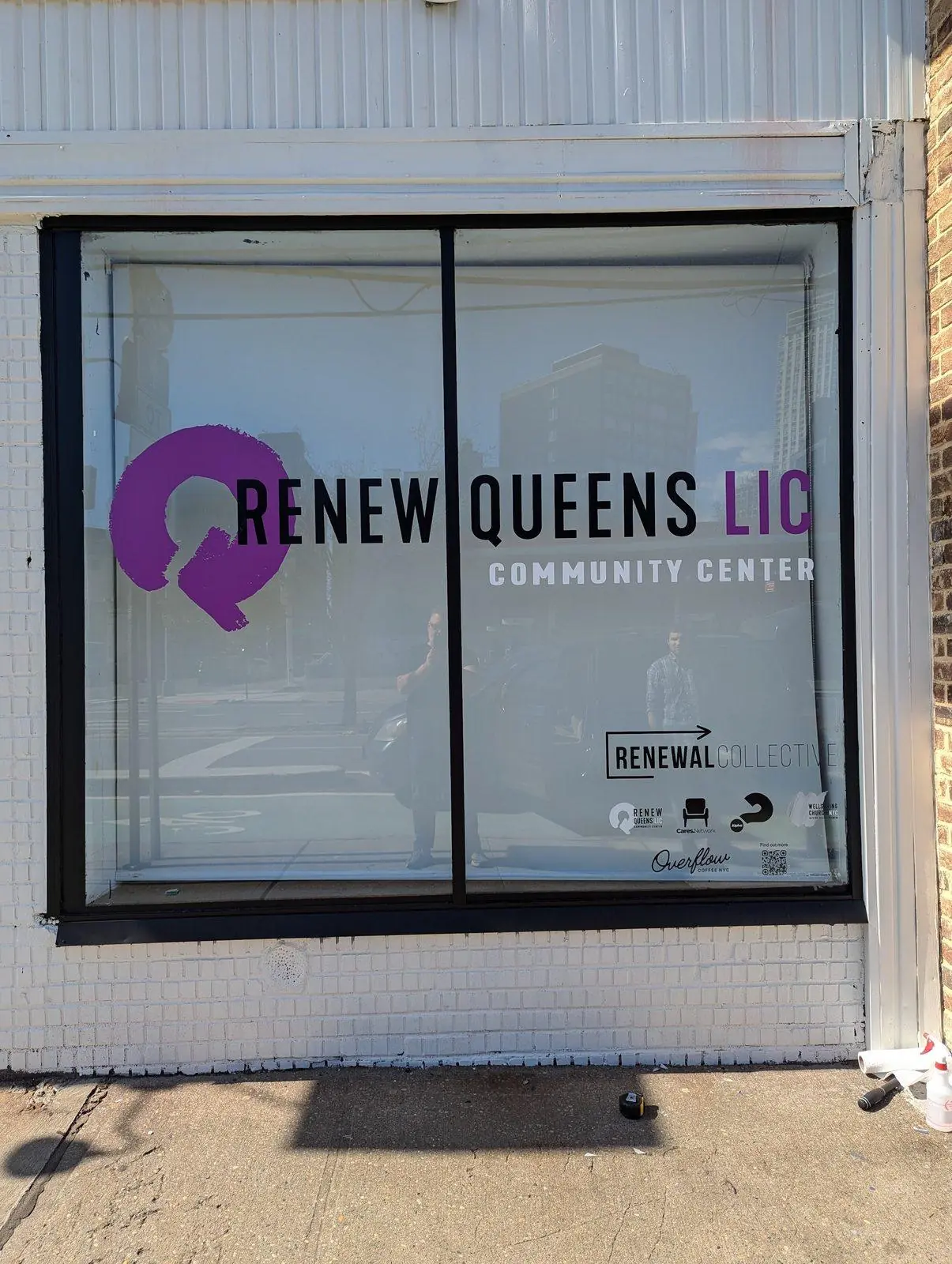
A full window wrap can look great, but in many towns it is not allowed on a ground floor storefront. Local sign rules often limit how much of the glass can be covered, so police, firefighters and passersby can see inside and the street stays open and inviting.
The rules differ from town to town. This guide explains how coverage is usually measured and how to check your own address before you order.
In this guide
- Window Sign Rules at a Glance
- Why Towns Limit Window Signs
- How Coverage Is Usually Measured
- New Jersey
- New York City
- What Usually Counts and What Does Not
- How to Plan Around the Rule
- How to Measure Your Own Coverage
- Special Districts and Malls
- When a Permit Is Needed
- How We Handle Window Decals Jobs
- Common Questions About Window Sign Rules
- Before You Print
Window Sign Rules at a Glance
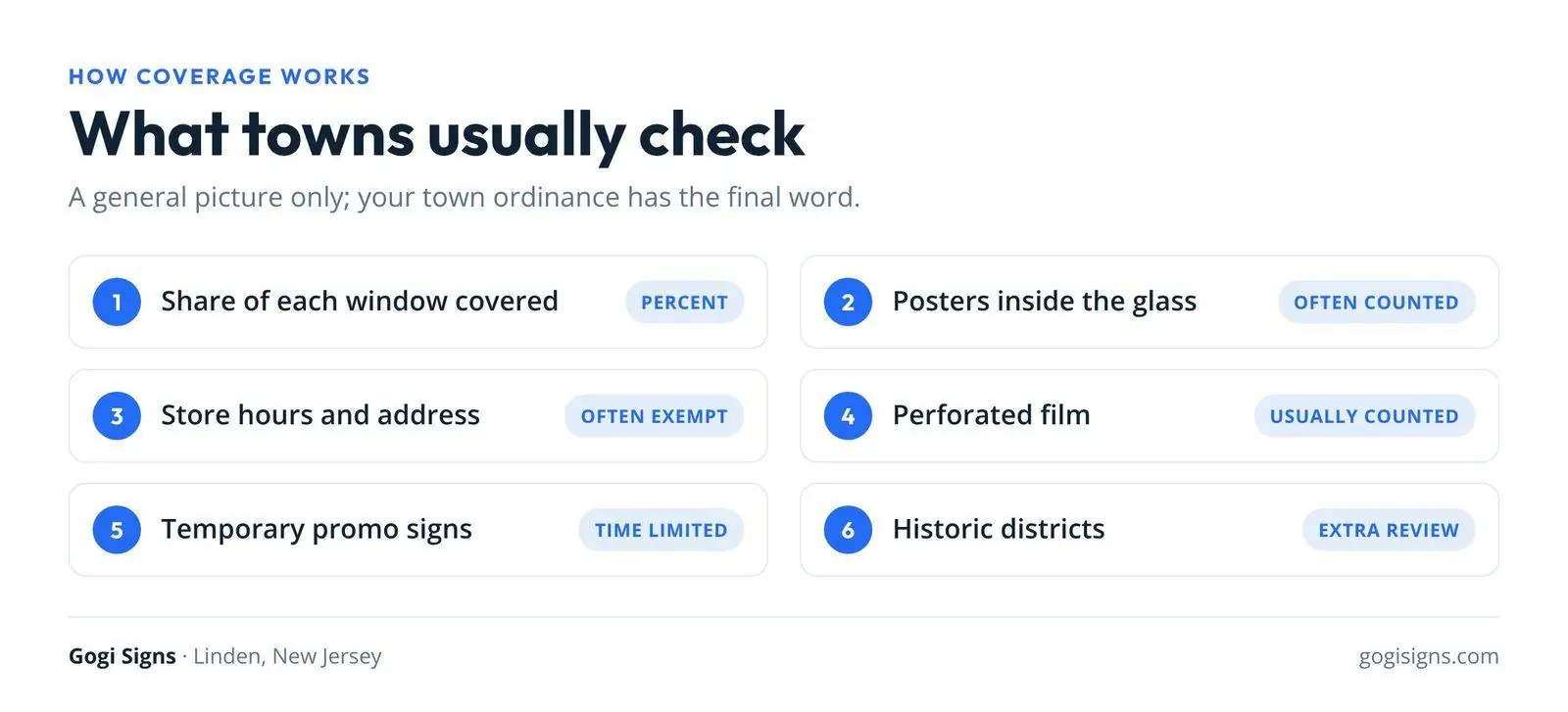
Why Towns Limit Window Signs
- Safety: clear glass lets emergency crews see inside.
- Street character: downtowns want storefronts that look open.
- Sign clutter: limits keep one store from covering every pane with ads.

How Coverage Is Usually Measured
Most ordinances measure coverage per window or per storefront, as a share of the glass area. A town might allow signs on a set part of each window, often somewhere around a quarter to a third, and count both decals and posters hung inside the glass. Some towns count only signs within a few feet of the glass. Others treat hours and address numbers as exempt.
Because the details vary, always read the actual ordinance. Most New Jersey towns publish their codes online, many through eCode360.
New Jersey
In New Jersey, sign rules are set by each municipality in its zoning code, and the construction side is handled under the state code framework from the NJ Department of Community Affairs. Some towns also have historic districts or special improvement districts with stricter design rules for windows. Ask the zoning office whether window graphics need a zoning permit at your address.
New York City
In New York City, signs are governed by the NYC Zoning Resolution and the Building Code, and the Department of Buildings sign permit page explains when a permit is needed. Signs in landmark districts may also need review. Window signs are treated differently from signs mounted on the facade, so check both before you plan a full wrap.
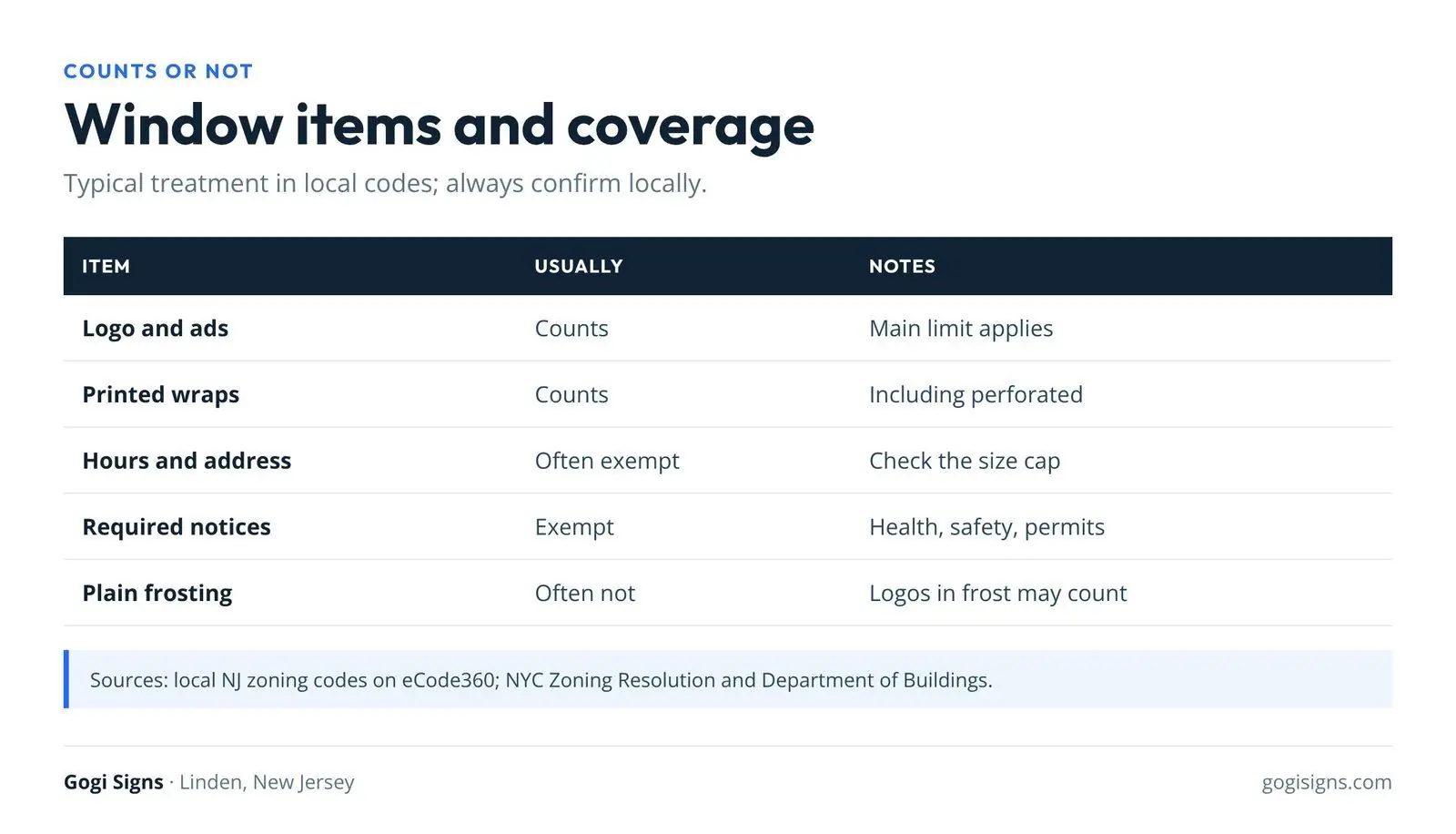
What Usually Counts and What Does Not
Treat this table as a starting point only. Your town decides.
How to Plan Around the Rule
- Put the business name and logo where it has the most impact, and keep the rest of the glass clear.
- Use a band of graphics at the top or bottom of the window instead of a full wrap.
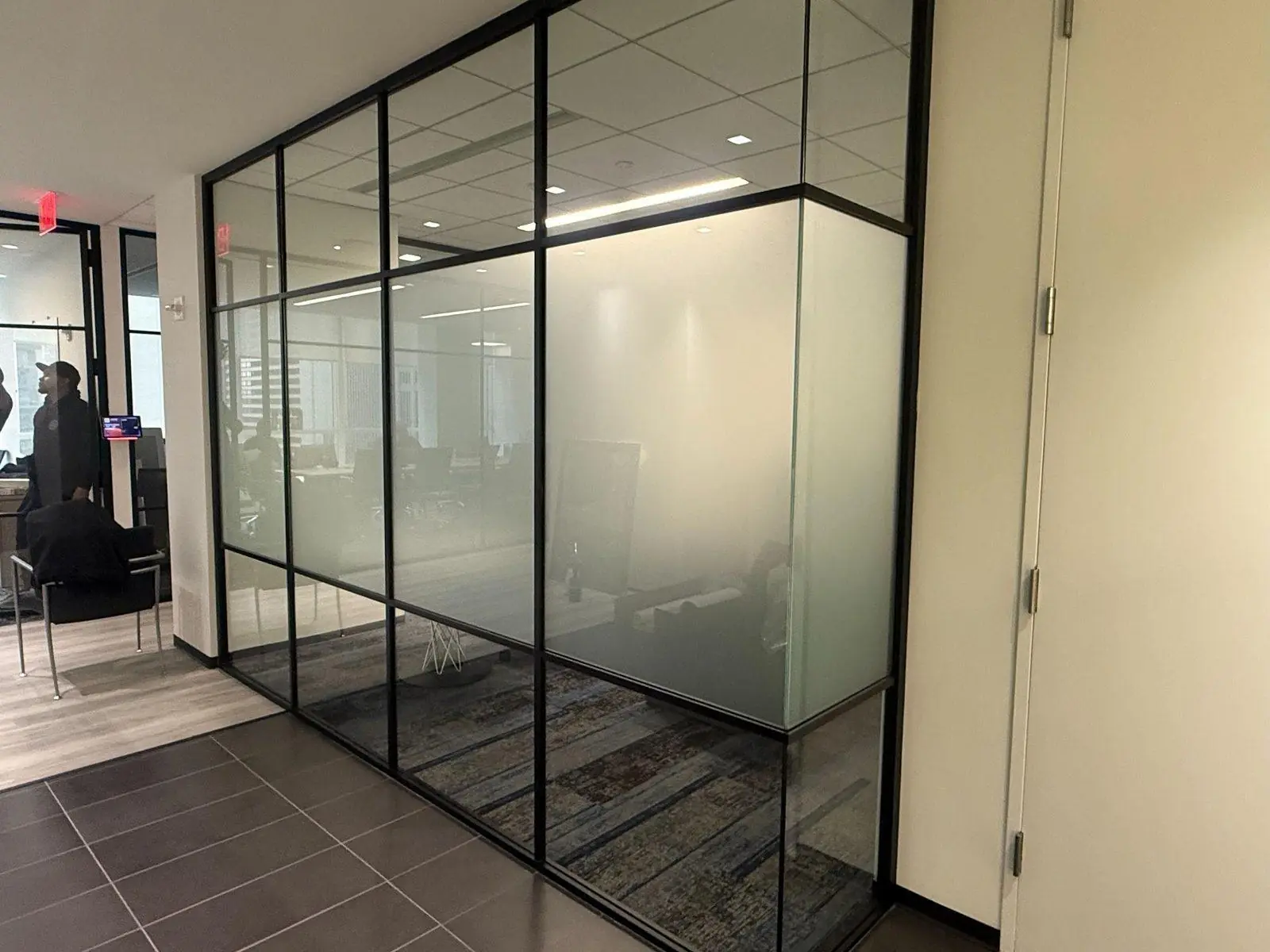
- Use frosting for privacy where codes allow it.
- For empty spaces, ask whether a temporary leasing wrap is allowed.
How to Measure Your Own Coverage
- Measure each pane of glass, width by height, and multiply for its area.
- Measure the graphic the same way, using the smallest rectangle around it if your code says so.
- Divide the graphic area by the glass area for each window.
- Add posters and other signs hung inside the glass if your code counts them.
- Compare with the limit in your town ordinance.
We do this math on every layout we send for window decals and window wraps.

Special Districts and Malls
Historic districts, special improvement districts and shopping centers often add their own rules on top of the town code. A mall lease may limit window graphics to a set area or require landlord approval for every change. In historic districts, materials and colors may be reviewed too; our guide to historic district signs explains that process.
When a Permit Is Needed
In many New Jersey towns, permanent window signs above a set size need a zoning permit, and temporary promotional signs may be allowed for a set number of days. In New York City, the Department of Buildings explains which signs need a permit, and the Zoning Resolution sets sign rules by district. Our sign permits team files the paperwork when it is needed.
How We Handle Window Decals Jobs
Every window decals job at Gogi Signs follows the same path from our Linden, New Jersey shop. It starts with a site survey or photos of the space, then a scaled layout from our sign design team. We check the town rules through our sign permits service when the graphic counts as a sign, cut or print it in house through our vinyl cutting and print shop, and our own crews handle graphics installation across New Jersey and New York City. When old graphics or signs have to come down first, the sign removal crew does it in the same visit.
Most clients pair window decals with related work such as window wraps, window frosting and gold leaf decals. See the full range on our vinyl graphics page or browse more guides on the Gogi Signs blog.
Common Questions About Window Sign Rules
Does perforated film count as covering the window?
In most codes it does, even though you can see out. Check how your town defines a window sign.
Can I get fined for too much window vinyl?
Yes. Code officers can issue notices and ask you to remove graphics.
Do upper floor windows have the same rule?
Not always. Some codes treat upper floor windows differently from street level glass.
Can you check the rules for me?
Yes. Send us your address and we look up the ordinance before we lay out the graphics. See our sign permits service.
Is frosted privacy film counted as a sign?
Plain frosting usually is not, but a logo cut into the frost may be. Check how your code defines a sign.
Do window rules apply to temporary sale signs?
Often yes, though many codes allow temporary signs for a set number of days.
Before You Print
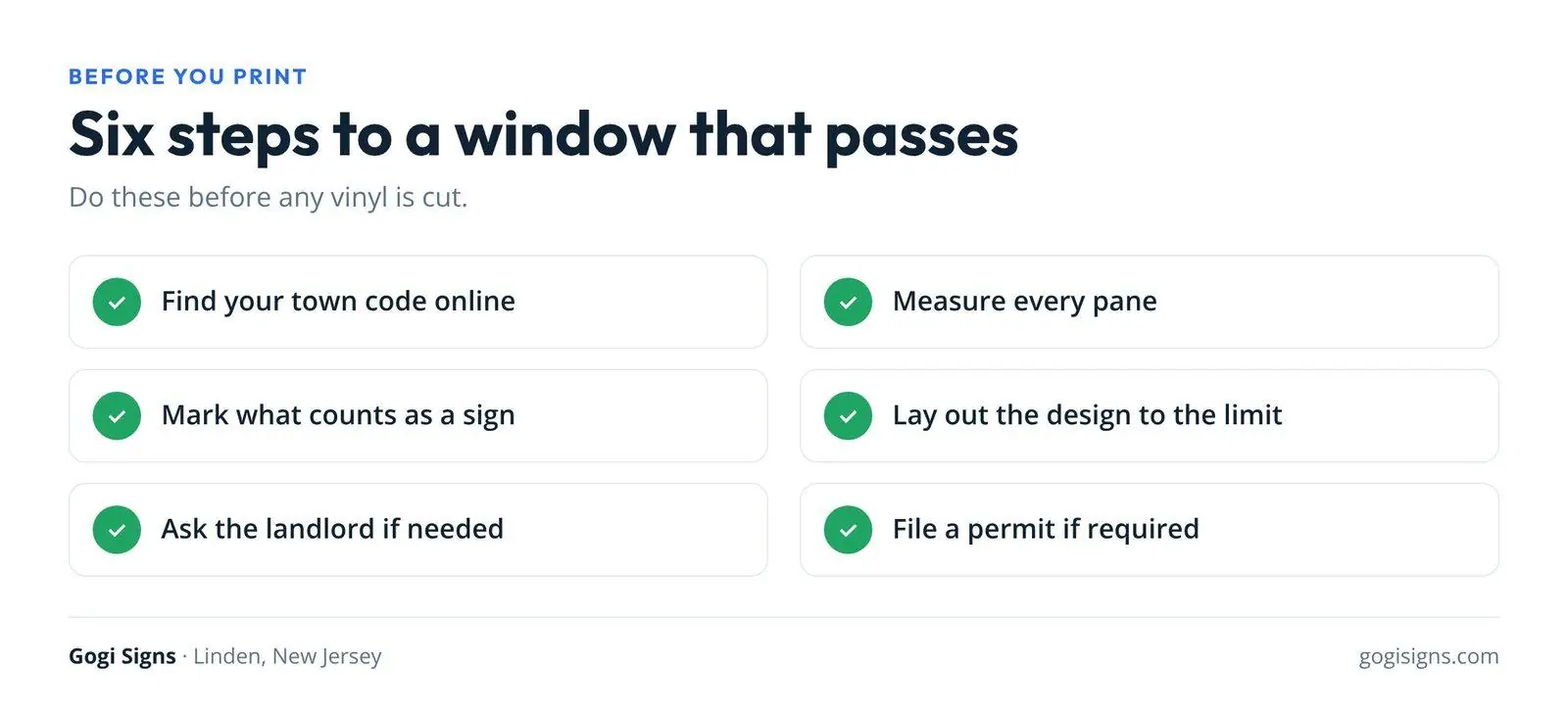
Measure the glass, read the ordinance, and lay out the design to the limit. New York shops face the same checks; see Signs NY window wraps. For perforated film details, see the perforated film from Pixel Wraps, our sister graphics shop. When you are ready, browse our window decals and window wraps.
Sources and further reading
- eCode360: municipal codes
- NJ Department of Community Affairs: codes and standards
- NYC Zoning Resolution
- NYC Buildings: sign permits
- Avery Dennison: perforated window films
- U.S. Access Board: ADA standards
- NFPA 101: Life Safety Code
- OSHA 1910.22: walking working surfaces
- 3M: graphics and signage films
- Avery Dennison: graphics solutions
- Signs NY: window wraps
- Pixel Wraps: perforated film