When a wall wrap lifts, bubbles or peels, the print is rarely the cause. The wall is. Paint type, texture, dust and curing time decide whether vinyl sticks for years or lets go in weeks.
Before you plan a mural, check the wall.
In this guide
- Wall Prep at a Glance
- The Four Common Wall Types
- Paint Type Matters
- Fresh Paint Needs Time
- Prep Checklist
- Brick and Block Walls
- Surfaces to Avoid
- The Test Patch
- Primer and Paint Recommendations
- Fire Ratings for Interior Finishes
- How We Handle Wall Wraps Jobs
- Common Questions About Wall Wrap Prep
- Start With a Good Wall
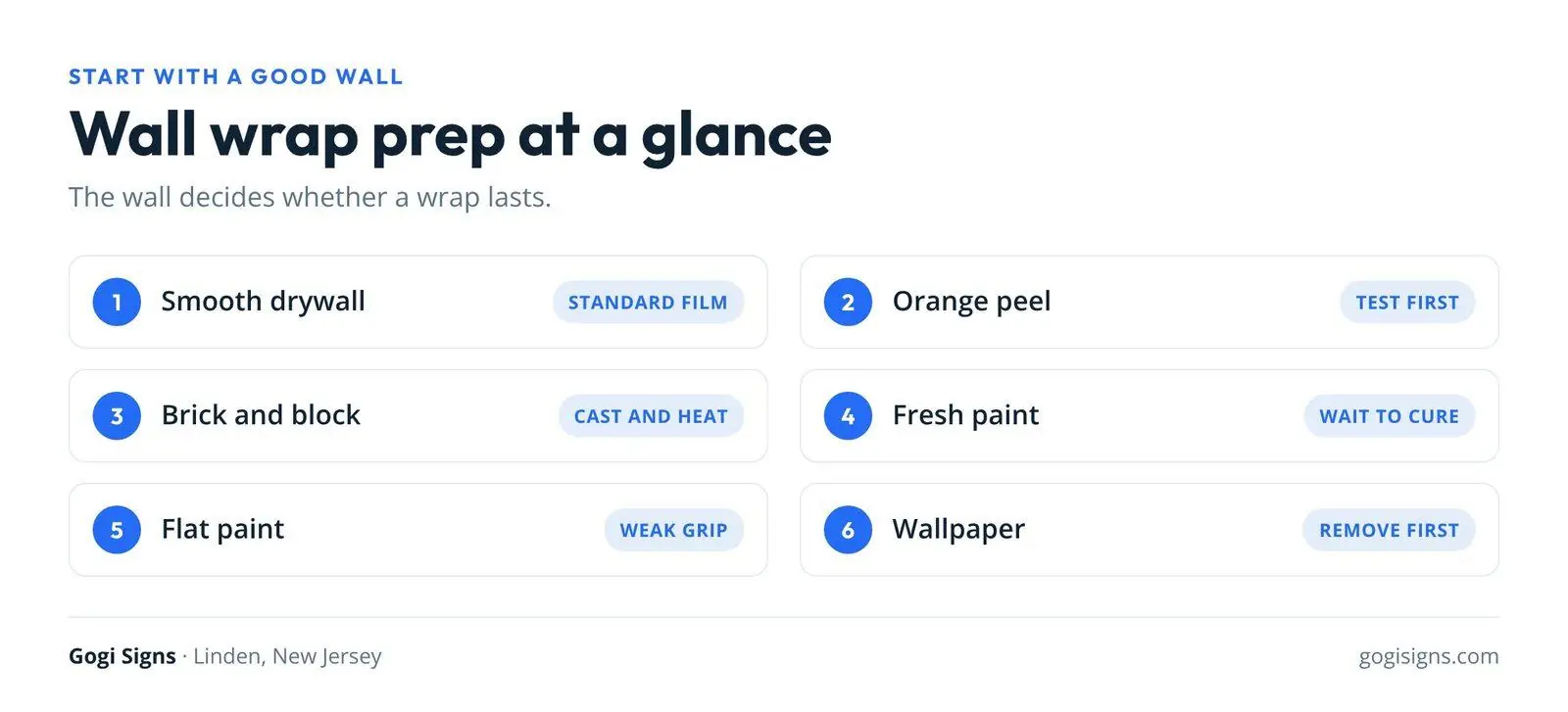
Wall Prep at a Glance
The Four Common Wall Types
| Wall | What it needs |
|---|---|
| Smooth painted drywall | Standard wall film, the easiest surface |
| Light orange peel texture | Wall film with a strong adhesive, test first |
| Brick | Cast film pressed into the grout with heat |
| Concrete block | Cast film with heat, or a sealed and painted surface |
Paint Type Matters
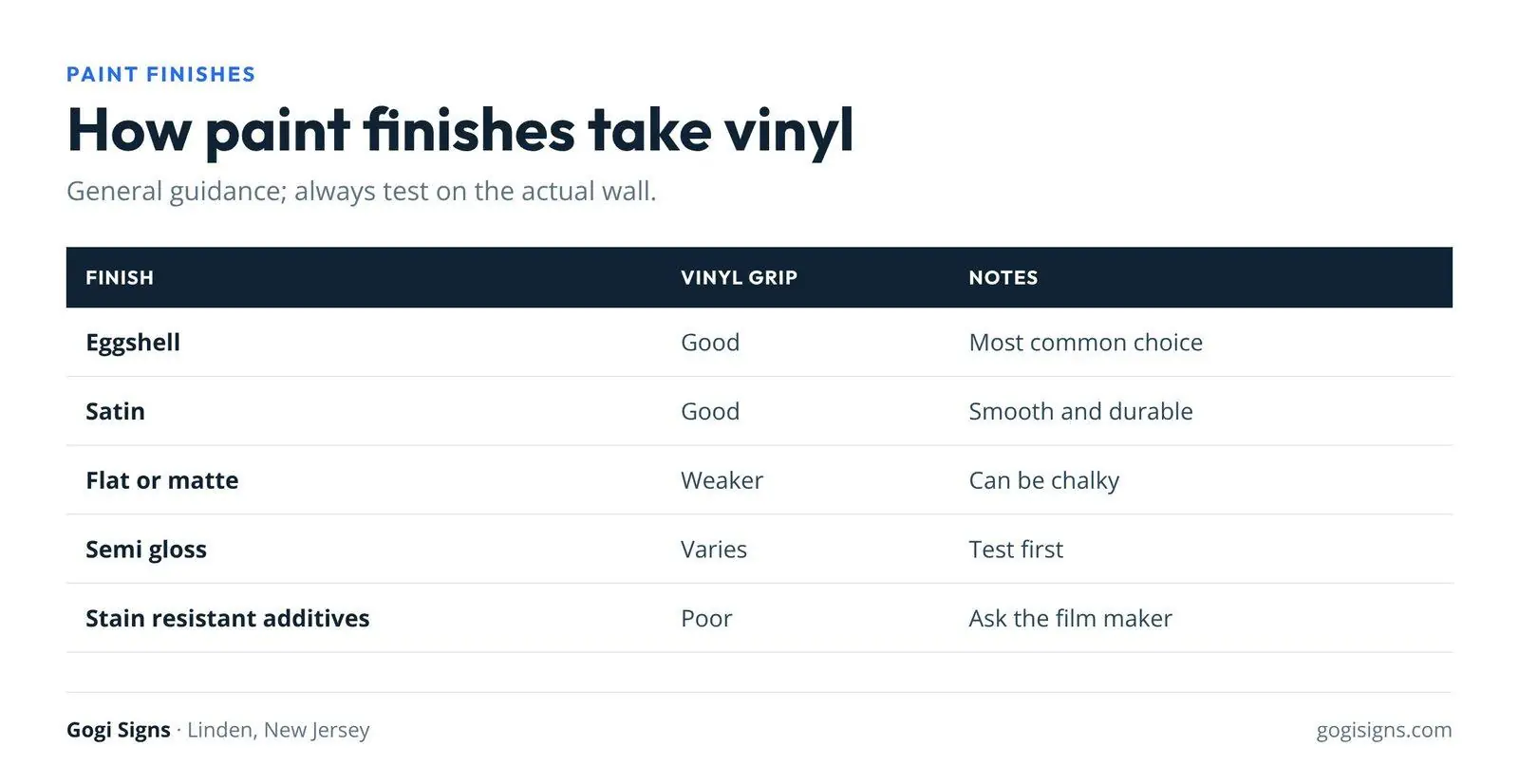
- Eggshell and satin latex paint usually take vinyl well.
- Flat or matte paint can be chalky, so adhesion is weaker.
- Paints with additives that resist stains or make walls washable can make vinyl slide off. Low VOC and some specialty paints can also be tricky.
When in doubt, apply a small test piece and leave it for a few days.
Fresh Paint Needs Time
New paint looks dry in hours but keeps releasing solvents for weeks. Vinyl applied too soon traps those gases and bubbles. Film makers commonly advise waiting a couple of weeks or more after painting; check the data sheet for the film, such as those from 3M or Avery Dennison.
Prep Checklist
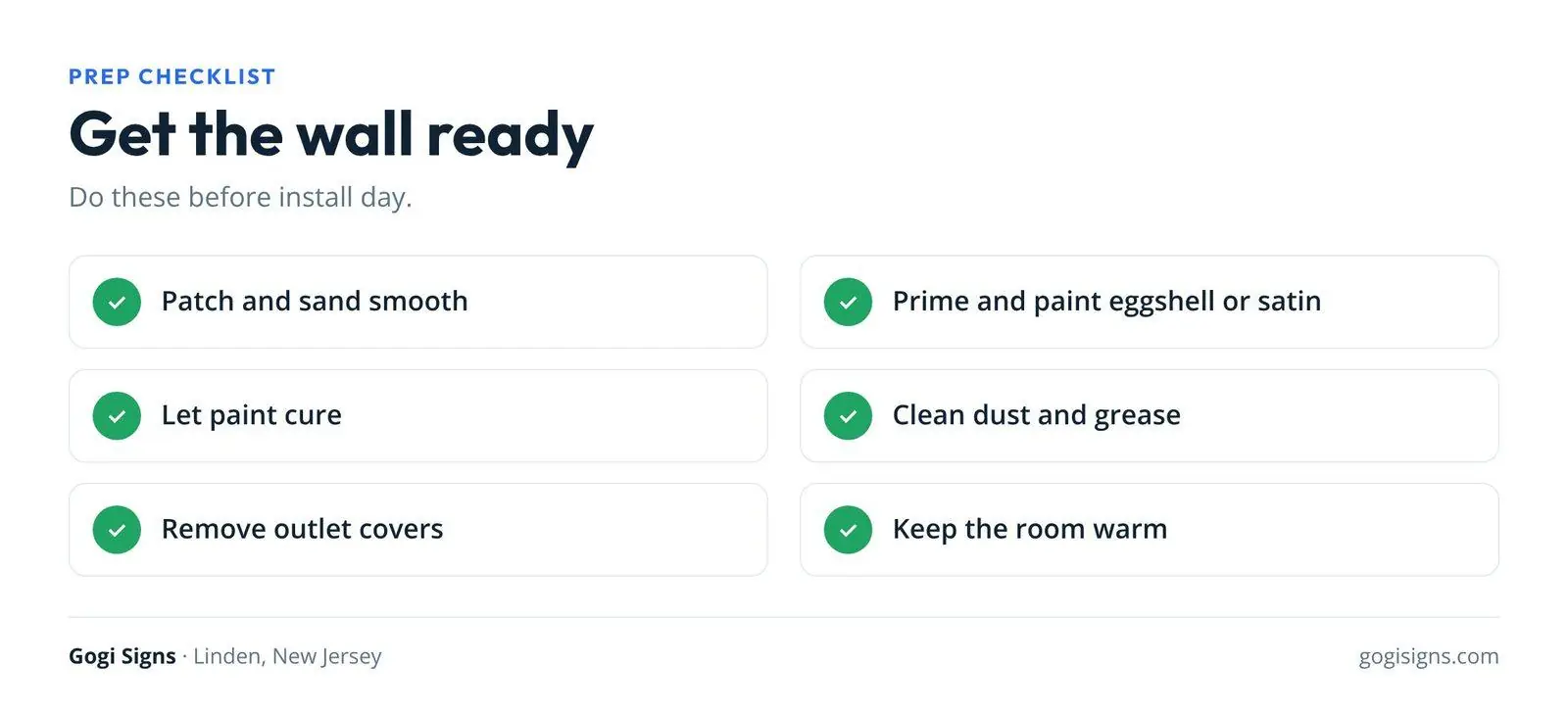
- Patch holes and sand smooth.
- Paint with a compatible paint and let it cure.
- Clean dust and grease with a mild cleaner, then let it dry.
- Remove outlet covers and switch plates before install.
- Keep the room at normal indoor temperature.
Brick and Block Walls
Textured walls need cast film, heat and a roller or foam tool to press the film into each grout line. Without that, the film bridges the gaps and pulls loose. Our guide to cast vs calendered vinyl explains why the film type matters here.
Surfaces to Avoid
- Wallpaper, which can peel off with the vinyl.
- Damp or exterior walls with moisture coming through.
- Heavily textured knockdown walls, unless skimmed smooth first.
- Walls right next to heat sources.
The Test Patch
On any wall we have doubts about, we apply a small test piece of the actual film, leave it for a few days and then try to peel it. If it lifts too easily, the paint is not taking the adhesive. If it pulls paint off, the paint is weak. Either result changes the plan before money is spent on a full print. We do this during the site survey.

Primer and Paint Recommendations
When a wall is being painted for a graphic, a good primer and an eggshell or satin finish give the best result. Ask the painter to avoid additives that make walls stain resistant or extra washable unless the film maker approves them. Then give the paint time to cure; makers such as 3M and Avery Dennison list cure times in their wall film guidance.
Fire Ratings for Interior Finishes
Some buildings, such as schools, hospitals and places of assembly, require interior finishes to meet a fire rating under life safety codes like NFPA 101. Many wall films are tested for flame spread. If your building manager asks, we provide the film data sheet before install.
How We Handle Wall Wraps Jobs
Every wall wraps job at Gogi Signs follows the same path from our Linden, New Jersey shop. It starts with a site survey or photos of the space, then a scaled layout from our sign design team. We check the town rules through our sign permits service when the graphic counts as a sign, cut or print it in house through our vinyl cutting and print shop, and our own crews handle graphics installation across New Jersey and New York City. When old graphics or signs have to come down first, the sign removal crew does it in the same visit.
Most clients pair wall wraps with related work such as wall decals, floor decals and elevator wraps. See the full range on our vinyl graphics page or browse more guides on the Gogi Signs blog.
Common Questions About Wall Wrap Prep
Will a wall wrap pull paint off when removed?
On a well bonded, cured paint with a wall film, removal is usually clean. Weak or old paint can lift with the film.
Can you check our walls first?
Yes. A quick site visit or photos tell us which film fits. See our site survey service.
Can we wrap a wall the week it was painted?
It is better to wait. Rushing the install risks bubbles.
Do wall films carry fire ratings?
Many do. Ask for the data sheet if your building needs it.
Can you wrap a wall with outlets?
Yes. We remove the covers, cut around the boxes and reinstall the covers on top.
What about a wall with a window or door?
The print is laid out around openings so key text does not land on them.
Start With a Good Wall
Check the paint, give it time to cure and match the film to the texture. More wall work in New York is shown at Signs NY wall graphics, and textured wall jobs at see the wall wraps from Pixel Wraps, our sister graphics shop. See our wall wraps page to plan your mural.
Sources and further reading
- 3M: graphics and signage films
- Avery Dennison: graphics solutions
- ORAFOL: ORACAL 751C high performance cast film
- NFPA 101: Life Safety Code
- ORAFOL: ORACAL 651 intermediate calendered film
- 3M: Preferred Graphics Installer program
- ORAFOL: ORACAL 8810 frosted glass film
- Avery Dennison: Supreme Wrapping Film
- 3M: Print Wrap Film IJ180mC
- Signs NY: wall graphics
- Pixel Wraps: wall wraps