Vinyl graphics are thin films that stick to glass, walls, floors and doors. They change the look of a business faster than almost anything else on the building, because most jobs are cut or printed in a shop and installed in a few hours, often before the doors open.
The word covers a lot of different products, though. A store hours decal and a full wall mural are both vinyl, but they are made, priced and installed very differently. Gogi Signs cuts, prints and installs vinyl across New Jersey and New York City, and this guide walks through each type: what it is good for, how long it lasts and how to choose.
In this guide
- Vinyl Graphics at a Glance
- Cut Vinyl or Printed Vinyl
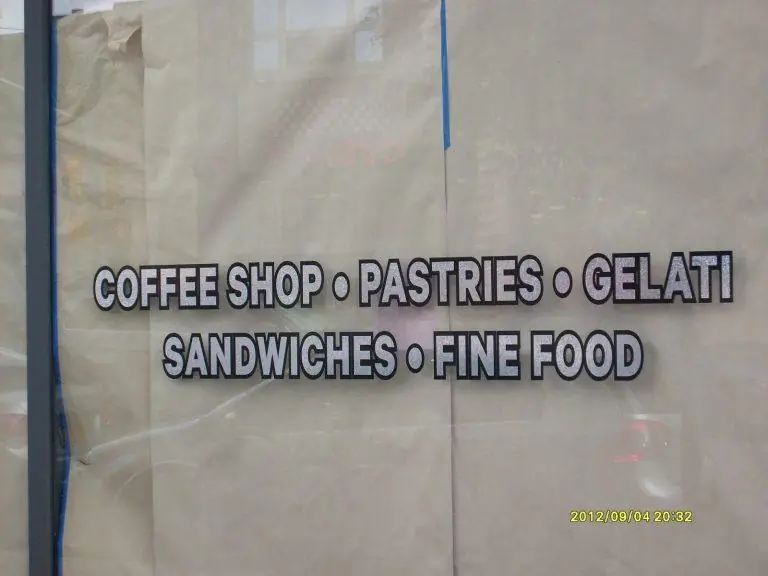
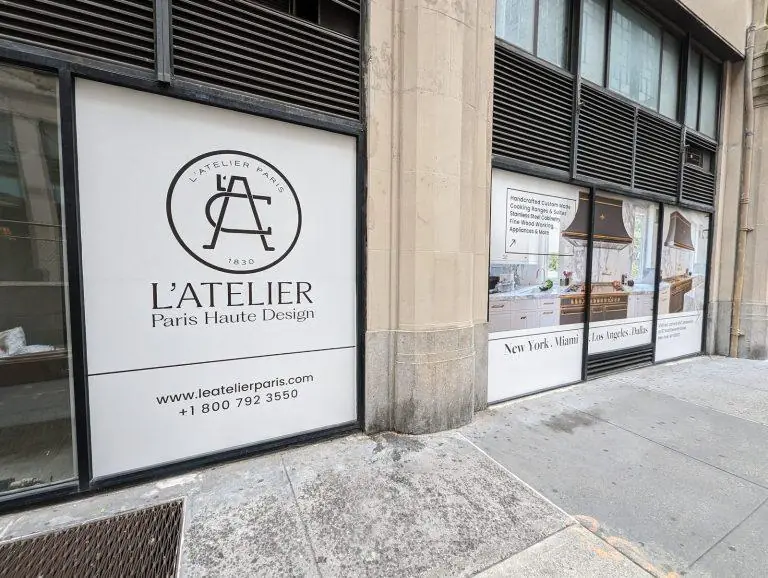
- Window Graphics
- Window Frosting
- Wall Graphics
- Floor, Elevator and Door Graphics
- Specialty Films
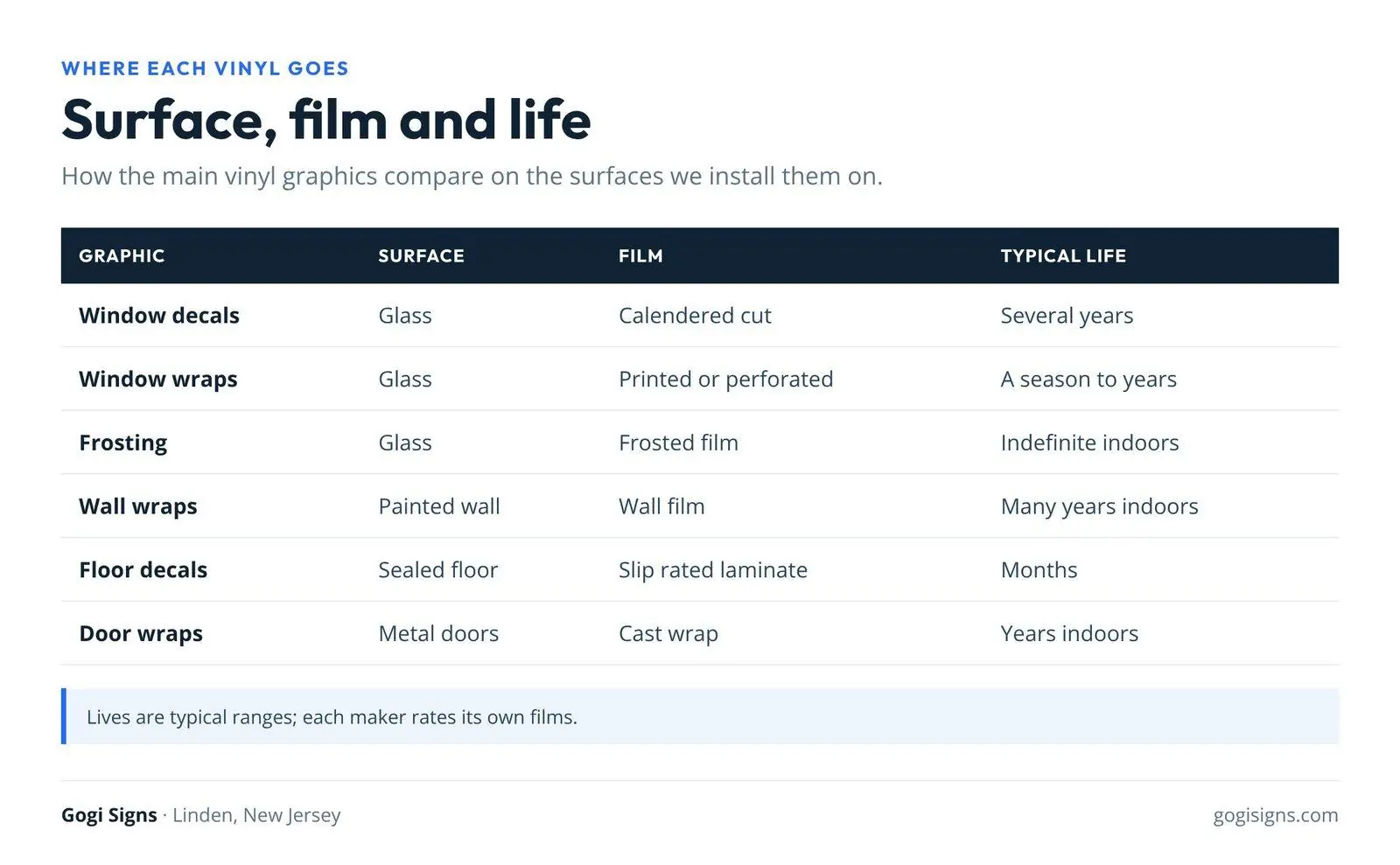
- How Long Vinyl Graphics Last
- How to Choose
- What Affects Price
- Permits and Window Rules
- Inside or Outside the Glass
- What Happens on Install Day
- How We Handle Vinyl Graphics Jobs
- Common Questions About Vinyl Graphics
- Plan Your Vinyl Graphics
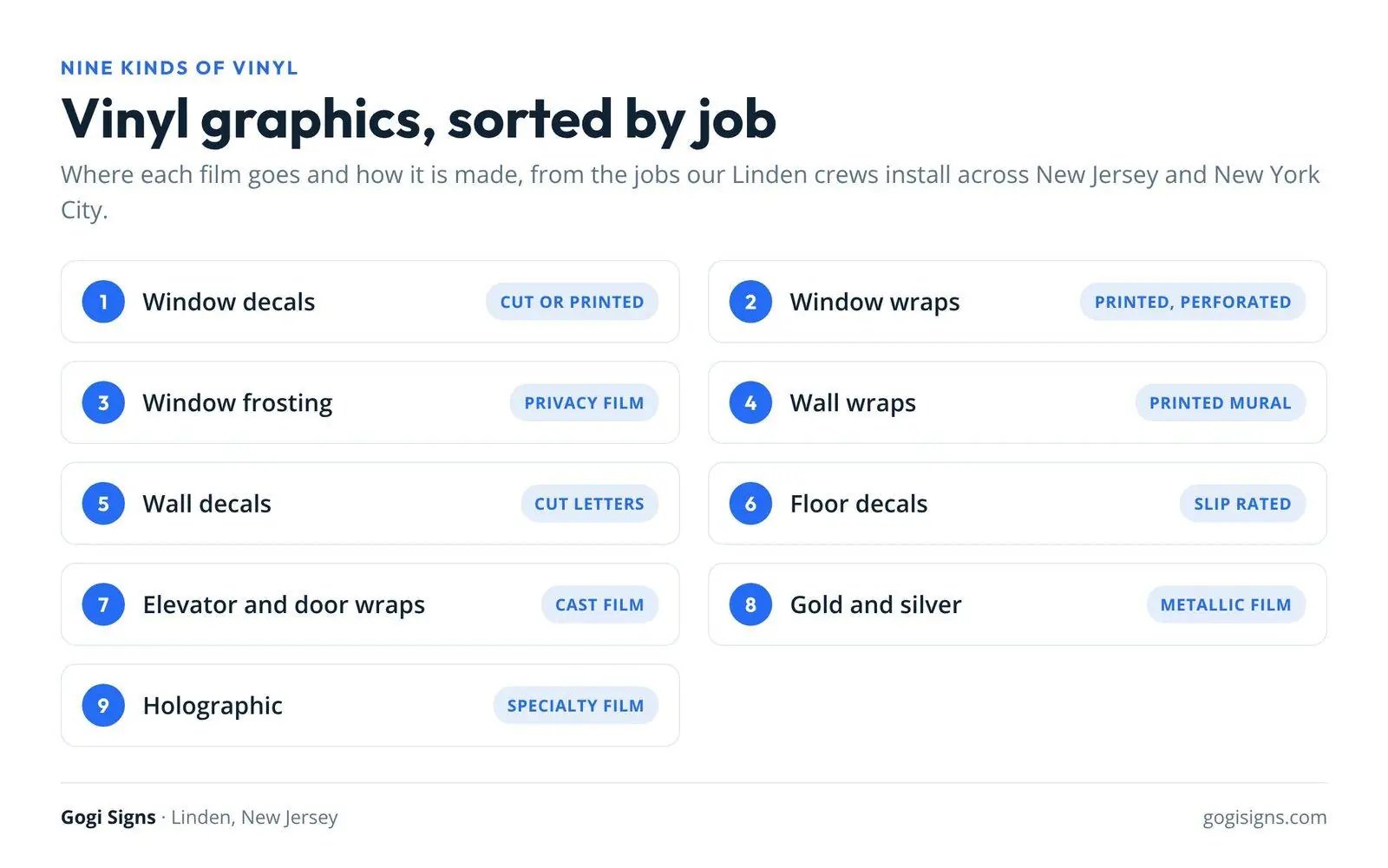
Vinyl Graphics at a Glance
Cut Vinyl or Printed Vinyl
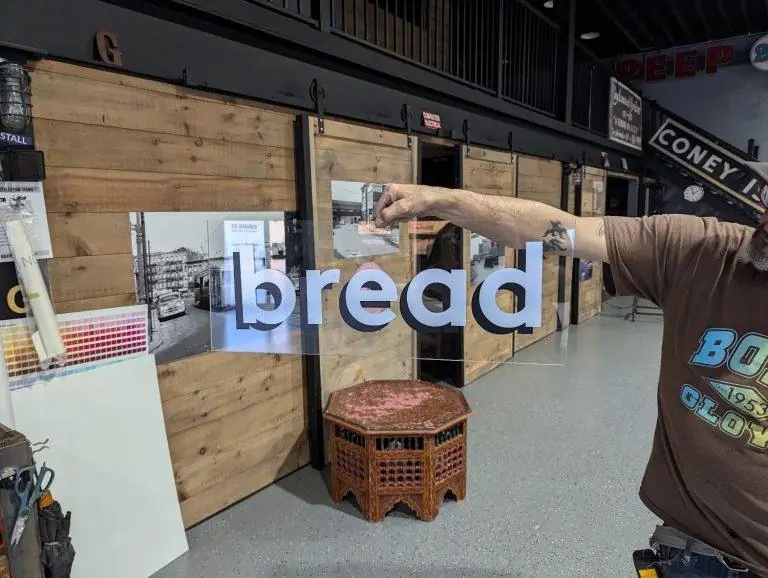
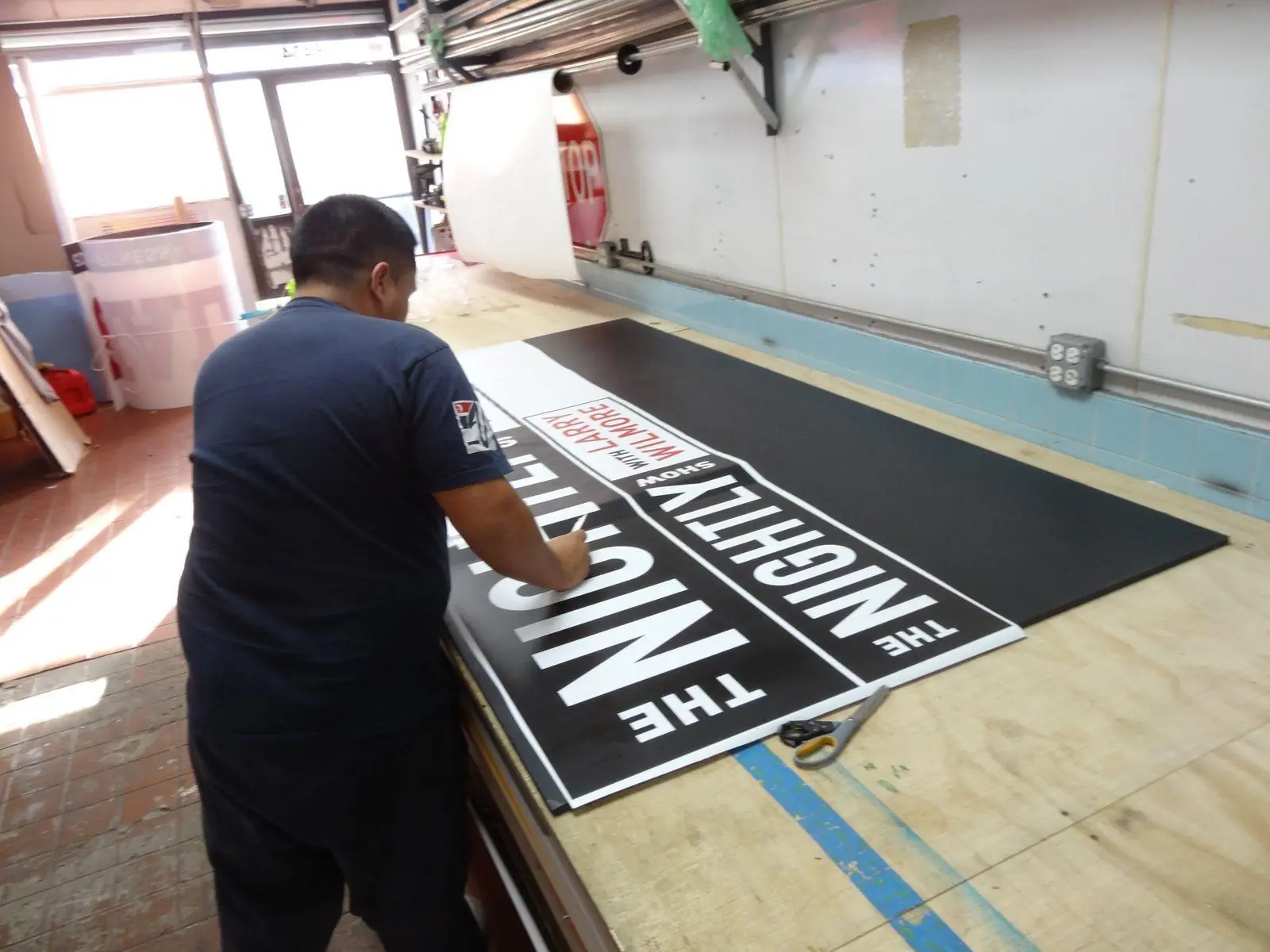
Every vinyl graphic starts one of two ways. Cut vinyl is solid colored film cut by a plotter along the outline of letters and shapes. The extra film around the letters is weeded away, so nothing but the letters stays on the surface and they look painted on. It suits names, hours, phone numbers and logos with one to three flat colors. Our vinyl cutting service runs this work in the Linden shop.
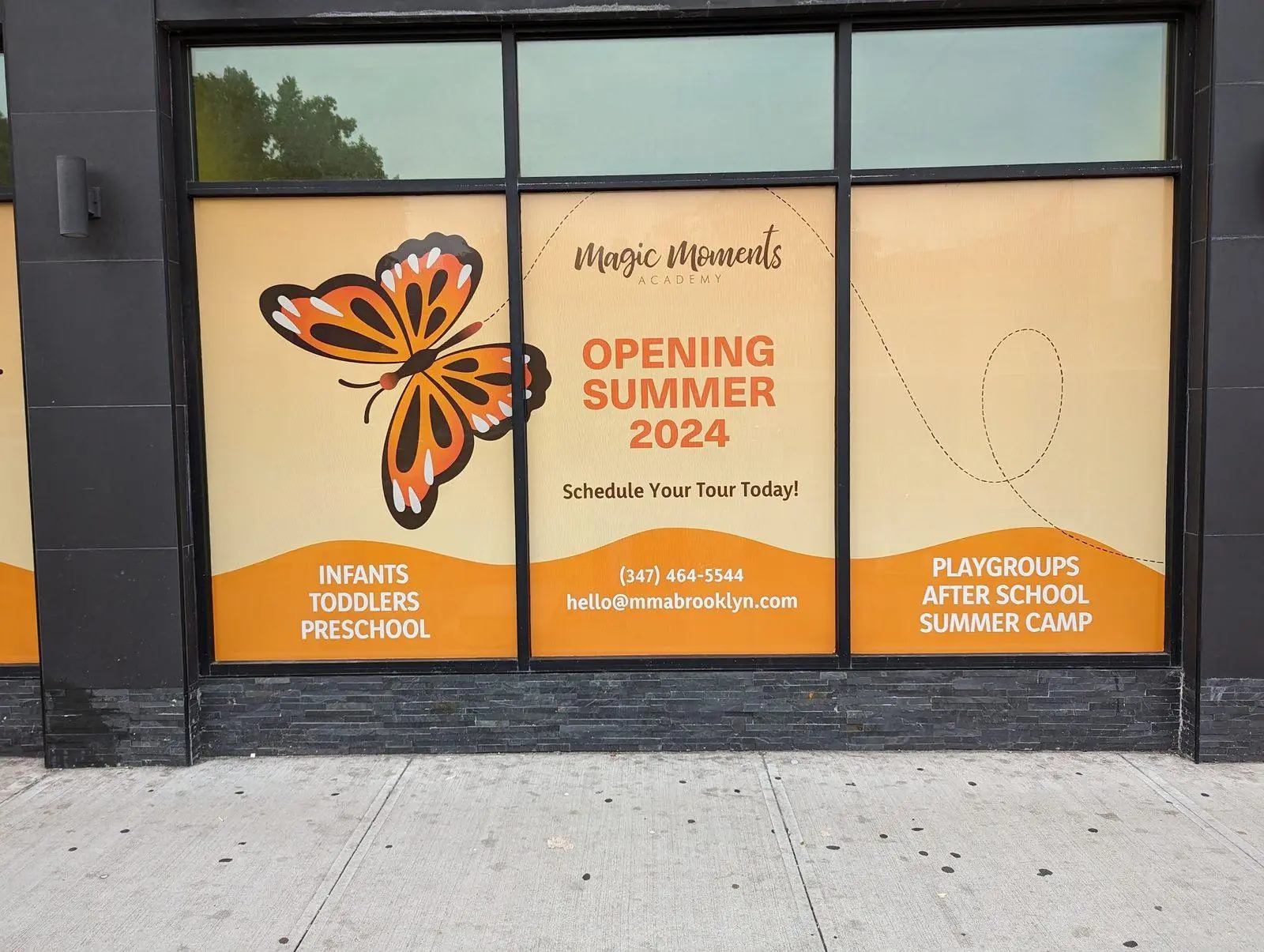
Printed vinyl is white or clear film printed in full color, then usually covered with a clear laminate that protects the ink. It carries photos, gradients and detailed artwork. Nearly every window wrap, wall mural and floor graphic is printed. Many jobs mix both: a printed logo with cut letters beside it.
Window Graphics
Glass is where most businesses start, because the window is the first thing people see from the sidewalk.
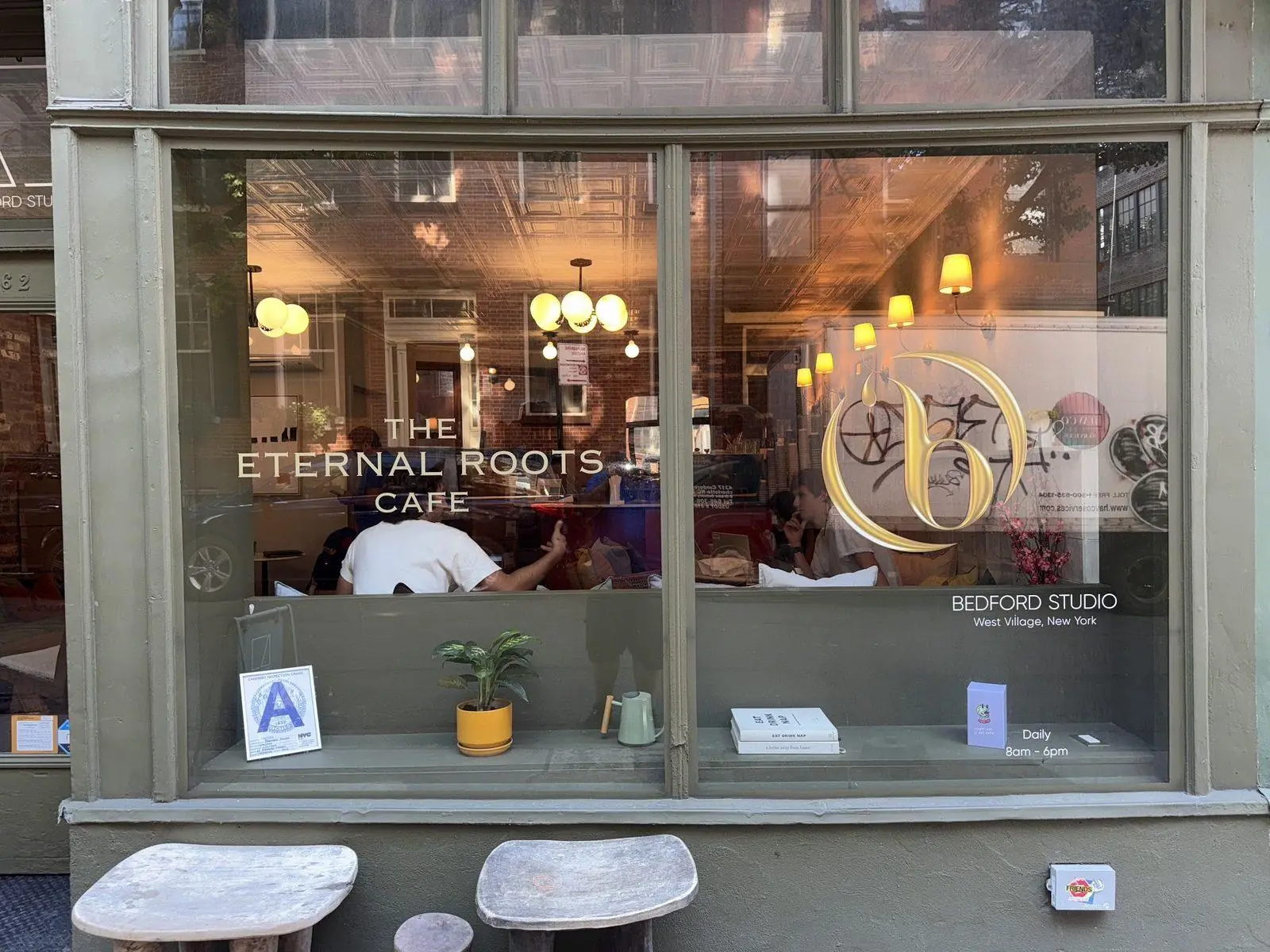
- Window decals put the name, logo, hours and services on the glass. They can go on the outside face for the crispest look or on the inside face to protect them from weather and cleaning.
- Window wraps cover most or all of a window with a print. Perforated film is printed on a sheet full of tiny holes, so the outside sees the graphic and the inside still sees out. Our perforated window film guide explains the hole patterns.
Window Frosting
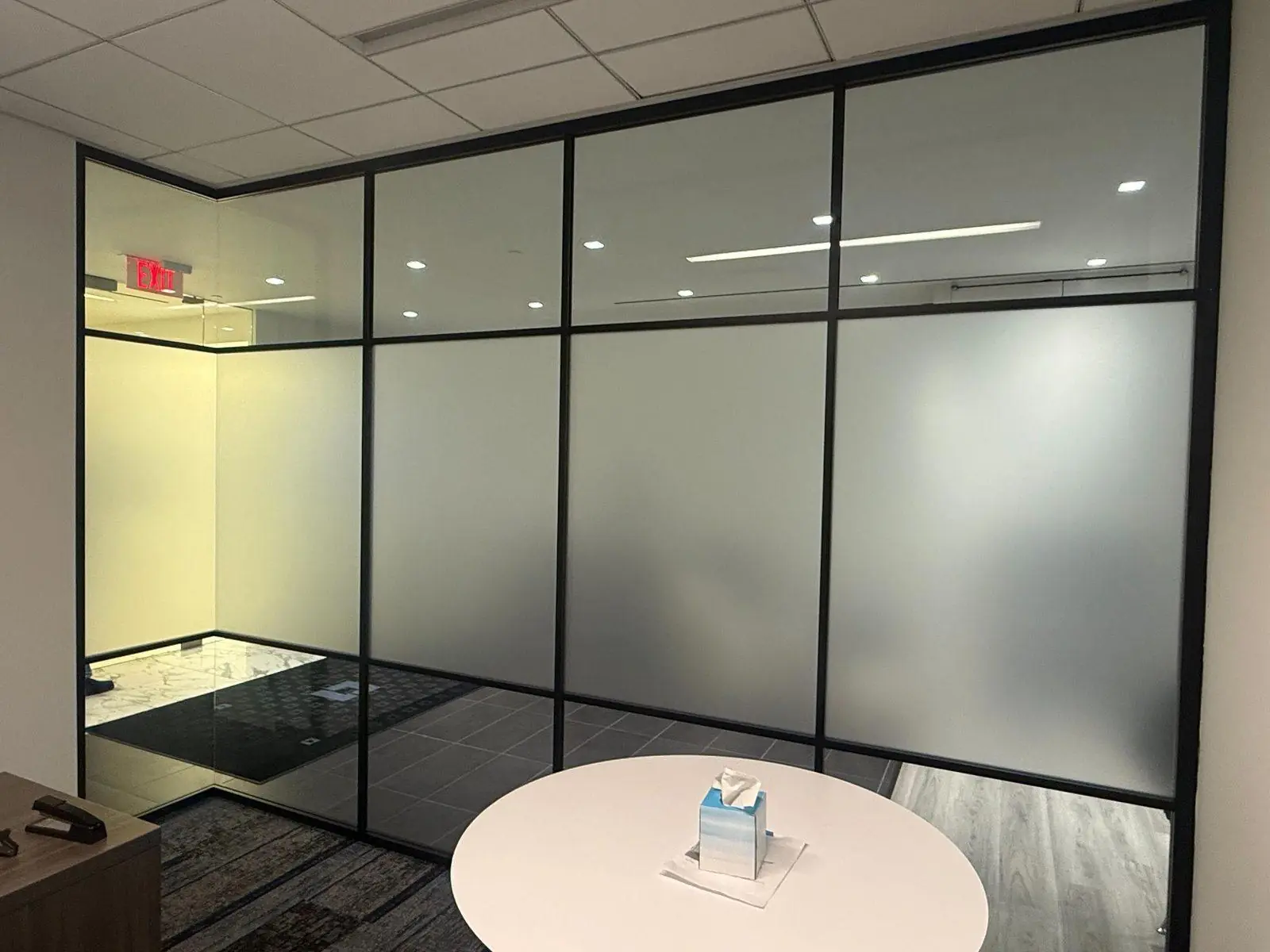
Window frosting is a translucent film that looks like etched glass. It gives offices, clinics and conference rooms privacy while keeping them bright. It can be cut into bands, patterns and logos, or printed with color. ORAFOL rates its ORACAL 8810 frosted film as lasting indefinitely indoors, which is why frosting is one of the longest lived interior graphics. See frosted glass vinyl for offices for common layouts.
Wall Graphics
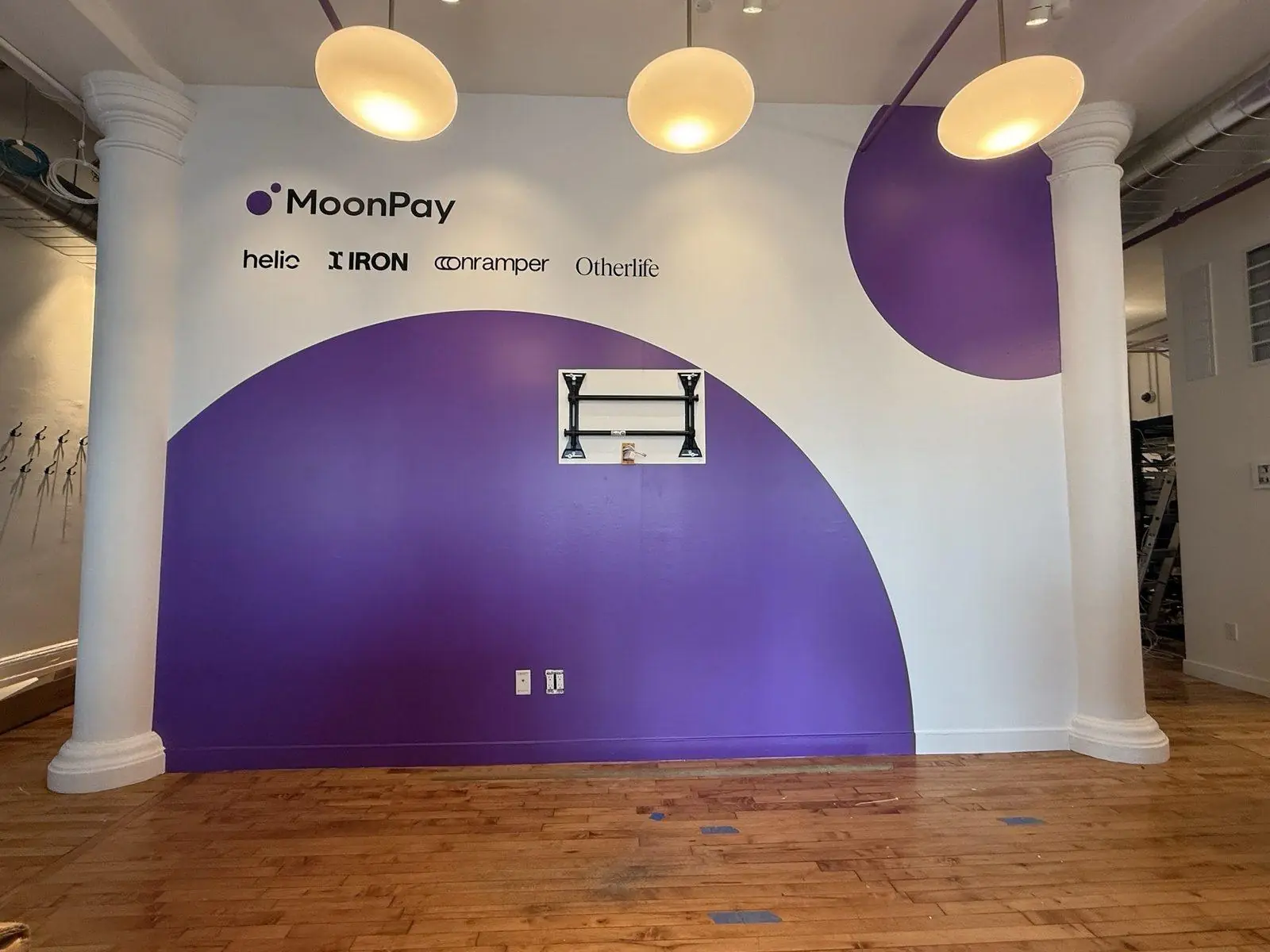
Walls take two kinds of vinyl. Wall wraps are printed murals that cover a wall from edge to edge: photos, brand stories, maps and illustrations. Wall decals are cut letters, logos and shapes placed on a painted wall, like a mission statement, room names or a reception logo.
Wall films use adhesives made for paint, which grip firmly and still come off later without pulling the paint. The surface decides the film: smooth drywall takes standard wall film, while brick and block need cast film pressed into the texture with heat. Our guide to wall wrap surface prep covers each wall type.
Floor, Elevator and Door Graphics
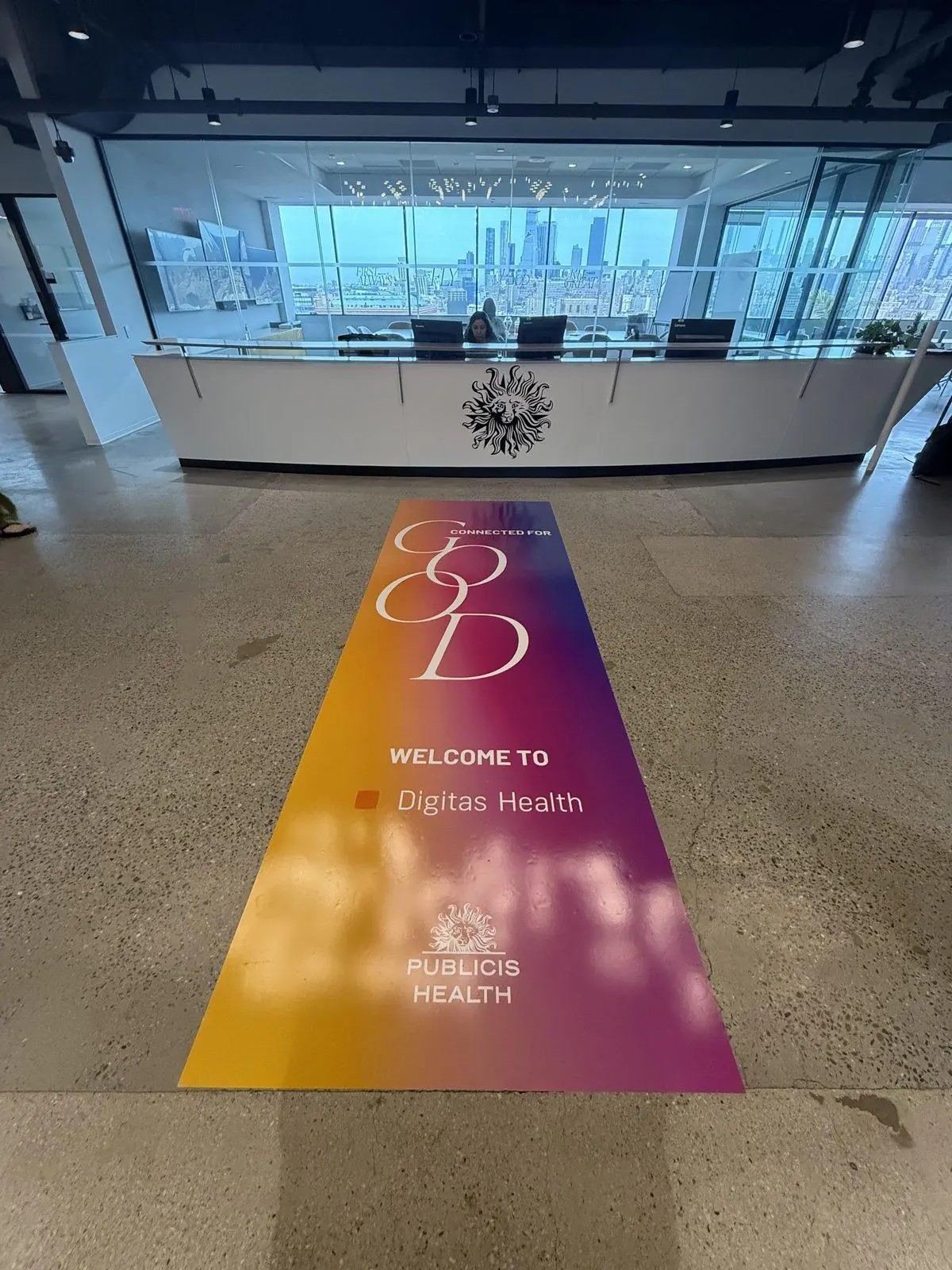
Floor decals are printed graphics with a textured, slip resistant laminate. Stores use them for promotions and lines, offices and venues for wayfinding, warehouses for safety markings. Our floor graphics guide covers films and lifespans.
Elevator and door wraps cover steel or wood doors in lobbies, schools and hotels. They need a conformable cast film that wraps cleanly around door edges and slides with the doors all day.
Specialty Films
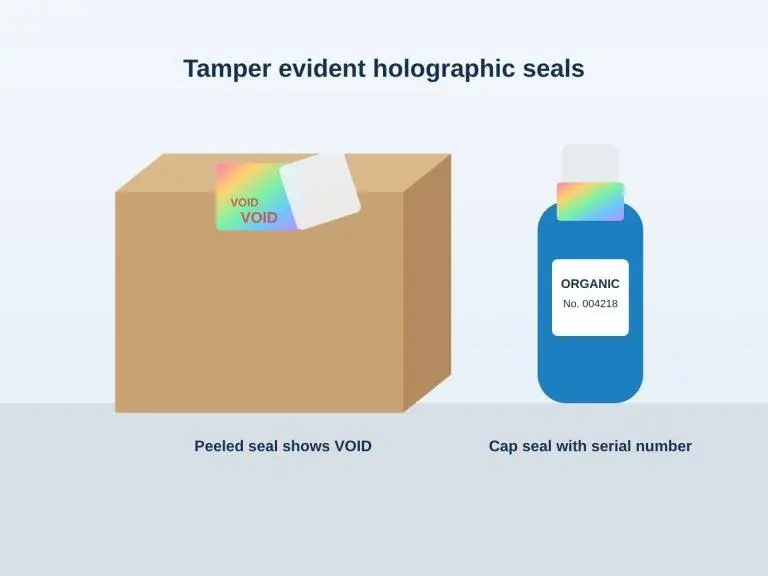
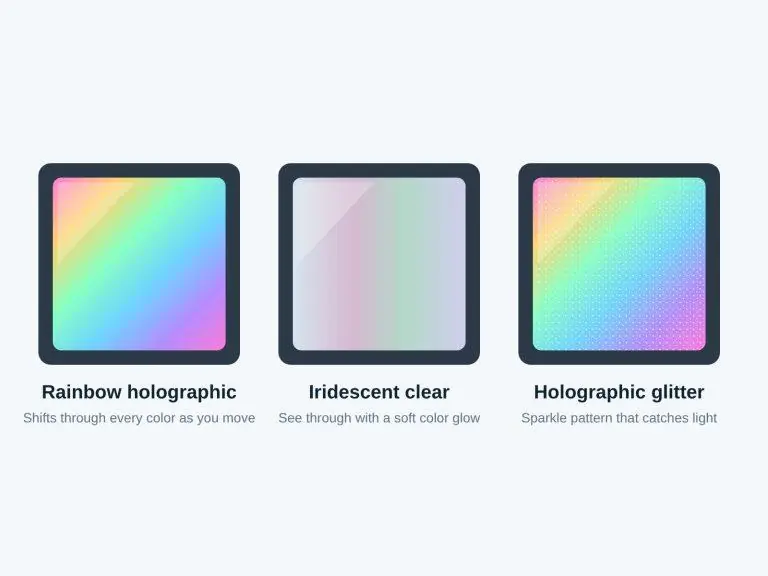
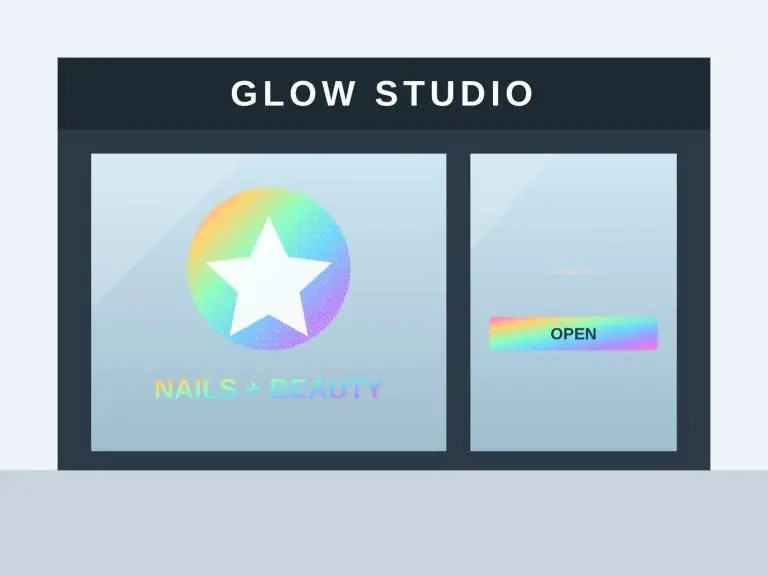
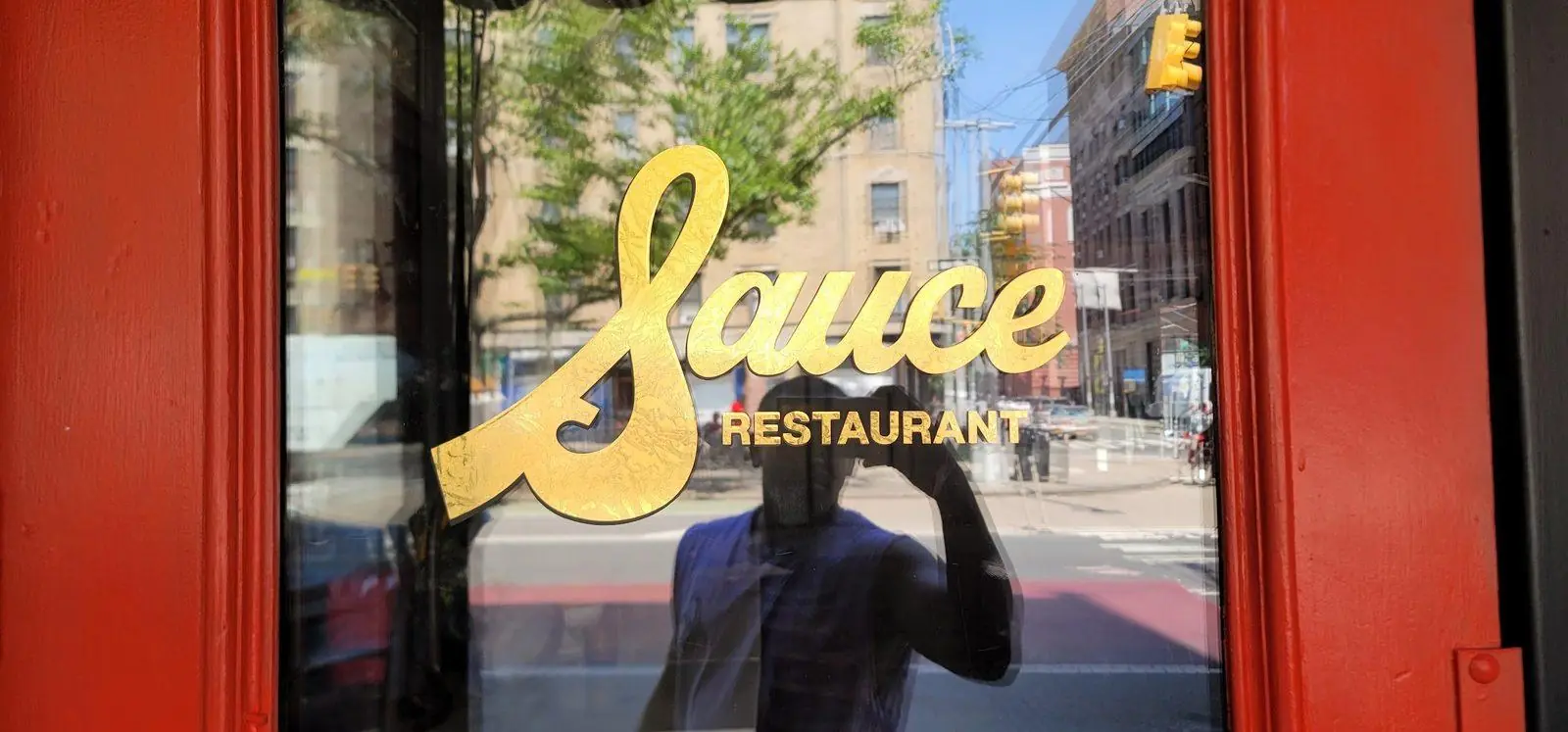
Some looks need special film. Gold leaf decals and silver leaf decals use metallic vinyl for the classic lettered look you see on restaurant windows and law office doors. Holographic decals shift color as people walk past and suit salons, boutiques and events. Specialty films are often stiffer and shorter lived outdoors than standard vinyl, so they work best as accents or inside the glass.
How Long Vinyl Graphics Last
Lifespan depends on the film and where it goes. Film makers publish outdoor ratings for vertical surfaces in a mild climate, and the numbers drop on hot, sunny or horizontal surfaces. A few examples from the makers:
Figures are from ORAFOL’s product pages for ORACAL 651 and ORACAL 751C. Indoor graphics last longer than outdoor ones, and cast films outlast calendered films. Our guide to cast vs calendered vinyl explains why.
How to Choose
| Goal | Best fit | Typical life |
|---|---|---|
| Hours and name on the door | Cut window decals | Several years |
| Turn a storefront into an ad | Printed or perforated wrap | A season to a few years |
| Privacy without losing light | Window frosting | Many years indoors |
| Brand a lobby or hallway | Wall wrap or wall decals | Many years indoors |
| Guide people through a space | Floor decals | Months, by traffic |
| Upscale lettering on glass | Gold or silver decals | Longest inside the glass |
What Affects Price
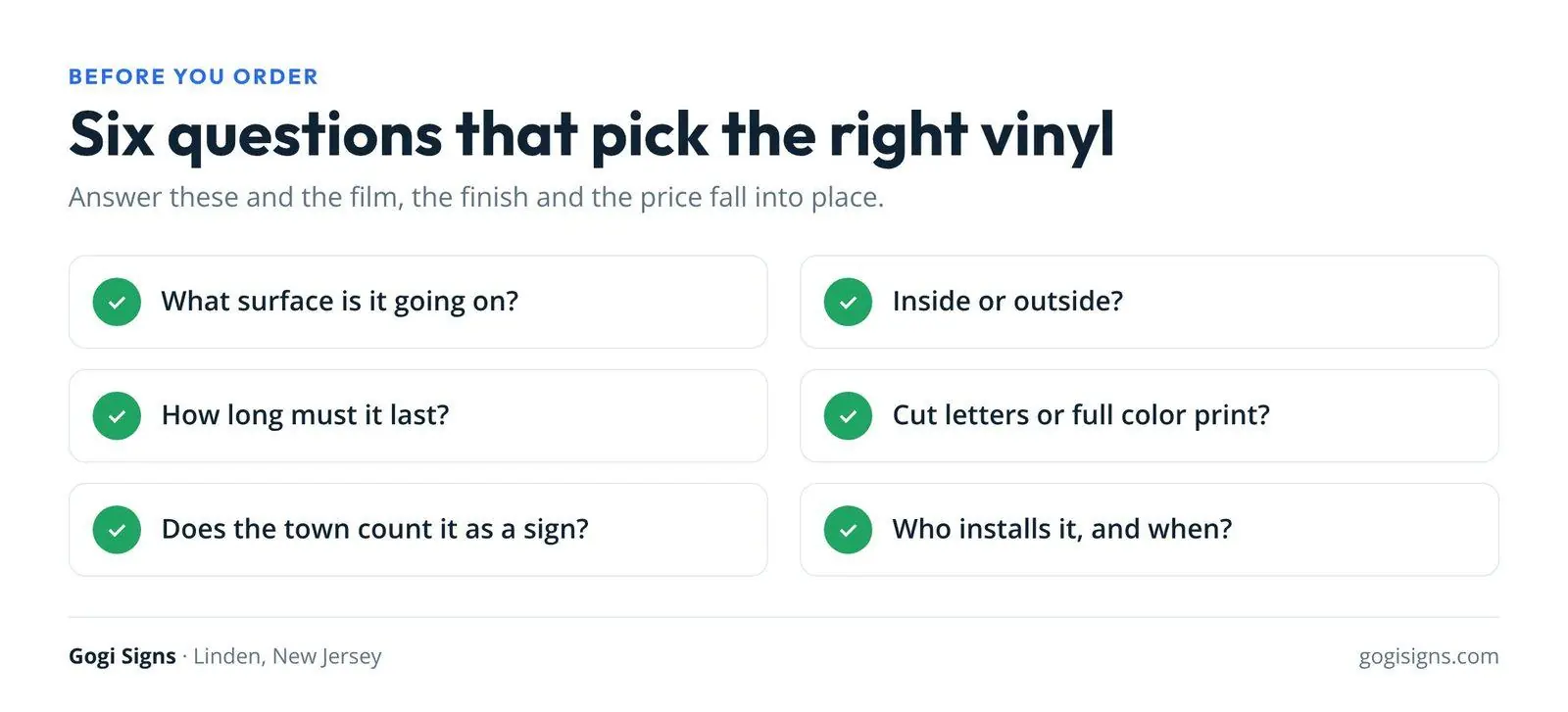
Four things set the price of a vinyl job: size, cut or print, the film and the install. Printed graphics cost more per square foot than simple cut letters, specialty films cost more than standard colors, and installs that need ladders, lifts or night work take more labor. Our guide to what window graphics cost walks through each factor, and 3M, Avery or ORACAL explains how film brands compare.
Permits and Window Rules
Many towns count window graphics as signs and limit how much glass can be covered. New Jersey towns set these rules in their zoning codes, and New York City rules are explained on the NYC Buildings sign permit page. Read our guide to window sign coverage rules, or let our sign permits team check the address before anything is printed.
Inside or Outside the Glass
Window graphics can go on either face of the glass, and the choice changes how they look and how long they last. Graphics on the outside face read crisp and bright, but face sun, rain, road salt and window washers. Graphics on the inside face are protected and usually last longer, but the glass adds a little glare and the artwork must be printed or cut in reverse.
For lettering on a busy door, inside mounting is usually the better choice. For perforated window film, outside mounting gives the clearest view through. We decide this during the site survey or from your photos.
What Happens on Install Day
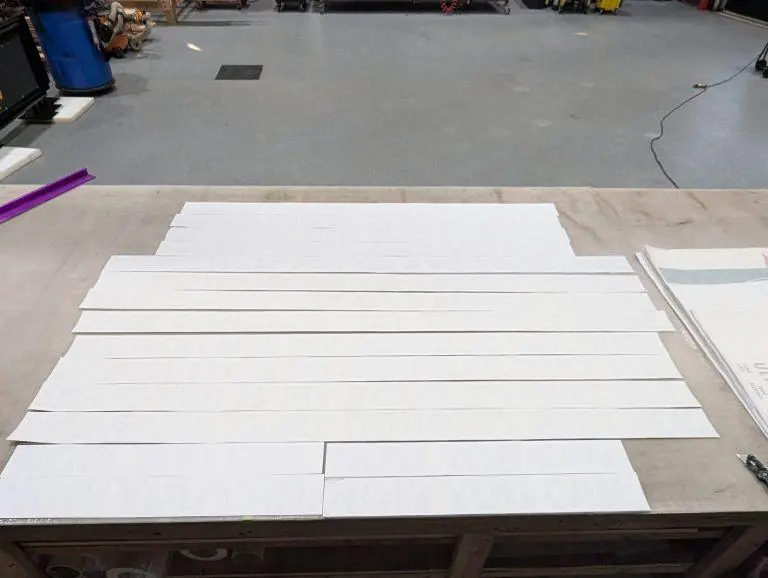
Most vinyl jobs follow the same steps. The crew cleans the surface, marks a level layout line, then applies the film from the center out with a squeegee, using a wet method on glass when the film allows it. Cut letters are held together by transfer tape that comes off after the letters are down. Wall and floor graphics go on dry. Wraps on doors and textured walls are heated as they go, so the film settles into edges and grout lines.
A storefront or office usually takes a few hours. We schedule before opening, after closing or on weekends when the space needs to stay quiet.
How We Handle Vinyl Graphics Jobs
Every vinyl graphics job at Gogi Signs follows the same path from our Linden, New Jersey shop. It starts with a site survey or photos of the space, then a scaled layout from our sign design team. We check the town rules through our sign permits service when the graphic counts as a sign, cut or print it in house through our vinyl cutting and print shop, and our own crews handle graphics installation across New Jersey and New York City. When old graphics or signs have to come down first, the sign removal crew does it in the same visit.
Most clients pair vinyl graphics with related work such as window decals, wall wraps and floor decals. See the full range on our vinyl graphics page or browse more guides on the Gogi Signs blog.
Common Questions About Vinyl Graphics
Can vinyl graphics be removed?
Yes. Most commercial films come off with heat and a plastic scraper. Removable adhesives make short term jobs faster to take down.
Do vinyl graphics damage glass or paint?
Not when the right film goes on a sound surface. Window films come off glass cleanly; wall films are made to release from cured paint.
Do I need a permit for window graphics?
Some towns count them as signs. Check the local sign ordinance, or ask us to check before we print.
Can you match my brand colors?
Printed graphics are color matched to your files. Cut vinyl is matched to the closest stock film color, and we show samples first.
How long does an install take?
Most storefront and office jobs install in a few hours. Large walls and full window wraps can take a day.
Do you install outside New Jersey?
Yes. Our crews install across New Jersey and the five boroughs of New York City.
Plan Your Vinyl Graphics
Send a photo of the space, rough sizes and your logo. We suggest the right film, lay out the graphics to scale and give you a price, and our own crews handle the installation. For how New York shops approach the same work, see Signs NY vinyl graphics, and for vehicles, our sister graphics shop Pixel Wraps covers vehicle wraps. Browse every option on our vinyl graphics page.
Sources and further reading
- ORAFOL: ORACAL 651 intermediate calendered film
- ORAFOL: ORACAL 751C high performance cast film
- ORAFOL: ORACAL 8810 frosted glass cast film
- 3M: graphics and signage films
- Avery Dennison: graphics solutions
- 3M: architectural glass finishes
- 3M: floor graphic film
- Avery Dennison: perforated window films
- NYC Buildings: sign permits
- NJ Department of Community Affairs: codes and standards
- Signs NY: vinyl graphics
- Pixel Wraps: vehicle wraps