Every wrap reaches a point where it needs work. A panel gets dented, the phone number changes, the brand gets a new look or the film simply ages out. Vehicle wrap removal and repair decide how long the truck is off the road and whether the paint underneath comes back clean.
This guide covers when to repair a panel, when to reprint, when to remove the whole wrap and how fleets in New Jersey and New York City rebrand without parking their vehicles for a week.
In this guide
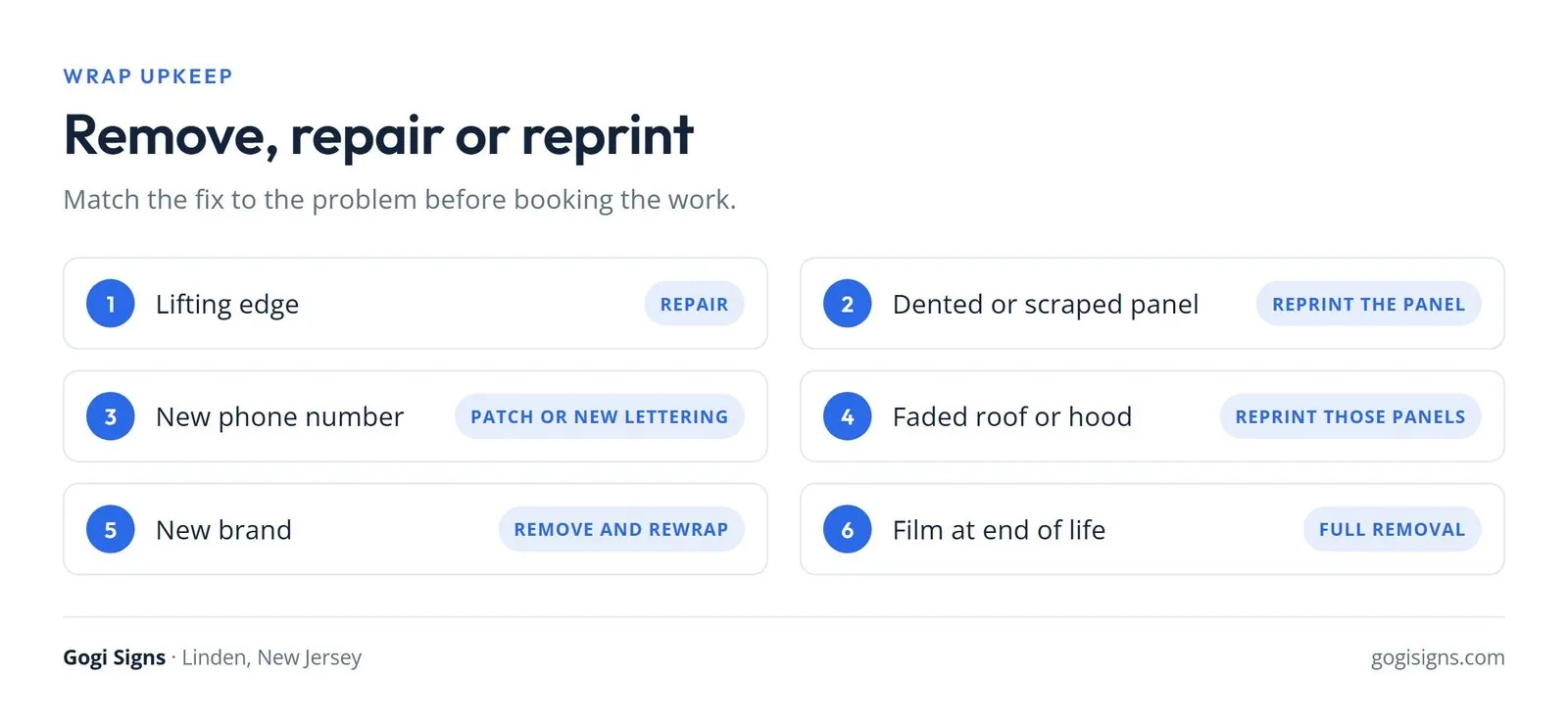
Remove, Repair or Reprint at a Glance
Signs a Wrap Needs Attention
Avery Dennison tells owners in its vehicle wrap maintenance bulletin to call their installer when film shows loss of gloss, discoloring, cracking or crazing. In our shop, these are the usual reasons a wrap comes back in:
- Lifting edges. Corners and seams that start to peel, often around door handles and wheel wells.
- Damage. A scraped or dented panel after a minor accident.
- Fading. A sunny roof or hood that has gone dull while the sides still look fine.
- Old information. A new phone number, website or service list.
- A new brand. New colors and logo across the whole fleet.
The first three can often be fixed with a repair. The last two usually mean a reprint or a full removal. See how long vehicle wraps last for what shortens a wrap’s life.
Repair One Panel
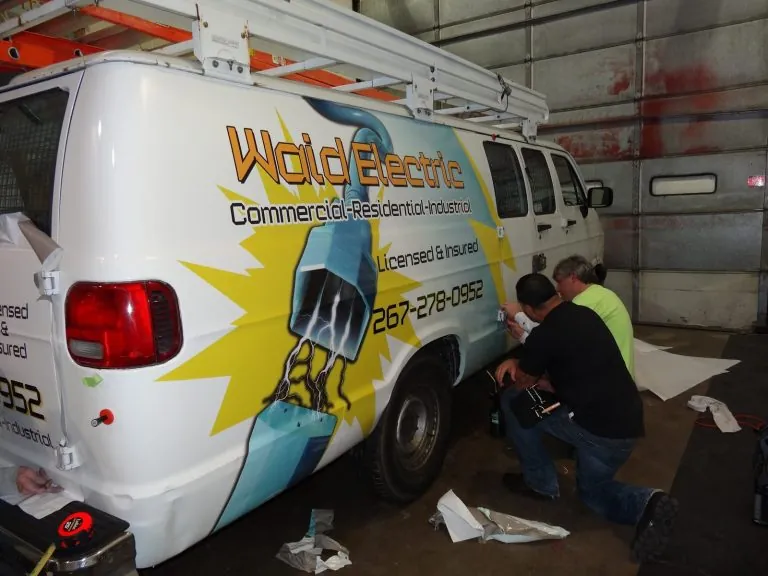
A wrap is printed in panels, so one damaged area rarely means a whole new wrap. We keep your print files, reprint the damaged panel on the same film and replace it in one visit. When only the phone number changes, we can often cut new lettering or print a small patch panel instead of redoing a side.
One thing to expect. A new panel next to film that has been in the sun for years may look a little brighter at first. On an older wrap we sometimes suggest redoing the full side so the color matches.
How Vehicle Wrap Removal Works
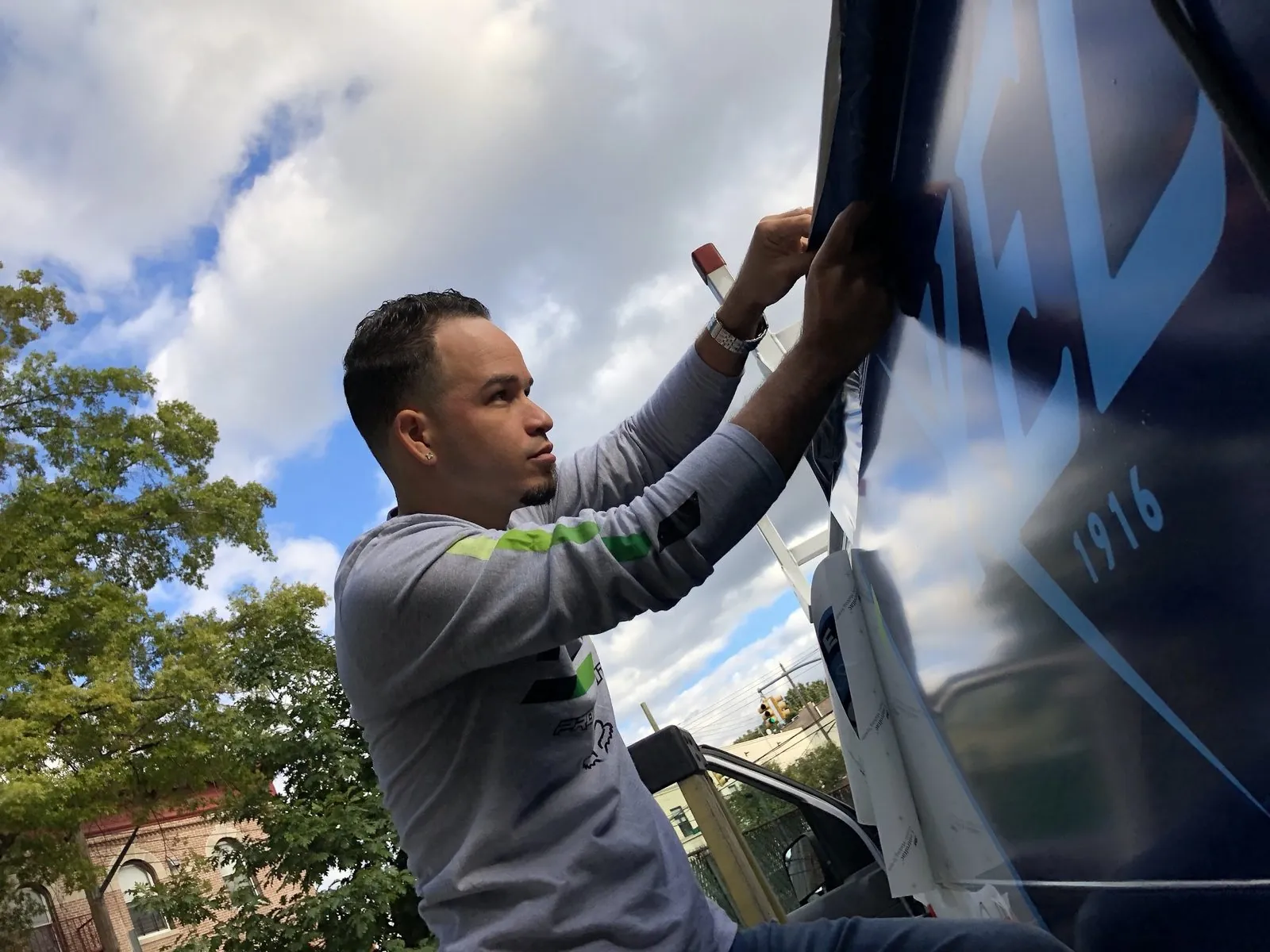
Avery Dennison’s removal bulletin explains that how easily a film comes off depends on the film, the adhesive, the surface under it and how long it has been outside. That is why every removal starts with a small test area.
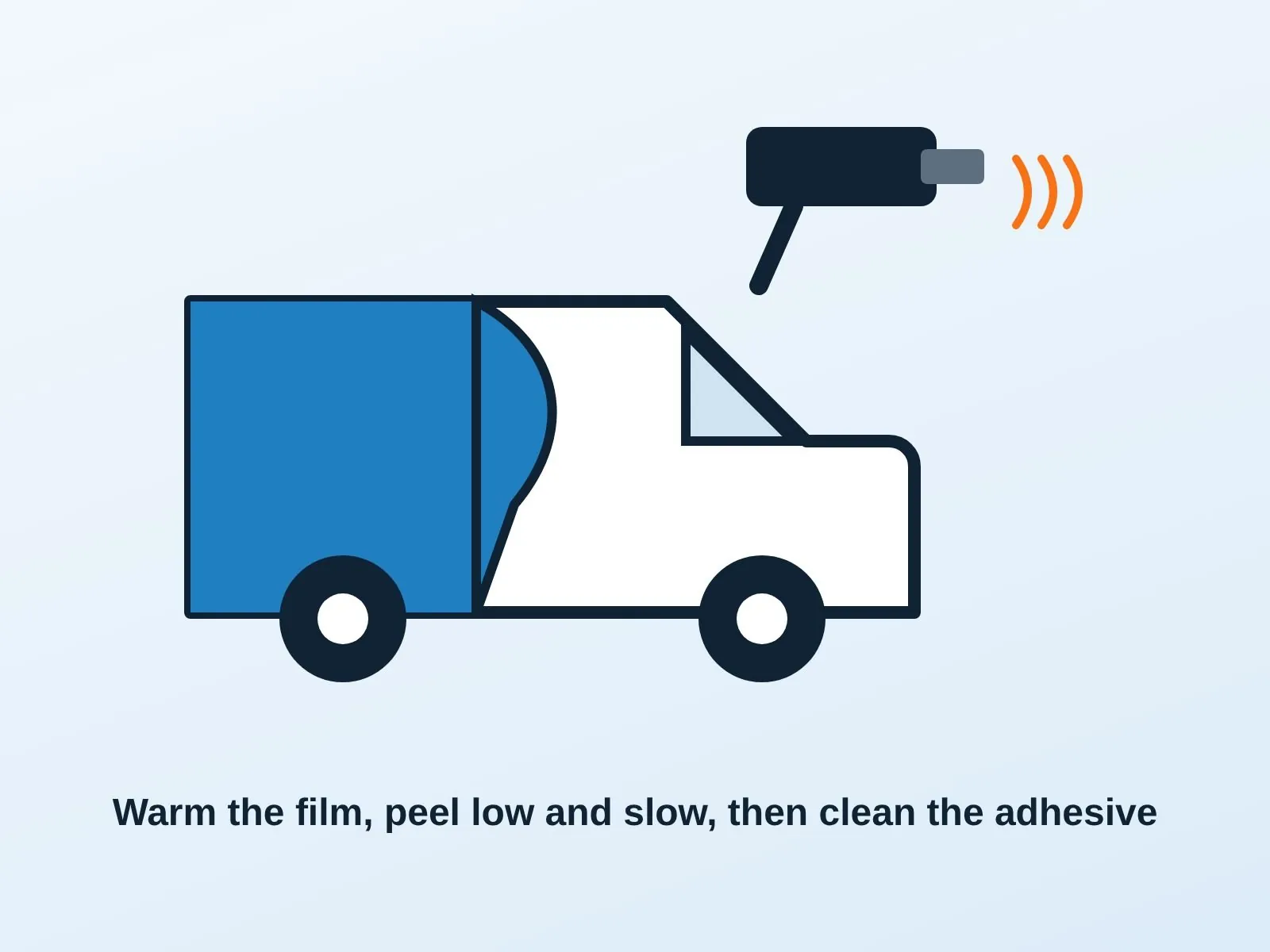
- Test a corner. We check how the film and the paint under it behave before pulling a full panel.
- Warm the film. A heat gun softens the film and adhesive so it releases in large pieces.
- Pull low and slow. A slow, steady pull at a low angle leaves less adhesive behind and keeps the film from tearing.
- Clear the residue. Any adhesive left is soaked with a remover and lifted with a plastic scraper.
- Clean and inspect. The surface is cleaned so it is ready for new film or for return.
The same bulletin notes that removal gets harder when it is cold, below about 50 degrees Fahrenheit. That is one reason we do most removals in our heated bay in Linden during the winter.
What Slows a Removal
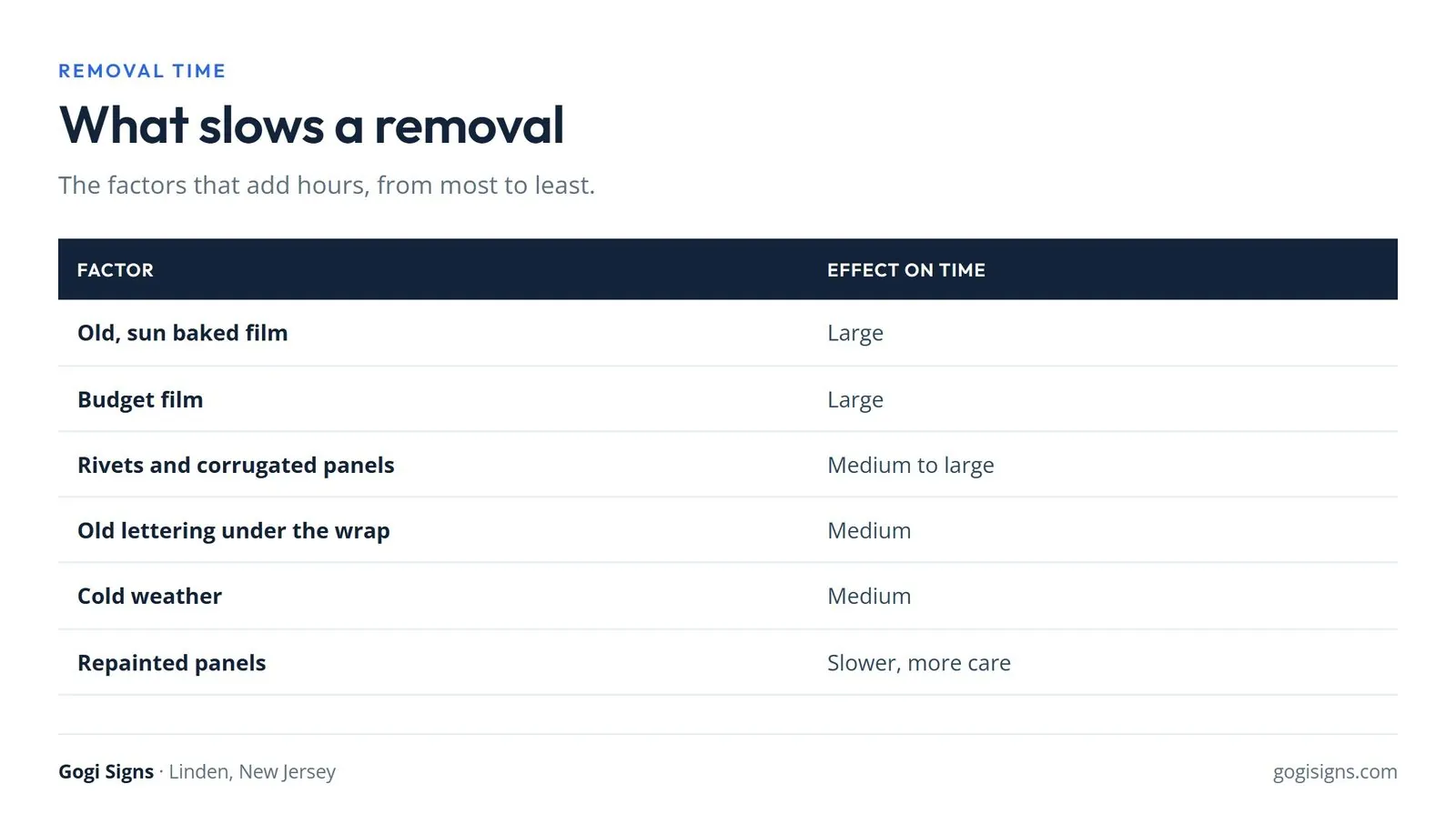
| Factor | Why it matters |
|---|---|
| Film quality | Cast wrap films usually come off in larger pieces than budget films |
| Age and sun | Old, sun baked film can crack and come off in small pieces |
| Paint condition | Repainted or chipped panels need extra care to avoid lifting paint |
| Temperature | Cold film is stiff and tears more easily |
| Old lettering under the wrap | Two layers of adhesive mean two removals |
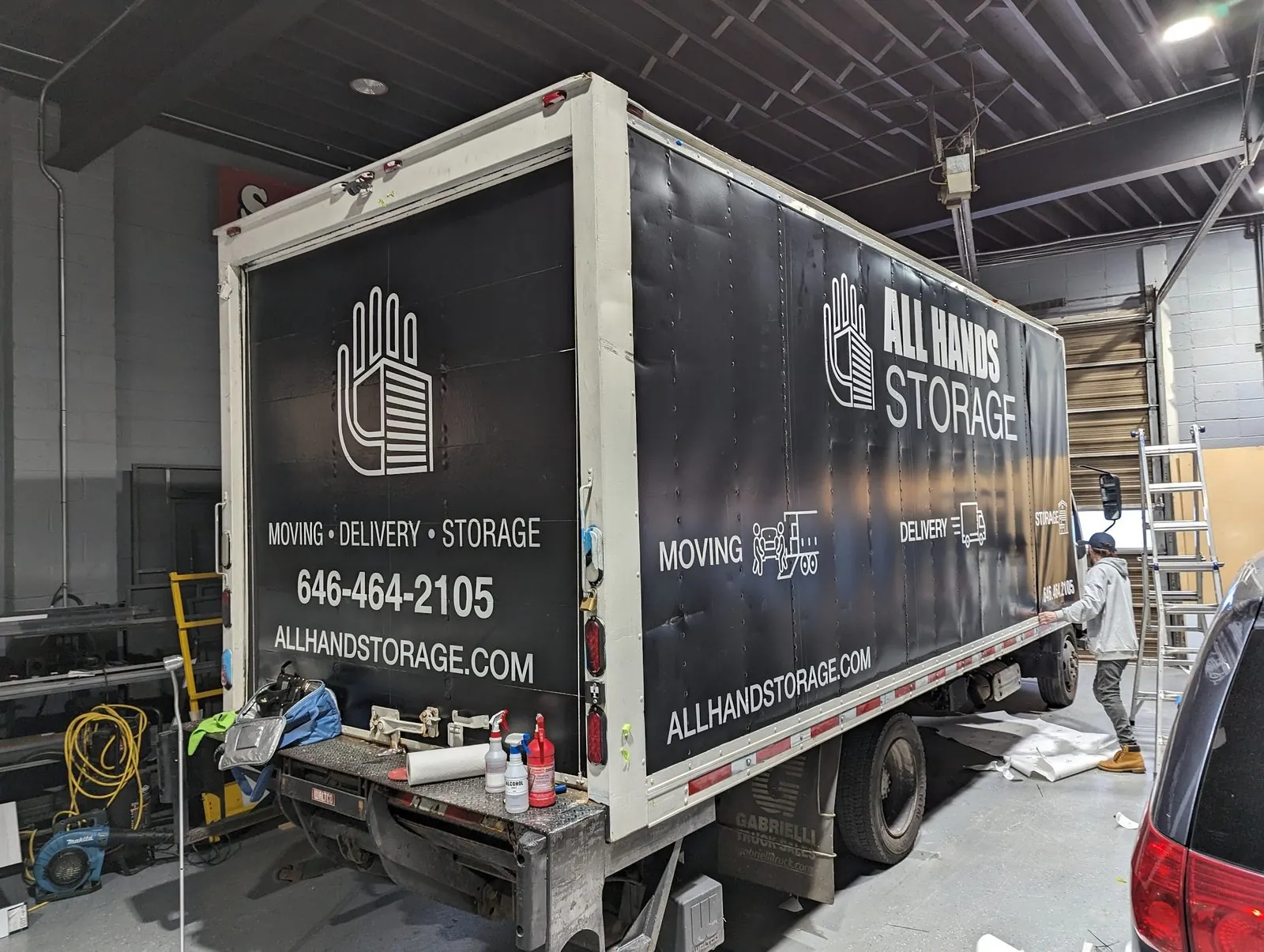
| Rivets and corrugation | Box truck bodies take longer than smooth van panels |
Factory paint in good condition usually comes back clean. Panels that were repainted at a body shop are the ones we test most carefully. If a car is leased, see our guide to wrapping a leased car before you book removal.
Rebrand Without the Downtime
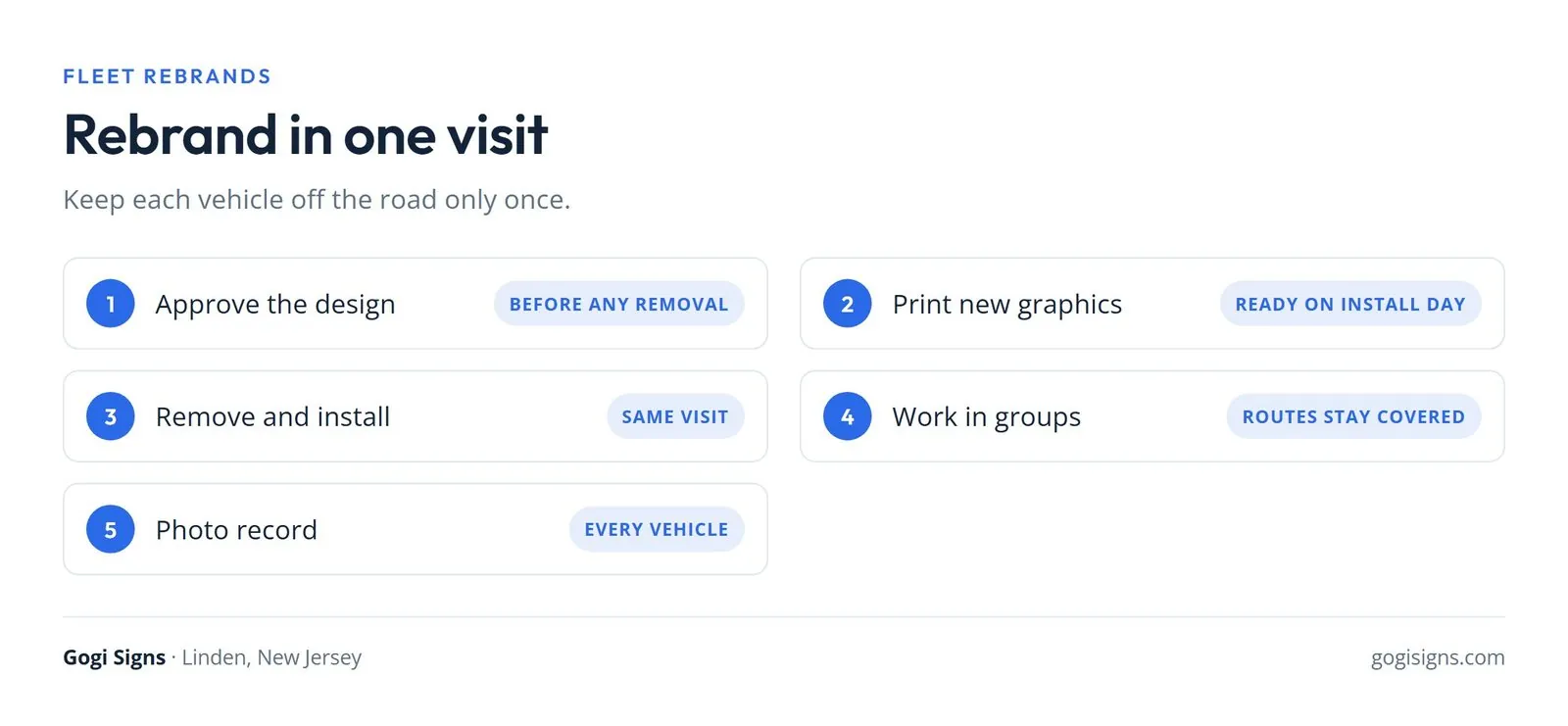
The costly part of a rebrand is often the time a vehicle sits still, not the film. A planned rebrand keeps every truck working.
- Approve the new design first. New graphics are printed before the old ones come off.
- One visit per vehicle. Removal and the new install happen together, so each vehicle is down once.
- Work in groups. Two or three vehicles at a time keep routes covered.
- Come to the yard. For larger fleets our crews can work on site. See mobile truck wrap installation.
Our fleet graphics rollout plan walks through the vehicle list, templates and schedule in detail.
How We Handle Wrap Removal and Repair
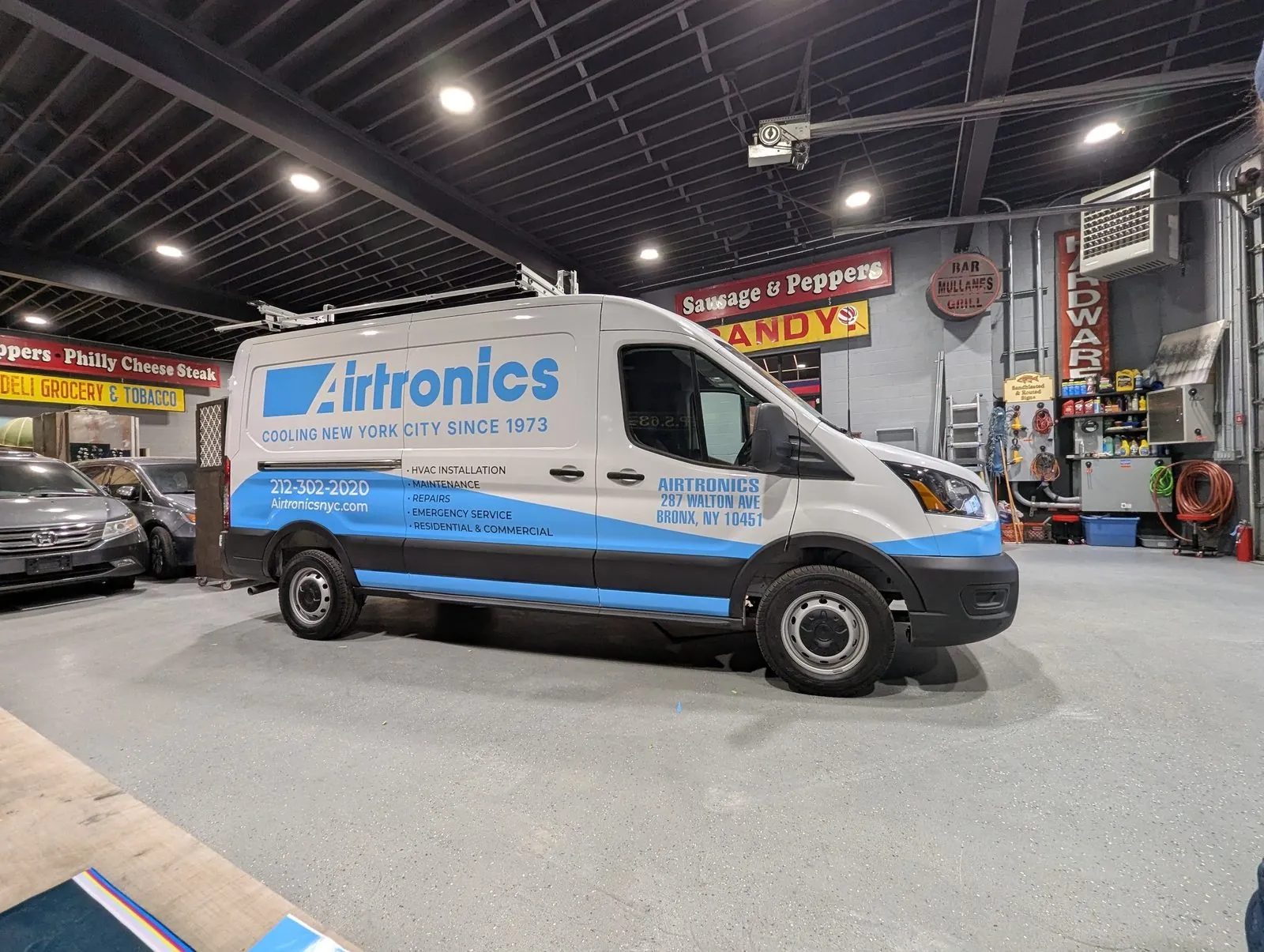
Every vehicle wrap job at Gogi Signs follows the same path. We look at the vehicle at our Linden, New Jersey shop or at your yard, test the film and the paint, and our sign design team updates your artwork on a template of the exact make and model. We print and laminate in house, and our own crews handle removal and graphics installation in our heated bay or at your yard across New Jersey, New York City and the Philadelphia area. New lettering is cut through our vinyl cutting service.
Fleet owners can see rollout options on our fleet wraps page, and single vehicles are covered on our van wraps, truck wraps and car wraps pages. We handle fleet wrap removal in Elizabeth and across Union County. Sign shops and agencies can order removal and reinstall through our wholesale program. See every option on our vehicle graphics page or browse more guides on the Gogi Signs blog.
Common Questions
Will removing a wrap damage my paint?
Rarely, on factory paint in good condition. Repainted or chipped panels carry more risk, which is why we test a small area first.
Can you fix just one damaged panel?
Yes. We reprint the panel from your saved files and replace it in one visit.
How long does a full removal take?
It depends on the film, its age and the vehicle. A van usually takes far less time than a box truck with rivets and corrugated panels.
Can you remove a wrap another shop installed?
Yes. We test the film first, since some budget films come off in small pieces and take longer.
Can removal and the new wrap happen in one visit?
Often yes. We print the new graphics first, then remove the old film and install the new set while the vehicle is with us.
Do you remove wraps in the winter?
Yes. We do most winter removals in our heated bay, because cold film tears more easily.
Our Take
Repair what you can, reprint what is out of date and remove the whole wrap only when the brand or the film calls for it. Plan the new graphics before the old ones come off, and each vehicle is down once. Send us photos of your vehicles and we will plan the work on our fleet wraps schedule.
Sources and further reading
- Avery Dennison: Technical Bulletin 1.07, removal of pressure sensitive adhesive films
- Avery Dennison: Instructional Bulletin 1.8, vehicle wrap and graphics maintenance
- Avery Dennison: Supreme Wrapping Film
- 3M: Print Wrap Film IJ180mC product bulletin
- 3M: Wrap Film Series 2080 product bulletin
- 3M: Preferred Graphics Installer program
- ORAFOL: ORACAL 751C high performance cast film