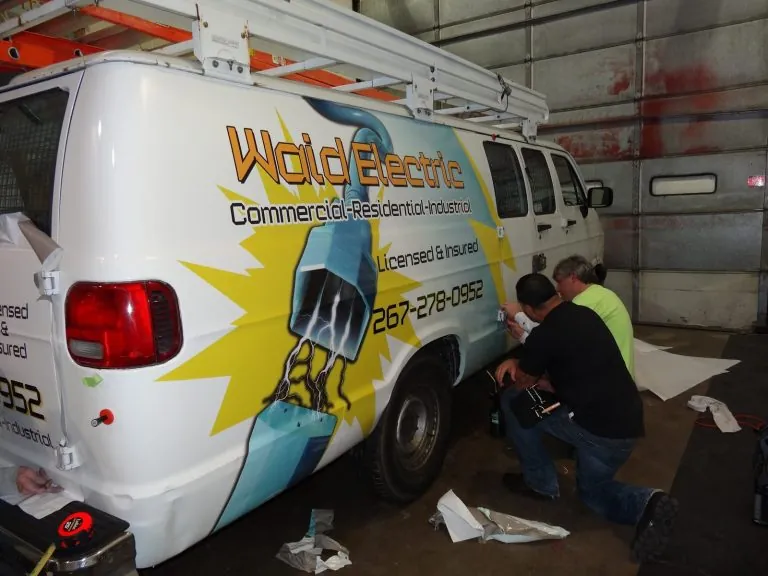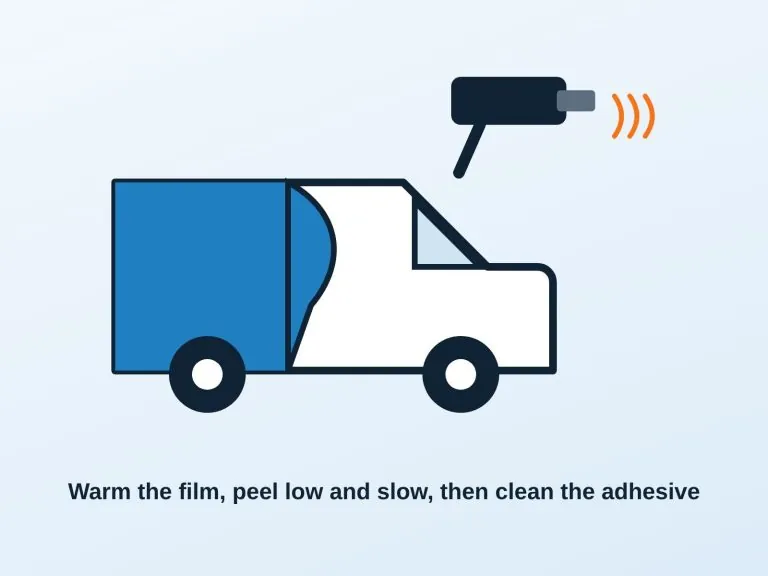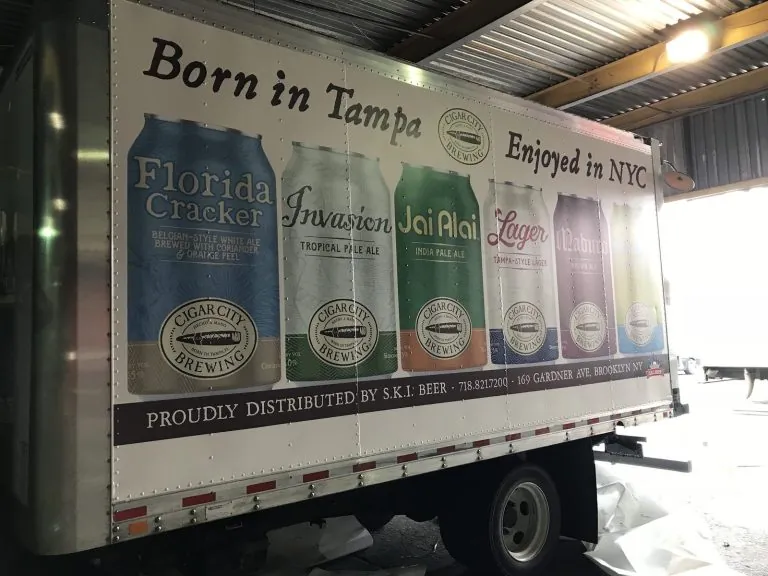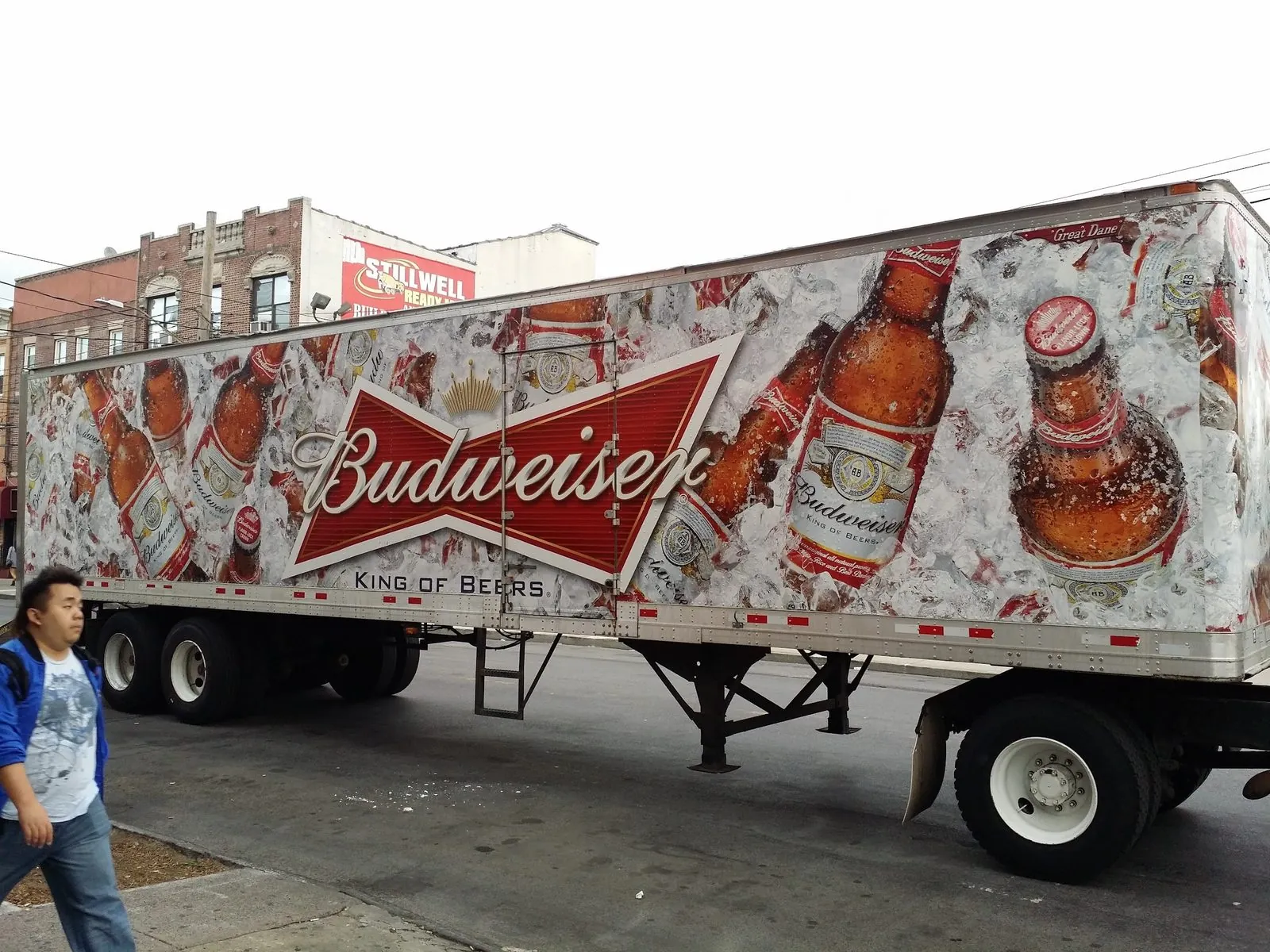
Red and white reflective tape on trailers is not decoration. Federal rules require it on many trailers so they can be seen at night. When you wrap a trailer, the tape has to stay visible. This guide explains which trailers need it, where it goes and how to plan a wrap around it. It is general information, not legal advice. DOT reflective tape requirements for trailers come from federal rule 49 CFR 393.11, and a trailer wrap has to work around that tape.
In this guide
Conspicuity Tape at a Glance
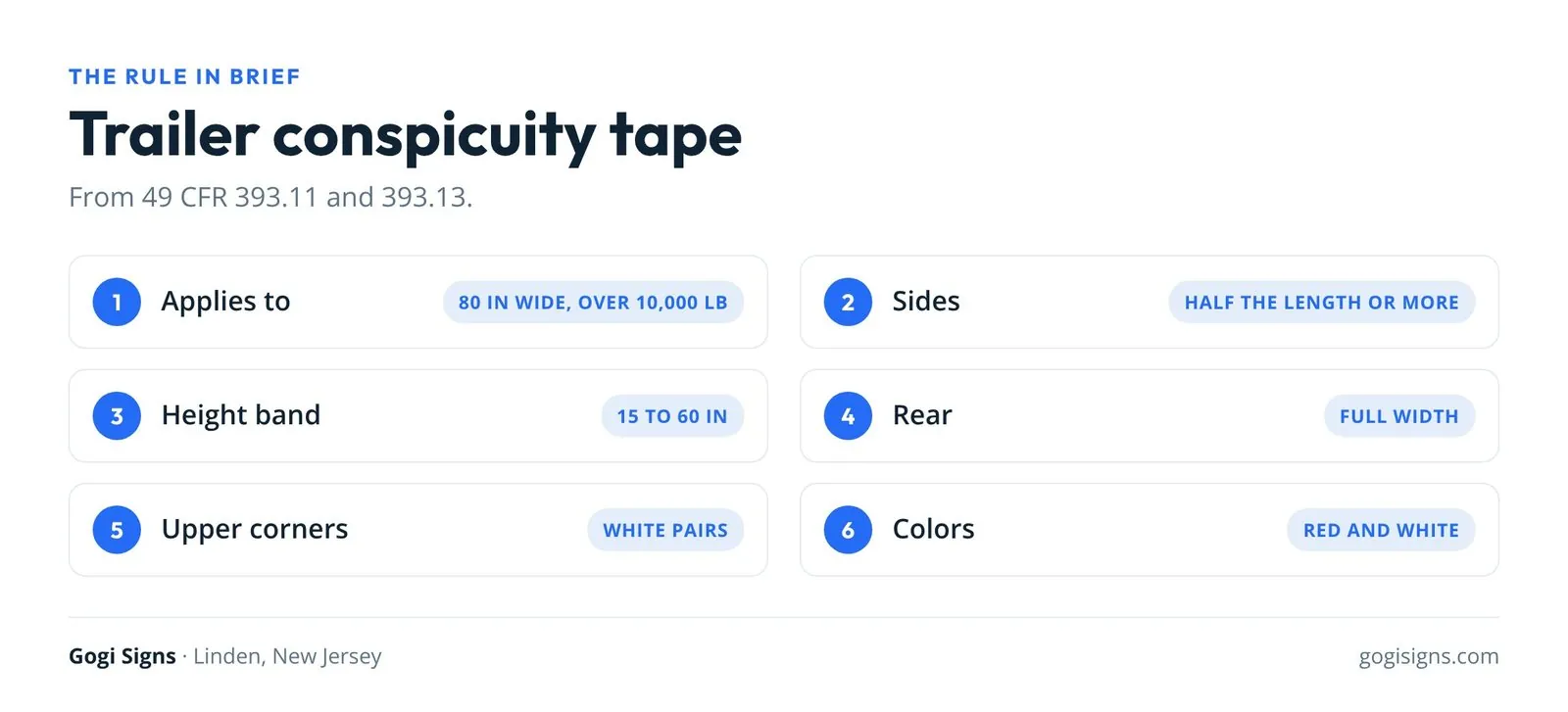
Which Trailers Need It
Under 49 CFR 393.11, trailers 80 inches or wider with a gross vehicle weight rating over 10,000 pounds, built on or after December 1, 1993, need retroreflective sheeting or reflex reflectors. Older trailers of the same size were brought under the rule by 49 CFR 393.13. Pole trailers and trailers built for living or office use are treated differently.
Small utility and landscape trailers under those limits usually do not need it, but many owners add it anyway.
Where the Tape Goes
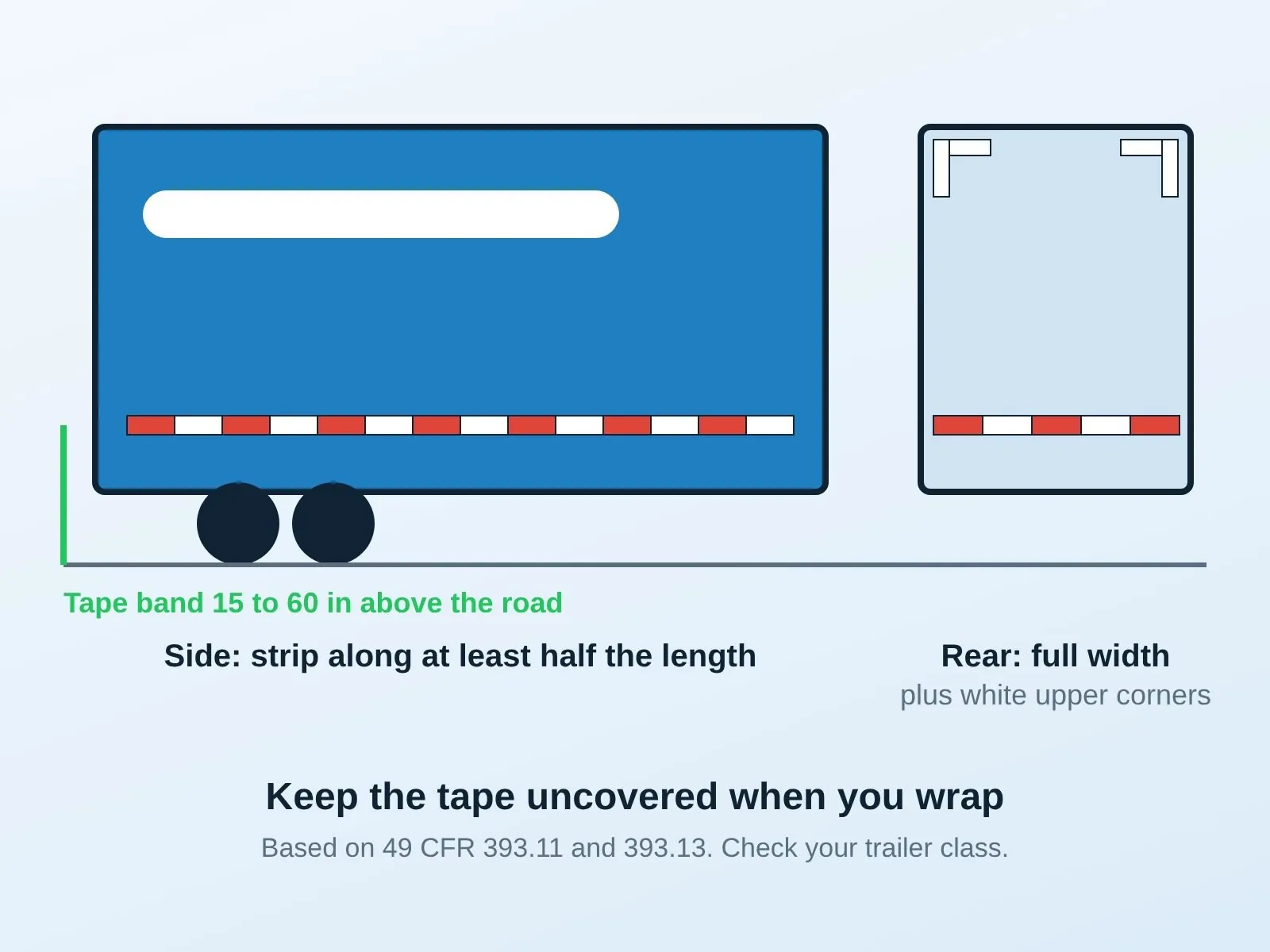
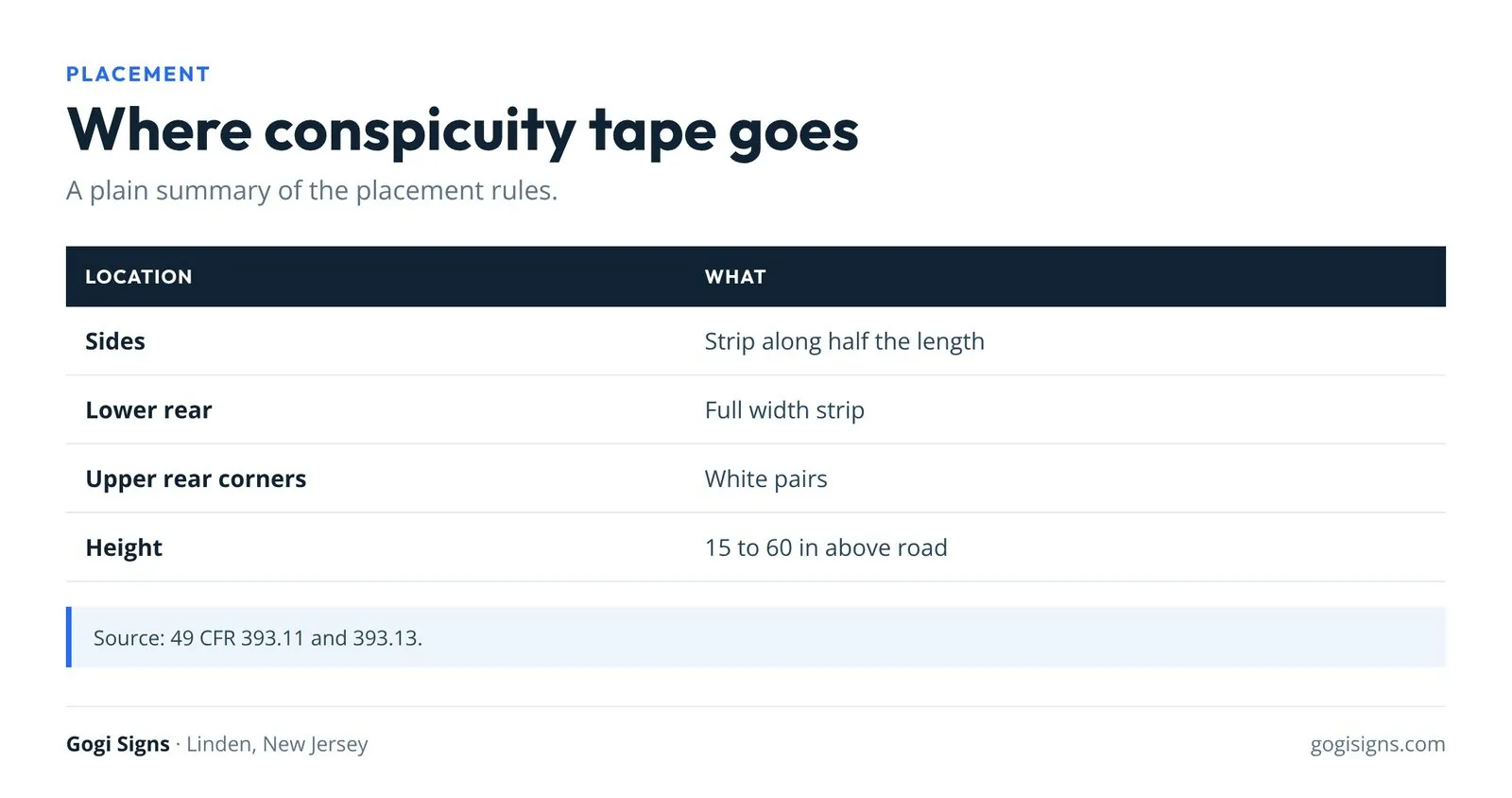
- Sides: a strip as horizontal as practical, covering at least half the trailer length, 15 to 60 inches above the road
- Lower rear: a strip across the full width, in the same height band
- Upper rear corners: pairs of white strips about 12 inches long, near the top
- Colors: alternating red and white segments
Planning a Wrap Around It
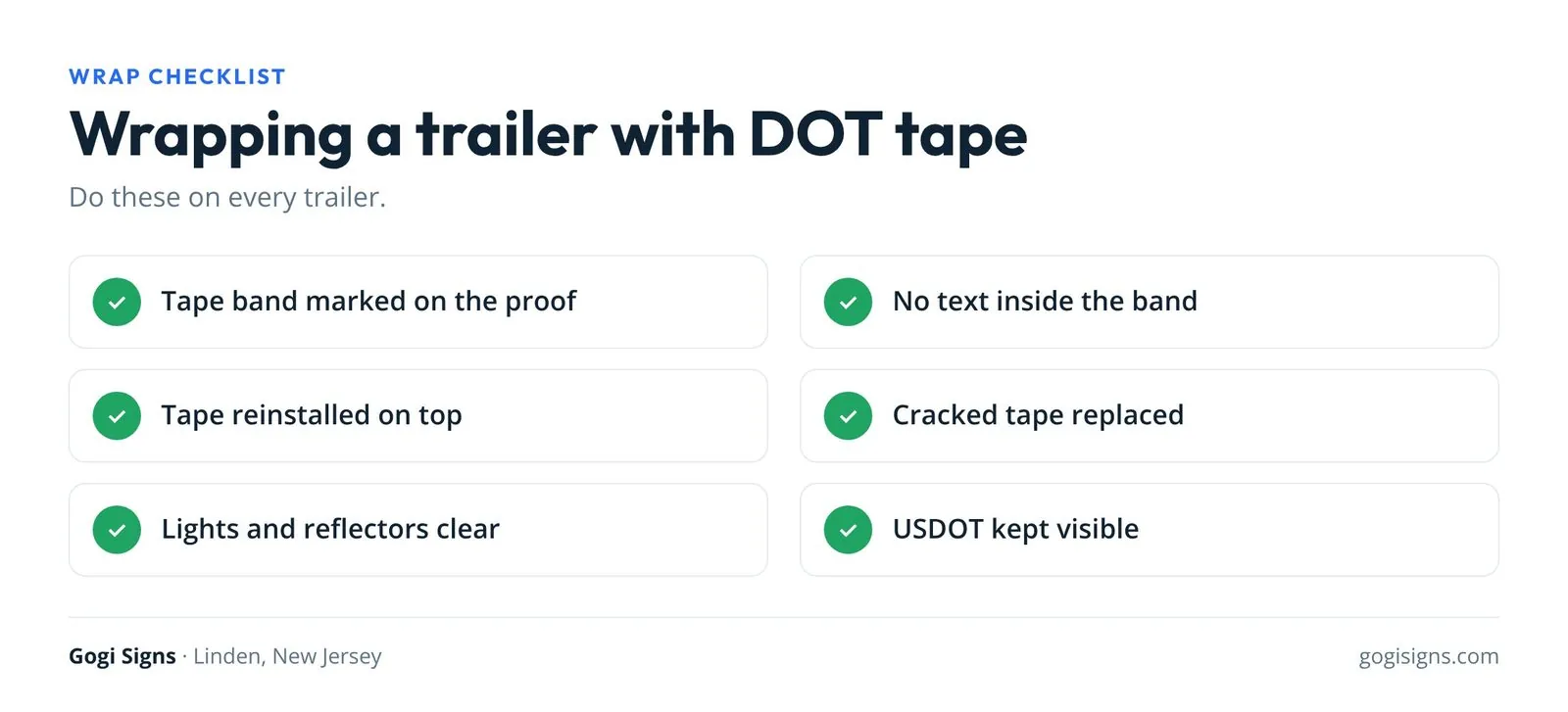
The simplest plan is to design the wrap so the tape band is part of the layout: a darker band or a solid color stripe where the tape sits. The tape goes back on top after the wrap, on a clean surface. Text and logos stay above the band so the tape never cuts through them.
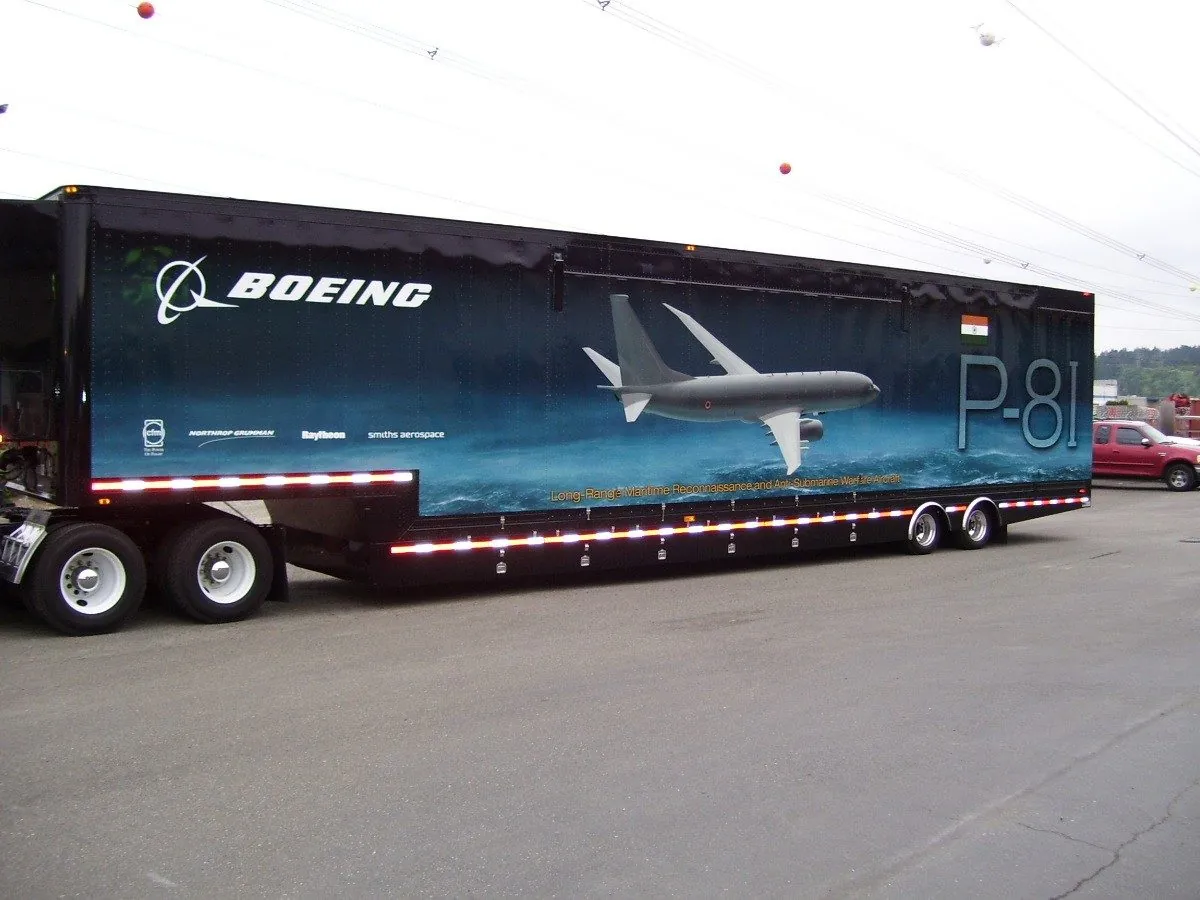
Never Cover It
Wrapping over conspicuity tape, or printing a picture of tape, does not meet the rule. Printed film is not certified retroreflective sheeting. If old tape is cracked or faded, replace it with new certified tape after the wrap.
Other Markings to Keep Clear
- Lights and reflectors
- License plate and plate light
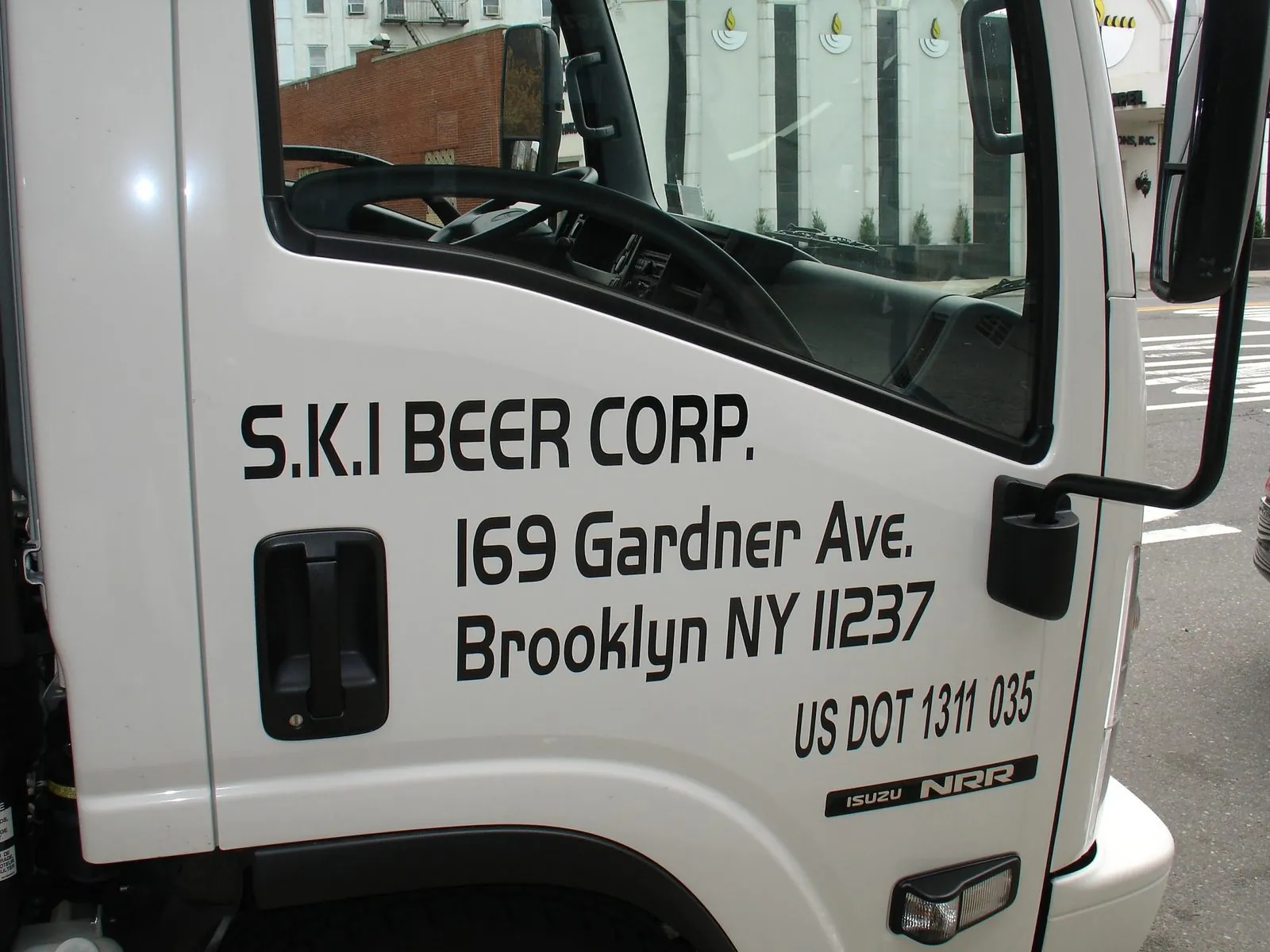
- USDOT and company name, if required. See USDOT lettering rules
- Vents and latches
Inspection and Roadside Checks
Missing or covered tape is a common roadside violation. A wrap shop that knows the rule saves you the ticket and the rework. We note tape locations on every trailer proof. See our trailer wraps page.
How We Handle Trailer Wrap Jobs
Every trailer wrap job at Gogi Signs follows the same path. We measure the vehicle at our Linden, New Jersey shop or at your location, and our sign design team sets your artwork on a template of the exact make and model. We print and laminate in house, and our own crews handle graphics installation in our heated bay or at your yard across New Jersey, New York City and the Philadelphia area. Old graphics come off in the same visit, and lettering is cut through our vinyl cutting service.
Most clients pair trailer wraps with truck wraps, food truck wraps and truck lettering. Sign shops and agencies can order the same work through our wholesale program. See every option on our vehicle graphics page or browse more guides on the Gogi Signs blog.
Common Questions
Does my trailer need conspicuity tape?
Many trailers 80 inches or wider with a GVWR over 10,000 pounds do. Check 49 CFR 393.11 and 393.13 for your trailer.
Can I wrap over the tape?
No. The tape must stay visible. It goes back on top of the wrap.
Can tape be printed into the wrap?
No. Printed film is not certified reflective sheeting.
How high does the tape go?
In a band 15 to 60 inches above the road on the sides and lower rear.
Do you replace conspicuity tape?
Yes, as part of a trailer wrap or on its own.
What about semi tractors?
Tractors have their own rules under federal lighting standards.
Our Take
Design the wrap around the tape band, put certified tape back on top and keep lights and markings clear. For more trailer work in the region, see Signs NY trailer wrapping and see the trailer wraps from Pixel Wraps, our sister graphics shop. Plan your trailer on our trailer wraps page.
Sources and further reading
- 49 CFR 393.11: lamps and reflective devices
- 49 CFR 393.13: retroreflective sheeting on older trailers
- FMCSA: 49 CFR 390.21T, marking of vehicles
- 3M: Print Wrap Film IJ180mC product bulletin
- Avery Dennison: Supreme Wrapping Film
- 3M: Wrap Film Series 2080 product bulletin
- 3M: Preferred Graphics Installer program
- 3M: graphics and signage films
- Avery Dennison: graphics solutions
- N.J.S.A. 39:4-46: commercial vehicle names and GVWR