Patients in an exam room and clients in a law office both expect privacy. Glass walls and street windows make spaces feel open and bright, but they can also put private moments on display. Privacy frosting solves that without blocking daylight.
The right layout depends on the room, the view and who is passing by.
In this guide
- Privacy Frosting at a Glance
- Start With What Needs to Be Hidden
- Three Common Layouts
- Street Windows
- Patterns and Branding
- Safety Markings on Glass
- Night Privacy
- Sizing the Band
- Signs That Pair With Frosting
- Cleaning in Clinical Spaces
- How We Handle Window Frosting Jobs
- Common Questions About Privacy Frosting
- Bright Rooms, Private Conversations
Privacy Frosting at a Glance
Start With What Needs to Be Hidden
- Faces: people sitting in waiting rooms and offices.
- Screens and papers: monitors, files and whiteboards.
- Exam tables and treatment areas: full privacy at every angle.
Walk the room seated and standing and look in from the hallway and the street. That tells you how high the frost must go.
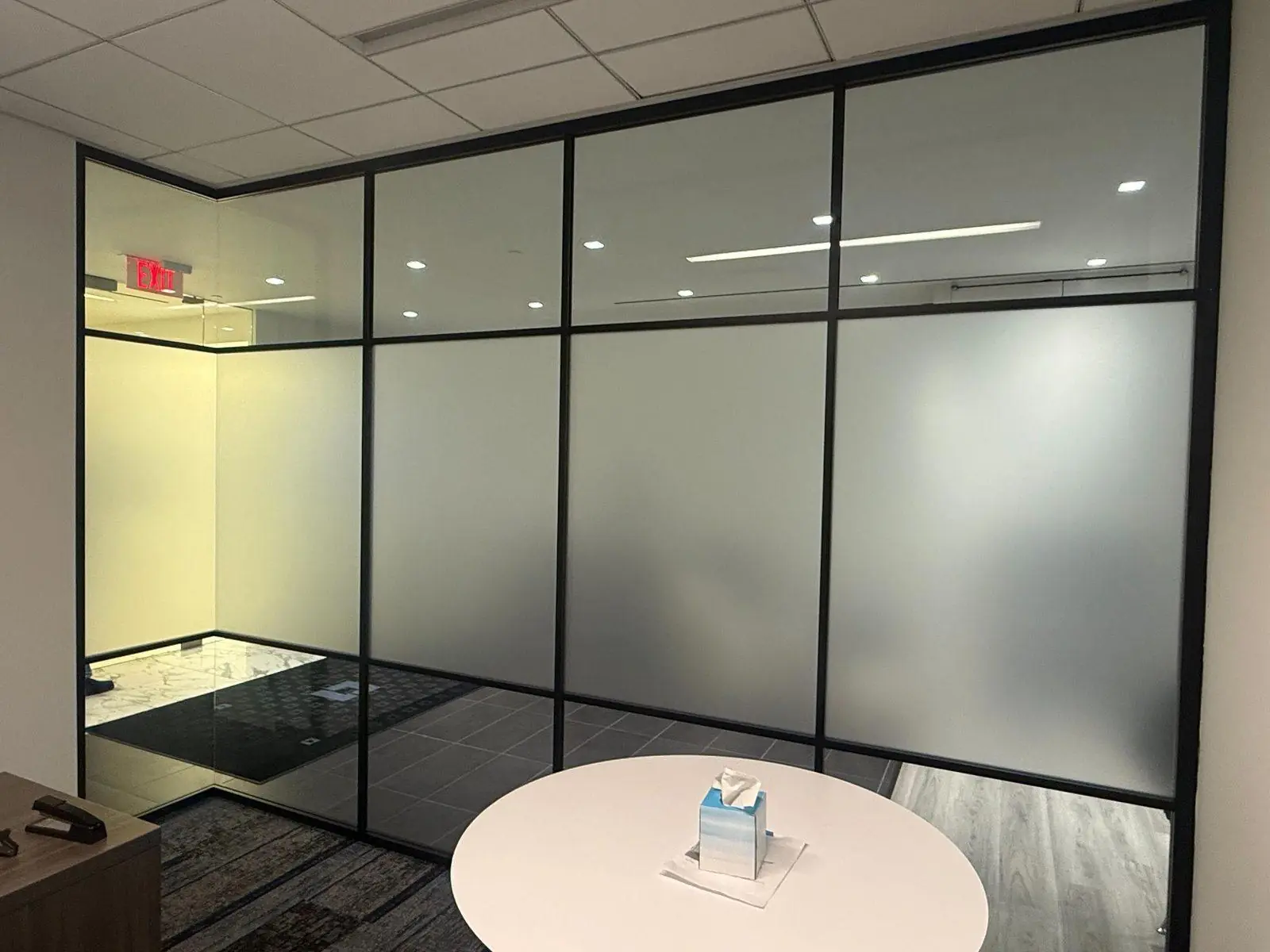
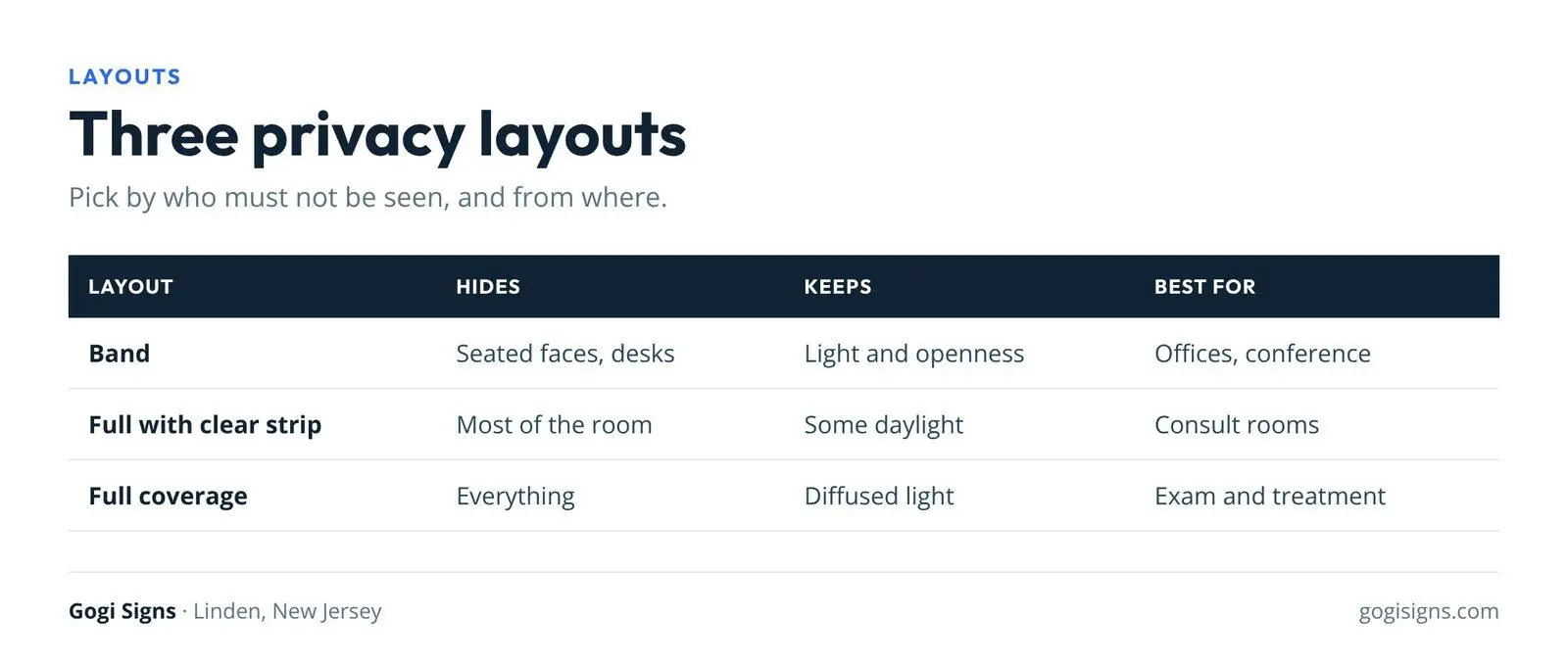
Three Common Layouts
| Layout | Best for |
|---|---|
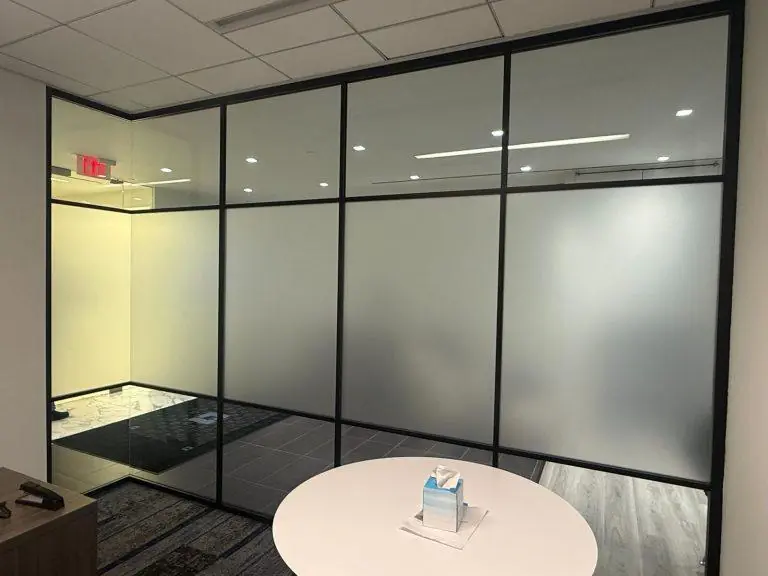
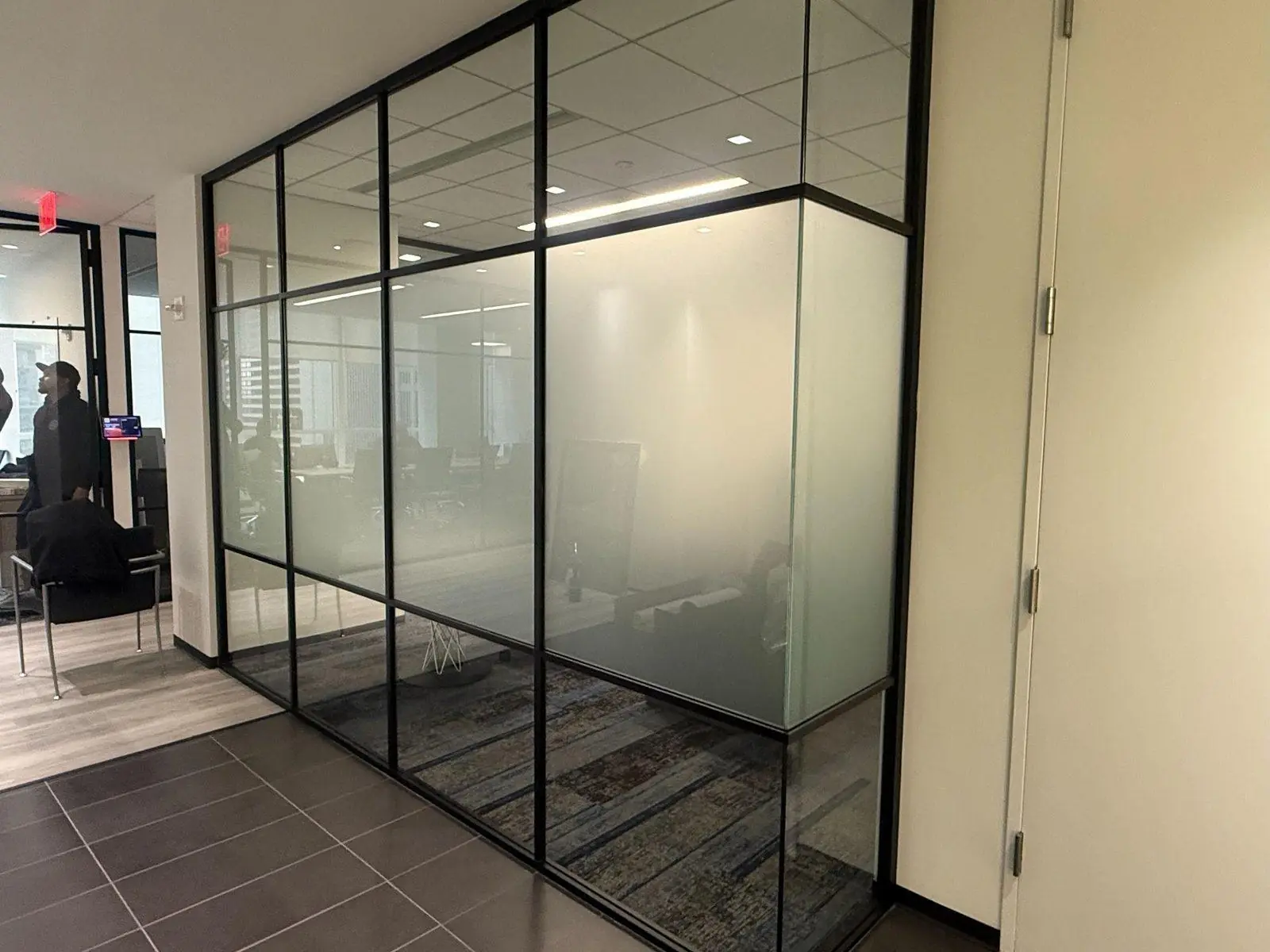
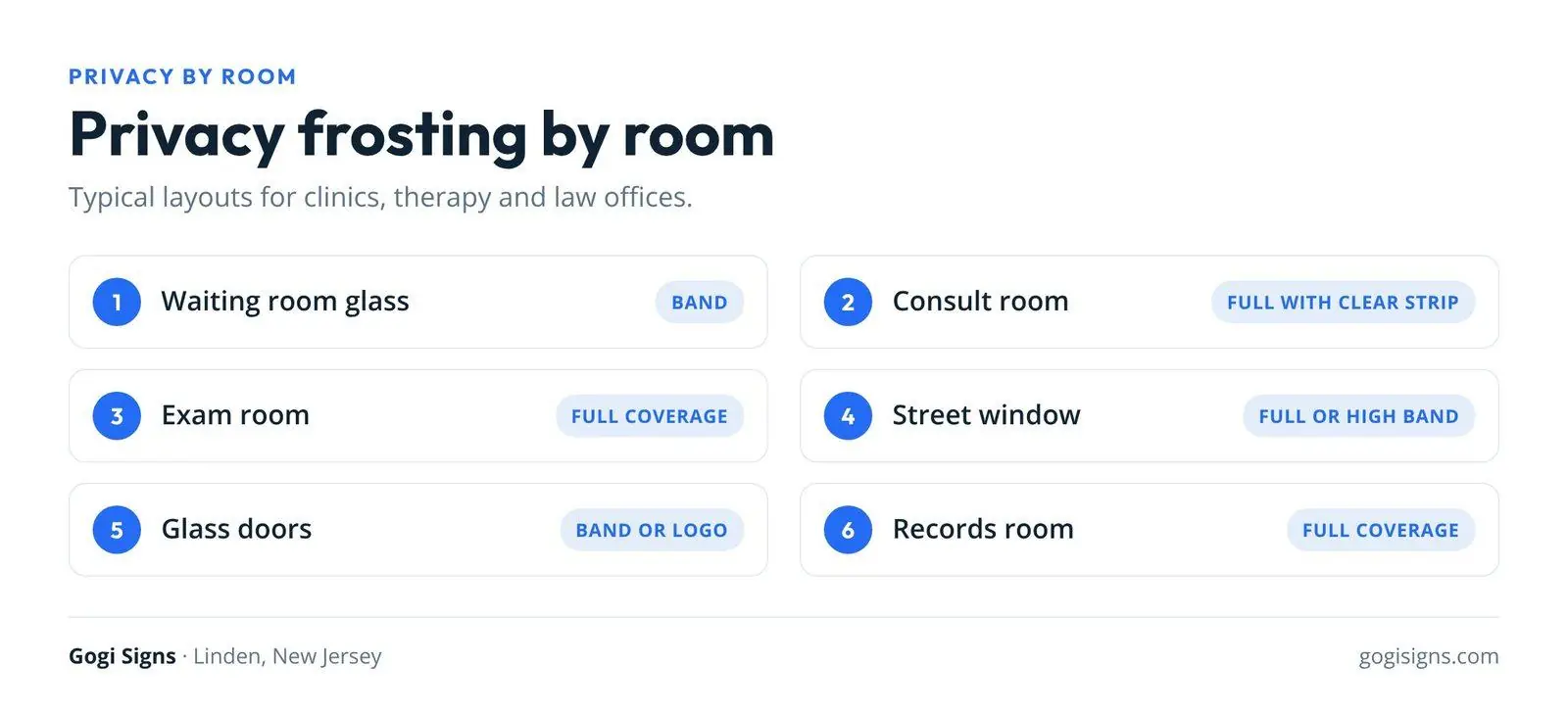
| Band at seated eye level | Offices and conference rooms where some openness is welcome |
| Full height frost with a clear strip | Consult rooms and attorney offices |
| Full coverage | Exam rooms, treatment rooms and street facing windows |
Street Windows
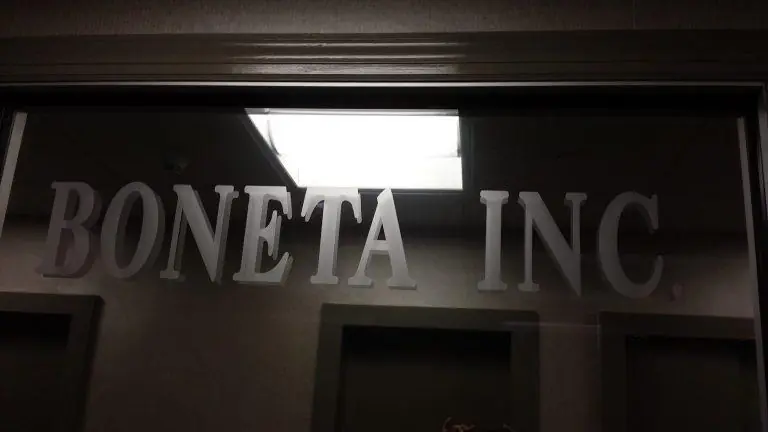
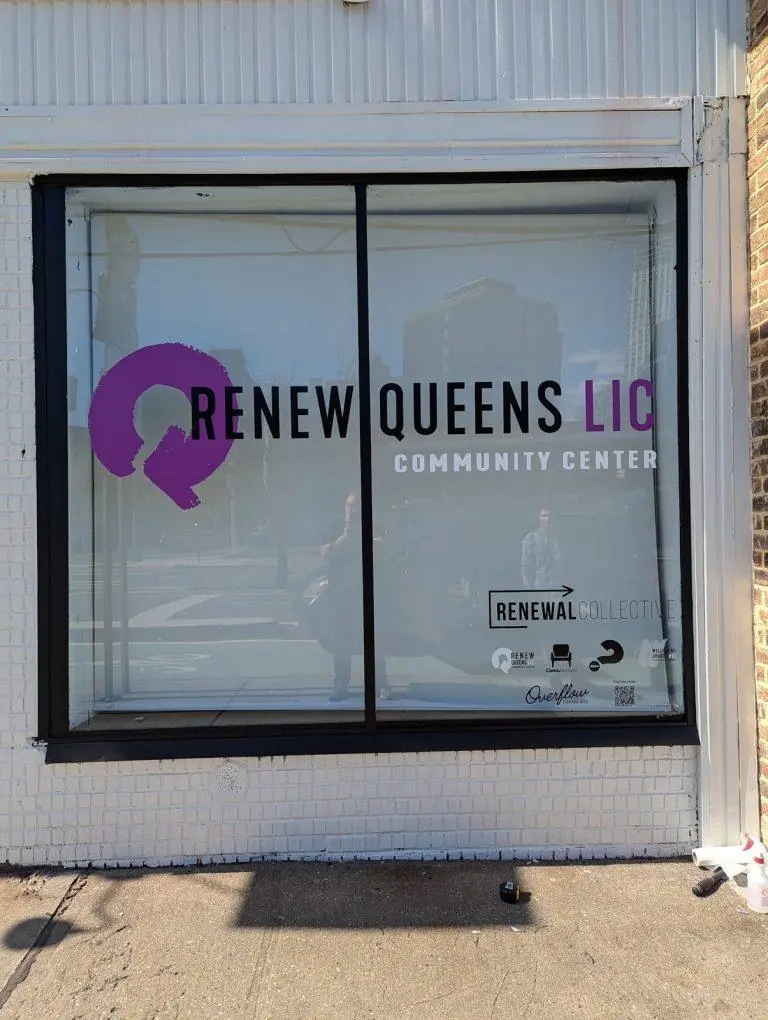
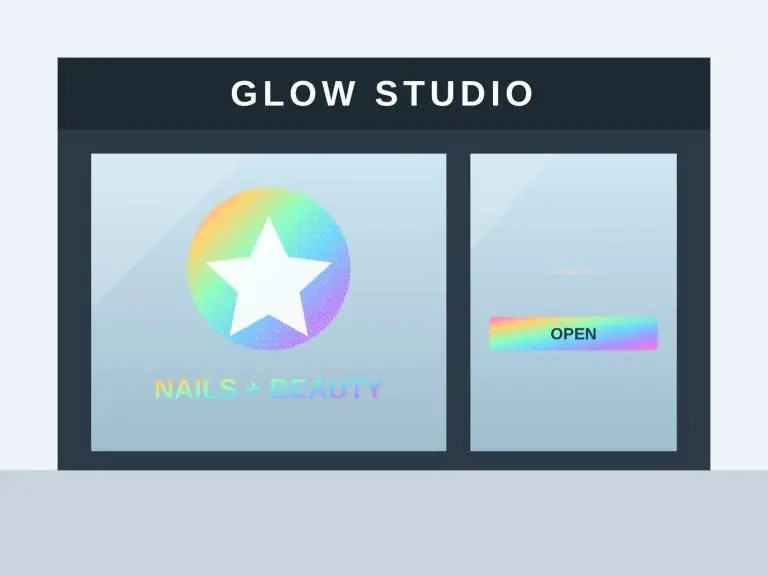
Ground floor offices facing a sidewalk often need full coverage or a high band on the lower part of the glass. A logo or practice name can be cut out of the frost so it reads from outside. Check local window sign rules before adding large logos; see our guide to window coverage rules.
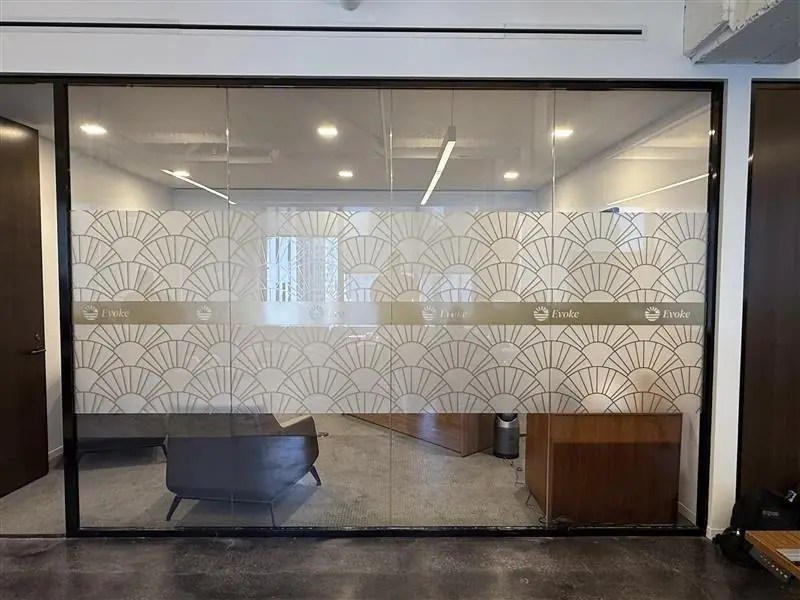
Patterns and Branding
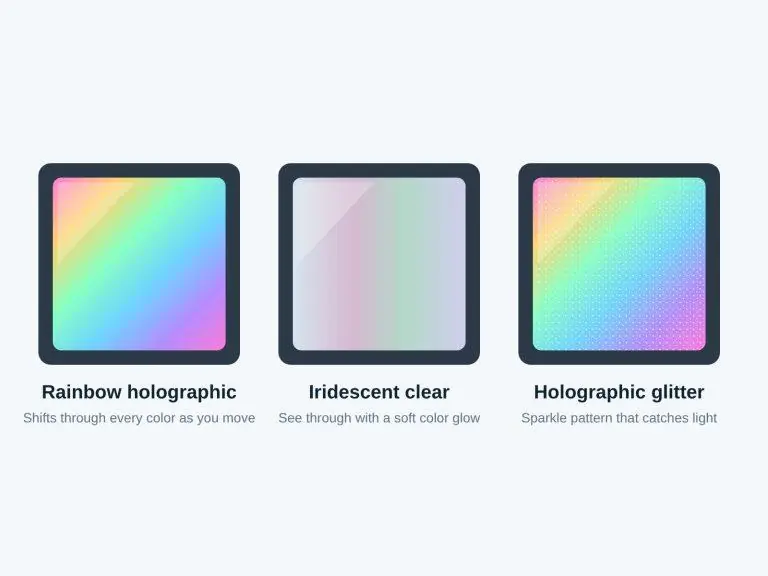
Frost does not have to be plain. Lines, dots, gradients and printed patterns add style while keeping privacy. A gradient that is solid at the bottom and fades toward the top keeps the room bright. See frosting vs etched glass for how these compare.
Safety Markings on Glass
Glass doors and full height panels often need visible markings so people do not walk into them. A frosted band or logo at eye level does this job and looks intentional. Your building code and landlord may set specific rules.
Night Privacy
Frosting works day and night, unlike some reflective films that become see through when the lights are on inside. For offices open in the evening, that matters.
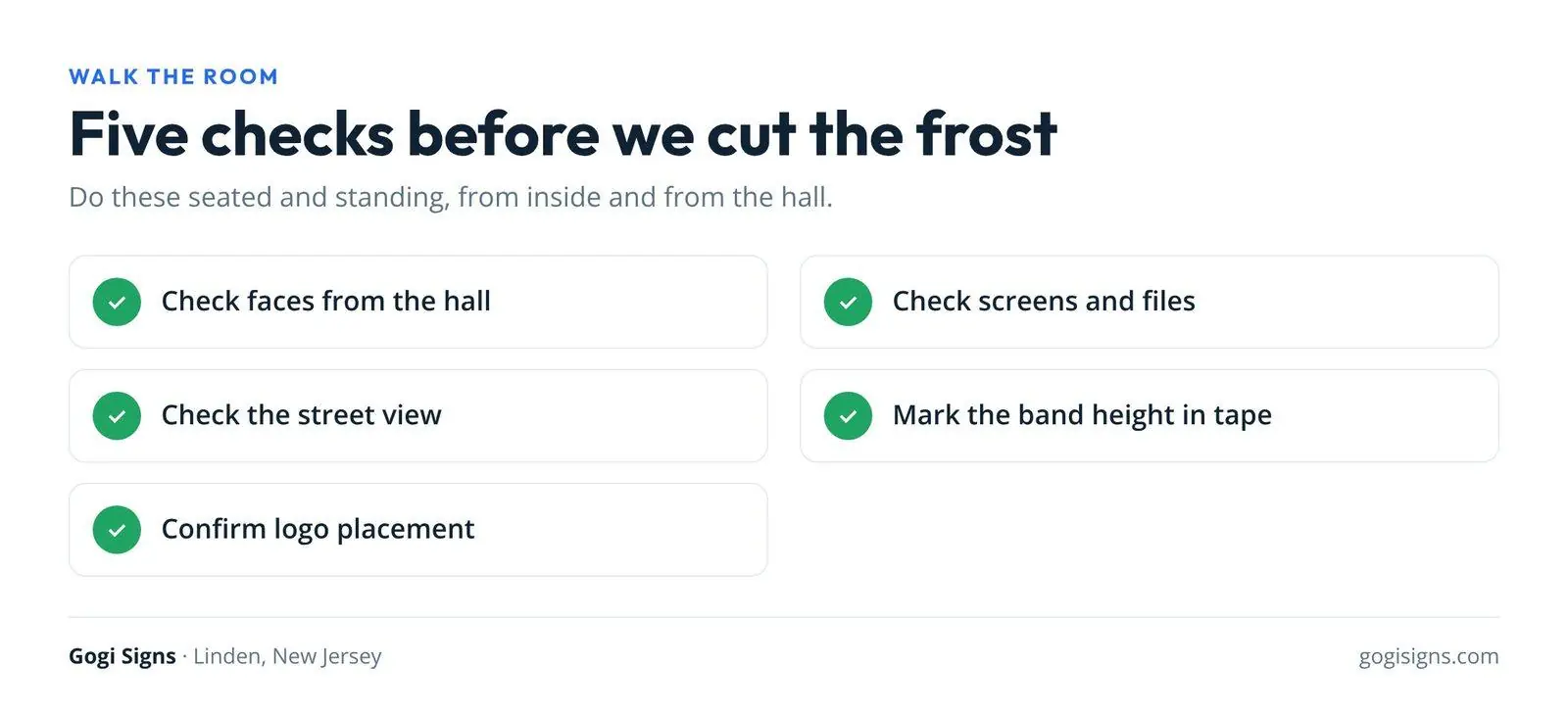
Sizing the Band
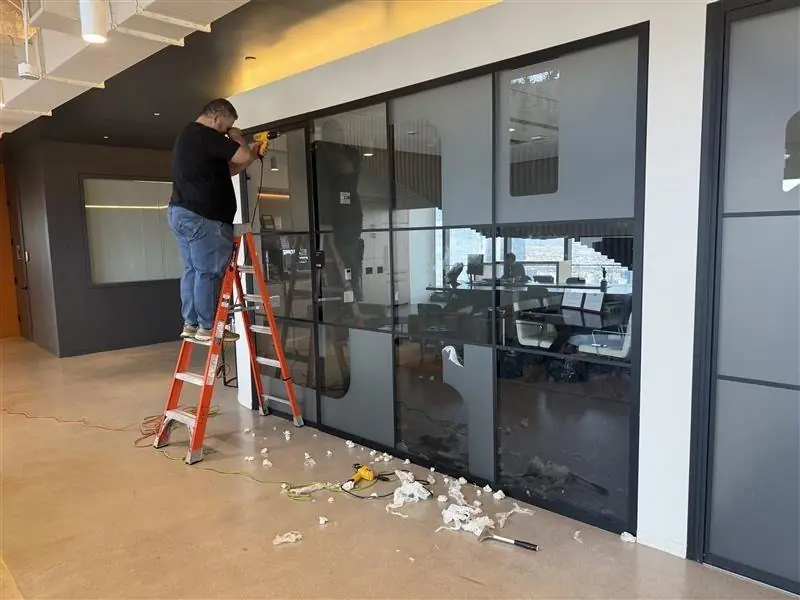
For a band, the usual goal is to cover seated eye level and the top of a desk. In practice that often means a band starting low and running to around head height for a seated person, with the exact height checked on site. In rooms where people stand, such as treatment rooms, full height frost is safer. We mark the height on the glass with tape before we cut, so you can sit and check the view from the hall.
Signs That Pair With Frosting
Clinics and law offices also need clear room identification. Frosted glass handles privacy, while room signs at the door handle wayfinding and, where required, raised text and braille under the ADA standards. See our ADA signs and office signs.
Cleaning in Clinical Spaces
Frosted film is wiped with mild cleaners and a soft cloth. Clinics that disinfect glass often should check the film data sheet for chemical resistance, and avoid scraping blades near the edges. Inside mounting keeps the film out of reach of carts and chairs.
How We Handle Window Frosting Jobs
Every window frosting job at Gogi Signs follows the same path from our Linden, New Jersey shop. It starts with a site survey or photos of the space, then a scaled layout from our sign design team. We check the town rules through our sign permits service when the graphic counts as a sign, cut or print it in house through our vinyl cutting and print shop, and our own crews handle graphics installation across New Jersey and New York City. When old graphics or signs have to come down first, the sign removal crew does it in the same visit.
Most clients pair window frosting with related work such as window decals, wall decals and silver leaf decals. See the full range on our vinyl graphics page or browse more guides on the Gogi Signs blog.
Common Questions About Privacy Frosting
Does privacy film meet HIPAA rules?
Privacy film supports patient privacy, but compliance depends on your full privacy practices, not just the glass.
Can you frost just part of a glass wall?
Yes. Bands, panels and shapes can be cut to any size.
Can it be installed after hours?
Yes. We often frost medical and law offices before opening or on weekends.
How long does frosted film last indoors?
Quality frosted films are rated for many years on interior glass, such as ORACAL 8810.
Can frosting carry the practice name?
Yes. The name can be cut out of the frost or added as a darker vinyl on top.
Does frosting help with glass door safety?
A frosted band at eye level makes glass doors and walls easy to see.
Bright Rooms, Private Conversations
Pick the layout by room, test the height seated and standing, and add branding where it helps. See more examples at Signs NY window frosting and see the privacy film from Pixel Wraps, our sister graphics shop. Plan yours on our window frosting page.
Sources and further reading
- ORAFOL: ORACAL 8810 frosted glass film
- 3M: architectural glass finishes
- U.S. Access Board: ADA standards
- NJ Department of Community Affairs: codes and standards
- 3M: graphics and signage films
- Avery Dennison: graphics solutions
- ORAFOL: ORACAL 651 intermediate calendered film
- ORAFOL: ORACAL 751C high performance cast film
- Avery Dennison: perforated window films
- eCode360: municipal codes
- Signs NY: window frosting
- Pixel Wraps: privacy film