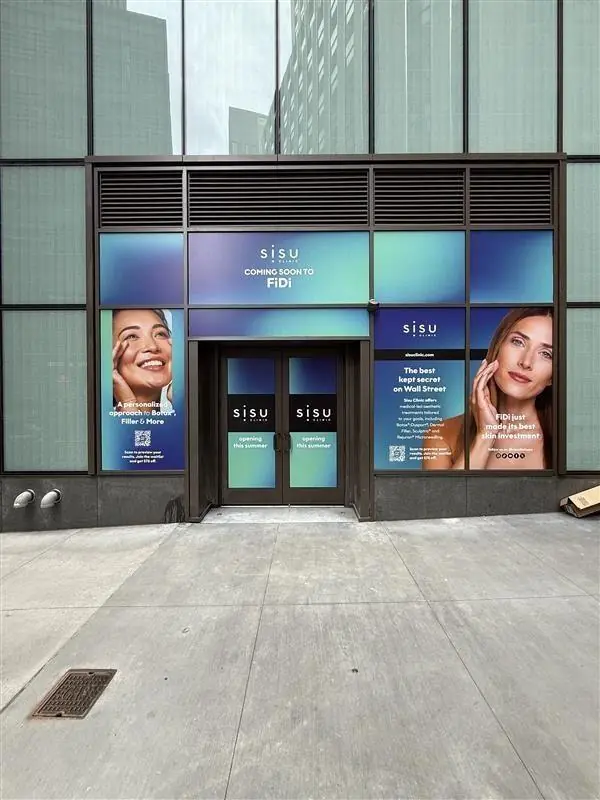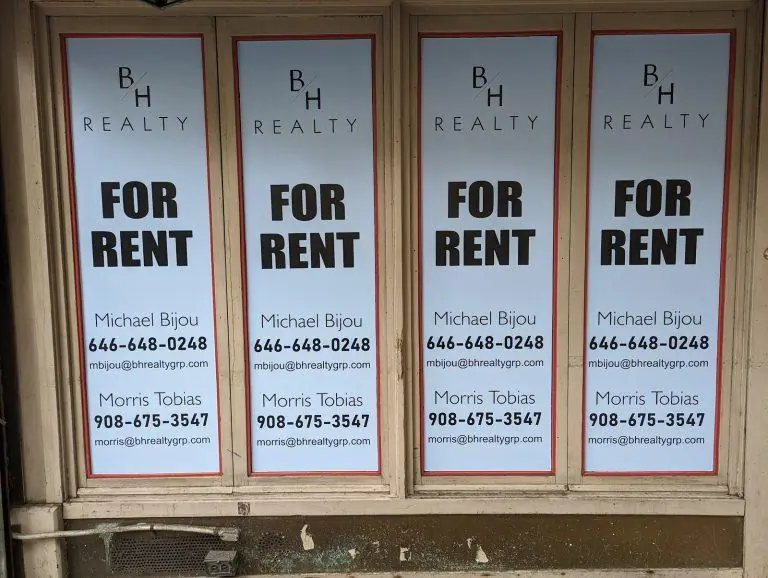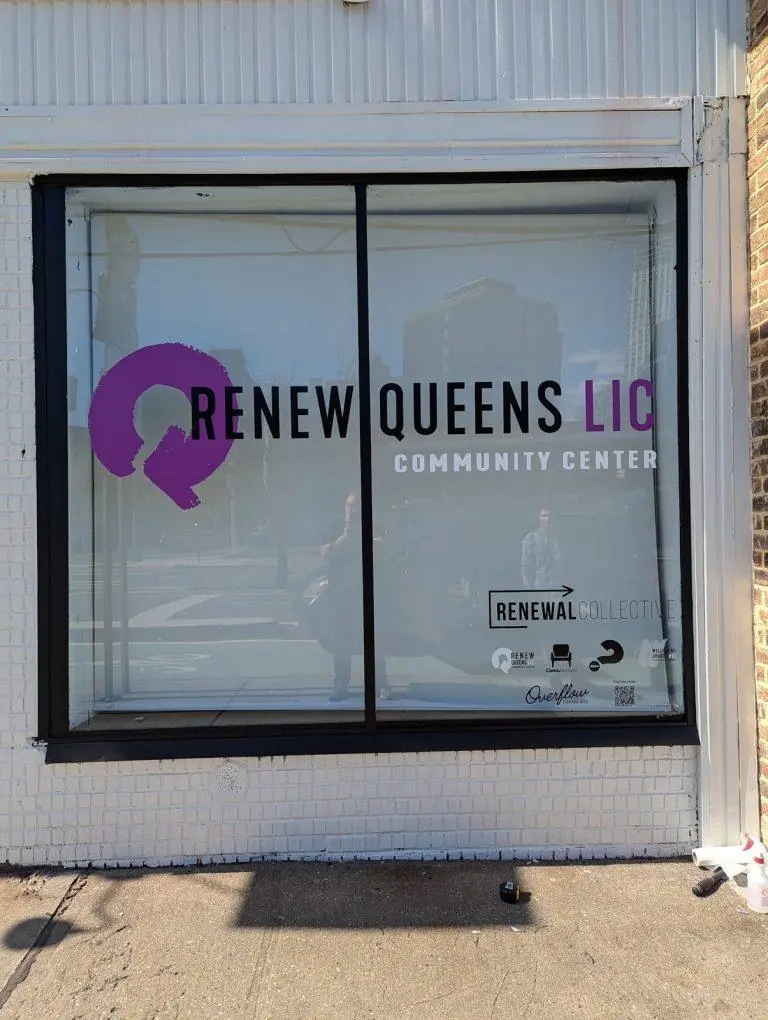
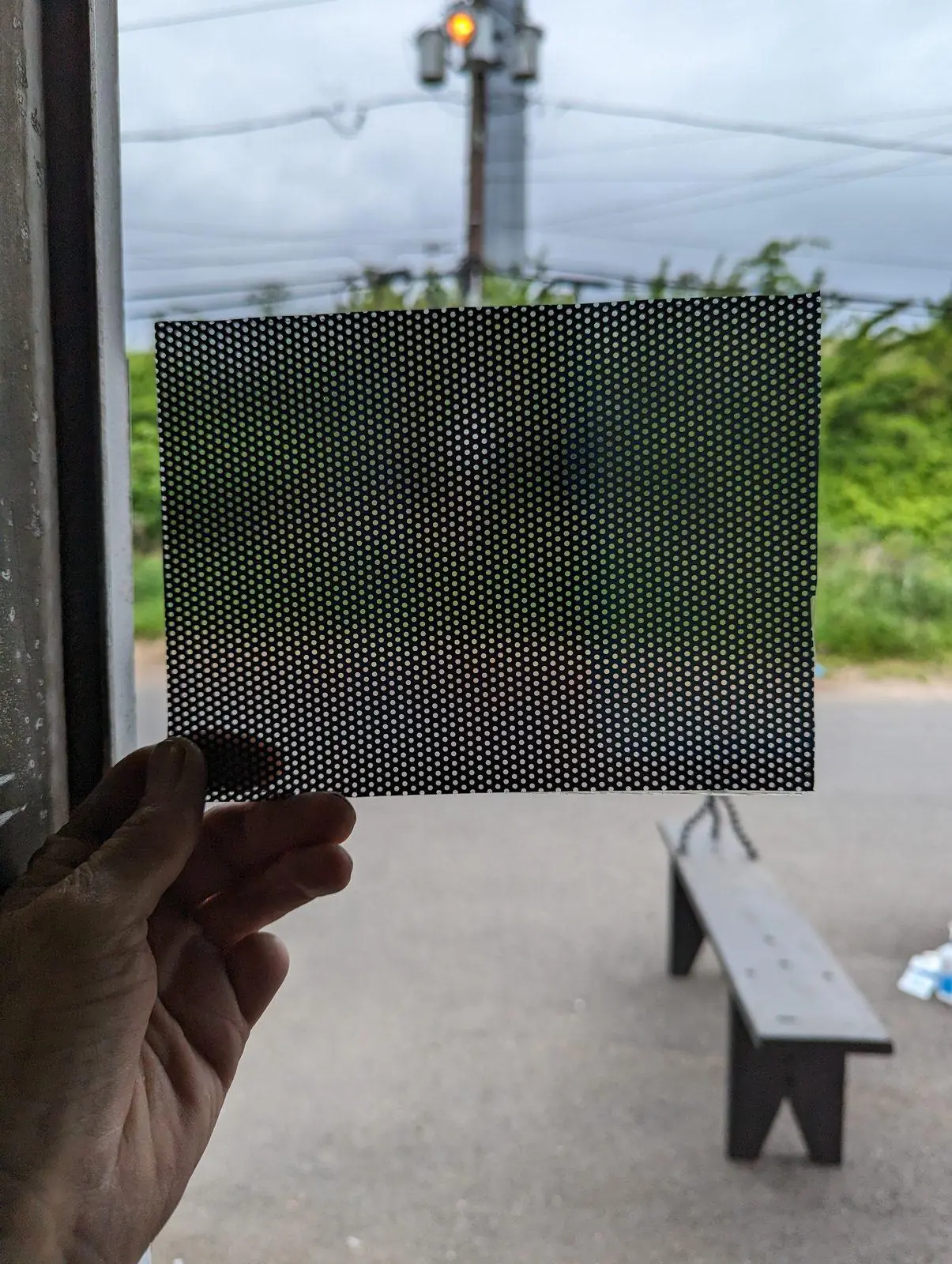
Perforated window film lets a storefront carry a full color picture while the people inside still see the street. It looks like magic until you hold a piece up to the light: the film is full of small holes.
In this guide
- Perforated Film at a Glance
- How It Works
- 50 to 50 vs 70 to 30
- What Happens at Night
- How Long It Lasts
- Where It Works Best
- Design Tips for Perforated Film
- Installing Perforated Film
- Perforated Film on Vehicles
- Cost Compared With Solid Wraps
- How We Handle Window Wraps Jobs
- Common Questions About Perforated Window Film
- Check Local Rules
Perforated Film at a Glance
How It Works
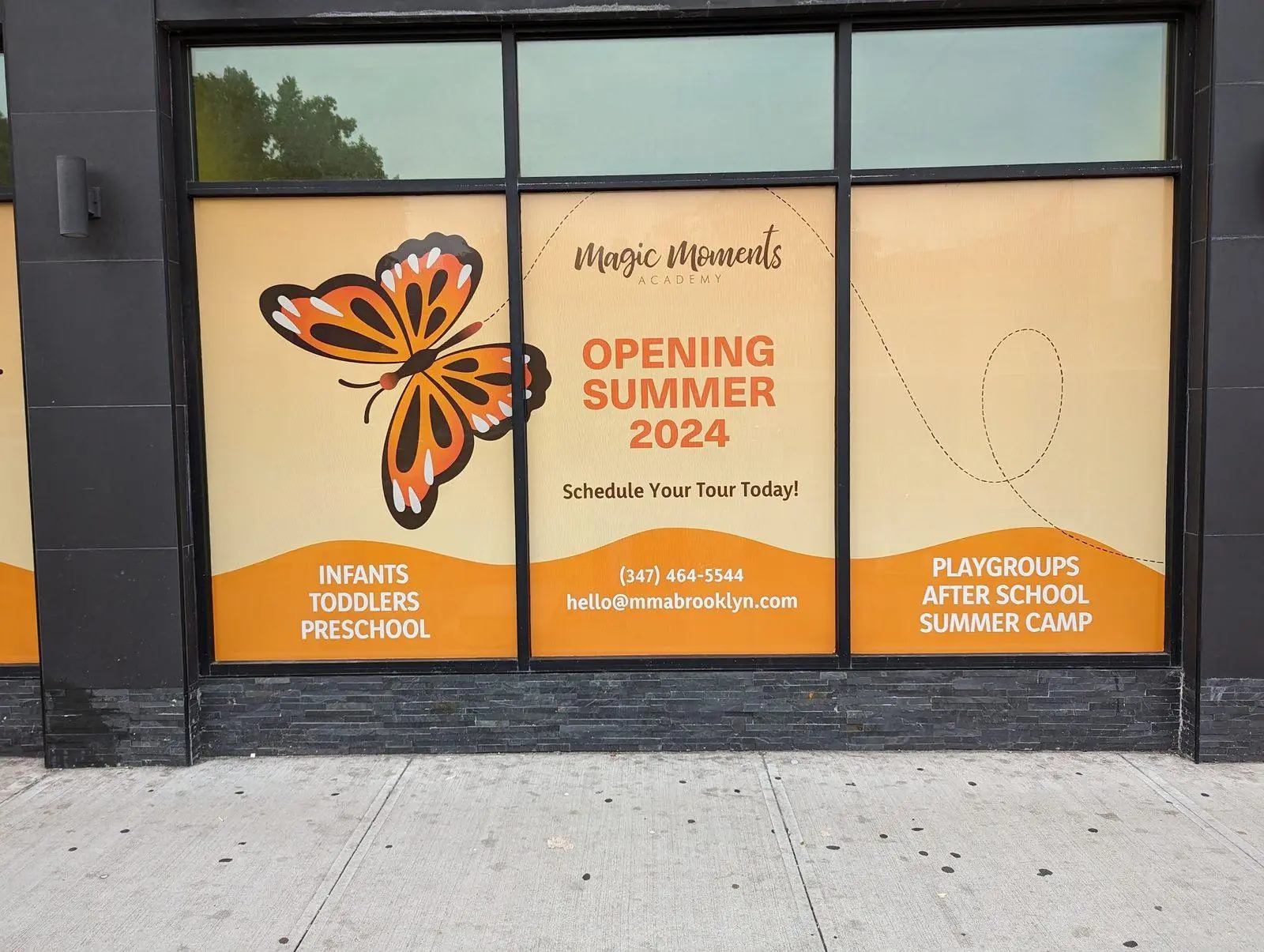
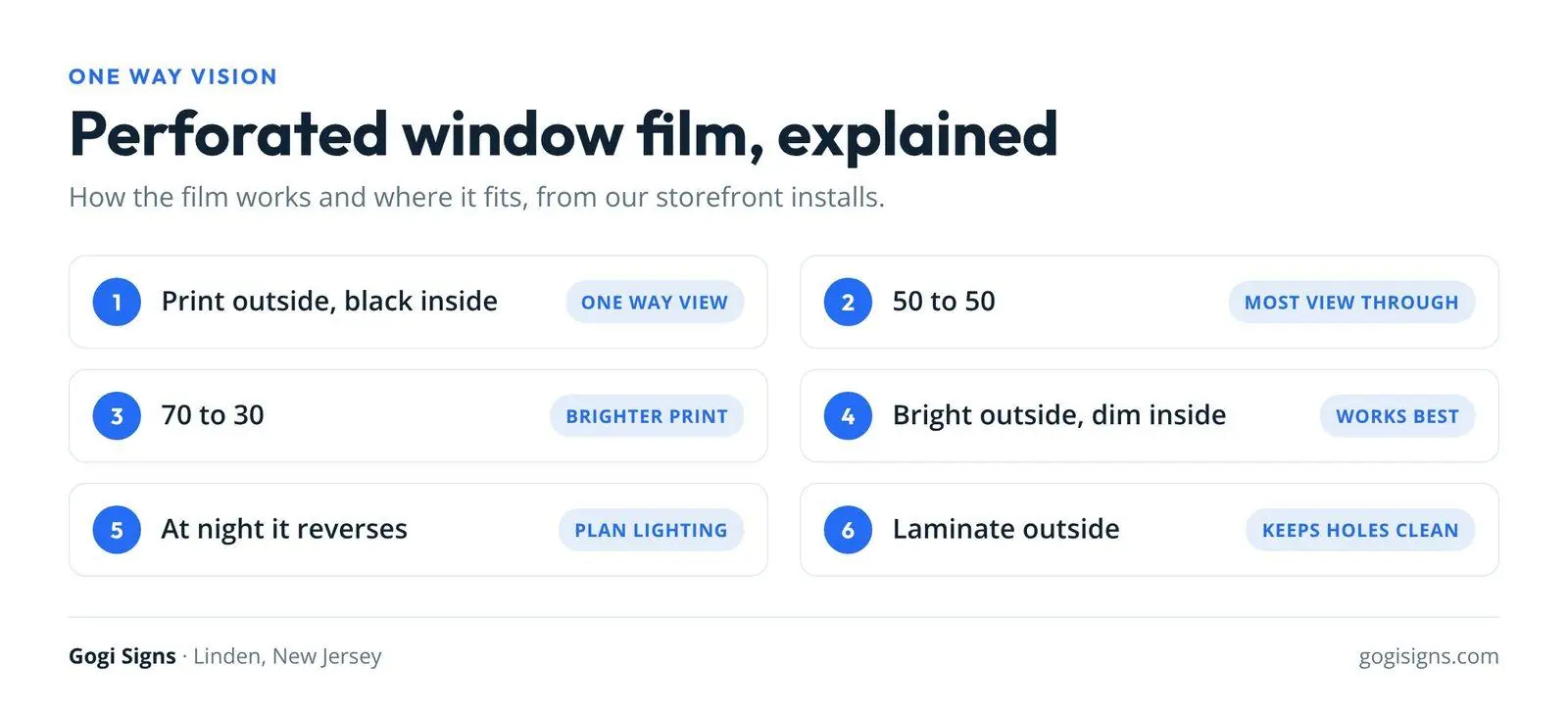
The film is white vinyl punched with thousands of holes and printed on the outside face. The back is black. From outside, your eye sees the printed surface. From inside, the black back disappears and the bright street shows through the holes.
The effect depends on light. It works when it is brighter outside than inside, which is most of the day.
50 to 50 vs 70 to 30
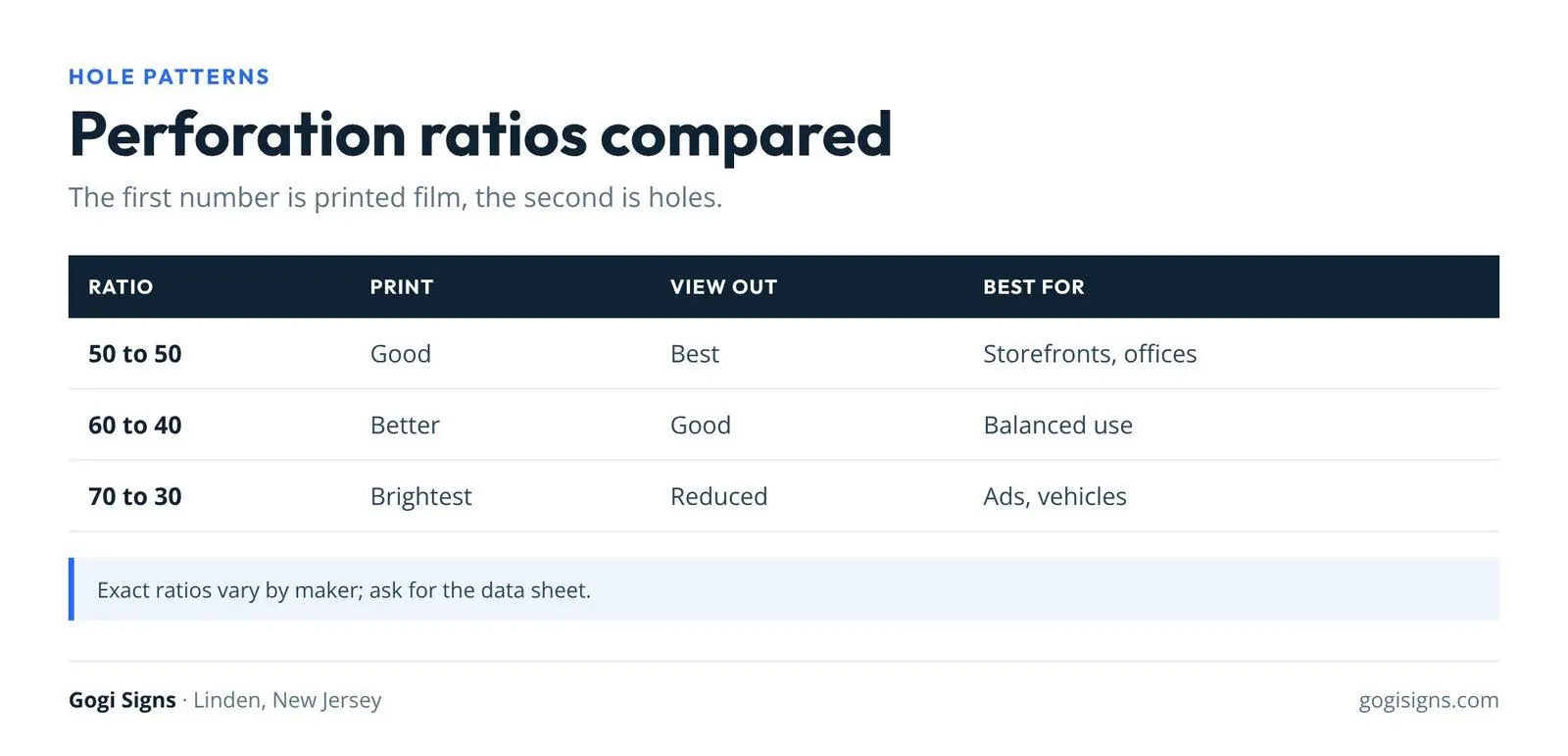
The numbers are the share of printed film to open hole.
- 70 to 30: more printed surface, so a sharper, brighter picture. A little less view and light from inside.
- 60 to 40: a middle ground.
- 50 to 50: half open, so more view and daylight inside, with a softer picture outside.
For storefronts where the picture matters most, 70 to 30 is common. For offices and clinics where people sit by the window, 50 to 50 keeps the room brighter.
What Happens at Night
After dark, with the lights on inside, the effect flips: people outside can see in through the holes, and from inside you see your own reflection. If privacy matters at night, pair the film with blinds or choose solid vinyl for those panes. For privacy around the clock, frosted film is often the better tool.
How Long It Lasts
Perforated film is made for short to mid term graphics, usually about 1 to 3 years outside depending on sun and the film. An optically clear laminate keeps rain and dirt out of the holes and helps the print last. Manufacturer guides, like Avery Dennison’s perforated window films, list ratings for each series.
Where It Works Best
- Retail and restaurant storefronts that want a full picture.
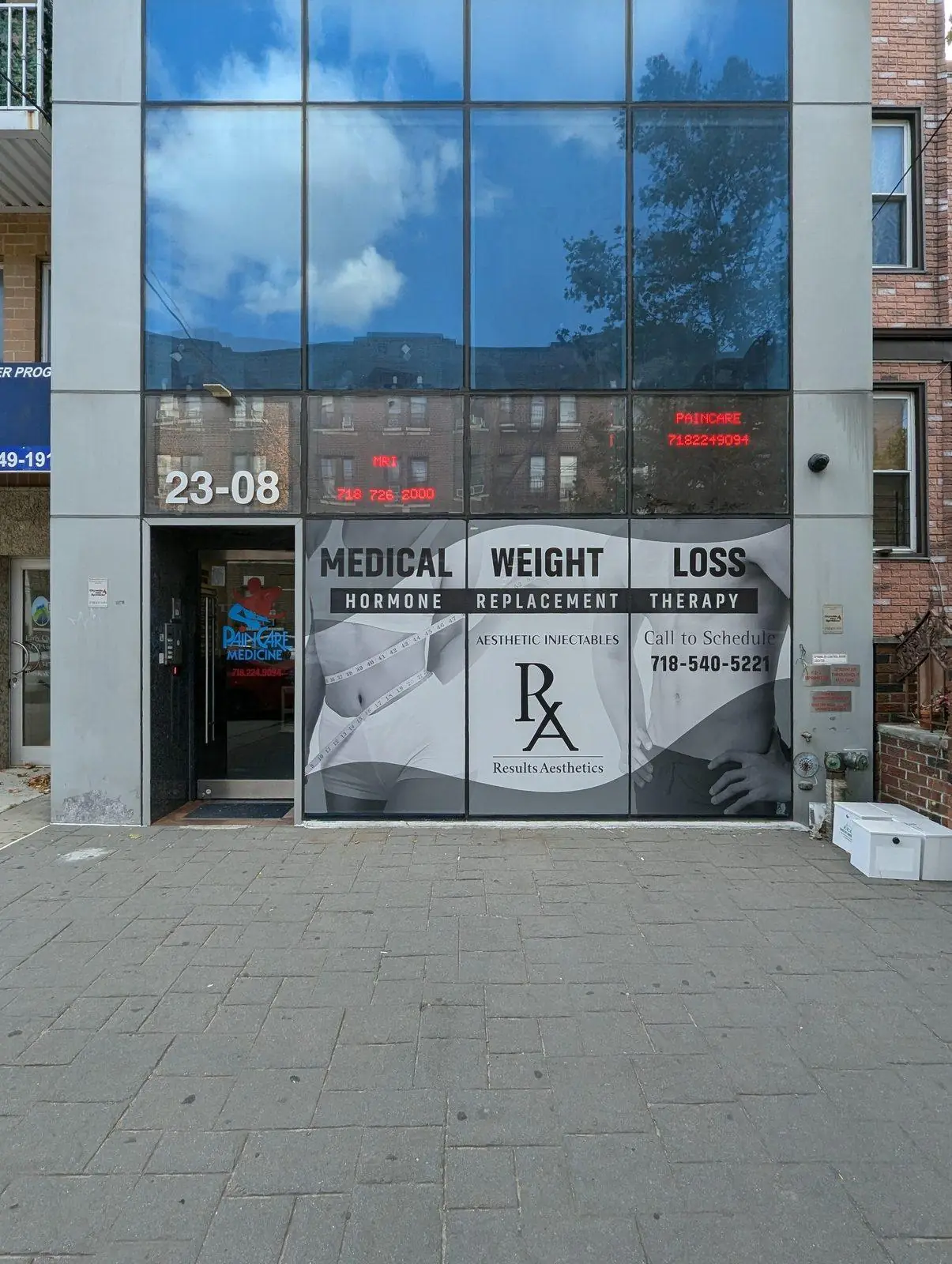
- Clinics and med spas that want privacy by day.
- Coming soon and vacant units, see window wraps.
- Rear windows on vans and trucks; vehicle wrap shops like see the vehicle wraps from Pixel Wraps, our sister graphics shop use it on fleets.
Design Tips for Perforated Film
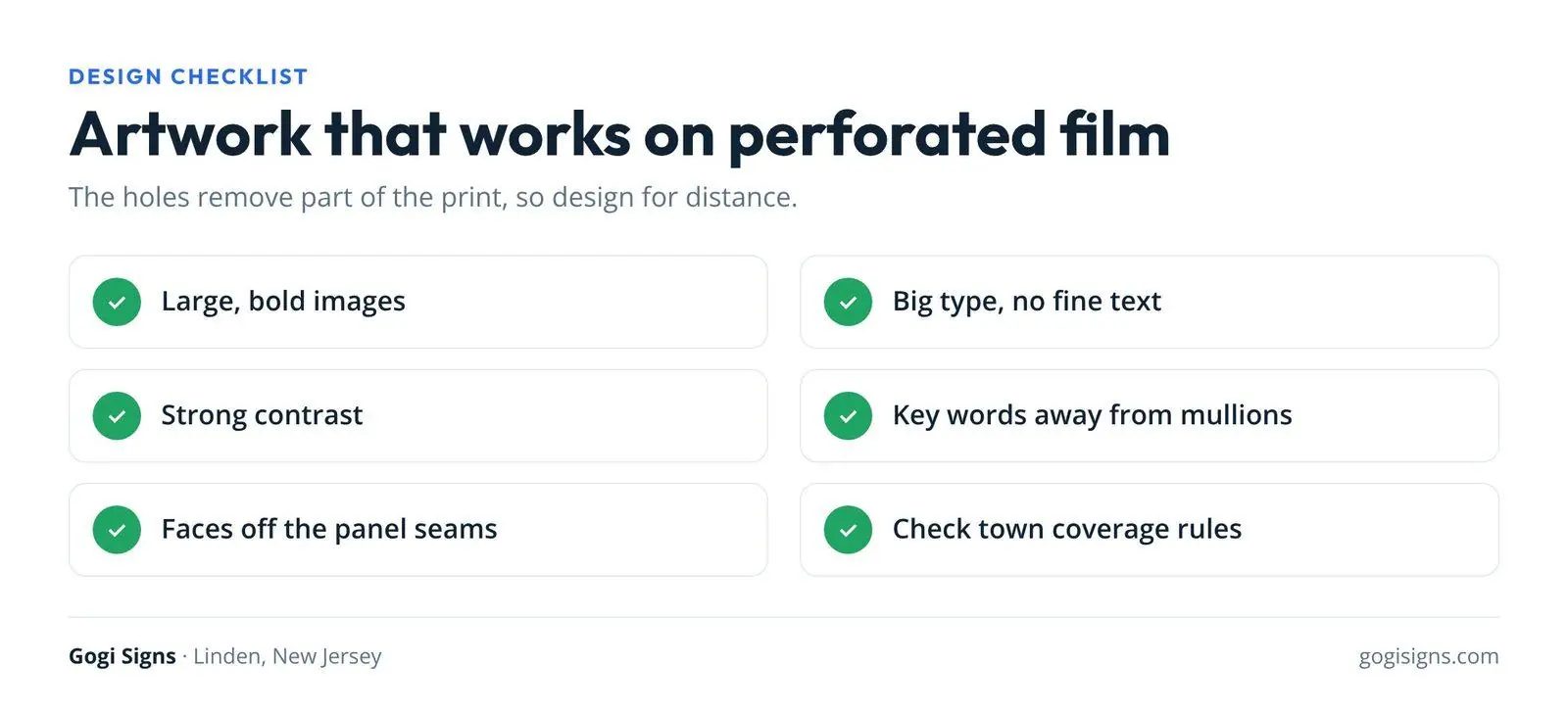
- Use bold images and large text. Fine print gets lost in the holes.
- Keep important text out of window mullions and seams.
- High contrast colors read best from the sidewalk.
- Leave the door glass clear or use a smaller decal for safety and visibility.
Installing Perforated Film
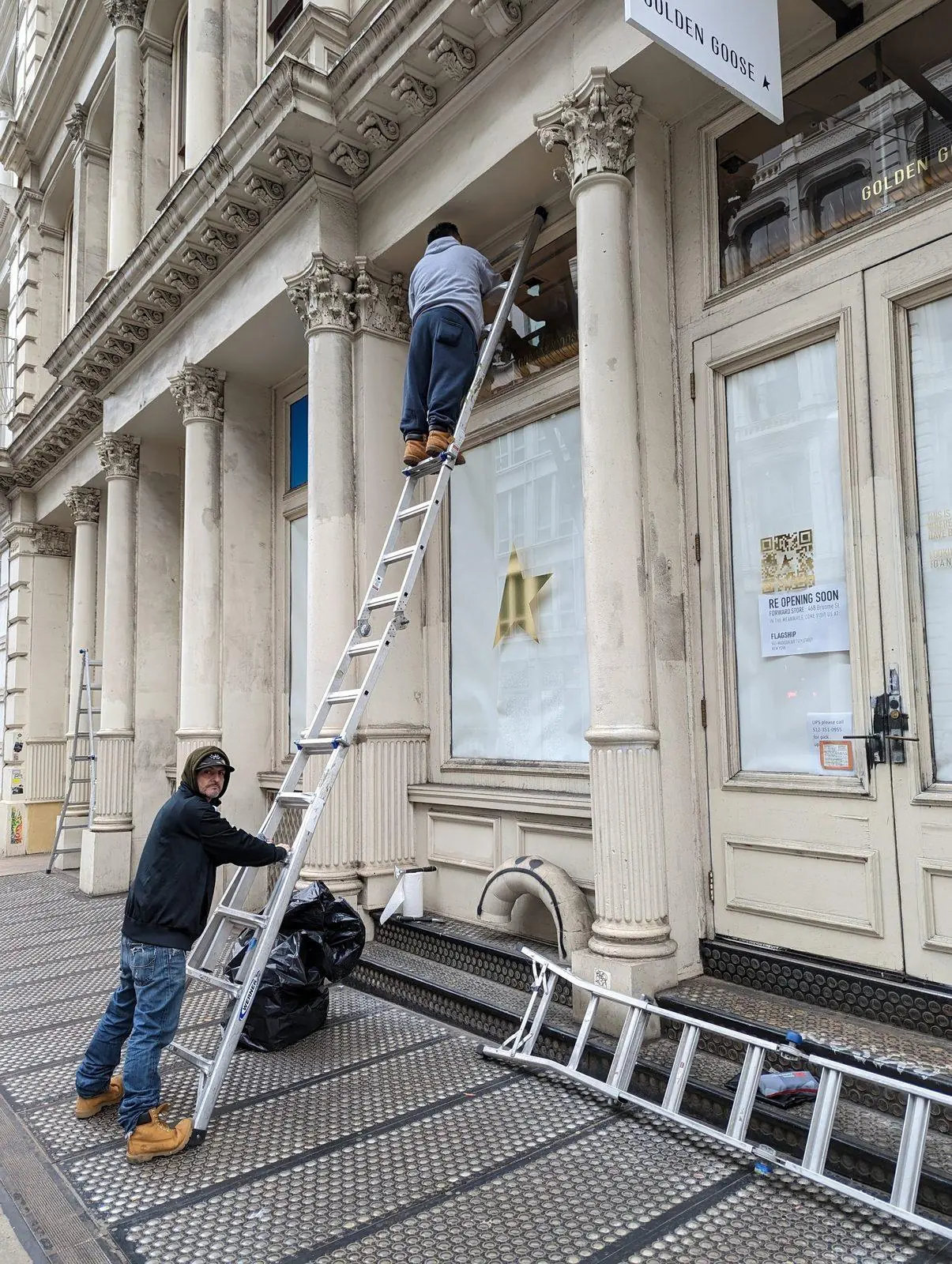
Perforated film is usually applied to the outside of the glass, so the print faces the street and the black backing faces inside. Panels are overlapped or butted at the mullions. Many installs add an optically clear laminate on outside panels to keep rain and dirt out of the holes, which keeps the view through clear. Our graphics installation crews handle storefronts and tall windows with ladders and lifts.
Perforated Film on Vehicles
The same film goes on rear and side windows of vans and buses, where drivers still need to see out. Vehicle rules on window coverage differ from building rules, so check your state rules for each window position. Our sister graphics shop handles vehicle graphics every week; see its perforated window film work.
Cost Compared With Solid Wraps
Perforated film costs a little more per square foot than solid printable film and usually needs a laminate outside. In return, staff keep their view out and the store keeps natural light. For a closed or vacant space where no one needs to see out, a solid wrap is the lower cost choice; see vacant storefront wraps.
How We Handle Window Wraps Jobs
Every window wraps job at Gogi Signs follows the same path from our Linden, New Jersey shop. It starts with a site survey or photos of the space, then a scaled layout from our sign design team. We check the town rules through our sign permits service when the graphic counts as a sign, cut or print it in house through our vinyl cutting and print shop, and our own crews handle graphics installation across New Jersey and New York City. When old graphics or signs have to come down first, the sign removal crew does it in the same visit.
Most clients pair window wraps with related work such as window decals, window frosting and wall wraps. See the full range on our vinyl graphics page or browse more guides on the Gogi Signs blog.
Common Questions About Perforated Window Film
Does perforated film block heat?
It shades the glass and can cut glare and some heat, but it is not a solar control film.
Can it go on the inside of the glass?
It can, but the view through and the print look best when it goes on the outside face.
Can I clean it?
Yes, gently, with a soft brush or sponge and mild soap. Avoid pressure washers aimed at the edges.
Will water collect in the holes?
A clear laminate over the film keeps rain and dirt out of the holes.
Can perforated film go on the inside of the glass?
It can, but the view and print both look softer. Outside mounting gives the clearest result.
Does perforated film keep heat out?
It shades the glass a little, but it is not a solar control film.
Check Local Rules
Some towns count perforated film as window signage and limit coverage. Ask before you print. New York shops face their own rules; Signs NY window wraps covers how they handle storefronts in the city.
Sources and further reading
- Avery Dennison: perforated window films
- 3M: graphics and signage films
- eCode360: municipal codes
- NYC Buildings: sign permits
- ORAFOL: ORACAL 651 intermediate calendered film
- ORAFOL: ORACAL 751C high performance cast film
- Avery Dennison: graphics solutions
- 3M: Preferred Graphics Installer program
- ORAFOL: ORACAL 8810 frosted glass film
- Avery Dennison: Supreme Wrapping Film
- Pixel Wraps
- Signs NY: window wraps