A food truck has a few seconds to win a customer. People see it from across a parking lot, read the name, look for the menu and decide whether to walk over. Good food truck wrap design makes each of those steps easy, and a crowded design makes people keep walking.
This guide covers where the logo goes, how to lay out menu panels by the window, which food photos print well and what to keep clear for permits and equipment.
In this guide
Design at a Glance
Start With the Serving Side
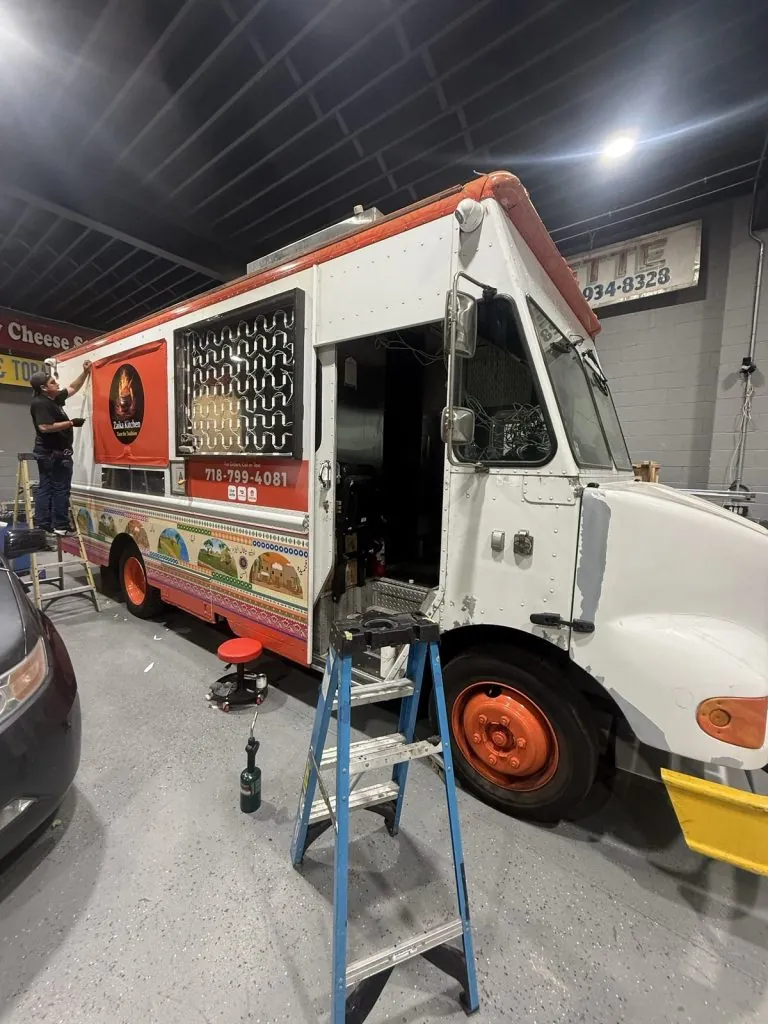
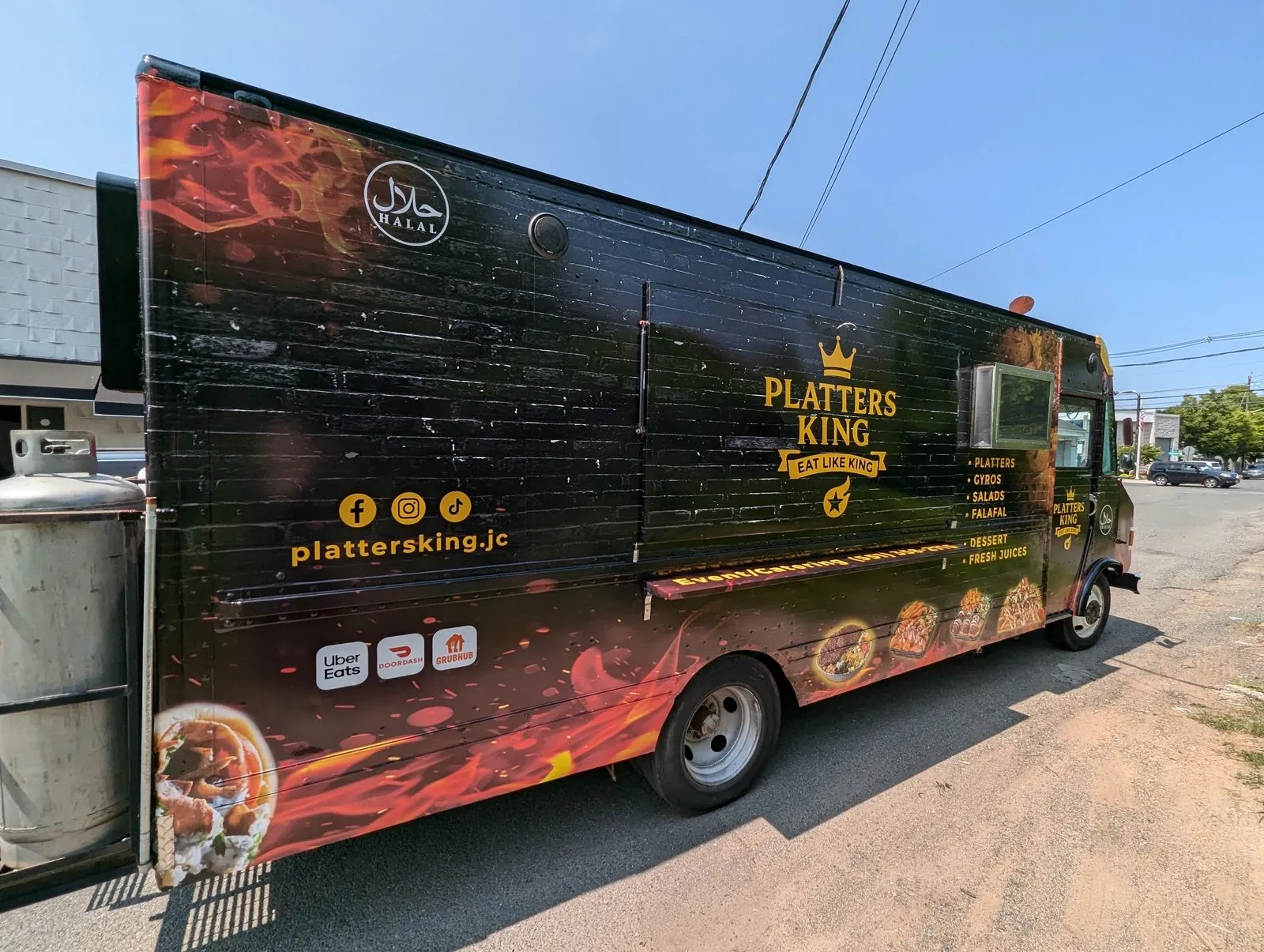
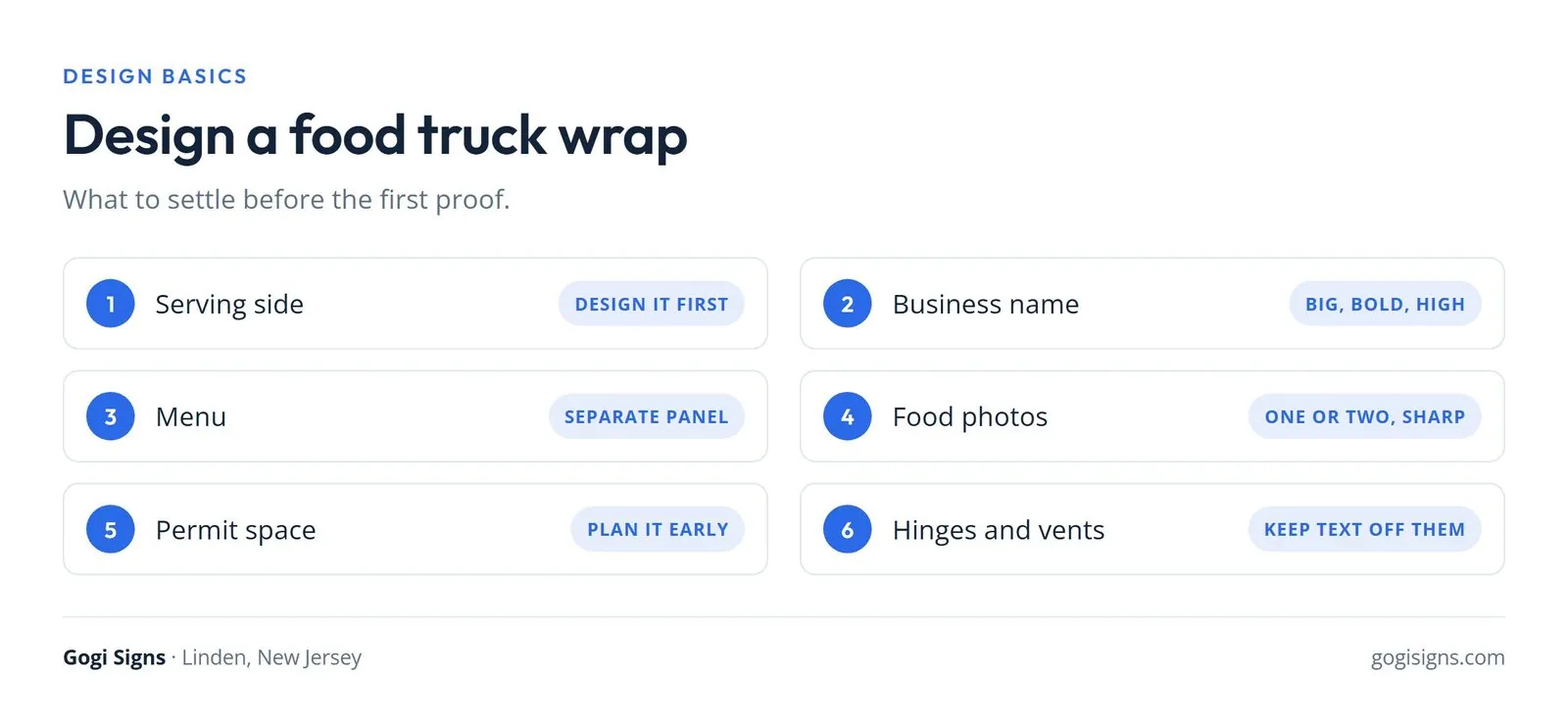
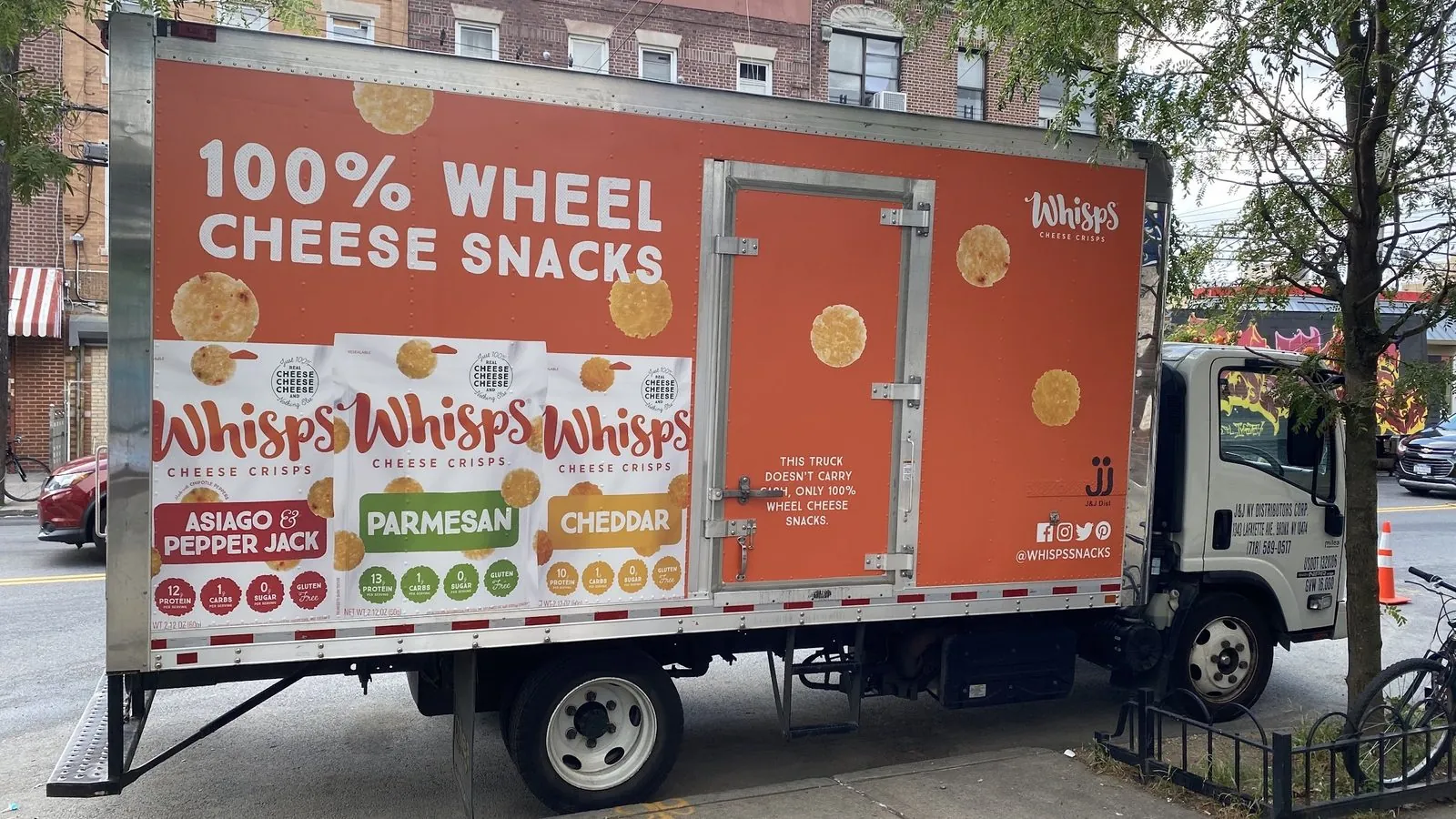
The serving side does most of the selling, so we design it first and fit the other sides around it. The logo usually sits high on this side, above the window line, so it shows over a line of people.
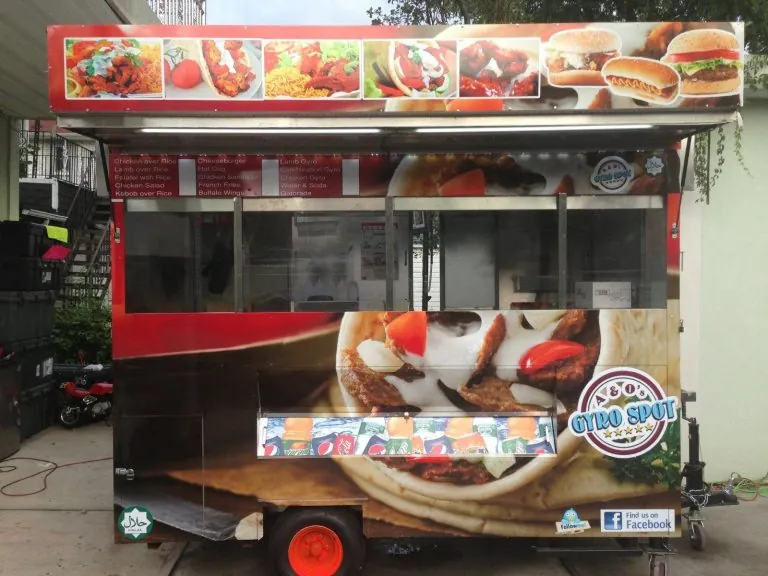
Keep the area around the window calm. A busy pattern behind the menu makes prices hard to read, and the awning or hatch will cover part of the panel when it is open. In New York City, the space for the permit decal sits next to the main service window, so we plan that spot before anything else goes on the proof. Our guide to food truck permit decals explains the rule.
What Goes on Each Panel
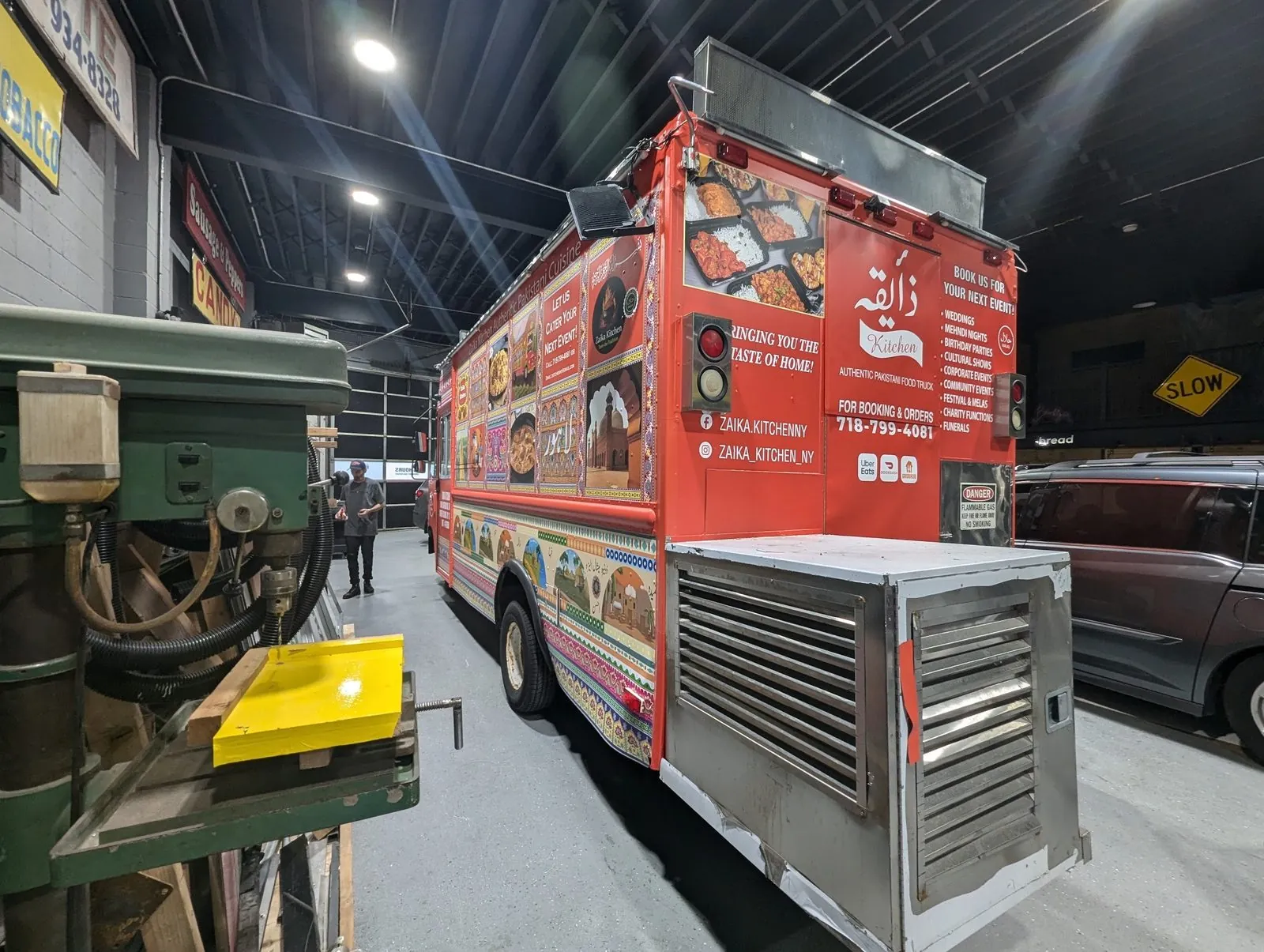
Each side of the truck is seen from a different distance, so each one has a different job.
| Panel | What to put there | Keep in mind |
|---|---|---|
| Serving side | Logo, menu panels, social handle | Leave the permit space and window frame clear |
| Opposite side | Big logo and one hero food photo | Seen from traffic, so fewer words |
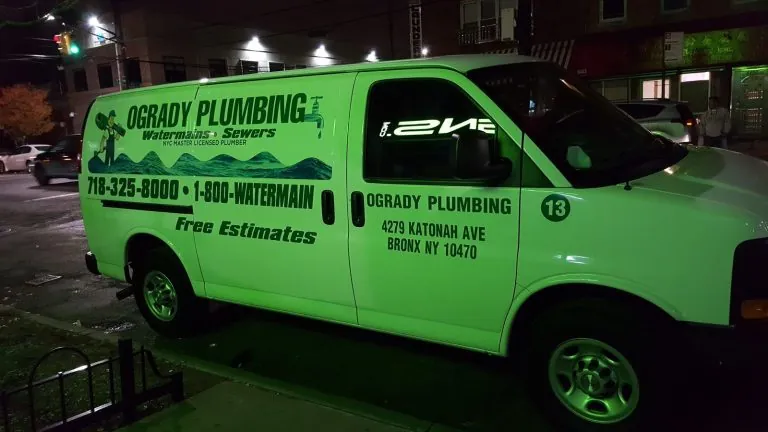
| Rear doors | Name, website and phone or booking line | Read by drivers behind you at lights |
| Front and hood | Name or logo mark | Curves and vents limit large text |
| Upper band | Name in large letters | The part people see over a crowd |
| Windows and hatches | Little or nothing | Perforated film only where glass rules allow |
A Name People Can Read
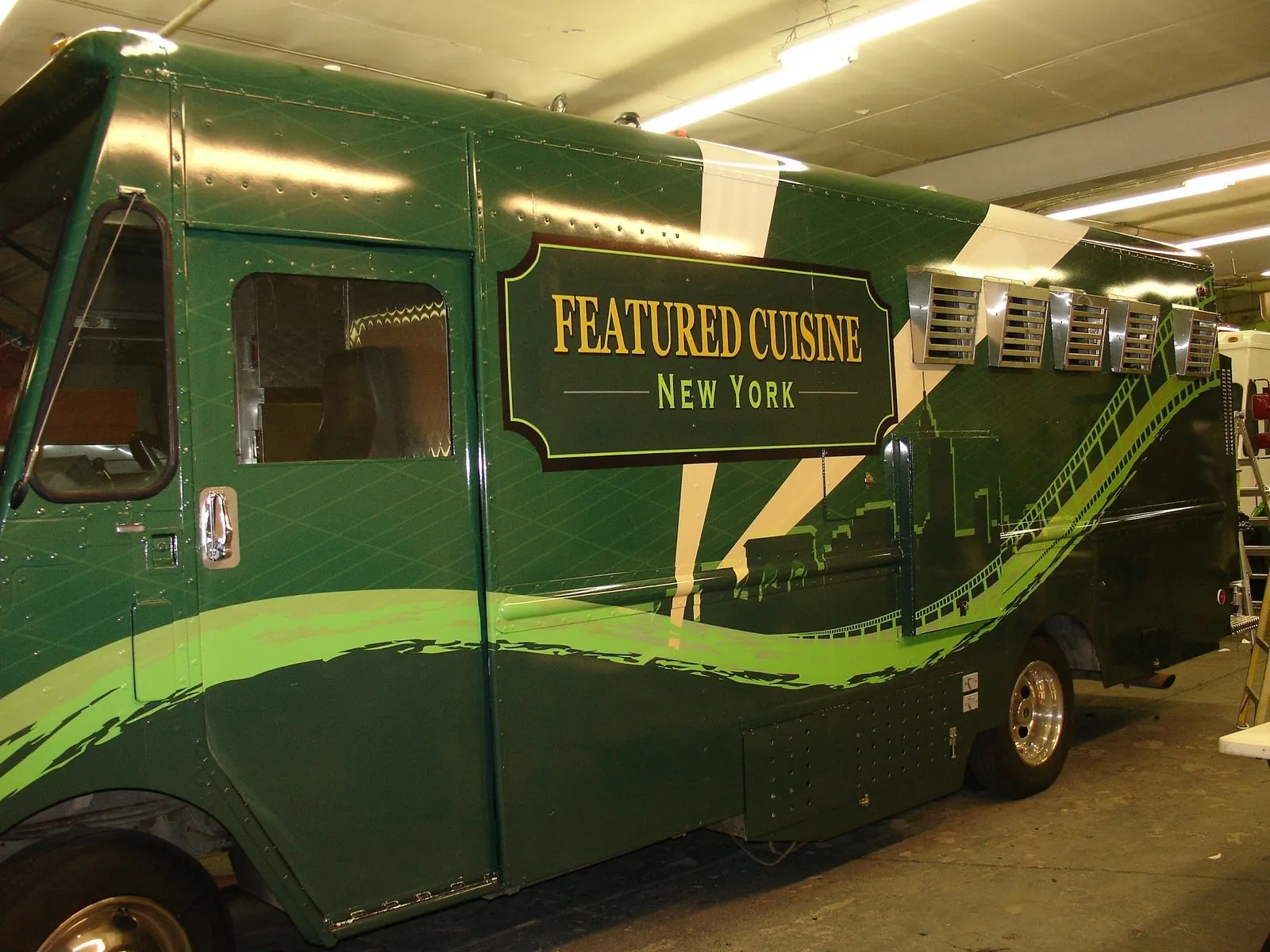
The name should read from across a lot or a street. Sign researchers measure this with letter height. The United States Sign Council publishes a legibility index that ties every inch of capital letter height to a reading distance, and it notes that all capital letters need to be about 15 percent taller than mixed case to read as well.
- One font for the name. A clean, bold typeface reads faster than a thin script.
- Strong contrast. Light letters on a dark field or dark letters on a light field, never mid tones on mid tones.
- No photo behind the name. Put the name on a solid band and keep photos for their own space.
- Short taglines. Three or four words, like the cuisine or the city you serve.
Menu Panels You Can Change
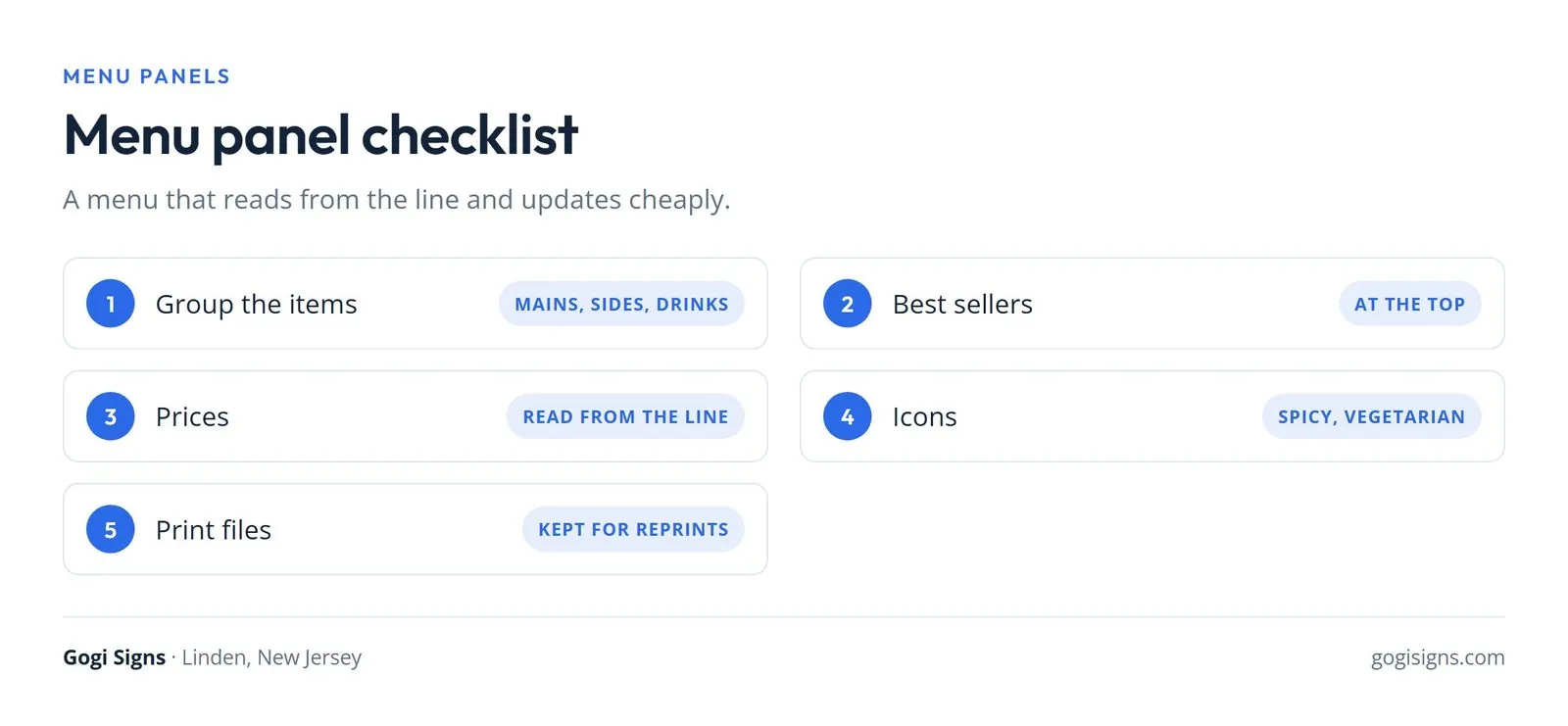
Prices and dishes change more often than your logo. Design the menu as its own panel next to the window, and print it separately so an update does not mean reprinting a whole side.
- Group the menu. Mains, sides and drinks in clear blocks, with the best sellers at the top.
- Size the prices. Prices should read from where the line forms, not only at the counter.
- Mark what matters. Small icons for spicy or vegetarian dishes beat long notes.
- Keep the files. We keep your print files, so a new menu panel is a quick reprint.
Food Photos That Print Well
A wrap prints food several feet wide, so small or soft photos fall apart. Send original camera files rather than screenshots from social media, and choose one or two hero dishes instead of a collage of ten. Bright daylight shots with a plain background usually print best on cast wrap film such as 3M IJ180mC.
Place photos on flat panels. A plate of food that runs over a rivet line, a door gap or a deep body line will look bent from the sidewalk.
Design Around the Equipment
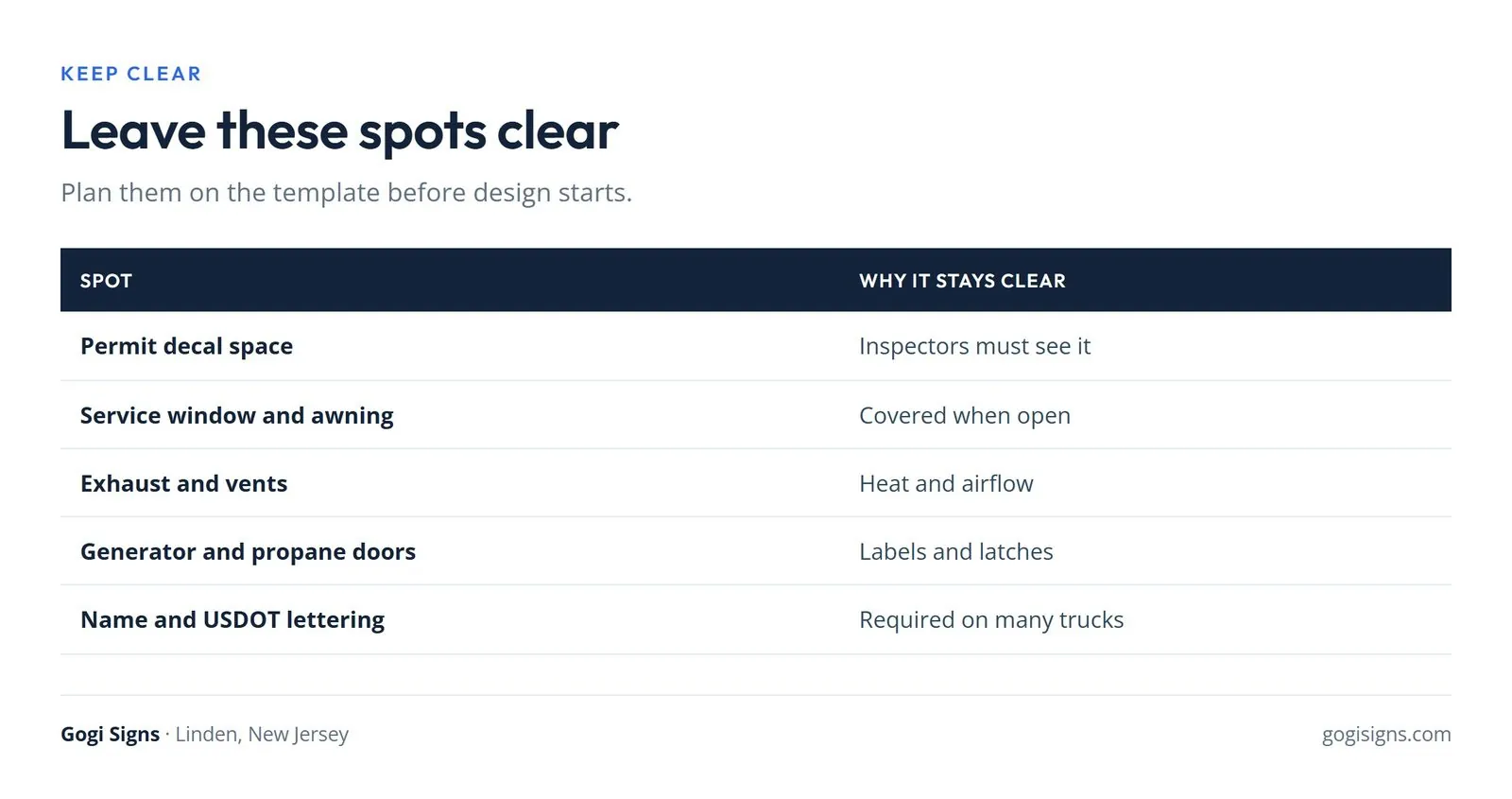
Food trucks carry more hardware than most vehicles. We trace every opening on the template before design starts, so no letter falls on a hinge or a vent.
- Hatches and awnings. Text that disappears when the window opens is wasted.
- Vents and exhaust. Keep film and key graphics away from hot exhaust areas.
- Generator and propane doors. Leave their labels and latches clear.
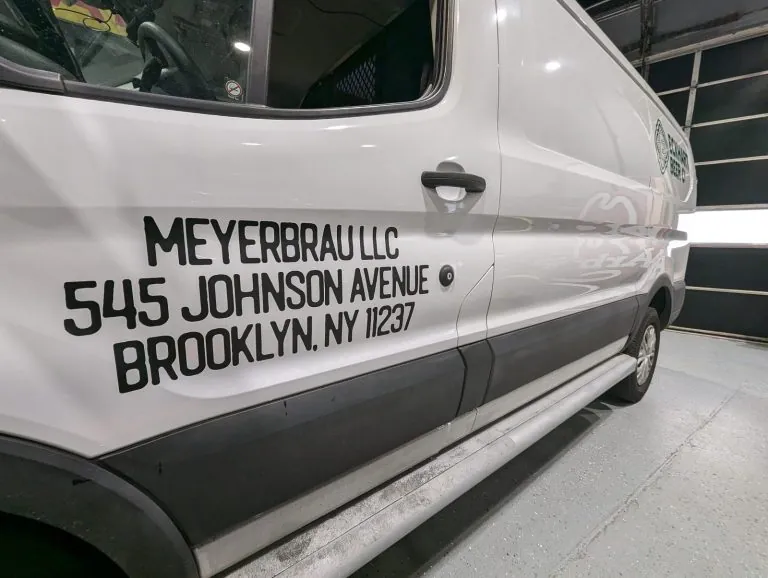
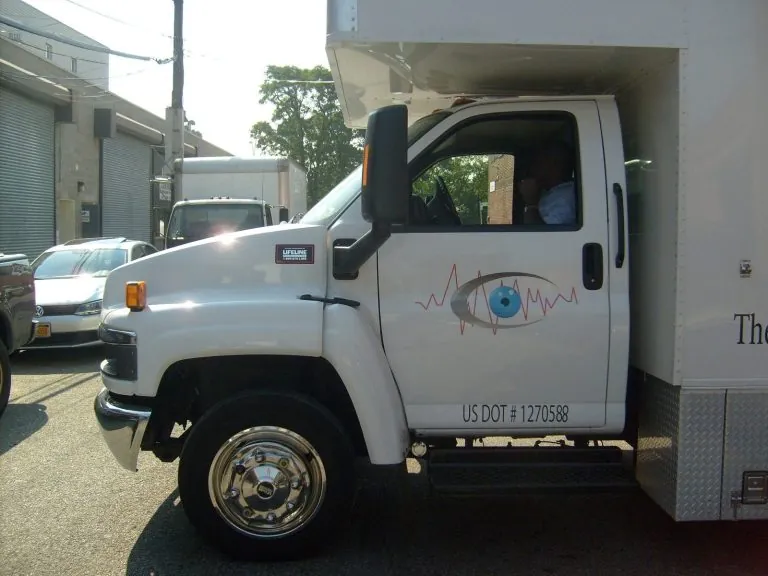
- Required lettering. Commercial name lettering and any USDOT number need their own clear spot. See our guide to NJ and NYC commercial vehicle lettering.
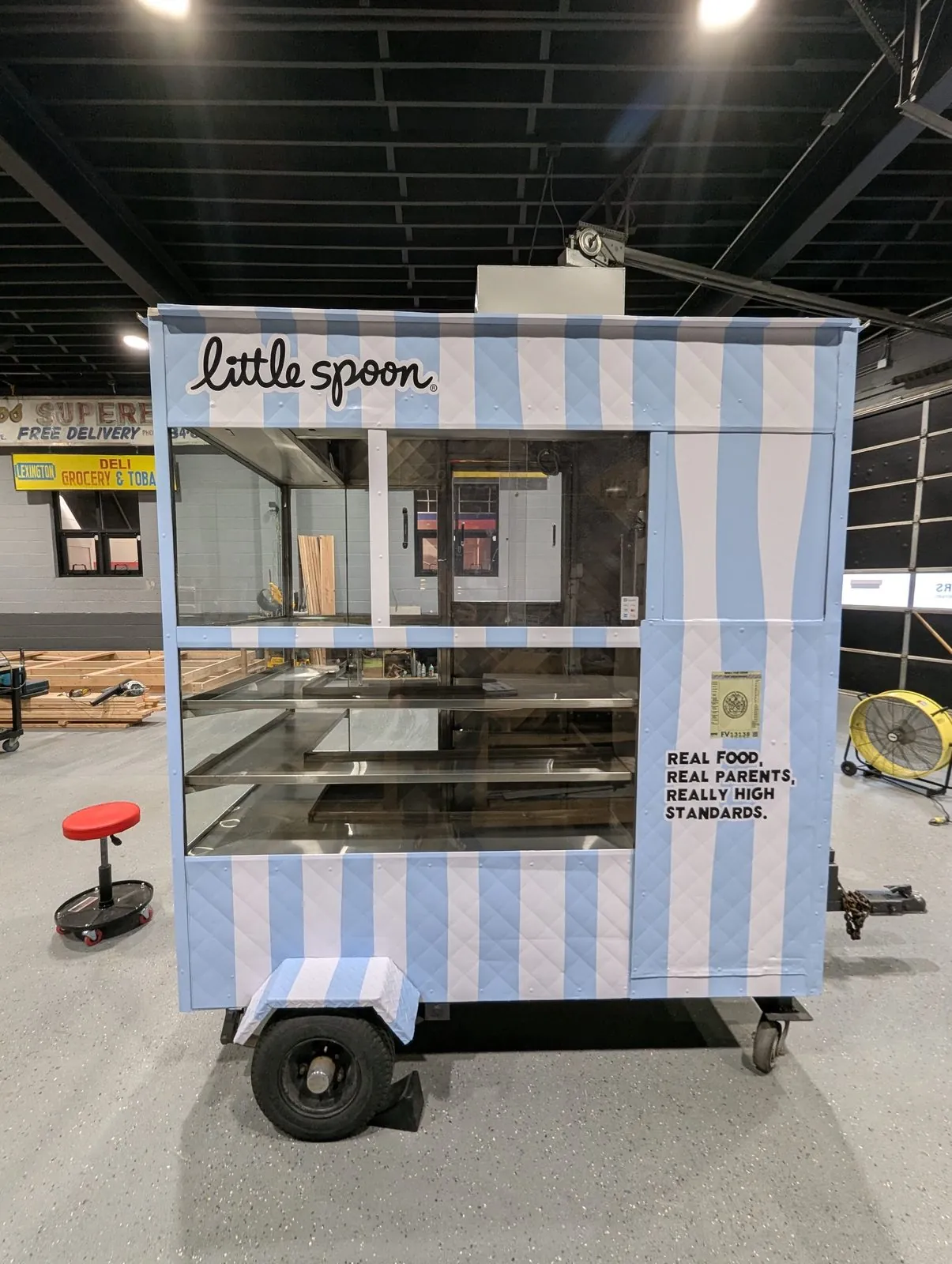
Carts follow the same rules on a smaller scale. A cart needs the name, three or four menu items and the permit space, and little else.
How We Handle Food Truck Wrap Design
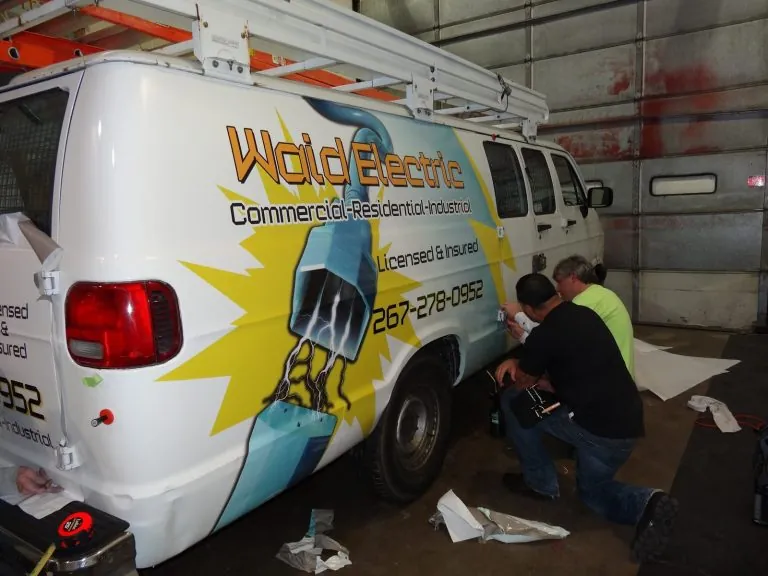
Every food truck wrap job at Gogi Signs follows the same path. We measure the truck, cart or trailer at our Linden, New Jersey shop or at your commissary, and our sign design team sets your artwork on a template of the exact make and model. We print and laminate in house, and our own crews handle graphics installation in our heated bay or at your location across New Jersey, New York City and the Philadelphia area. Menu lettering and logos in solid colors are cut through our vinyl cutting service.
See layouts and options on our food truck wraps page, and plan the budget with our food truck wrap cost guide. Owners with a concession trailer can compare trailer wraps, and trucks that only need a name and number can start with truck lettering. We also design food truck wraps for Newark vendors. Sign shops and agencies can order the same work through our wholesale program. See every option on our vehicle graphics page or browse more guides on the Gogi Signs blog.
Common Questions
Do you design food truck wraps from scratch?
Yes. We can start from a finished logo, a sketch or just your menu, and you approve a proof before anything prints.
Should the menu be part of the wrap?
Usually not. A separate menu panel next to the window is cheaper to update when prices or dishes change.
Can I use photos from my phone?
Often yes, if they are the original files and sharp. Screenshots from social media are too small for a wrap.
Which side should the logo go on?
Both sides and the rear. The opposite side usually gets the largest version for traffic.
Do I need to leave space for permits?
Yes. In New York City the permit decal space sits next to the main service window, and New Jersey health departments set their own display rules.
Can you match my brand colors?
Yes. Printed colors are matched to your logo files, and we show the colors on the proof before printing.
Our Take
Design the serving side first, keep the name big and the menu separate, and give each photo a flat panel of its own. Send us your logo, your menu and a photo of the truck, and we will lay out a proof on our food truck wraps template.
Sources and further reading
- USSC Foundation: guideline standards for on premise signage
- NYC Health: Rules for mobile food vending, Chapter 6
- NYC Health: rules for mobile food vendors
- 3M: Print Wrap Film IJ180mC product bulletin
- Avery Dennison: Supreme Wrapping Film
- ORAFOL: ORACAL 751C high performance cast film
- N.J.S.A. 39:4-46: commercial vehicle names and GVWR