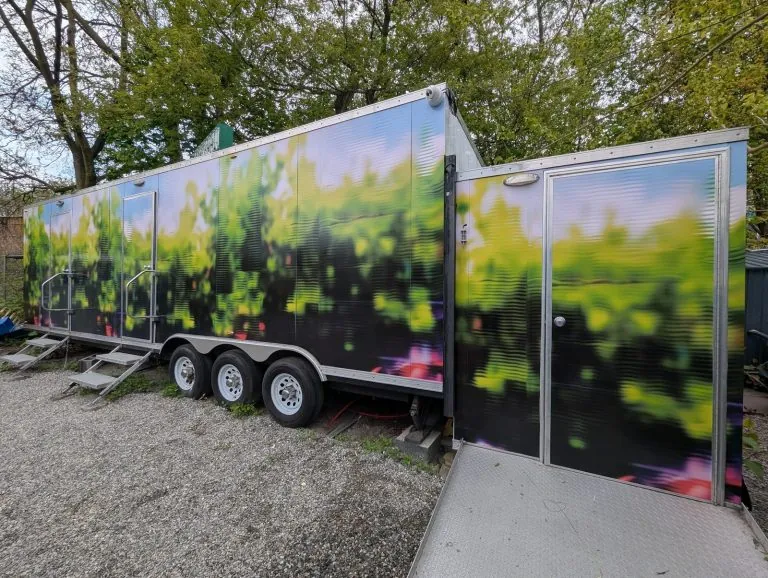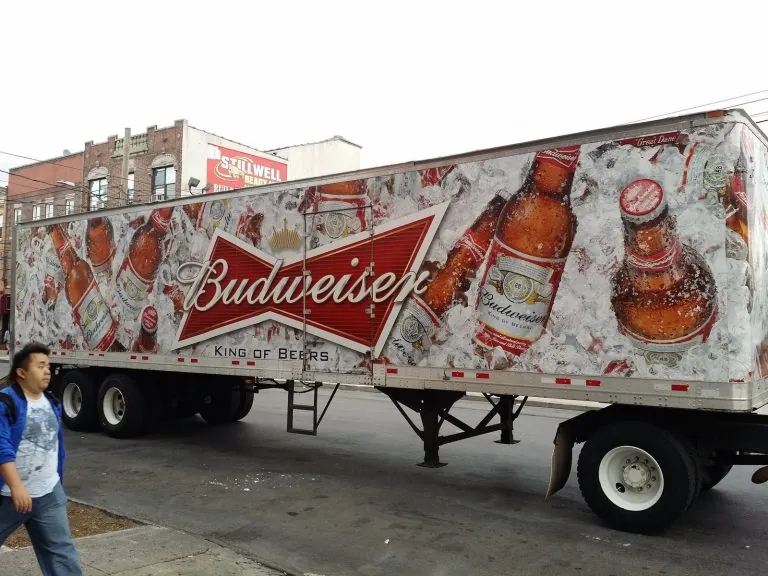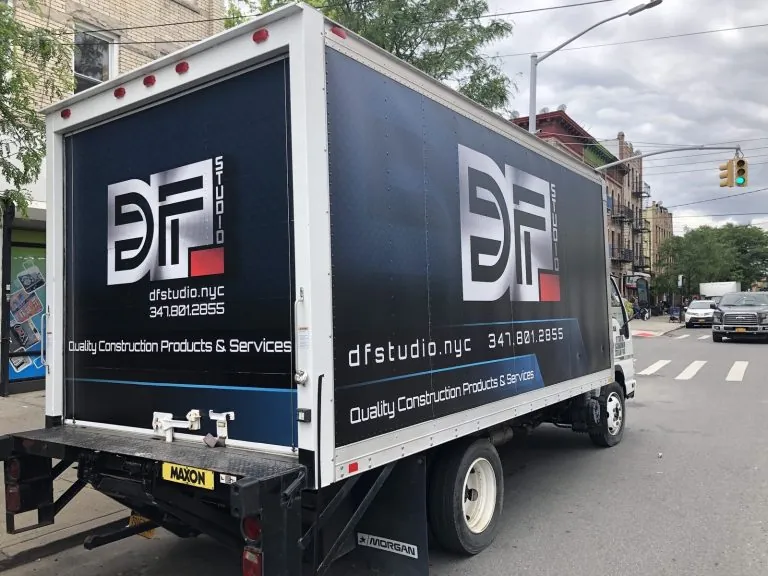
An enclosed trailer spends most of its life parked. It sits outside job sites, in driveways and in lots where people walk past it every day, which makes it one of the cheapest billboards a contractor, caterer or event company can own. The question is how much of it to cover and what an enclosed trailer wrap costs at your size.
This guide walks through the common trailer sizes, coverage options and the industry planning ranges we see in New Jersey and New York City. Every number is a planning range, not a quote. Your price follows the trailer size, its doors and a look at the skin.
In this guide
Enclosed Trailer Wraps at a Glance
Common Trailer Sizes
Enclosed trailers are sold by width and box length in feet. A 6×12 is six feet wide with a twelve foot box. The size on the sale sheet is a good start, but height, a V nose and the door style change how much film the trailer takes.
- 6x10 and 6x12. Single axle trailers for landscapers, handymen and small event kits.
- 7x14 and 7x16. Tandem axle trailers, the most common size for contractors and caterers.
- 8.5x20 and 8.5x24. Car haulers, race trailers and large equipment trailers with the most side area.
- Extra height. A taller box adds film on both sides and the rear.
- V nose. The angled front adds surface and some install time.
Planning Ranges by Size
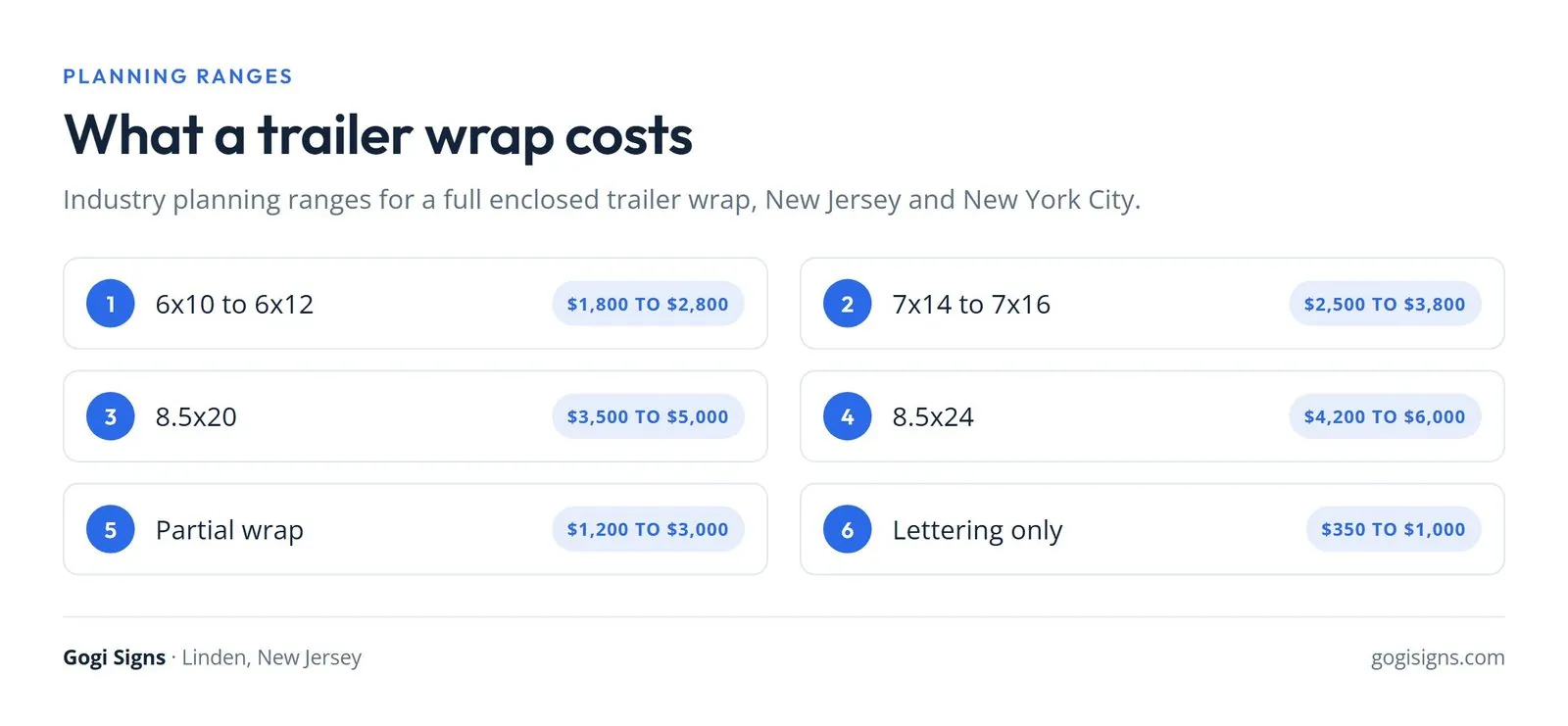
These ranges sit inside the enclosed trailer ranges in our guide to vehicle wrap cost in NJ and NYC, broken out by size. They assume quality cast film, lamination and professional installation.
| Trailer size | Lettering | Partial wrap | Full wrap |
|---|---|---|---|
| 6×10 to 6×12 | $350 to $700 | $1,200 to $1,800 | $1,800 to $2,800 |
| 7×14 to 7×16 | $450 to $850 | $1,600 to $2,300 | $2,500 to $3,800 |
| 8.5×20 | $500 to $1,000 | $2,000 to $2,700 | $3,500 to $5,000 |
| 8.5×24 | $500 to $1,000 | $2,300 to $3,000 | $4,200 to $6,000 |
A full wrap here means both sides, the front and the rear door. The roof is usually left as is because nobody sees it.
Coverage Options
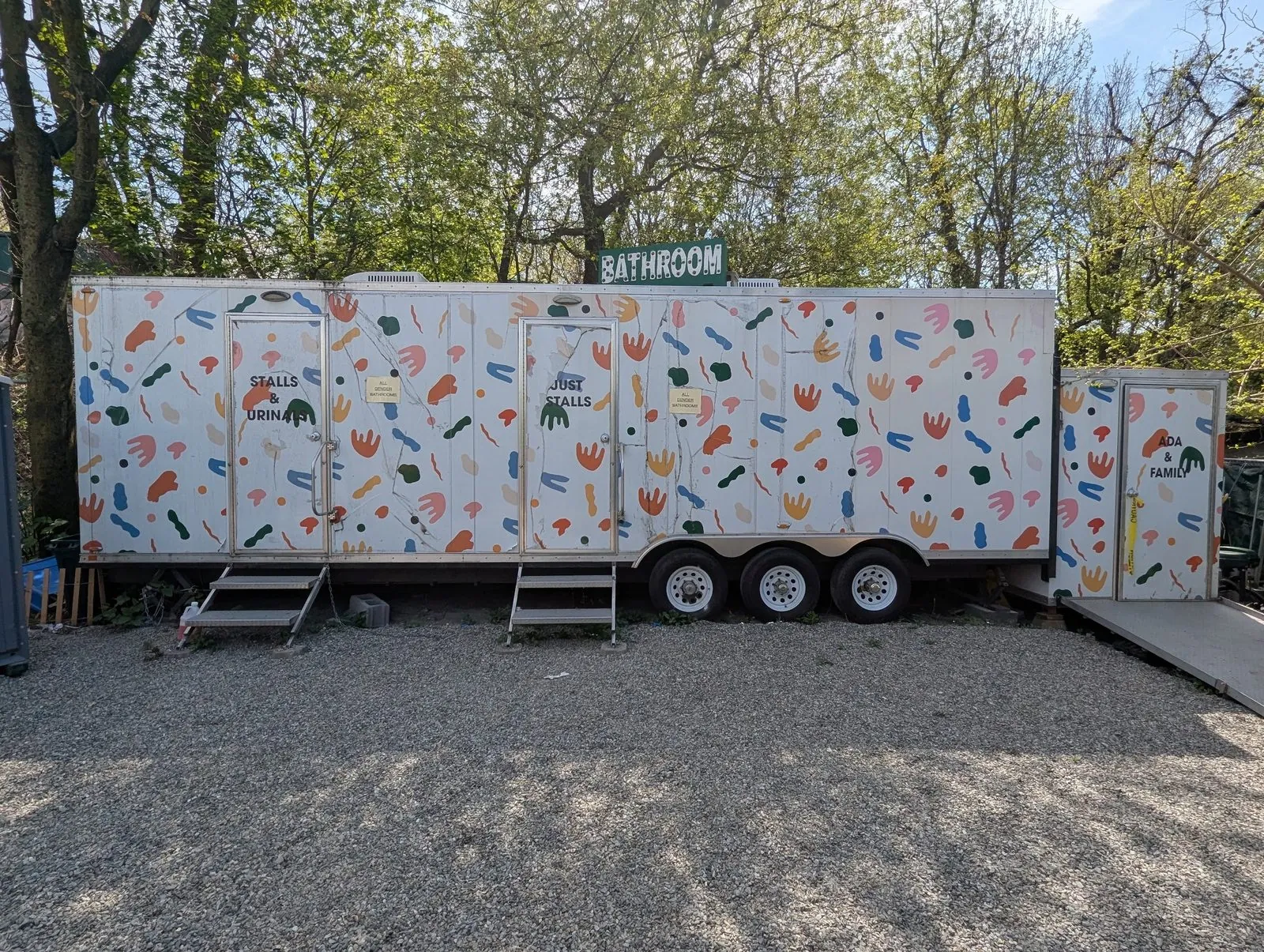
Coverage is the biggest price lever on a trailer, the same as on any vehicle. Our guide to full wrap vs partial wrap vs lettering explains each option in more detail.
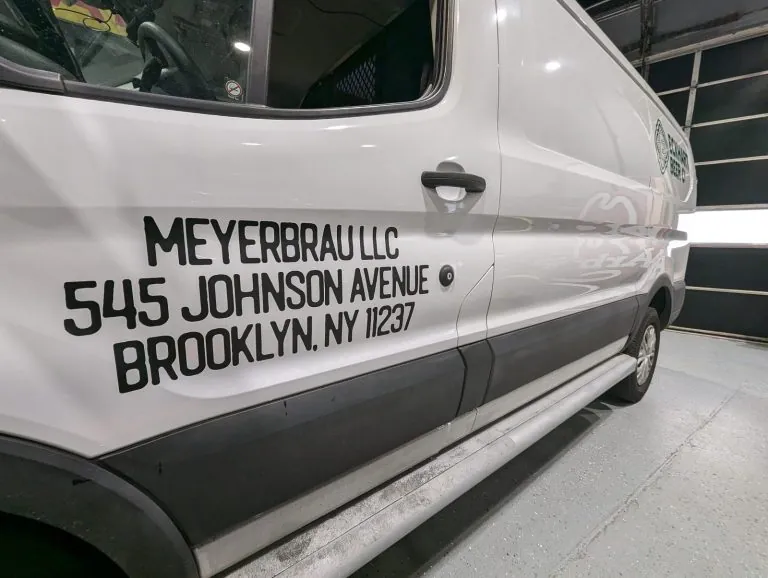
- Lettering. Cut vinyl name, phone number and website on the factory color. Clean and the lowest cost.
- Partial wrap. Printed graphics on part of each side, often a logo panel or a graphic that fades into the trailer color.
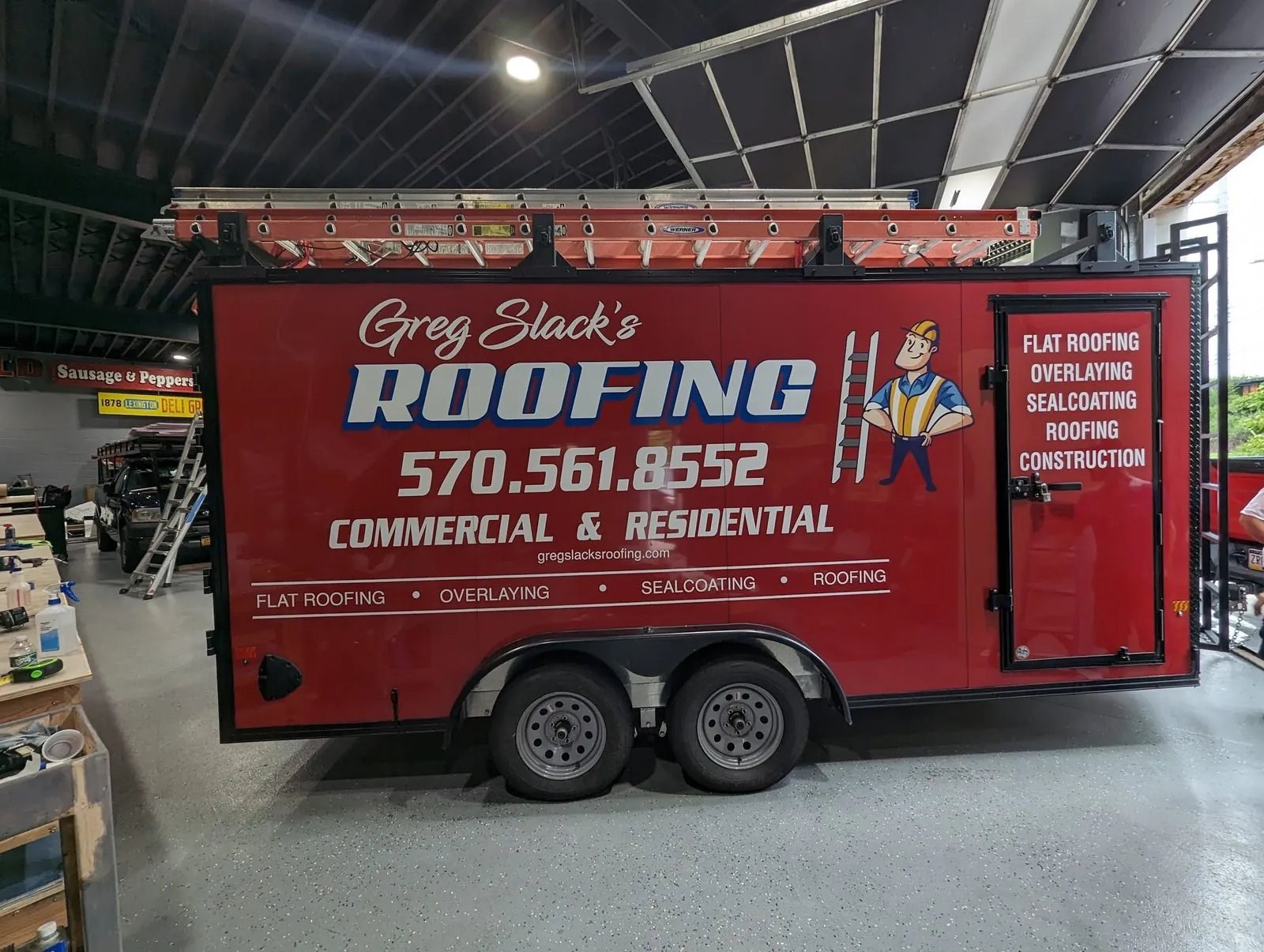
- Full wrap. Printed film over the sides, front and rear. Best for photos, patterns and bold brand colors.
- Color change. A solid film in your brand color with cut lettering on top.
What Changes the Price
- Size and height. The side area grows fast with each extra foot of length and height.
- Rear door style. A ramp door is one large flat panel. Barn doors add seams, hinges and handles.
- Side doors, vents and lights. Each one is trimmed by hand.
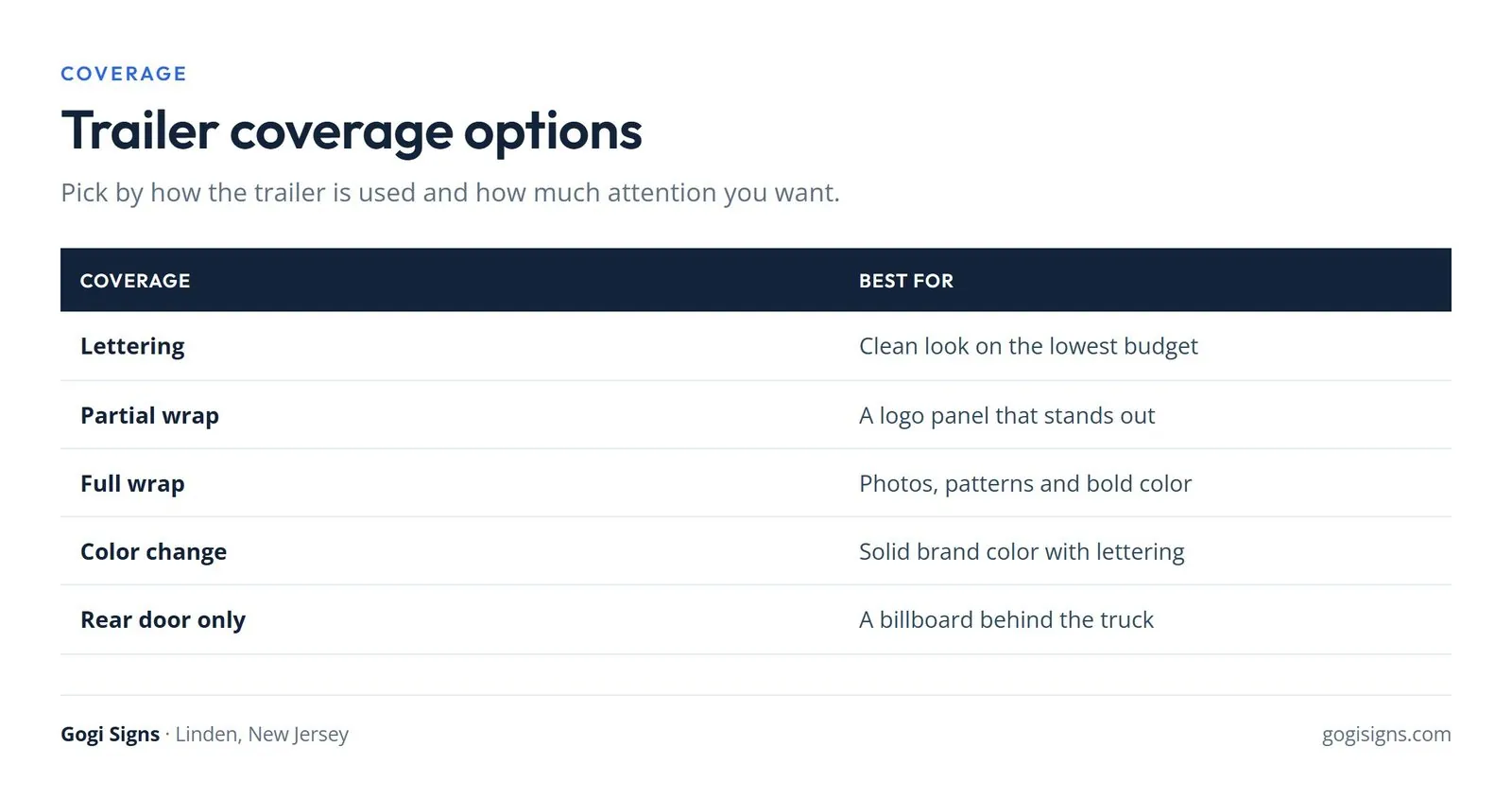
- Screws and seams. Screwed or riveted skins take longer than smooth panels.
- Old decals. Factory stripes and old lettering come off first.
- Design work. Photos and patterns take more design time than a logo and phone number.
Doors, Lights and Reflective Tape
Lights, reflectors, the license plate and latches stay clear. Larger trailers may also need red and white reflective tape. Under 49 CFR 393.11, trailers 80 inches or wider with a gross vehicle weight rating over 10,000 pounds need it. Many 8.5 foot wide trailers are wide enough, so the weight rating decides. Our guide to DOT reflective tape rules for trailers shows how to design around the tape band.
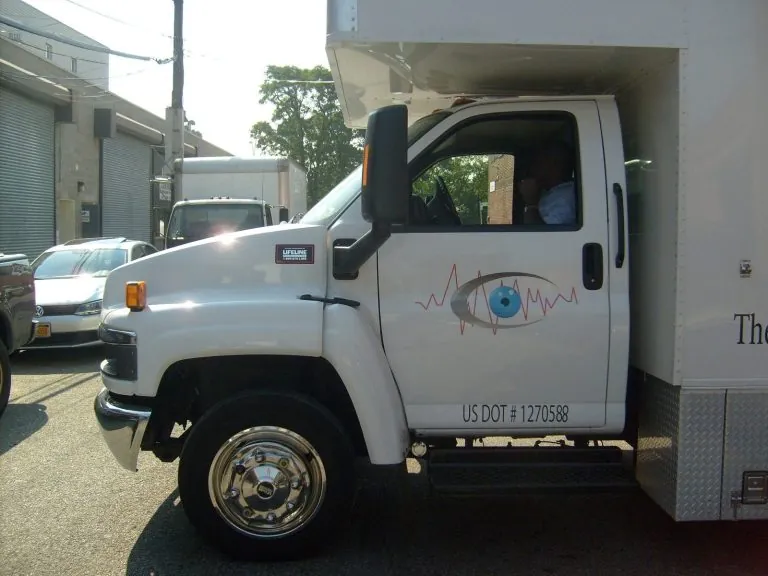
Trailers used in business may also need the company name or other markings. See the federal marking rule and N.J.S.A. 39:4-46, and check what applies to your trailer. We add those details as cut vinyl or into the design.
Design Tips for Trailers
- Put the logo and name high. Cars, fences and equipment often block the lower half of a parked trailer.
- Make the phone number big. People read a trailer from across a lot or a street.
- Use the rear door. On a ramp door, the whole panel is a billboard behind your truck.
- Keep it simple. Three things on each side is plenty: who you are, what you do, how to reach you.
- Match the tow vehicle. A trailer that matches the truck looks like one brand.
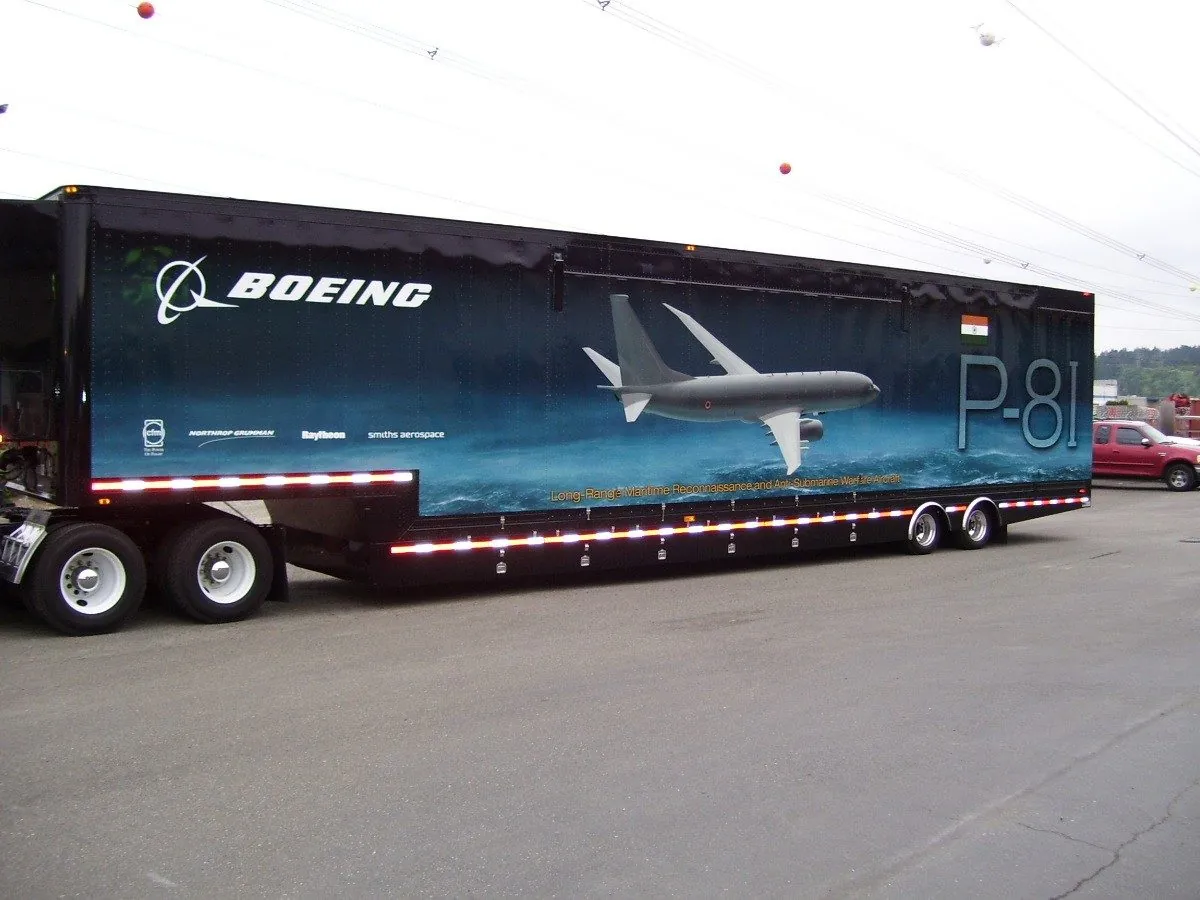
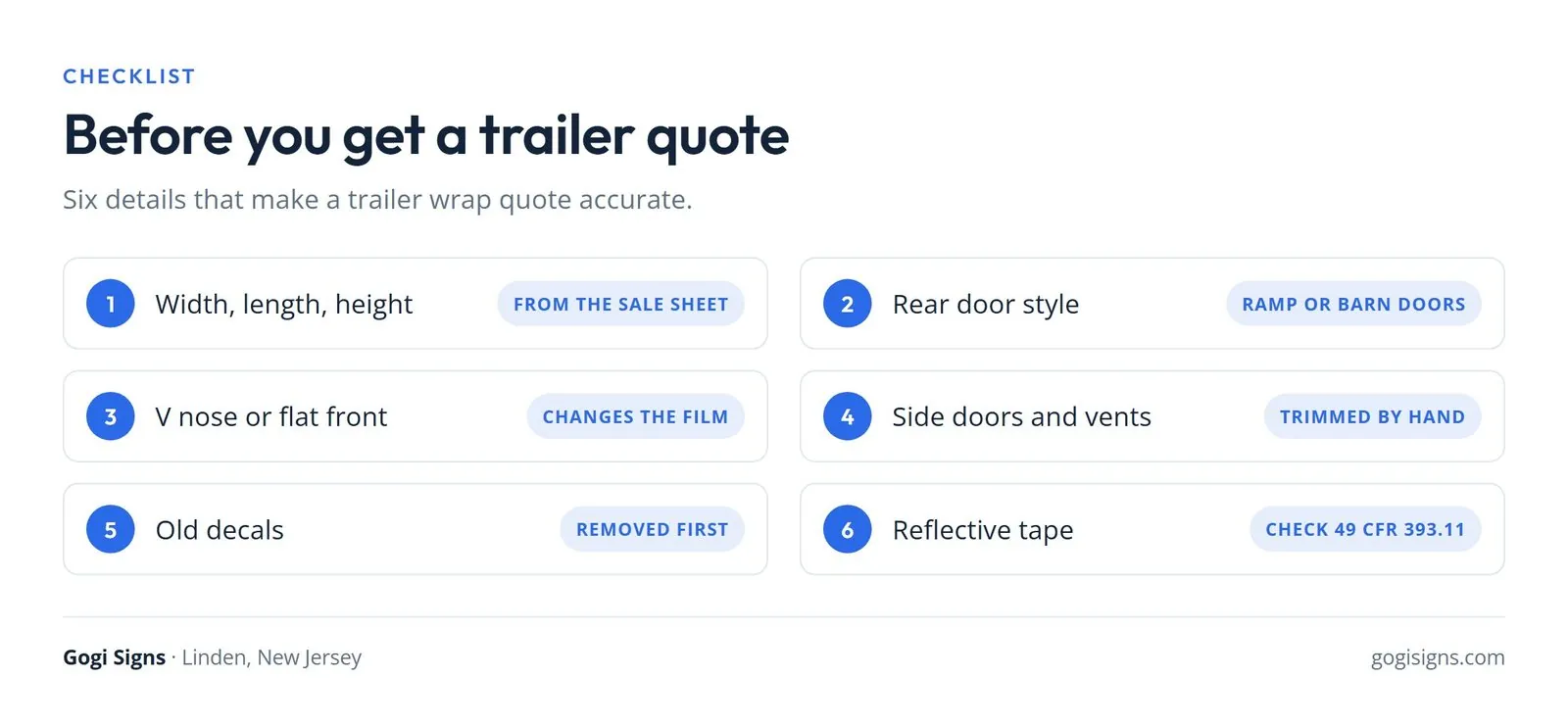
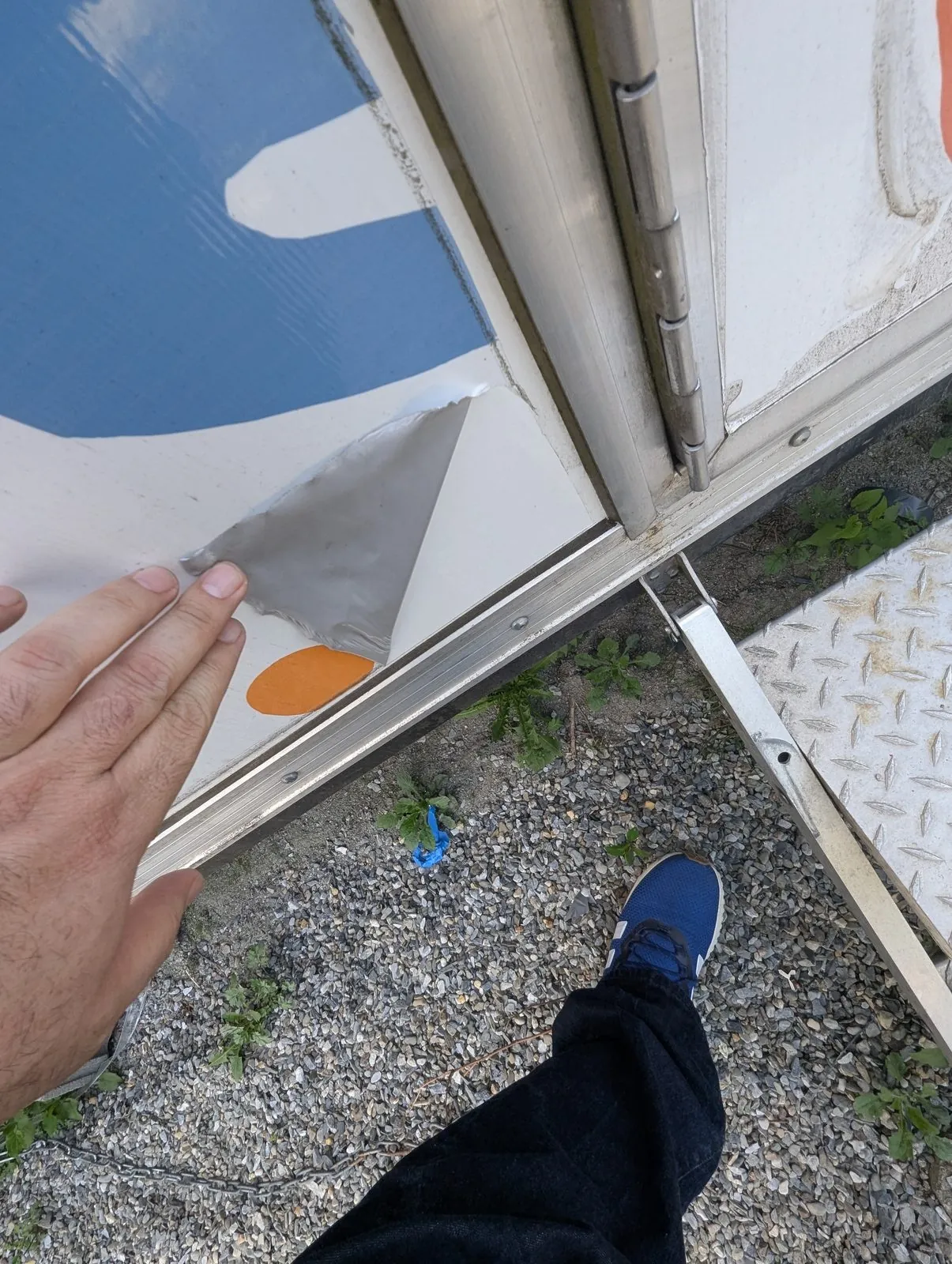
Event and hospitality trailers have their own design needs. See restroom and event trailer wraps for venue styles.
How We Handle Trailer Wrap Jobs
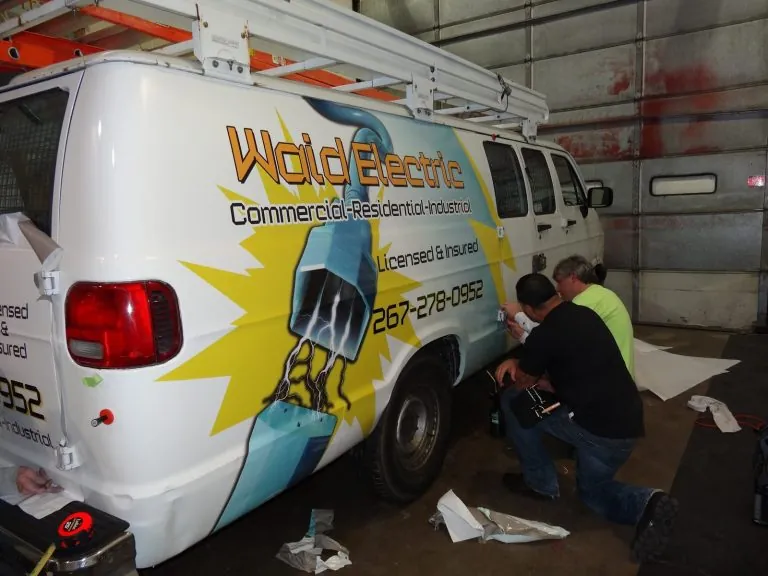
Every trailer wrap job at Gogi Signs follows the same path. We measure the vehicle at our Linden, New Jersey shop or at your location, and our sign design team sets your artwork on a template of the exact make and model. We print and laminate in house, and our own crews handle graphics installation in our heated bay or at your yard across New Jersey, New York City and the Philadelphia area. Old graphics come off in the same visit, and lettering is cut through our vinyl cutting service.
Most clients pair enclosed trailer wraps with truck wraps, food truck wraps and truck lettering. Contractors bring trailers from trailer wraps in Paterson to trailer wraps on Staten Island. Sign shops and agencies can order the same work through our wholesale program. See every option on our vehicle graphics page or browse more guides on the Gogi Signs blog.
Common Questions
How much does it cost to wrap a 7x16 enclosed trailer?
As a planning range, about $2,500 to $3,800 for a full wrap and $1,600 to $2,300 for a partial wrap. Height, doors and design change the final price.
Is lettering or a wrap better for a trailer?
Neither is better in every case. Lettering is the lowest cost and looks clean. A wrap gets far more attention when the trailer sits at a job site.
Can you wrap a ramp door?
Yes. A ramp door is one large flat panel and one of the best spots for a big logo and phone number.
Does my trailer need reflective tape?
It depends on width and weight rating. Trailers 80 inches or wider rated over 10,000 pounds need it under 49 CFR 393.11.
Can you wrap the V nose?
Yes. The angled panels take a little more film and time, and they are included in a full wrap quote.
Do you install at my yard?
Yes, across New Jersey, New York City and the Philadelphia area. Our heated bay in Linden is best in cold weather.
Our Take
Start with the trailer size and how much you want covered, then plan around the doors, lights and any required tape or markings. A trailer that is parked at job sites earns its wrap back every day. See finished trailers on our trailer wraps page, or send us the size and a photo for a planning price.
Sources and further reading
- 49 CFR 393.11: lamps and reflective devices
- 49 CFR 393.13: retroreflective sheeting on older trailers
- FMCSA: 49 CFR 390.21T, marking of vehicles
- N.J.S.A. 39:4-46: commercial vehicle names and GVWR
- NJ MVC: commercial vehicle information
- 3M: Print Wrap Film IJ180mC product bulletin
- Avery Dennison: Supreme Wrapping Film
- ORAFOL: ORACAL 751C high performance cast film