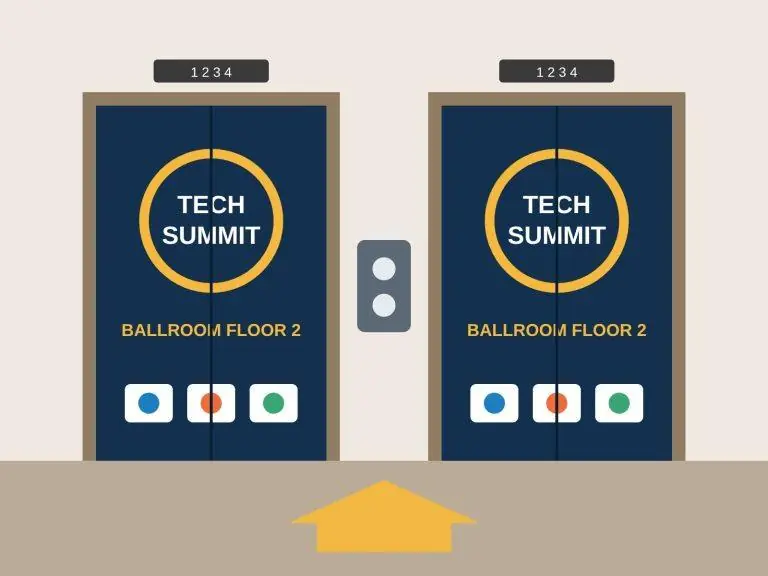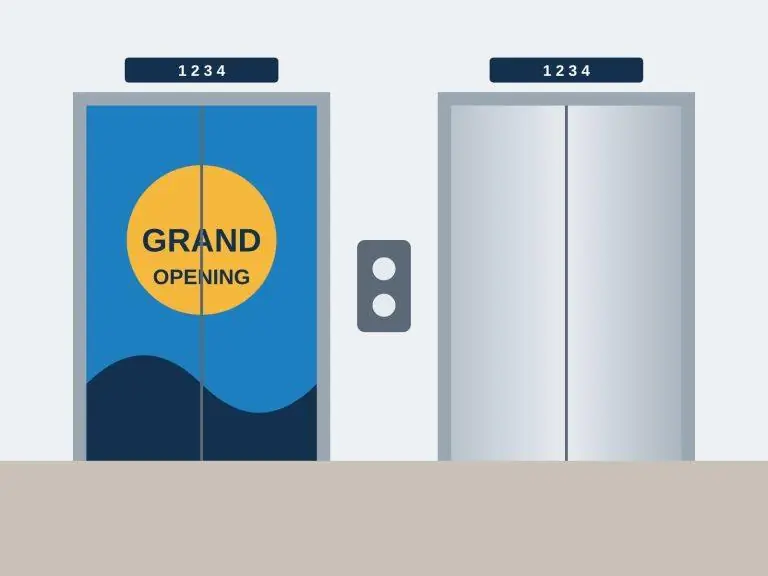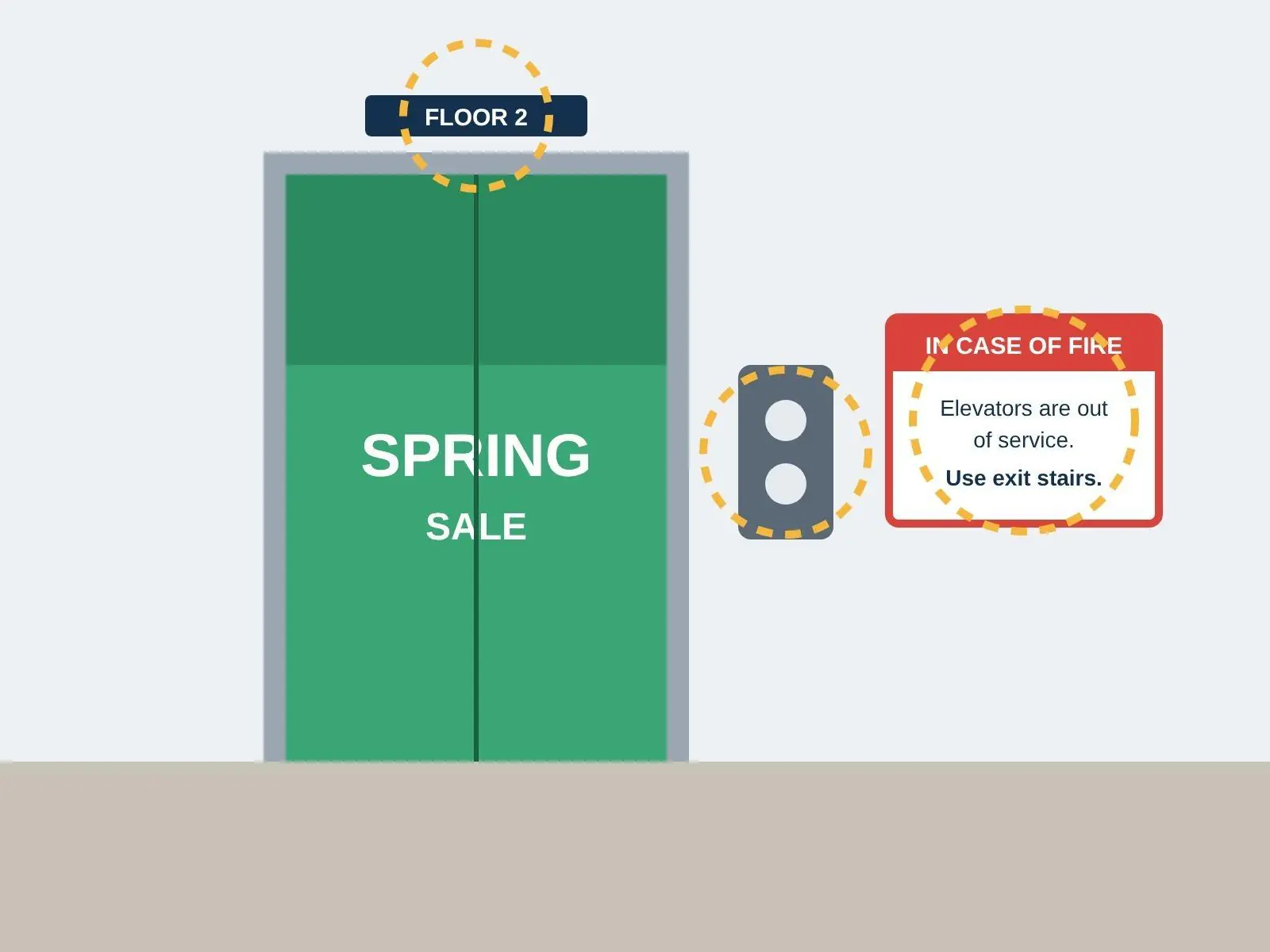
Elevator graphics are allowed in many buildings, but elevators are safety equipment. Fire codes, elevator codes and building rules all protect the items people need in an emergency. A good wrap works around them.
This guide is a practical checklist, not legal advice. Your building manager, elevator contractor and local fire official have the final say.
In this guide
- Elevator Safety Items at a Glance
- Items That Must Stay Visible
- Which Codes Apply
- Fire Ratings for Films
- Practical Layout Rules
- Approvals Checklist
- Inspection Certificates and Plates
- Signs Required Near Elevators
- Who Has the Final Say
- How We Handle Elevator Wraps Jobs
- Common Questions About Elevator Graphics and Codes
- Wrap Around the Safety Items
Elevator Safety Items at a Glance
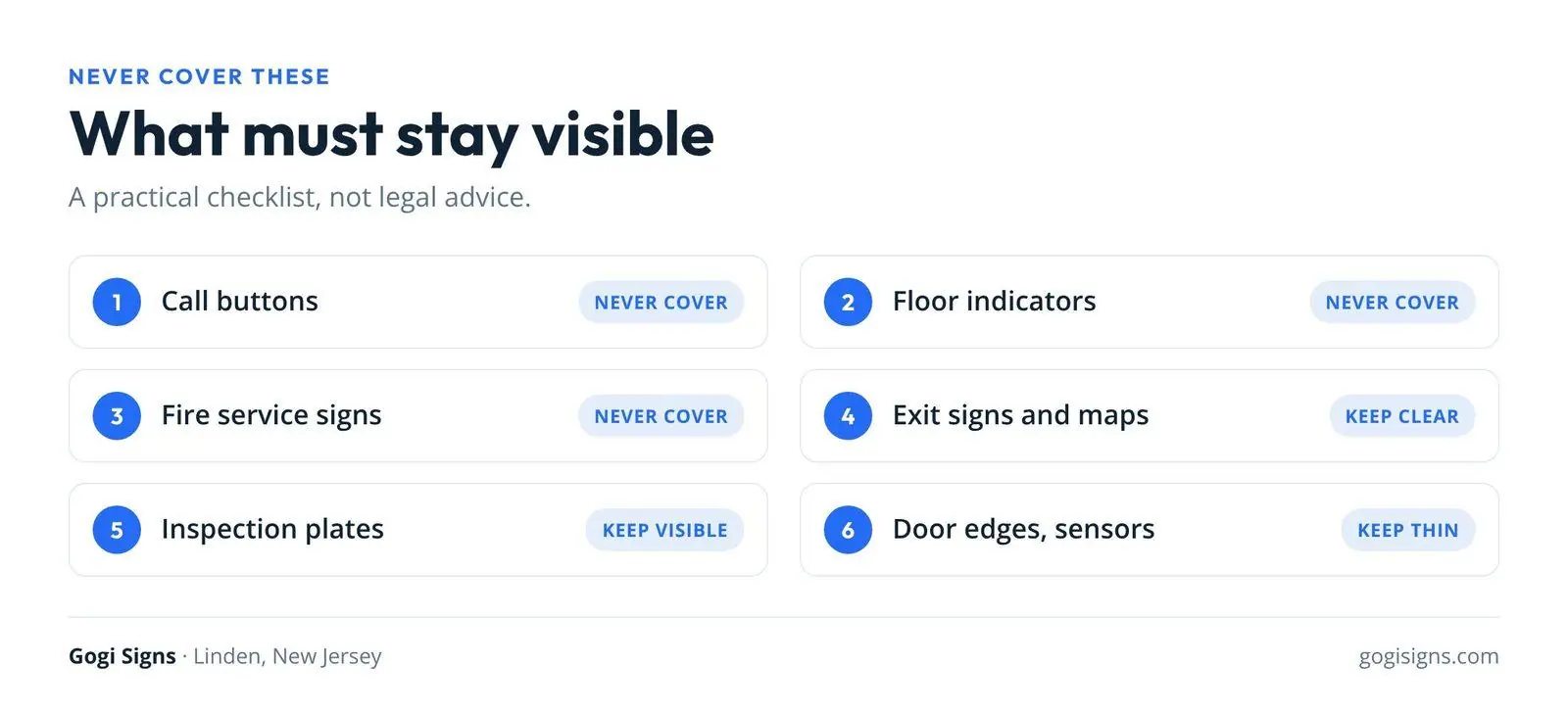
Items That Must Stay Visible
- Call buttons and their panels, including braille and raised markings.
- Floor indicators and arrival lights.
- Fire service signs, such as the notice that elevators are not to be used in a fire.
- Exit signs and emergency maps nearby.
- Fire alarm devices, pull stations and strobes near the doors.
- Door edges and sensors that stop the doors from closing on people.
Which Codes Apply
Elevators in the United States are built and maintained under the ASME A17.1 elevator safety code, enforced by state and city elevator inspectors. Life safety rules, such as those in NFPA 101 Life Safety Code, cover exits and emergency signs. In New Jersey, elevator and building codes are administered through the NJ Department of Community Affairs. In New York City, the Department of Buildings oversees elevators. Accessible features at elevators follow the ADA standards.
Fire Ratings for Films
Some buildings require interior finishes to meet a fire rating. Many wrap and wall films are tested for flame spread. Ask your sign shop for the data sheet before the building manager does.
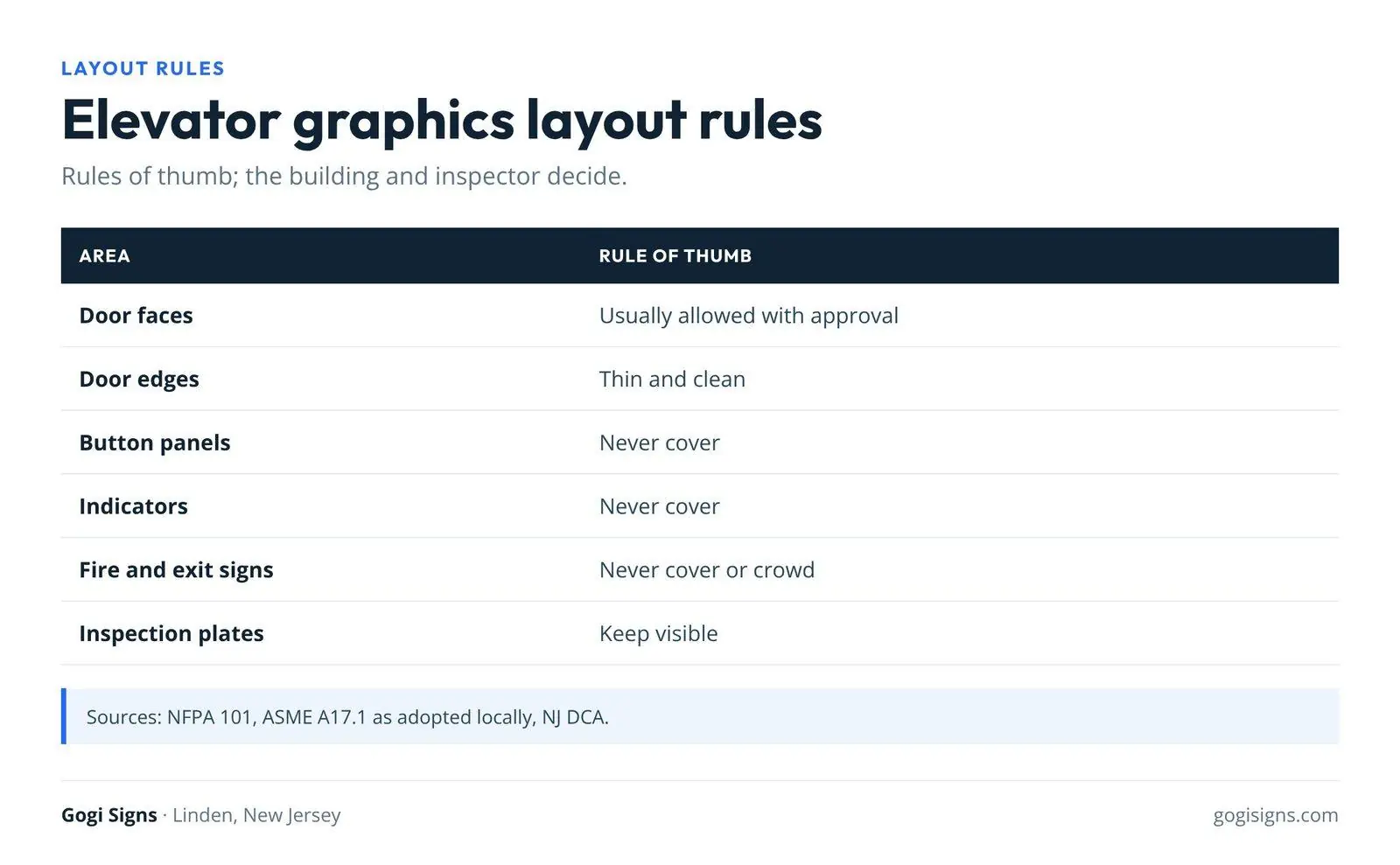
Practical Layout Rules
| Area | Rule of thumb |
|---|---|
| Door faces | Can usually be wrapped with approval |
| Door edges | Keep thin and clean so doors close normally |
| Button panels | Never cover |
| Indicators above the door | Never cover |
| Fire and exit signs | Never cover or crowd |
Approvals Checklist
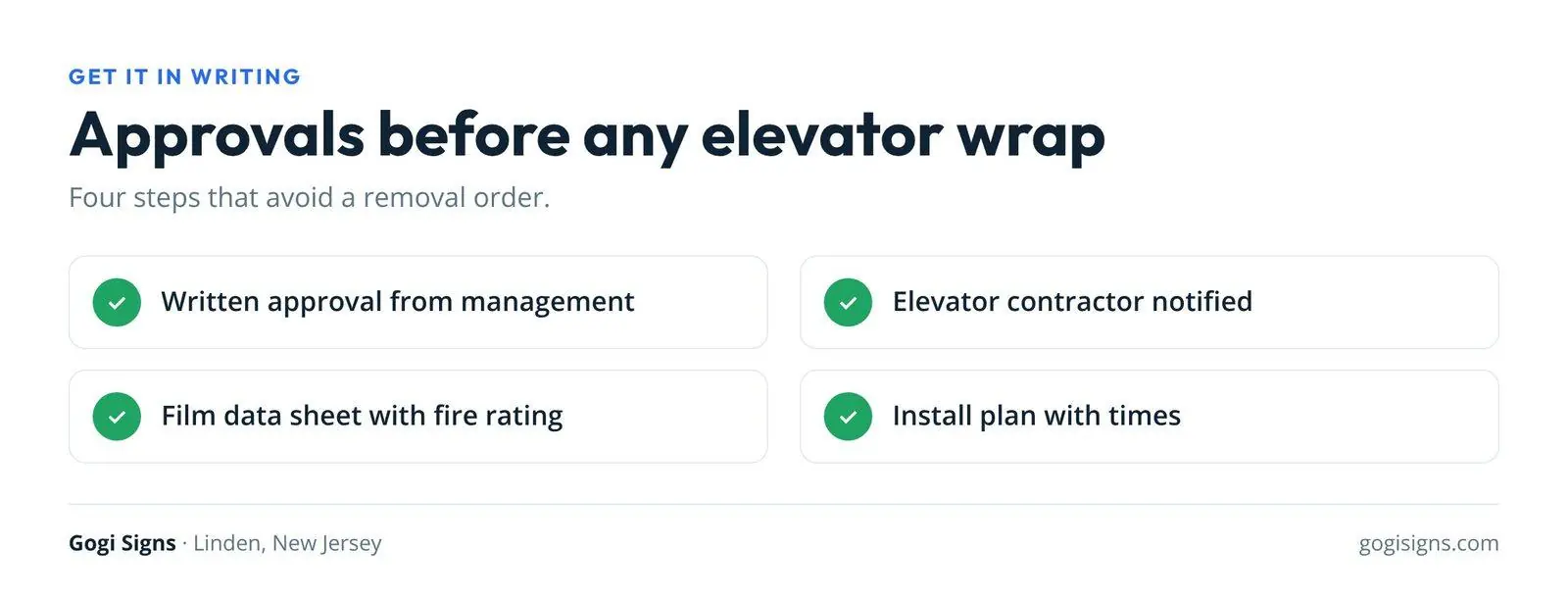
- Written approval from building management.
- Notice to the elevator service company.
- Film data sheet with fire rating if asked.
- Install plan with times and who holds the doors.
Inspection Certificates and Plates
Elevators carry inspection certificates, capacity plates and permits that inspectors check. These usually sit inside the cab or nearby, and they must stay visible. A wrap plan should mark each one and leave it clear.
Signs Required Near Elevators
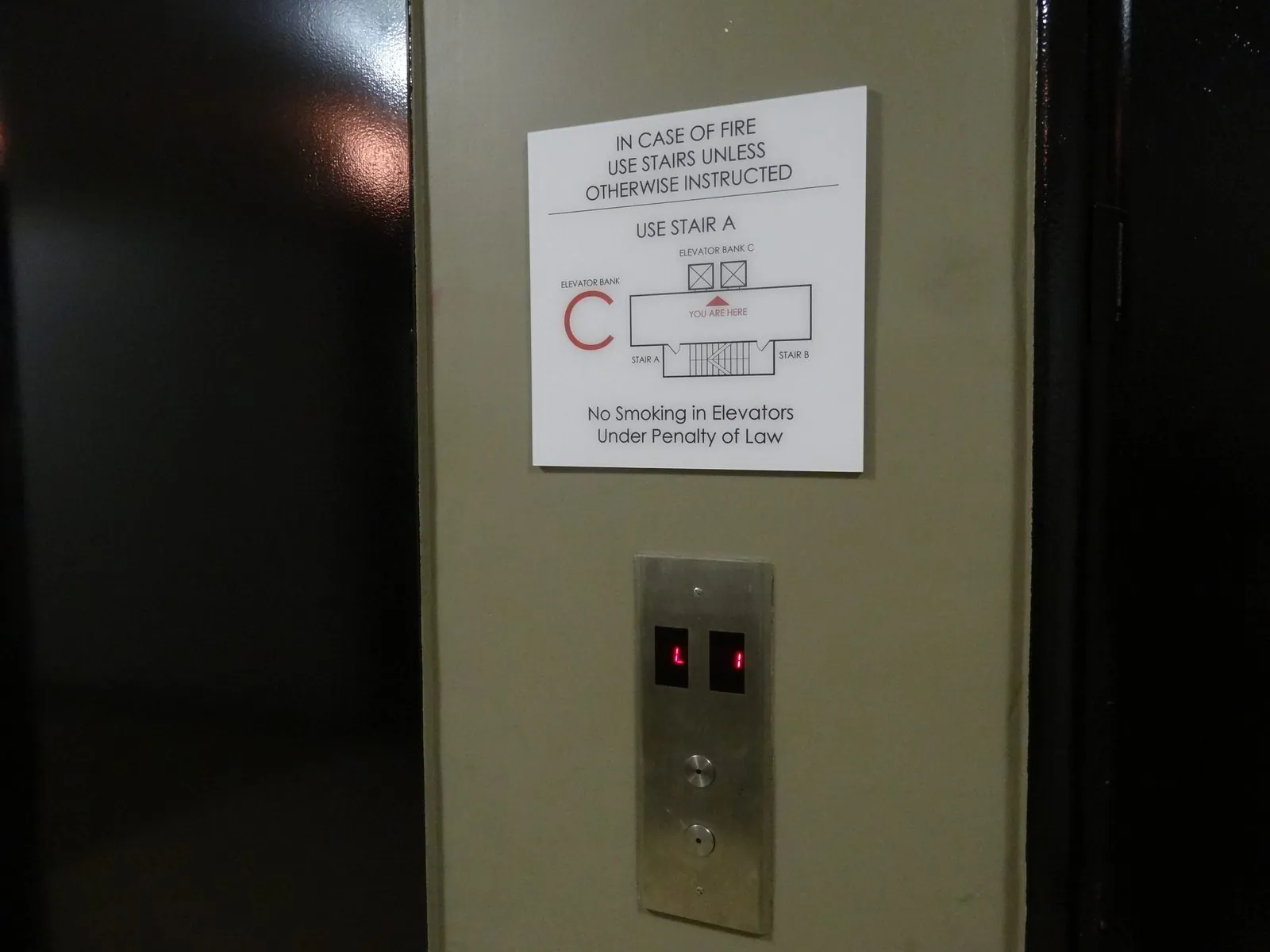
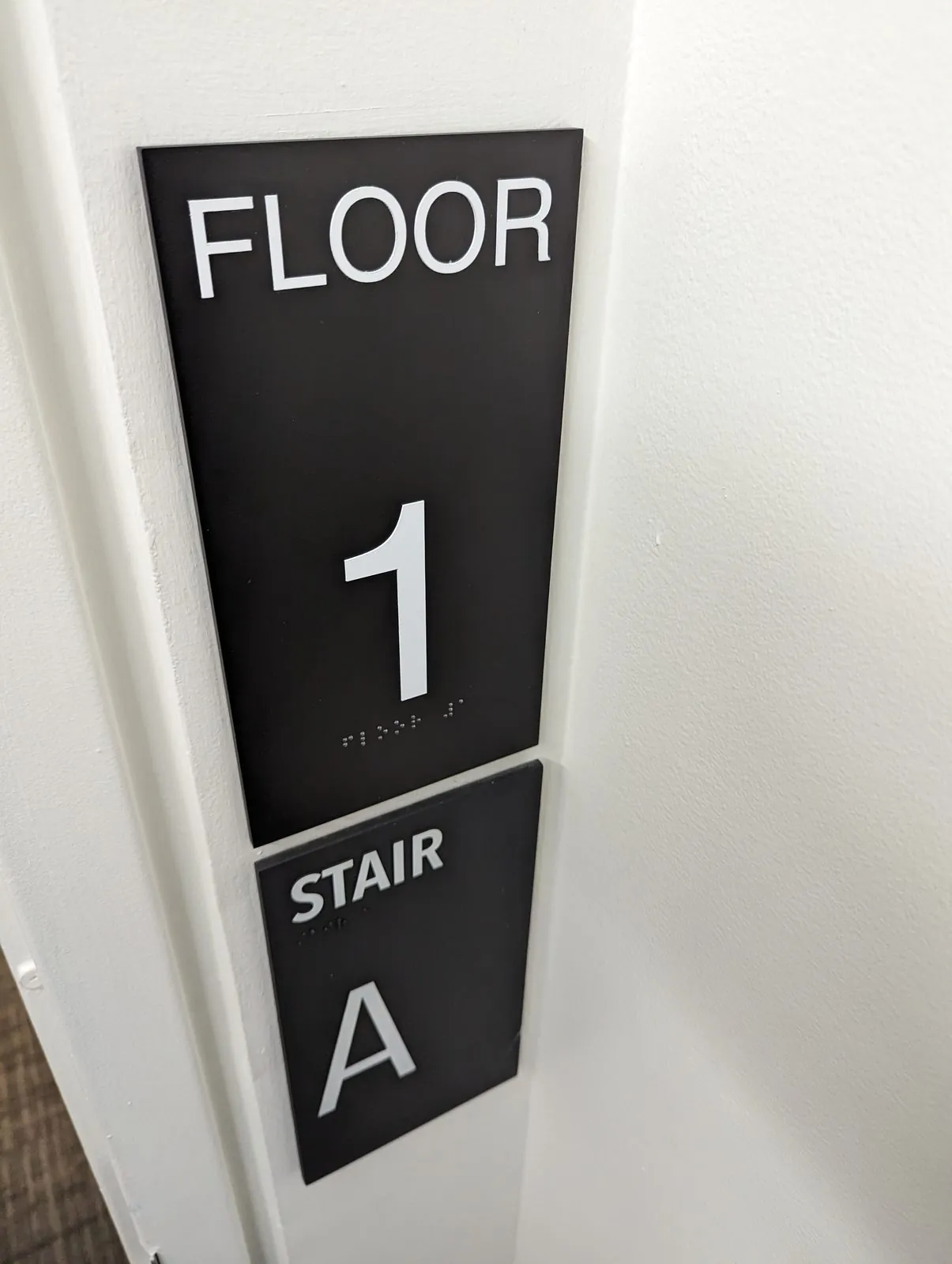
Many buildings must post a sign near elevators saying that in a fire the elevators should not be used and the stairs should be. Floor designations at the door frames and raised floor numbers for accessibility are also required in many buildings. Our ADA signs cover the tactile signs, and wraps work around them.
Who Has the Final Say
Building management, the elevator maintenance company and the local fire official all have a role. In New Jersey, elevator safety is administered through the Department of Community Affairs. When in doubt, we leave more clear space, not less.
How We Handle Elevator Wraps Jobs
Every elevator wraps job at Gogi Signs follows the same path from our Linden, New Jersey shop. It starts with a site survey or photos of the space, then a scaled layout from our sign design team. We check the town rules through our sign permits service when the graphic counts as a sign, cut or print it in house through our vinyl cutting and print shop, and our own crews handle graphics installation across New Jersey and New York City. When old graphics or signs have to come down first, the sign removal crew does it in the same visit.
Most clients pair elevator wraps with related work such as wall wraps, floor decals and window frosting. See the full range on our vinyl graphics page or browse more guides on the Gogi Signs blog.
Common Questions About Elevator Graphics and Codes
Do elevator wraps need a permit?
Usually not a sign permit, since they are inside, but the building and elevator contractor must approve.
Can wraps cover the inside of the cab?
Often yes, but inspection certificates and controls must stay visible.
What if the inspector asks for removal?
Removable films come off quickly. Planning with the rules avoids this.
Do you handle approvals?
We provide data sheets and layouts for the building and work with the elevator contractor on timing.
Can graphics go above the doors?
Yes, as long as floor indicators and signs stay visible.
Do wraps change the elevator inspection?
They should not, if controls, plates and signs stay clear.
Wrap Around the Safety Items
Cover the door faces, never the controls or safety signs, and get approvals in writing. For more lobby graphics see Signs NY wall graphics, and for wrap film installs see the vehicle wraps from Pixel Wraps, our sister graphics shop. See our elevator wraps page.
Sources and further reading
- NFPA 101: Life Safety Code
- NJ Department of Community Affairs: codes and standards
- U.S. Access Board: ADA standards
- Avery Dennison: Supreme Wrapping Film
- OSHA 1910.22: walking working surfaces
- 3M: graphics and signage films
- Avery Dennison: graphics solutions
- 3M: Print Wrap Film IJ180mC
- 3M: graphics and signage films
- Avery Dennison: graphics solutions
- Signs NY: wall graphics
- Pixel Wraps