Two decals can look the same on the day they go up and behave completely differently a year later. One stays flat and bright. The other shrinks back from its edges, leaves a dirty outline of adhesive and starts to curl. The difference is usually not the print or the installer. It is whether the film was cast or calendered.
Gogi Signs picks between these two films on almost every vinyl job we quote in New Jersey and New York City. This guide explains how each one is made, what the makers say about thickness and life, and which jobs need which film.
In this guide
- Cast vs Calendered at a Glance
- How Each Film Is Made
- Thickness and Feel
- Flat Surfaces: Where Calendered Film Wins
- Texture: Where Cast Film Wins
- Curves, Doors and Vehicles
- Lifespan and Shrinkage
- Match the Laminate
- Cast vs Calendered Compared
- Common Mistakes
- Polymeric Film: The Middle Ground
- Install Temperature and Removal
- What the Price Difference Buys
- How We Handle Vinyl Graphics Jobs
- Common Questions About Cast and Calendered Vinyl
- Get the Right Film for the Job
Cast vs Calendered at a Glance
How Each Film Is Made
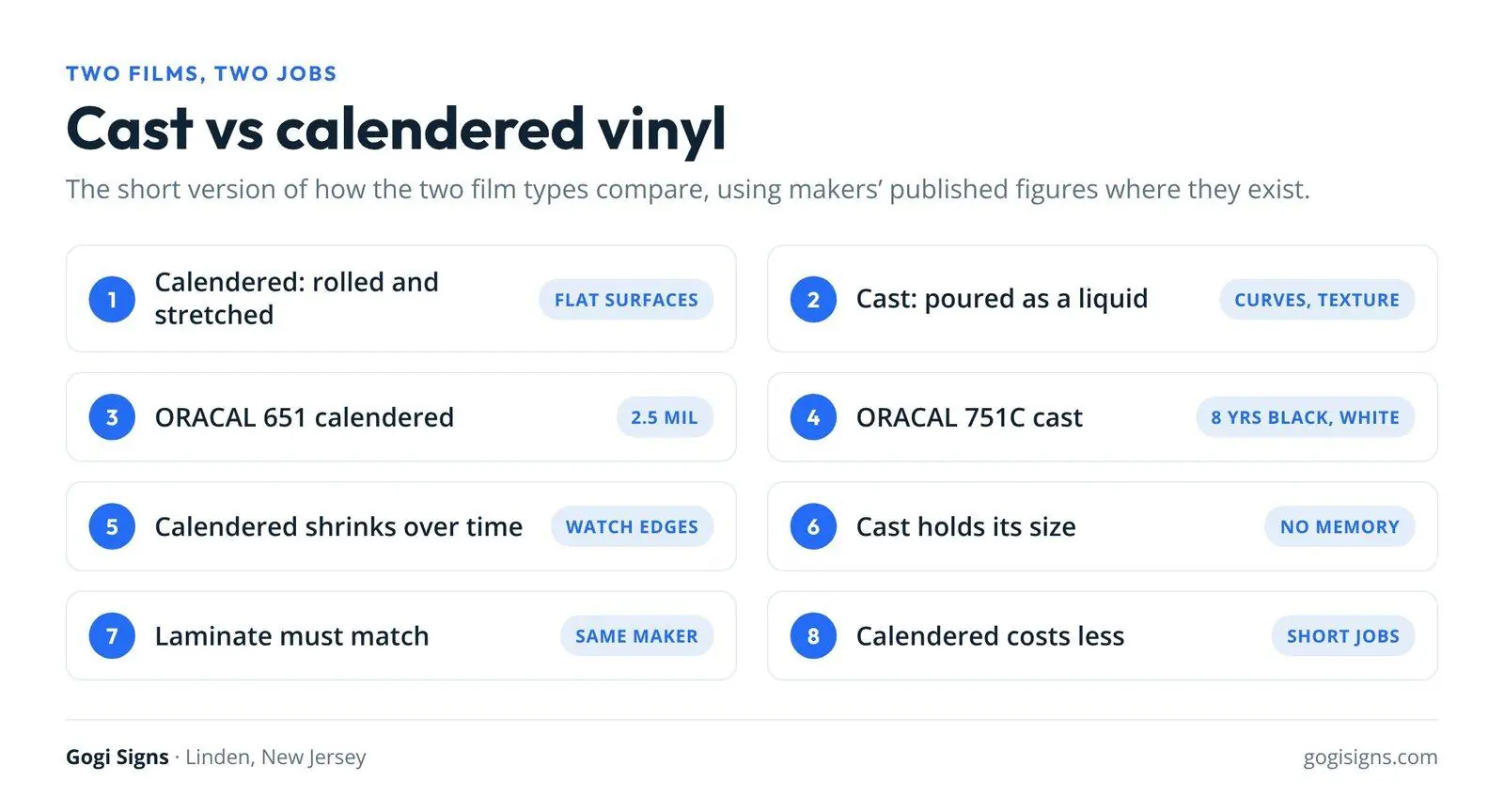
Calendered vinyl starts as a thick dough of PVC that is pressed and stretched between heated rollers until it is thin. Because it was stretched, the film keeps a memory and slowly tries to shrink back over time, especially in heat.
Cast vinyl starts as a liquid that is poured onto a casting sheet and baked dry. It is never stretched, so it has no memory. It is thinner, softer and holds its size, which is why it can be heated and stretched over curves and into texture without pulling back.
Thickness and Feel
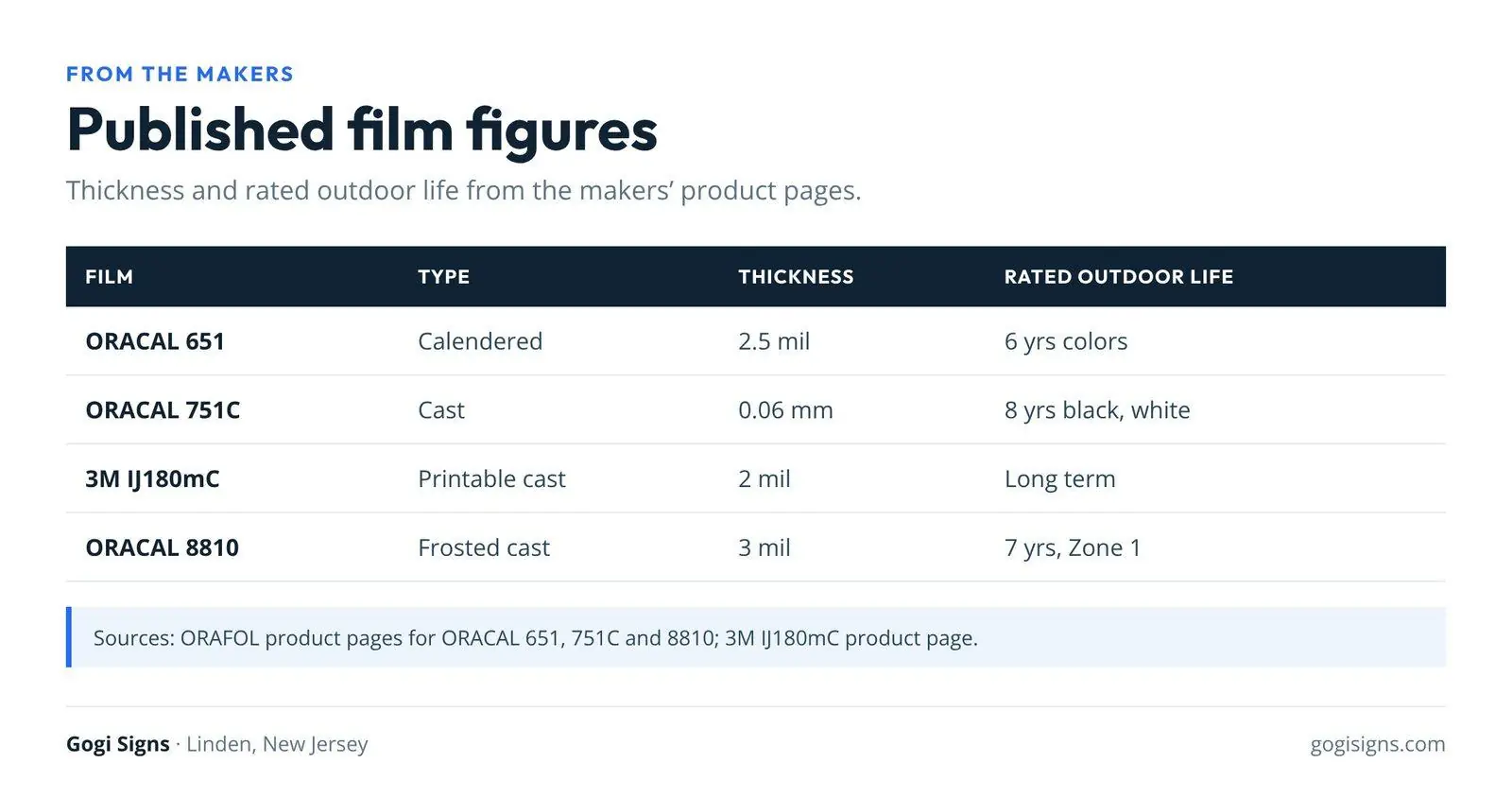
The two films feel different in the hand. ORAFOL lists its ORACAL 651 calendered film at 2.5 mil, while its ORACAL 751C cast film is listed at 0.06 mm, about 2.4 mil, and noticeably softer. 3M describes its IJ180mC print wrap film as a conformable 2 mil cast film. Thinner, softer film follows a surface more closely and is less likely to lift where the surface changes shape.
Flat Surfaces: Where Calendered Film Wins
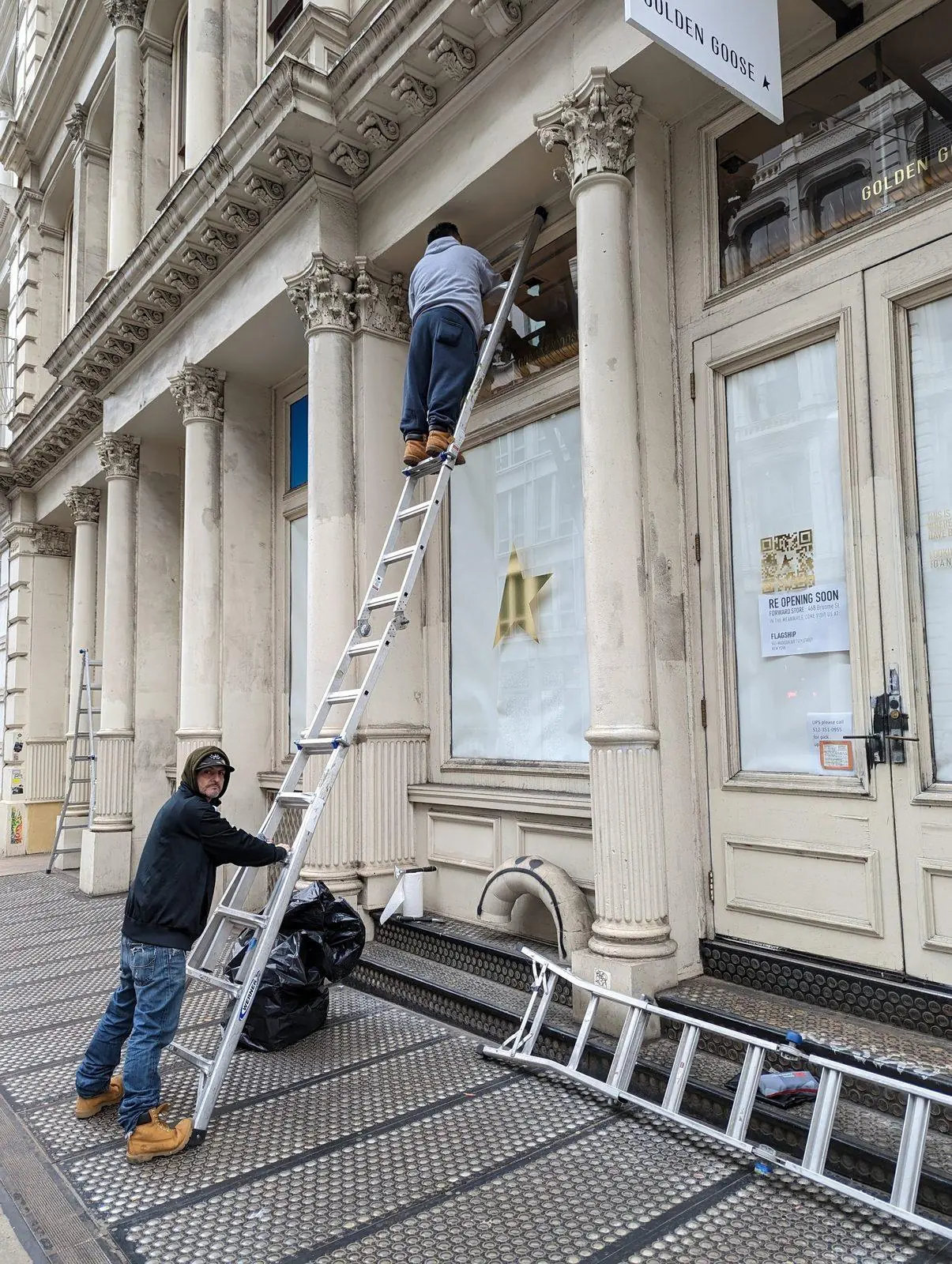
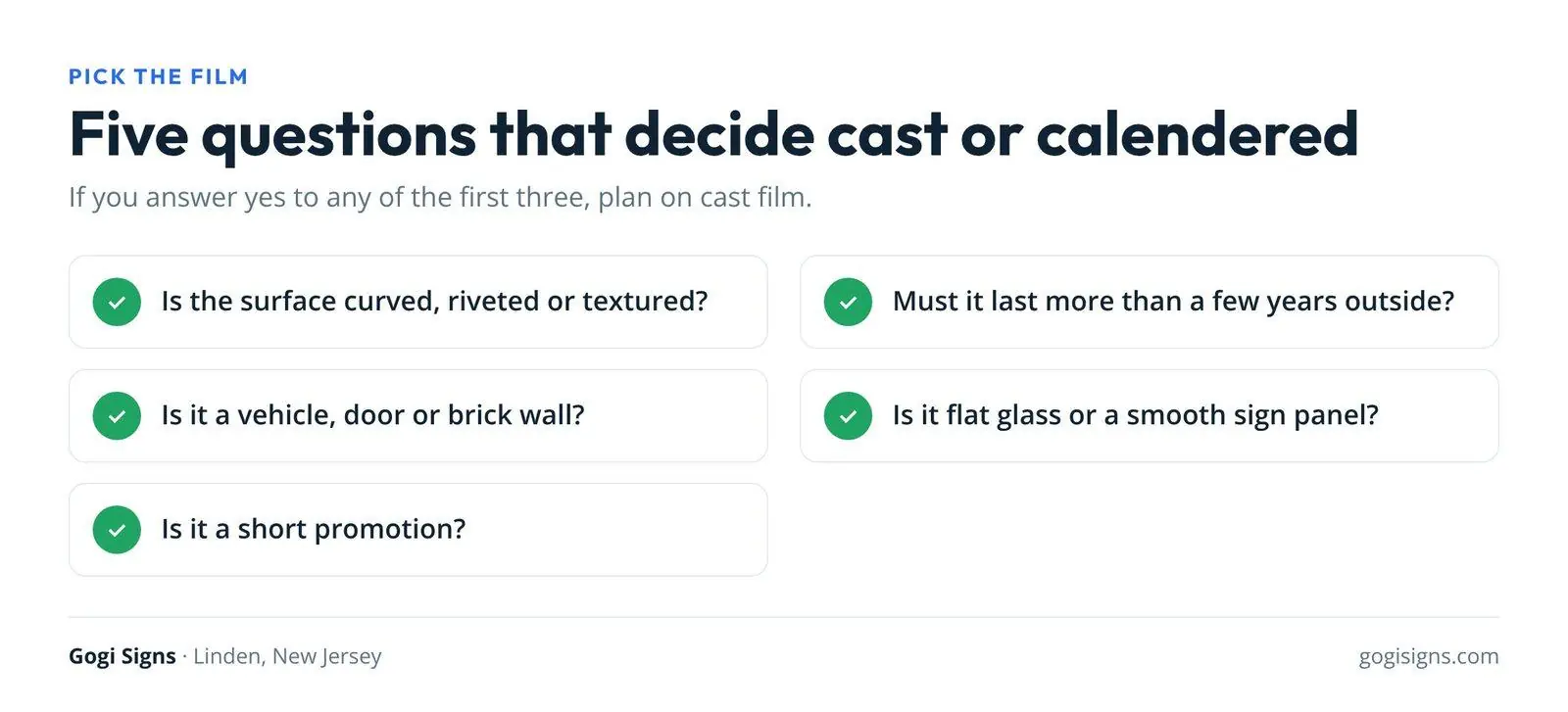
On flat, smooth surfaces such as store windows, sign panels and painted walls, calendered film does the job well and costs less. Store hours and door lettering on window decals, short promotions on window wraps and most wall decals are good calendered jobs. ORAFOL rates ORACAL 651 at 6 years outdoors for colors on vertical surfaces in a mild climate, which is longer than most promotions stay up.
Texture: Where Cast Film Wins
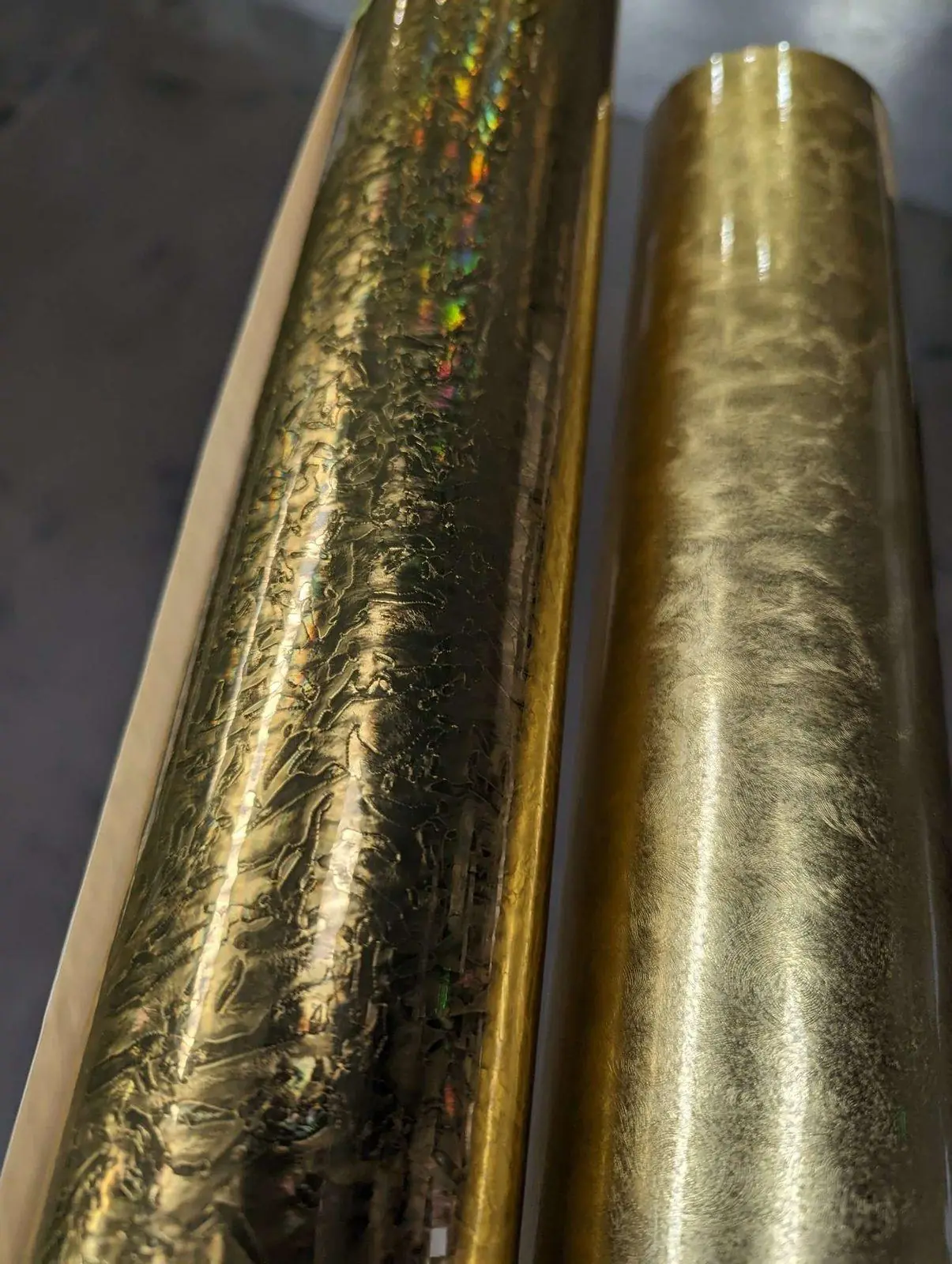
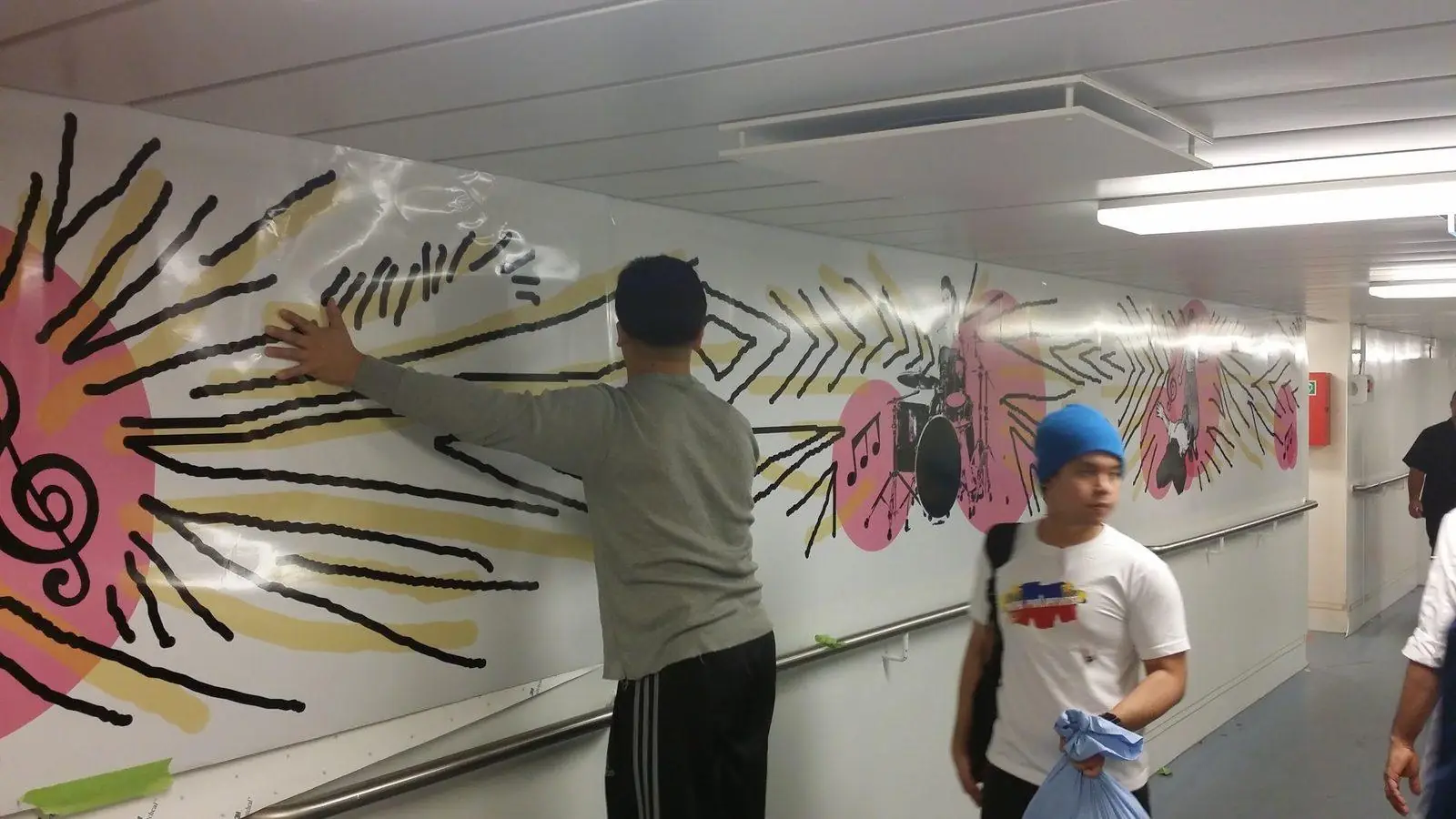
Brick, block, rough concrete and textured paint, common behind wall wraps in gyms and schools, need a film that can be pressed into every low spot and stay there. Calendered film bridges over the grout lines and then pulls loose as it tries to shrink. Cast film, heated and pressed in with a roller, stays put. Our wall wrap surface prep guide covers each wall type.
Curves, Doors and Vehicles
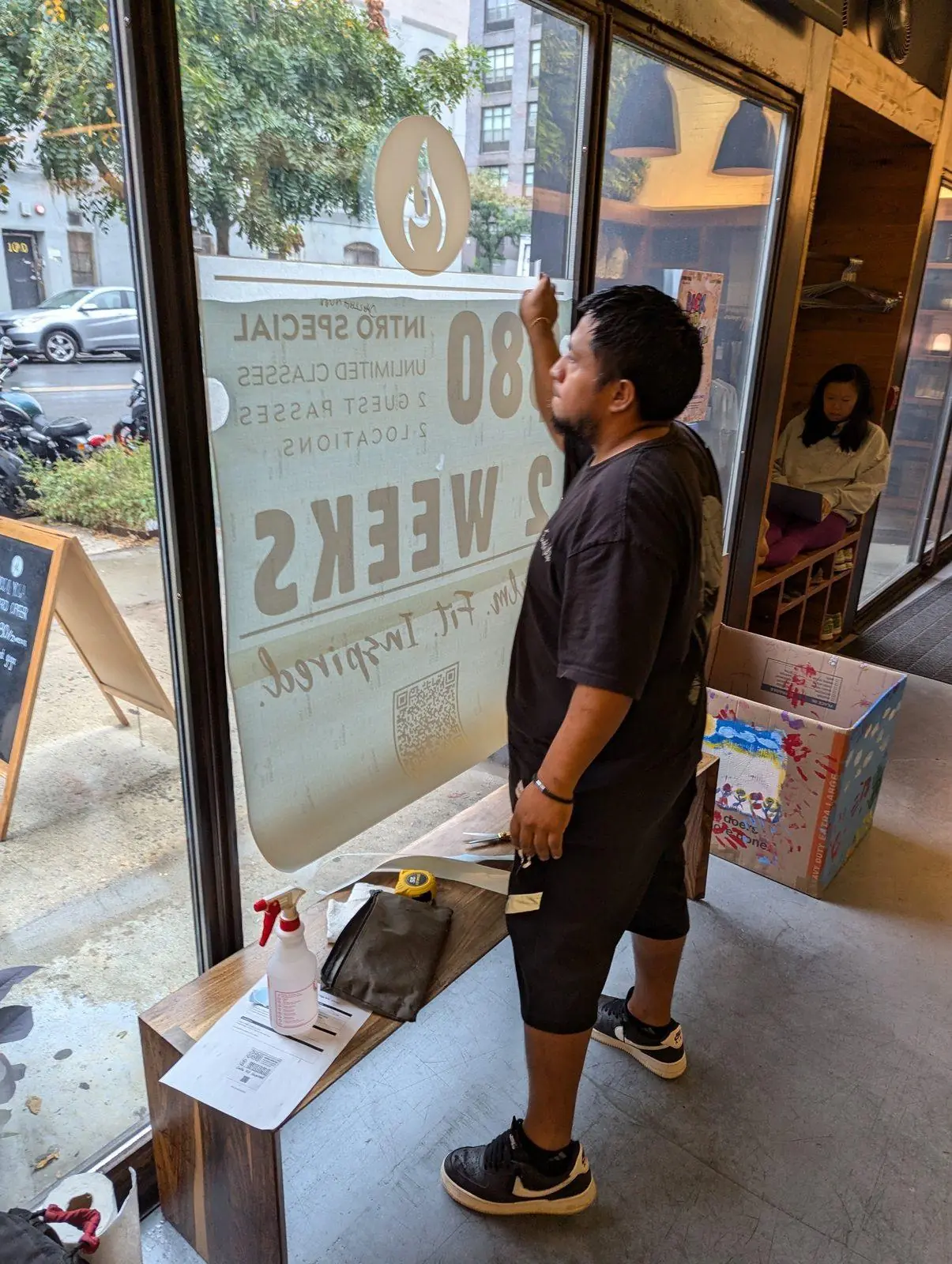
Vehicles, elevator doors, rivets and corrugated panels all need cast film. Wrap films like Avery Dennison Supreme Wrapping Film and 3M’s cast films add air release adhesives so installers can push out bubbles on large panels. For elevator and door wraps, a thin cast film also keeps the door edges clean so the doors keep closing normally.

Lifespan and Shrinkage
Makers publish outdoor ratings for vertical surfaces in a mild climate. ORAFOL rates ORACAL 751C cast film at 8 years for black and white and 7 years for colors, against 6 years for ORACAL 651 colors. Real life is shorter on south facing glass, hot dark surfaces and horizontal panels.
Shrinkage matters as much as color fade. When a calendered decal shrinks, its edges pull back and expose a thin line of adhesive that collects dirt. On a printed graphic, panels can open up at the seams. Cast film avoids both.
Match the Laminate
A printed graphic is a two layer system, film and laminate, and makers test them together. A cast print under a calendered laminate will shrink with the laminate. The same rule applies to floor decals, where the laminate also sets the slip rating. We always pair the laminate with the film from the same maker, and list both on the quote.
Cast vs Calendered Compared
| Calendered | Cast | |
|---|---|---|
| How it is made | Pressed and stretched | Poured and baked |
| Typical thickness | About 2.5 to 3 mil | About 2 mil |
| Holds its size | Can shrink over time | Stable |
| Curves and texture | Flat and simple curves only | Curves, rivets, brick |
| Best jobs | Windows, panels, short promos | Vehicles, doors, textured walls |
| Cost | Lower | Higher |
Common Mistakes
- Calendered film on brick. It looks fine for a week, then lifts out of every grout line.
- A mixed laminate. A cast print under a cheaper laminate still shrinks with the laminate.
- Skipping post heat. Cast film pressed into texture needs heat to set, or it creeps back out.
- The wrong adhesive. A permanent adhesive on a short promotion makes removal slow and costly.
Polymeric Film: The Middle Ground
Between standard calendered film and cast film sits a third group. Polymeric calendered films use additives that make them more stable, so they shrink less than standard calendered film. They handle simple curves and medium term jobs at a price between the two. They are not a substitute for cast film on deep curves, rivets or brick.
Install Temperature and Removal
Both films need the surface above a minimum application temperature, which each maker lists on the data sheet. In a New Jersey winter that matters for outdoor glass and vehicles: cold film is stiff and the adhesive does not wet out, so graphics lift later. We install outdoor work on warm enough days or warm the surface first.
Removal differs too. Cast film usually comes off in larger pieces with heat. Old calendered film that has shrunk and hardened can come off in small chips. If a graphic will be swapped often, a removable adhesive saves time at the end. Our removal crew takes down old graphics before new ones go up.
What the Price Difference Buys
Cast film costs more per square foot than calendered film, and installs on curves or texture take longer. On a flat window for a two year promotion, that extra cost buys nothing. On a brick wall, an elevator door or a vehicle, it buys a graphic that stays flat for its rated life instead of lifting in the first season. When we quote, we price the film the surface needs, not the most expensive one on the shelf.
How We Handle Vinyl Graphics Jobs
Every vinyl graphics job at Gogi Signs follows the same path from our Linden, New Jersey shop. It starts with a site survey or photos of the space, then a scaled layout from our sign design team. We check the town rules through our sign permits service when the graphic counts as a sign, cut or print it in house through our vinyl cutting and print shop, and our own crews handle graphics installation across New Jersey and New York City. When old graphics or signs have to come down first, the sign removal crew does it in the same visit.
Most clients pair vinyl graphics with related work such as window decals, wall wraps and floor decals. See the full range on our vinyl graphics page or browse more guides on the Gogi Signs blog.
Common Questions About Cast and Calendered Vinyl
Is cast vinyl always better?
No. It is better on curves, texture and long jobs. On flat glass for a few years, calendered film does the job at a lower cost.
How can I tell which film I have?
Ask for the brand and series on the quote. Cast film is thinner and softer in the hand; calendered film feels stiffer.
Why did my decal shrink?
Calendered film keeps a memory of being stretched and slowly pulls back, faster in heat and sun.
Can calendered film go on a vehicle?
Only on flat areas for short terms. Vehicles with curves and rivets need cast wrap film.
Does the printer matter?
Print quality matters for color, but the film decides how long the graphic stays flat and attached.
Which film do you use?
We choose by job and name the film series on every quote.
Get the Right Film for the Job
Tell us the surface, the size and how long the graphic needs to last, and we will pick the film and laminate and show it on the quote. New York shops make the same call every day; see Signs NY window decals. Pixel Wraps, our sister graphics shop, puts cast film on fleets every week; see its vehicle wraps. Start with our vinyl graphics or our vinyl cutting service.
Sources and further reading
- ORAFOL: ORACAL 651 intermediate calendered film
- ORAFOL: ORACAL 751C high performance cast film
- 3M: Print Wrap Film IJ180mC
- Avery Dennison: Supreme Wrapping Film
- 3M: graphics and signage films
- ORAFOL: ORACAL 8810 frosted glass film
- 3M: Preferred Graphics Installer program
- Avery Dennison: graphics solutions
- Avery Dennison: perforated window films
- Signs NY: window decals
- Pixel Wraps: vehicle wraps