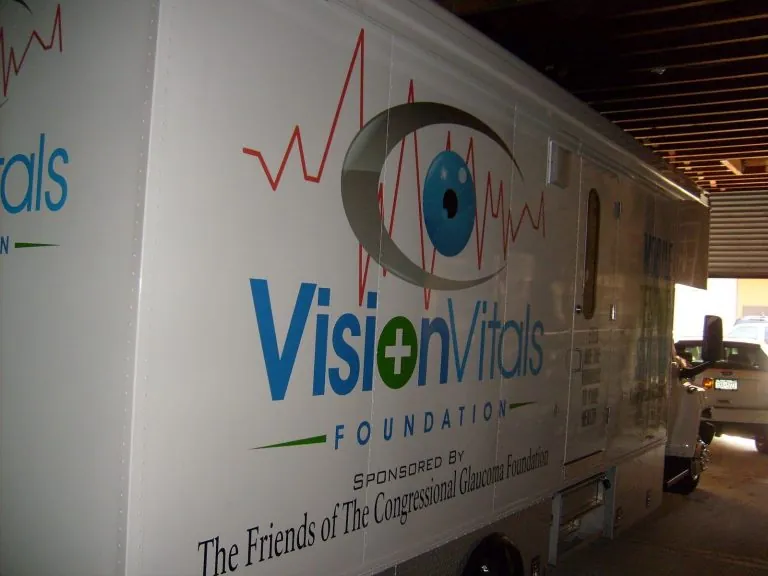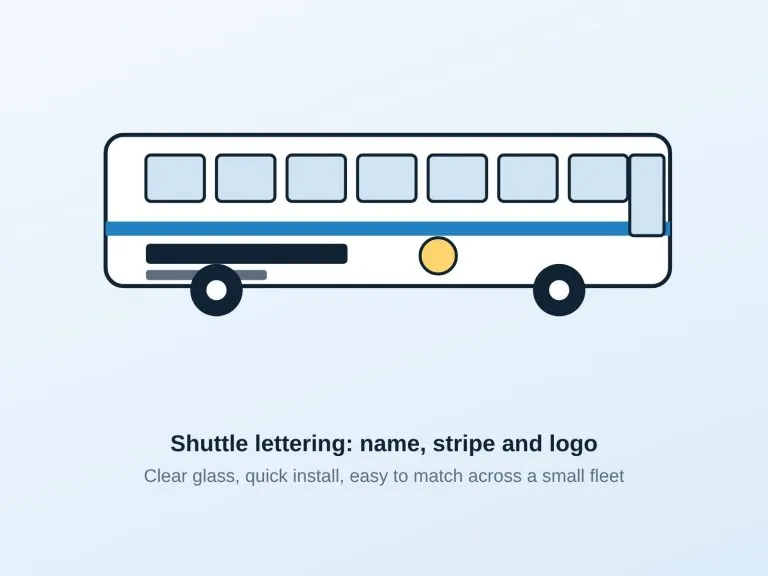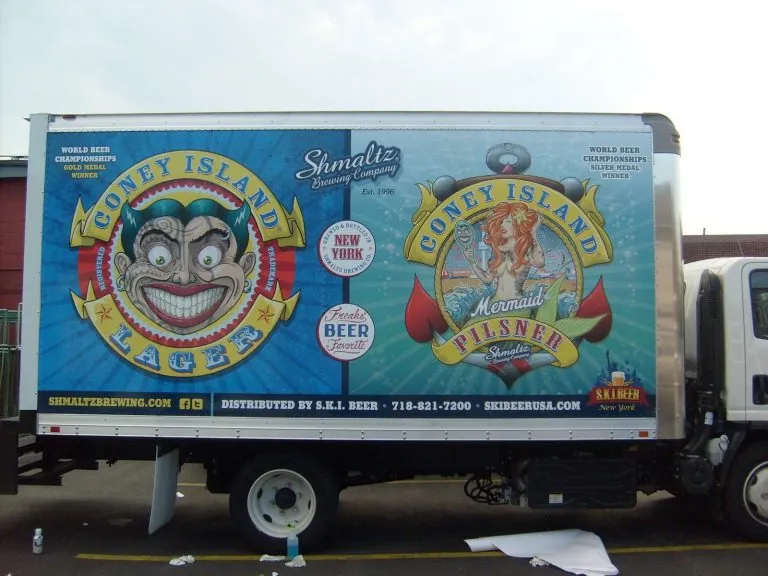
Bus and shuttle windows are a big part of the side of the vehicle. Covering them with perforated film lets a wrap run edge to edge while passengers still see out. But not every window can be covered. Here is how perforated film works and what has to stay clear. This is general information; check your state and operator rules.
In this guide
Bus Windows at a Glance
How Perforated Film Works
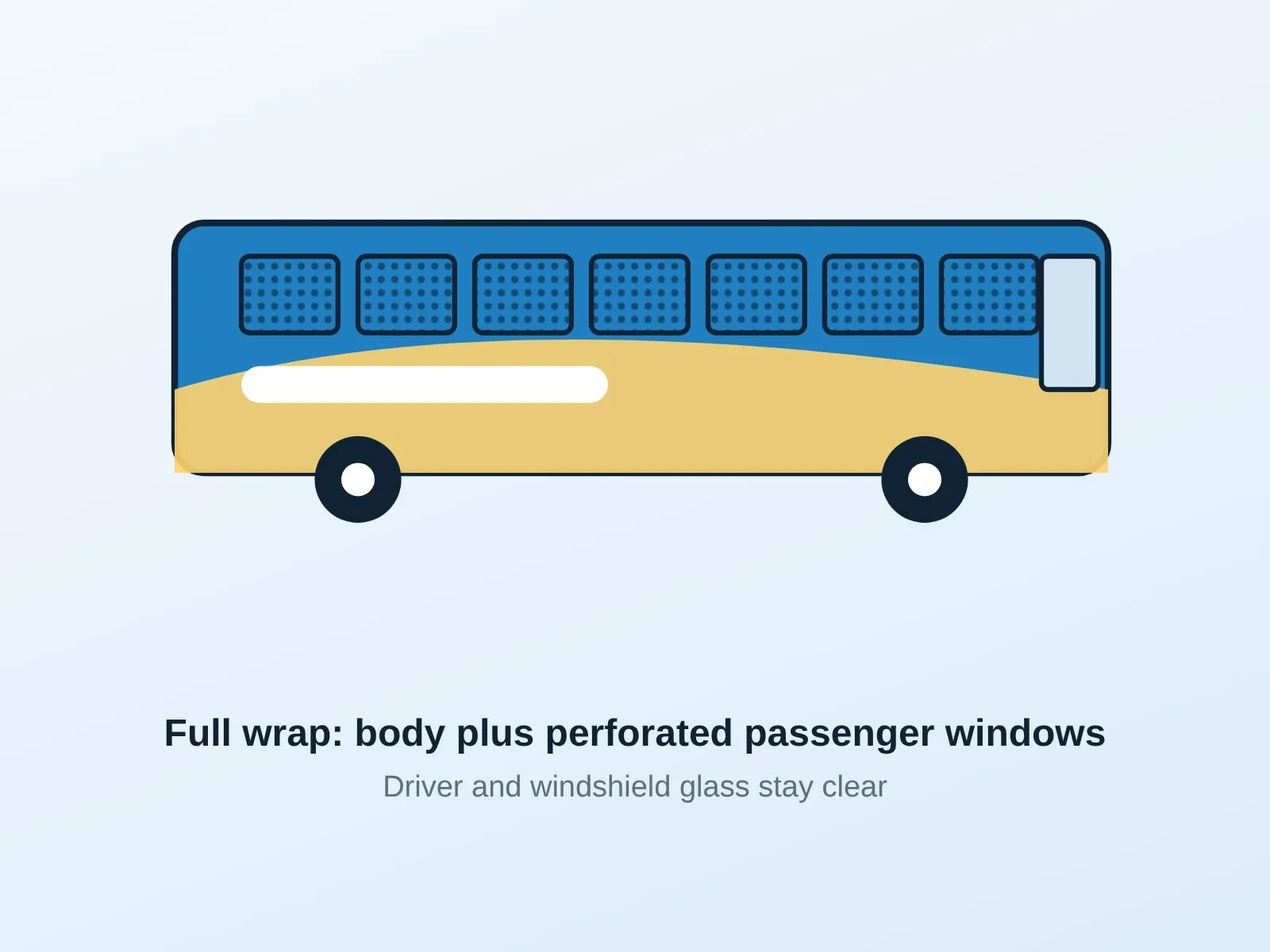
Perforated window film is a printed vinyl full of small holes, often in a 50 to 50 or 70 to 30 pattern of printed area to open holes. From outside, the eye sees the printed picture. From inside, the darker interior and the holes let passengers look out. Makers such as Avery Dennison publish the patterns and rated life.
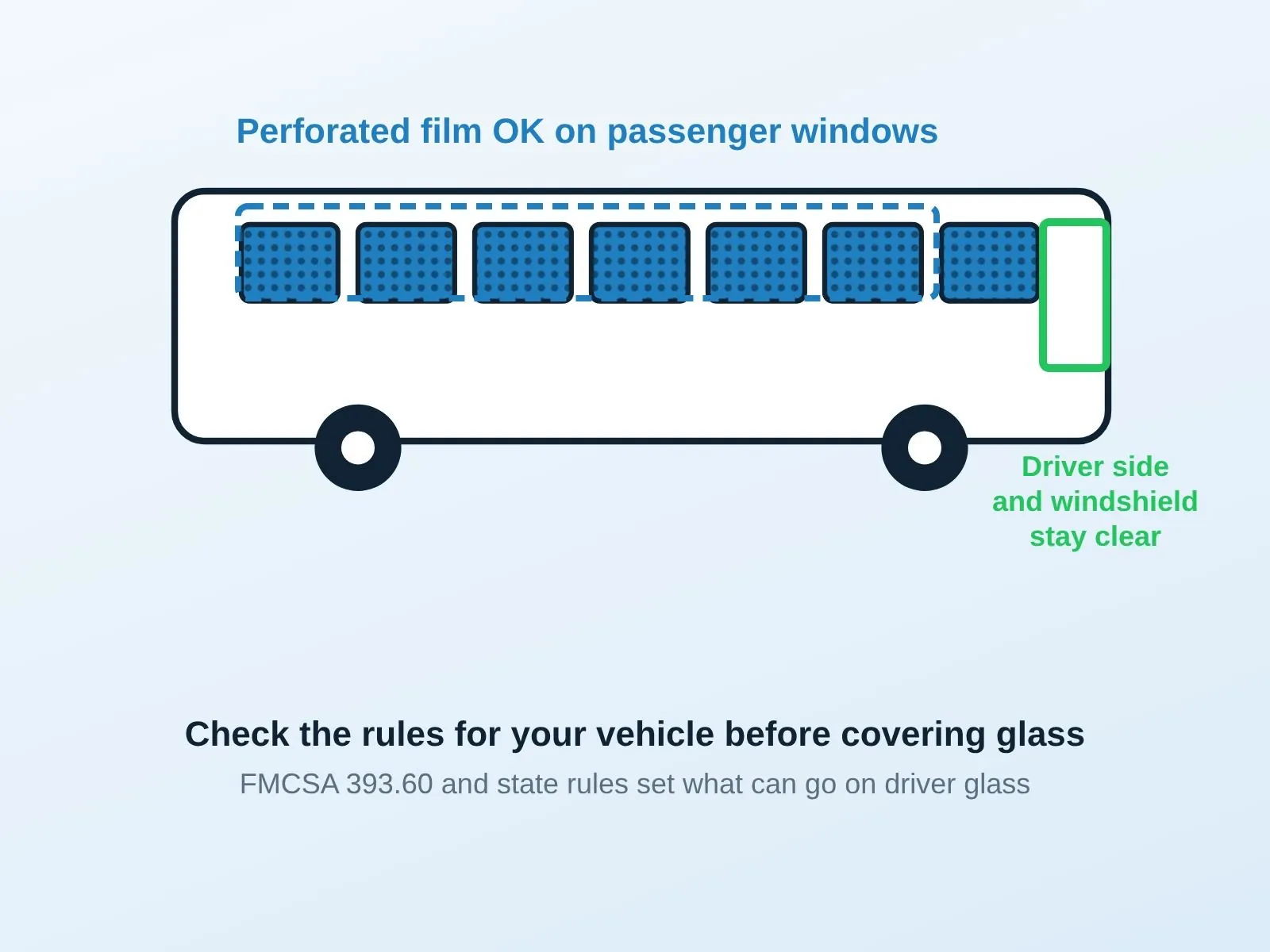
What Stays Clear
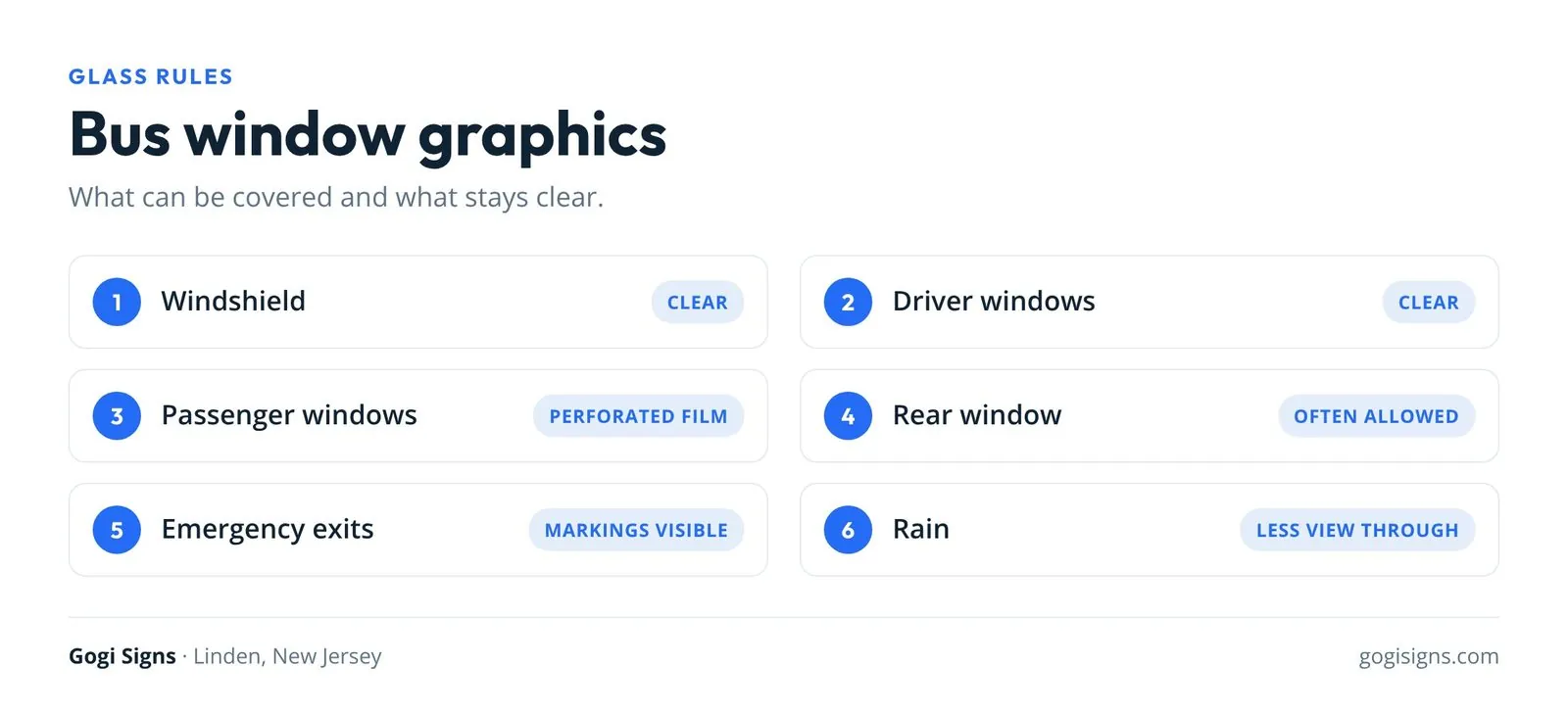
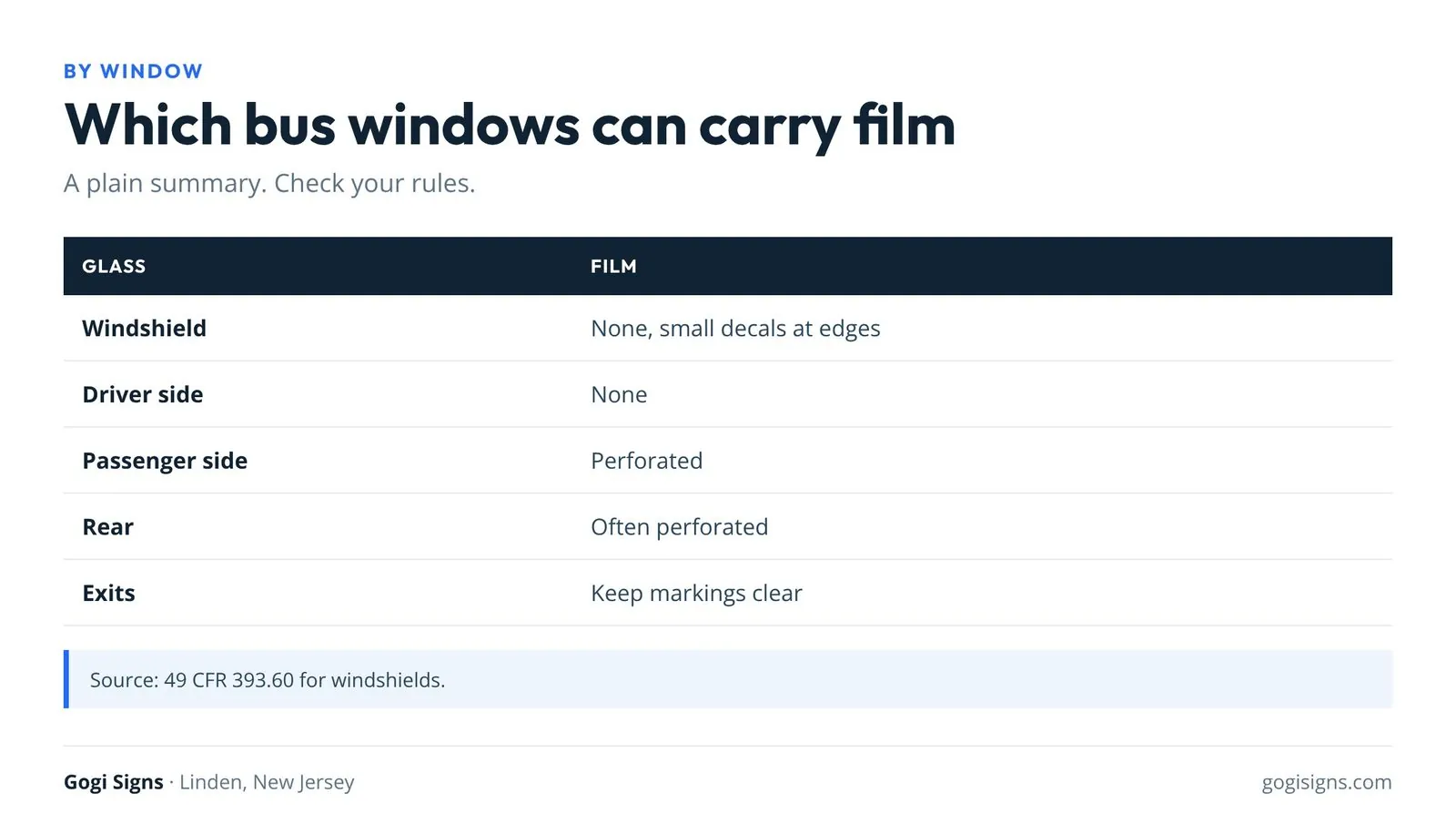
- Windshield: no film except small required decals at the edges, under 49 CFR 393.60
- Driver side windows: kept clear for mirrors and side view
- Emergency exits: markings and release instructions stay visible
- Door glass: often left clear so riders can see the curb
Where Film Works
- Passenger side windows behind the driver
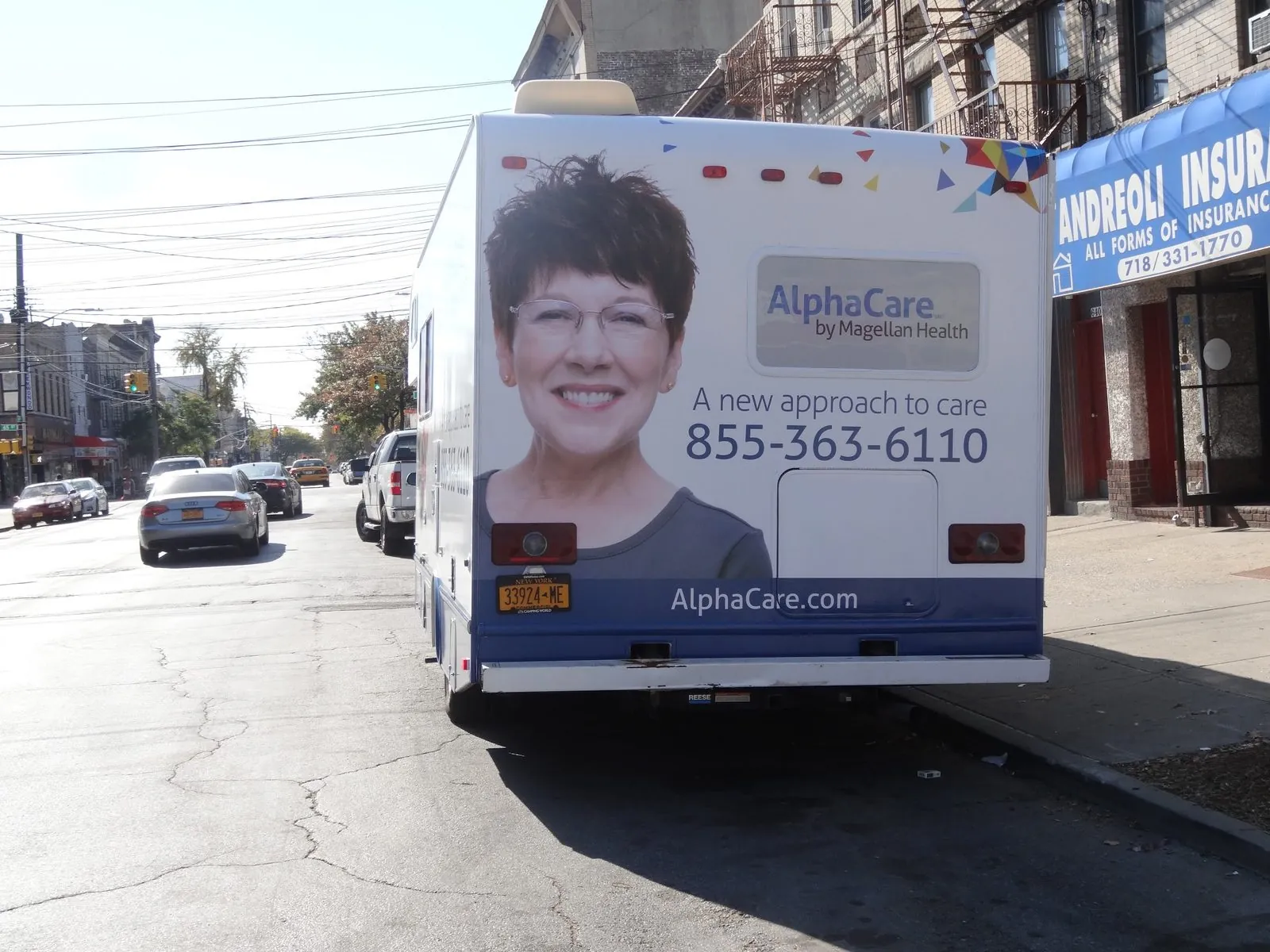
- Rear windows on many shuttles, depending on mirrors and cameras
- Windows on RVs and mobile units that are parked most of the time
Rain, Night and Washing
Water fills the holes when it rains, so view through drops in wet weather until the glass dries. At night, with lights on inside, people outside can see in more easily. Perforated film is laminated with an optically clear laminate and should be washed gently. It usually has a shorter life than body film.
Design Tips
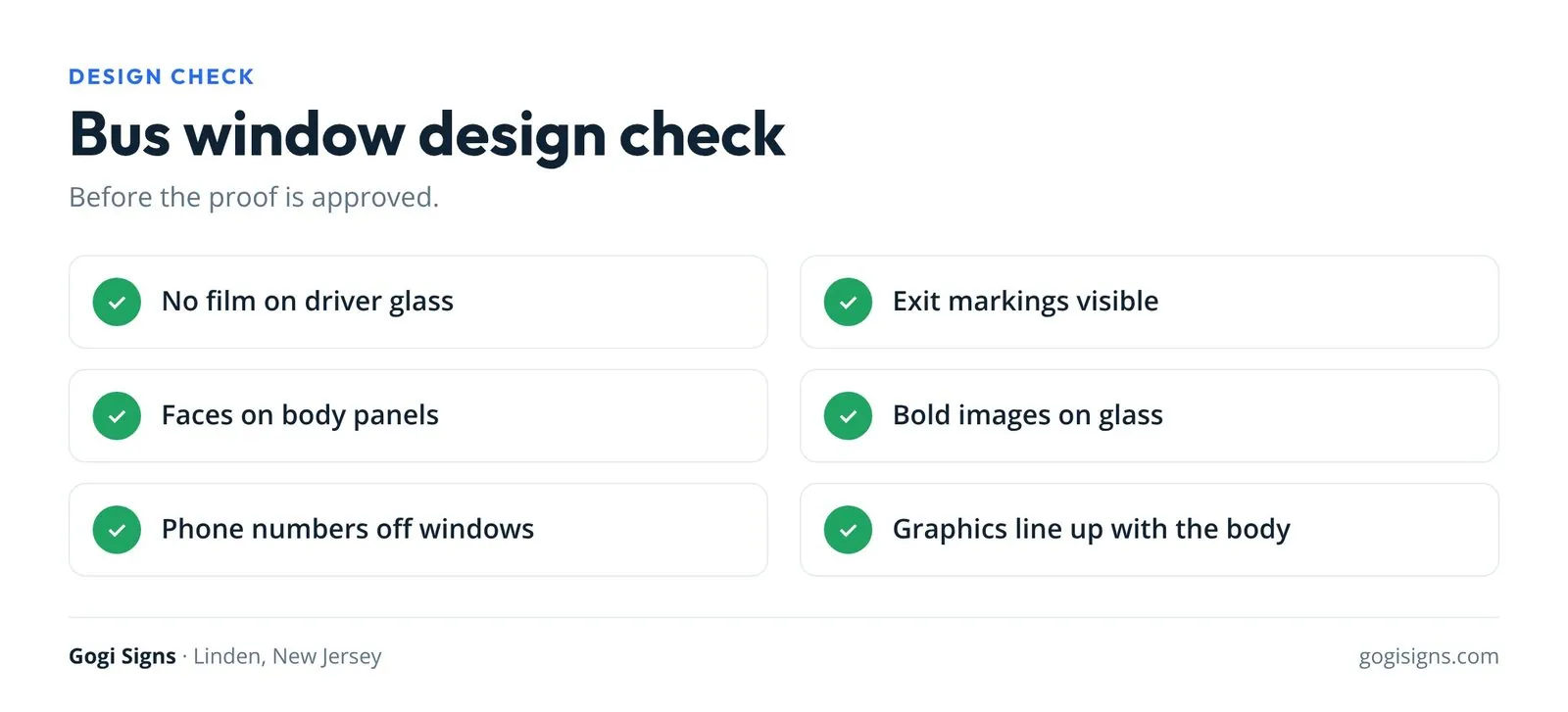
- Put faces and key text on body panels, not on windows
- Use bold, simple images on glass; fine detail gets lost in the holes
- Line up window graphics with the body graphics so the picture flows
- Keep phone numbers off the glass
Body Panels Only Is Fine Too
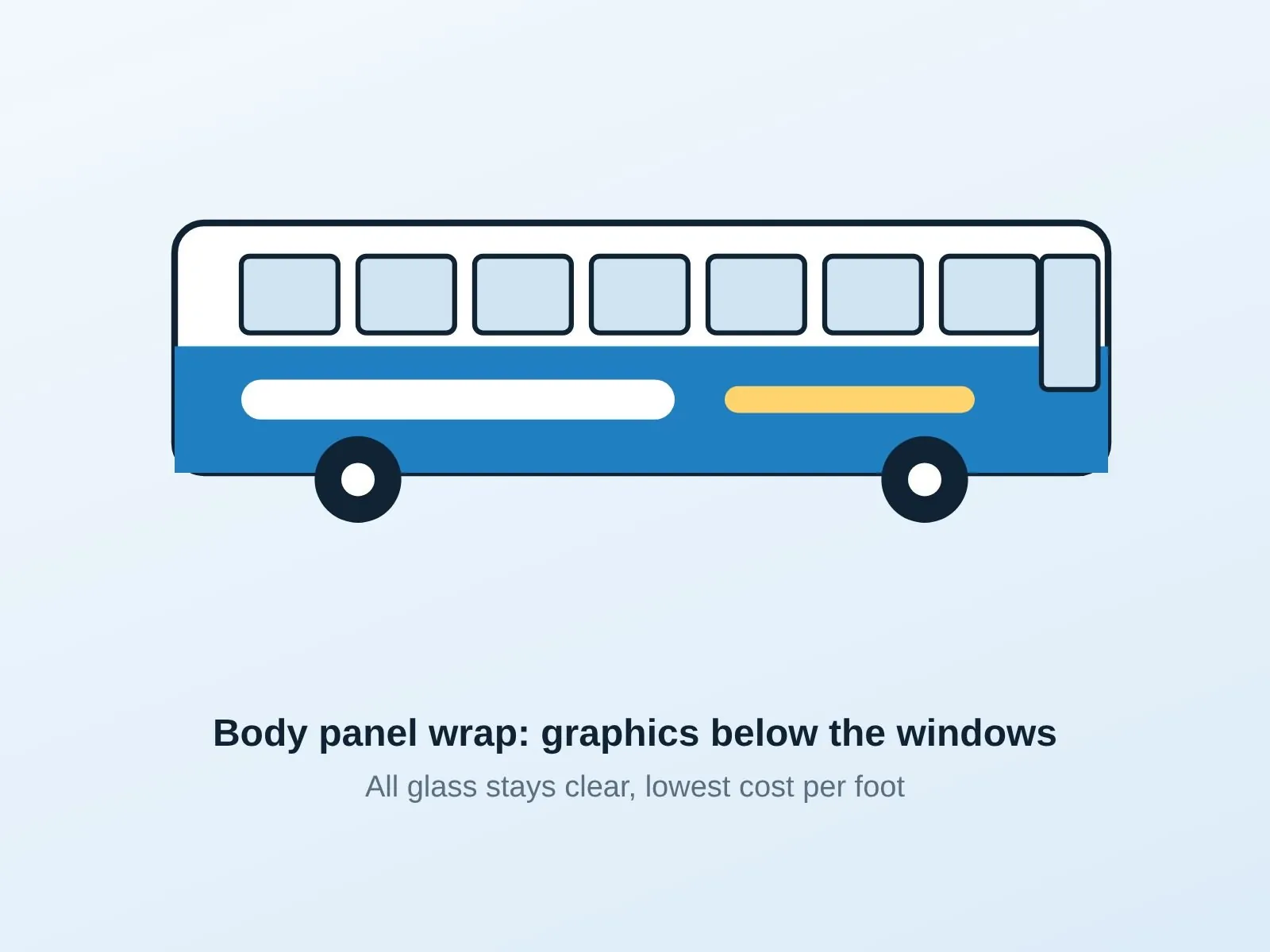
Many operators skip window film and wrap only the body panels below the windows. It costs less, keeps all glass clear and still looks finished. See our bus wraps page for both options.
How We Handle Bus Wrap Jobs
Every bus wrap job at Gogi Signs follows the same path. We measure the vehicle at our Linden, New Jersey shop or at your location, and our sign design team sets your artwork on a template of the exact make and model. We print and laminate in house, and our own crews handle graphics installation in our heated bay or at your yard across New Jersey, New York City and the Philadelphia area. Old graphics come off in the same visit, and lettering is cut through our vinyl cutting service.
Most clients pair bus wraps with fleet wraps, trailer wraps and truck lettering. Sign shops and agencies can order the same work through our wholesale program. See every option on our vehicle graphics page or browse more guides on the Gogi Signs blog.
Common Questions
Can bus windows be wrapped?
Passenger windows usually can, with perforated film. The windshield and driver windows stay clear.
Can passengers see out?
Yes, through the holes, though less clearly in the rain.
How long does window film last?
Usually less than body film, so it is often replaced sooner.
Can film go on the windshield?
No, except small required decals at the edges.
Is window film required for a bus wrap?
No. Body panel wraps leave all glass clear.
Do you check the rules?
Yes. We confirm which windows can carry film before design.
Our Take
Perforated film lets a bus wrap run across the windows while passengers see out, as long as driver glass and exits stay clear. For more bus examples, see Signs NY bus wrapping and see the bus wraps from Pixel Wraps, our sister graphics shop. Plan yours on our bus wraps page.
Sources and further reading
- Avery Dennison: perforated window films
- 49 CFR 393.60: glazing and windshield decals
- Avery Dennison: Supreme Wrapping Film
- 3M: Print Wrap Film IJ180mC product bulletin
- 3M: Wrap Film Series 2080 product bulletin
- 3M: Preferred Graphics Installer program
- 3M: graphics and signage films
- Avery Dennison: graphics solutions
- FMCSA: 49 CFR 390.21T, marking of vehicles
- N.J.S.A. 39:4-46: commercial vehicle names and GVWR